Engineered Google TV Configurations for Japanese Commercial Projects
High-efficiency, low-latency smart televisions tailored for Japanese OTT broadcast integration (TVer, U-NEXT, Abema, Amazon Prime Video Japan), commercial Hotel Mode CMS, and custom ISDB-T/Tunerless hardware architecture.
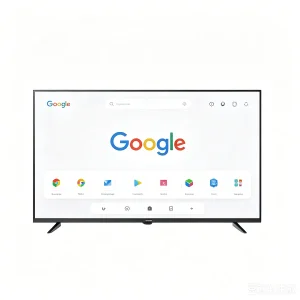
High-Quality 43-inch 4K QLED Google Smart TV, Google TV Export Network TV Factory Manufacturers
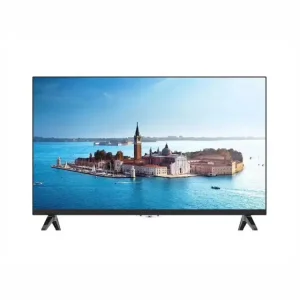
OEM Borderless 32 inch high-definition Android smart TV wholesale for supermarkets, high-definition network TVs Factory, Supplier
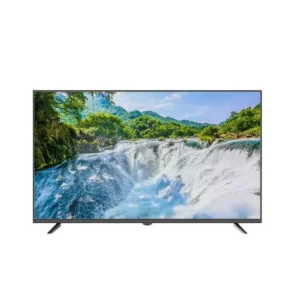
High-Quality 43-inch Borderless FHD Android Smart TV – Wholesale & Custom for Hotel, Supermarket & Engineering Projects Supplier, Manufacturer

OEM 75 -inch 4K QLED Android Smart Voice TV, Ultra HD Large Screen, Home/Commercial/Export TV Factories, Manufacturers
The Structural Transformation of Japan's Commercial & Consumer TV Market
An analytical overview of regulatory compliance, VOD platform transitions, tunerless display momentum, and hardware engineering specifications required for Japanese procurement networks.
The "Tunerless" Paradigm Shift & Over-The-Top (OTT) Dominance in Japan
Japan's display ecosystem is experiencing its most seismic operational pivot in two decades. Traditionally reliant on terrestrial digital broadcasting standards (ISDB-T/ISDB-S), commercial facilities, enterprise developers, and the younger Japanese demographic are aggressively moving toward dedicated "Tunerless Google System TVs". With the ubiquity of national OTT platforms such as TVer, ABEMA, U-NEXT, and global giants like Netflix Japan and Amazon Prime, the necessity of a physical RF tuner module has significantly declined.
As a specialized manufacturer, our factory provides both pure ISDB-T/ISDB-S dual-tuner compliant motherboards and pure Tunerless Smart Display architectures. This allows enterprise importers, discounters like Don Quijote suppliers, and hotel chain contractors to deploy the exact configuration demanded by their target commercial audience.
Strict Regulatory Adherence: PSE, TELEC, and Top Runner Standards
Entering the Japanese consumer electronics sector requires strict adherence to Ministry of Economy, Trade and Industry (METI) standards. Every television exported to Japanese ports must comply with:
- PSE Certification: Diamond/Circle safety verification for isolated switch-mode power supplies (SMPS) tolerating 100V 50/60Hz fluctuations.
- TELEC Radio Law: Conformance of integrated 2.4GHz/5GHz Wi-Fi and Bluetooth 5.0/5.2 RF modules to prevent spectrum interference.
- Top Runner Program: Rigorous standby power constraints (<0.5W) meeting Japan's Energy Conservation Act benchmarks.
Global Macro Trends: Google TV as the Unified Enterprise OS
Globally, disparate smart TV interfaces are consolidating around Google TV. Unlike fragmented Linux forks, Google TV integrates advanced AI content recommendation engines, centralized Google Assistant voice querying, multi-user enterprise provisioning, and integrated Google Cast / Apple AirPlay 2 protocols. For commercial clients in Japan, this guarantees long-term APK application compatibility without requiring constant proprietary firmware patches.
Compact Japanese Spatial Ergonomics & Bezel-less Finishes
The Japanese architectural layout—particularly in Tokyo, Osaka, and Fukuoka studio apartments (1R, 1K, 1DK) and business hotels—requires ultra-compact footprints. Our frameless laser-cut edge designs maximize the active display area while keeping outer dimensions minimal. Standardized VESA mounting brackets (75x75, 100x100, 200x200mm) ensure direct flush-wall installations, saving critical square footage.
Custom Commercial Hotel Mode & Automated Privacy Clearing
Japanese business travelers prioritize digital hygiene. Our factory-level Google TV firmware can be injected with custom Enterprise Hotel Mode: setting default volume limits, restricting access to settings menus, displaying customized Japanese welcome splashes, and automatically wiping guest personal streaming accounts and search histories upon television power-down.
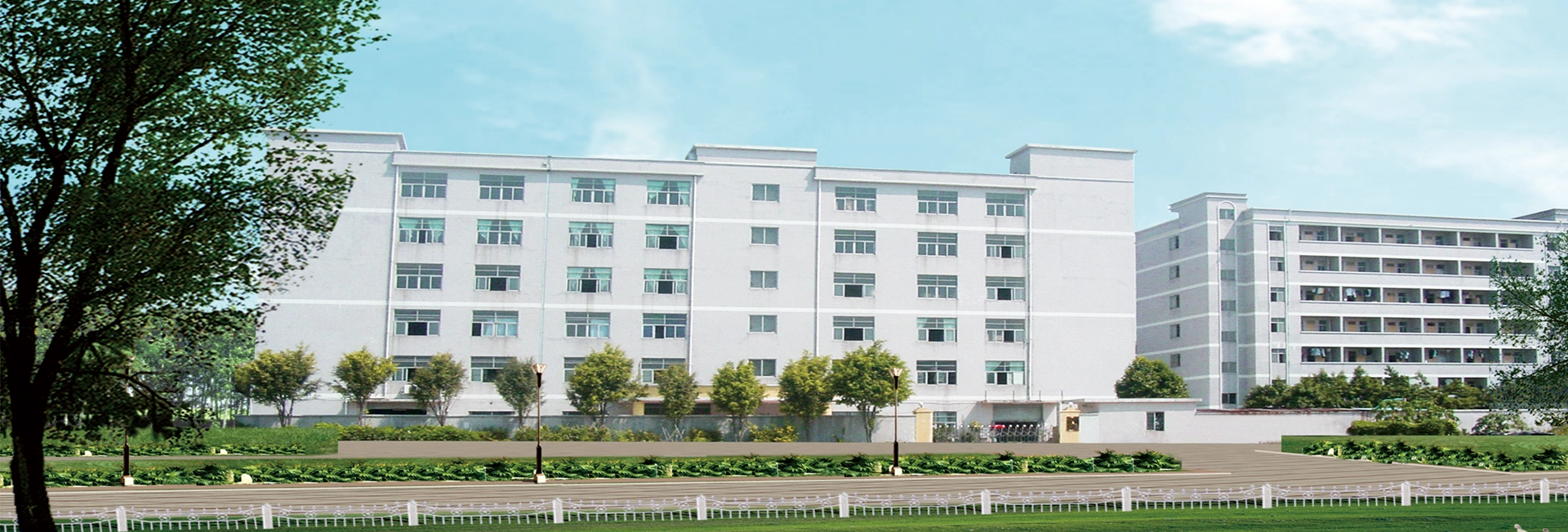
Why Japan’s Importers & B2B Contractors Partner with Our Guangzhou Source Factory
Combining upstream optical glass procurement, high-precision automated SMT surface mounting, and rigorous Japanese Industrial Standard (JIS) quality protocols to create undeniable competitive advantages.
Direct Tier-1 Glass Substrate Integration
Located in Huadu District, Guangzhou, our manufacturing facility maintains direct strategic allocations with Tier-1 open-cell panel manufacturers including CSOT, BOE, HKC, and AUO. This eliminates secondary panel markups, guaranteeing Japanese buyers Grade-A panel quality, zero dead pixels (A+ threshold), high native contrast ratios, and consistent wide-viewing angles across all production cycles.
High-Efficiency SMT & Mainboard Tooling
Equipped with 6 high-speed automated Surface Mount Technology (SMT) assembly lines, our factory fabricates custom mainboards utilizing advanced MediaTek (MT9612/MT9617) and Realtek high-efficiency chipsets. We specialize in low-thermal dissipation layouts optimized for Japan's ultra-thin, fanless commercial enclosures, ensuring high reliability under continuous operation.
Comprehensive Aging & Environmental Stress Testing
Japanese commercial clients demand exceptionally low Defective On Arrival (DOA) rates. Every finished unit undergoes an automated 4-hour high-temperature electrical aging protocol, 100% white/black screen chromatic uniformity inspection, electrostatic discharge (ESD) testing, and JIS-standard packaging drop/vibration simulations to survive maritime transit across the East China Sea.
CBU, SKD & CKD Supply Flexibility for Japanese Brand Assemblers
We recognize that some Japanese consumer brands and regional electronics firms maintain domestic final-assembly plants to qualify for specialized procurement subsidies or local trade certifications. Beyond Complete Built Units (CBU), our monthly shipping capability includes over 200,000 sets of Semi-Knocked-Down (SKD) and Completely-Knocked-Down (CKD) kits. We supply matched optical backlights, open cells in cleanroom vacuum packaging, calibrated mainboards, tuned power boards, molded frames, Japanese silk-screened remote controllers, and localized multi-language OSD instruction manuals.
Direct Engineering Communication (No Trading Middlemen)
Japanese corporate procurement relies on transparency, deterministic lead times, and rigorous technical change management (ECN). By dealing directly with our Guangzhou factory engineering team, your procurement managers receive direct DFM (Design for Manufacturability) analysis, customized Japanese UI builds, and guaranteed bill of materials (BOM) locking—eliminating hidden substitutions.
Specialized Deployment Environments Across Japan’s Commercial Landscape
Tailoring hardware characteristics, panel anti-glare coatings, and operating system firmware to specific Japanese operational sectors.
Business Hotels & Capsule Pods (APA, Toyoko Inn Formats)
Japanese business hotels maximize room utility in tight floorplans. Our 32-inch and 43-inch frameless Google System TVs feature ultra-flat rear chassis profiles and recessed HDMI/LAN ports for clean wall mounts. Integrated Google Cast allows business travelers to stream presentations, Netflix, or YouTube directly from smartphones without entering credentials into the TV.
Karaoke Chains & Entertainment Lounges (DAM & Joysound Venues)
High ambient usage and vibration-prone sound environments demand robust displays. For Japanese entertainment complexes, we provide 55" to 75" QLED displays equipped with 4K 60Hz/120Hz MEMC motion smoothing, optical digital audio output (TOSLINK) for zero-latency karaoke amplifier synchronization, and anti-glare coatings to mitigate bright ambient disco lighting.
Medical Centers, Clinics & Eldercare Facilities
With Japan's hyper-aging society, senior living and nursing facilities require displays with enhanced accessibility. We deliver customized software builds featuring large Japanese high-contrast OSD typography, voice-activated Google Assistant remote controls with simplified button layouts, and flicker-free eye-care backlighting that minimizes ocular fatigue.
Pachinko Parlors & High-Impact Retail Signage
Pachinko and high-traffic shopping centers (Bic Camera, Yodobashi, Mega Donki) require continuous 16/7 or 24/7 commercial duty cycles. Our 65-inch to 100-inch explosion-proof models feature 4mm tempered glass protection, thermal-dissipating metal cabinets, and high-brightness 450–700 nit panel options to overcome vivid interior lighting environments.
Mansion & Rental Apartment Developments (UR Housing & Daito Trust Projects)
Real estate developers furnishing rental apartments across Tokyo and Osaka are increasingly bundling smart televisions into tenancy leases. Our 43" to 50" 4K frameless Google TV units serve as the central smart home hub. With integrated Matter and Google Home compatibility, tenants can easily sync air conditioning, lighting, and video intercoms through a single unified display.
The Next Era of Google System TV Engineering (2025–2030)
Anticipating hardware demands, AI picture engine integration, and green energy mandates shaping Japanese corporate procurement decisions.
Mini-LED & Quantum Dot Panel Dominance
Traditional direct-lit LED backlights are rapidly evolving toward full-array local dimming (FALD) Mini-LED architectures. By utilizing 500+ independent physical dimming zones paired with cadmium-free quantum dot enhancement films (QDEF), our export models achieve 95% DCI-P3 color reproduction, meeting the demands of cinema enthusiasts and design studios in Japan.
Edge-AI Picture Optimization Engines
Next-generation MediaTek quad-core processing architectures feature integrated Neural Processing Units (NPUs). These onboard processors perform real-time AI scene detection, upscaling legacy Japanese 1080i terrestrial broadcasts and YouTube streams into sharp 4K 60fps visuals with intelligent facial clarity refinement and grain suppression.
Matter Protocol & Smart IoT Building Hub
As Japanese smart buildings adopt the universal Matter connectivity standard, our Google System TVs act as Thread boundary routers and Google Home hubs. Guests and residents can command curtains, HVAC systems, and door locks directly via the TV's far-field microphones using native Japanese voice prompts.
JIS Compliance & Strict Sourcing Checklists
Procurement managers for Japanese retail and hotel projects require verified documentation trails: RoHS 2.0 chemical restriction compliance, VCCI Class B electromagnetic compatibility reports, and clear MTBF (Mean Time Between Failures) data exceeding 30,000 continuous hours.
Custom Packaging & Palletization for Port Handling
To maximize maritime container stowage factors into Yokohama, Tokyo, and Kobe ports, our factory designs heavy-duty 5-ply honeycomb export cartons. Packaging designs support high-density loading while maintaining drop-test resilience, reducing ocean freight costs per unit by up to 18%.
Comprehensive After-Sales & Spare Part Kits
For bulk commercial orders, our factory provides a complimentary 1%–2% reserve kit of high-wear components (including power boards, mainboards, T-CON modules, and remote controls). We support local warranty operations in Japan through direct engineering escalations and remote firmware management.
Wholesale & Custom OEM/ODM Smart Television Catalogue
Explore our complete range of certified smart displays, from ultra-compact 32" bedroom and hotel models to massive 100" explosion-proof commercial panels.
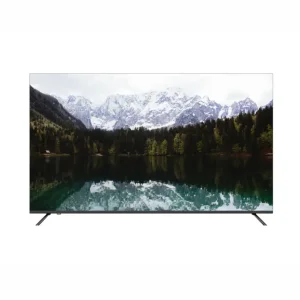
High-Quality 65-inch 4K OLED self-emissive Android smart TV with Dolby Vision HD TV Factory Manufacturers
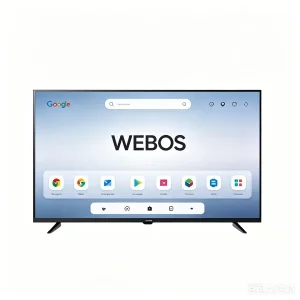
OEM 43-inch 4K UHD webOS Smart TV with AI, source manufacturer for home and hotel use, export Factory, Manufacturer
High-Quality 43-inch 4K QLED Google Smart TV, Google TV Export Network TV Factory Factory, Manufacturers
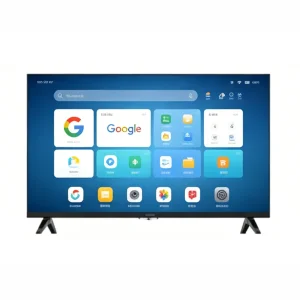
OEM 32-inch Full HD webOS Smart TV, LG System, for home, bedroom, hotel, commercial, and export use Suppliers, Supplier
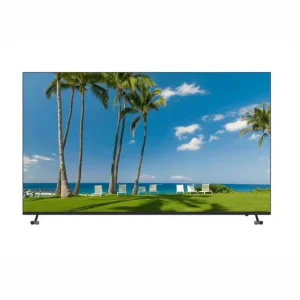
High-Quality 85 -inch 4K QLED Android Smart Voice TV, ultra-high definition large screen, flagship model for home and commercial use, export only. Suppliers, Manufacturer
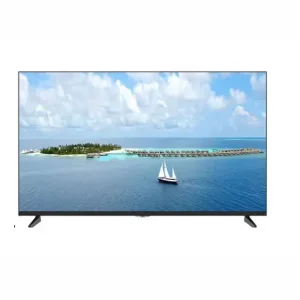
High-Quality 55-inch 4K QLED Android Smart TV with Frameless Design , Dolby Vision, Flagship Model for Home, Commercial, and Export Use Factories, Manufacturer
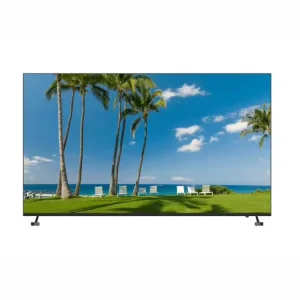
High-Quality 100-inch 4K Explosion-proof Smart TV with Tempered Glass Screen, Suitable for Hotels, KTVs, Commercial Use, and Export Supplier, Manufacturers
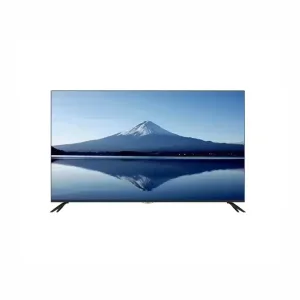
Wholesale Frameless 50-inch 4K Q LED Android Smart TV, Ultra HD HDR, for Home, Commercial, and Export Use Suppliers, Supplier
Frequently Asked Questions by Japanese Sourcing & Engineering Teams
Clear, definitive answers addressing regulatory compliance, software customization, manufacturing lead times, and logistical integration.
Are your Google System TVs certified with Japanese METI-approved PSE and TELEC standards?
Yes. Every television batch manufactured for export to Japan is certified for PSE (Product Safety Electrical Appliance & Material Safety Law) compliance. We implement custom isolated power boards tailored to 100V 50Hz (Eastern Japan) and 60Hz (Western Japan) grids. Furthermore, our integrated Wi-Fi and Bluetooth wireless RF components carry verified TELEC (Radio Law) certificate numbers, ensuring smooth Japanese customs clearance and legal distribution.
What is the advantage of choosing a "Tunerless" smart TV for the Japanese commercial market?
Tunerless smart displays omit legacy RF demodulator hardware, removing the obligation for end-users and commercial properties to enter into NHK broadcast reception contracts under Japan's Broadcast Act. For business hotels, rental complexes, and corporate offices, this substantially lowers recurring legal overhead while providing high-resolution access to OTT streaming platforms like TVer, YouTube, ABEMA, and Netflix through native Google TV integration.
Can you supply custom firmware tailored to hotel chains (e.g., custom UI, hotel mode)?
Absolutely. Our in-house software engineering team specializes in factory-level firmware adaptations. We can pre-load custom boot animations, branded hotel splash home screens, lock down input menus, configure default maximum turn-on volumes, enable automated background cache wipes for guest privacy, and integrate IP-based hotel Property Management Systems (PMS).
What are your Minimum Order Quantities (MOQ) and production lead times for Japan?
For customized OEM/ODM projects with private-label branding (custom silkscreen logo, Japanese retail gift box, custom remote), our typical MOQ is one 20GP container (or approximately 200–500 units depending on screen size). Production lead times are typically 25 to 35 business days following sample sign-off and BOM freeze. Rapid sea freight transit from Nansha/Shenzhen ports to Tokyo or Osaka typically takes only 4 to 6 days.
Do you support SKD / CKD shipments for final assembly in Japanese factories?
Yes. We regularly supply SKD (Semi-Knocked-Down) and CKD (Completely-Knocked-Down) kits to international brands and Japanese regional assemblers. Our packaging includes dust-free protective panel cassettes, pre-tested mainboards, power modules, speaker sets, molded bezels, and Japanese-labeled wiring harnesses. We also provide complete SOP assembly documentation and technical training videos.
How do you guarantee panel quality and handle RMA warranties for bulk orders?
Our factory operates under strict ISO 9001 and Japanese 5S quality principles. We utilize 100% Grade A+ open cells directly from BOE, CSOT, and HKC. For every container shipped, we provide 1%–2% free replacement spare parts (mainboards, power supplies, LED backlights, and remote controls). In the rare event of batch failure, our engineering staff provides video diagnostic sessions and dispatches replacement components under priority express freight.