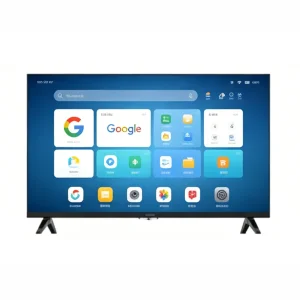
Commercial & Consumer Display Flagship Models
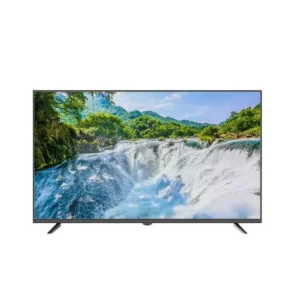
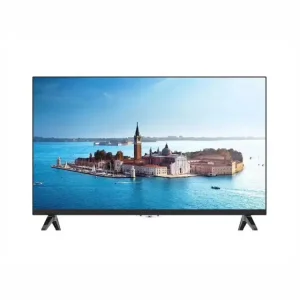
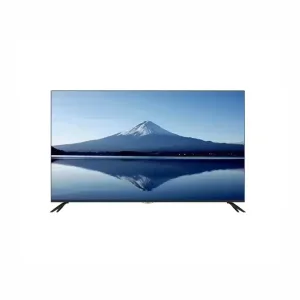
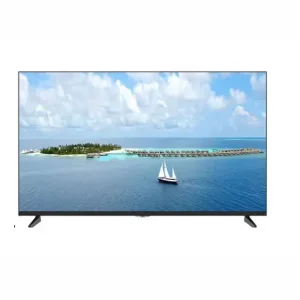
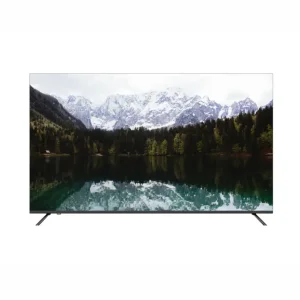
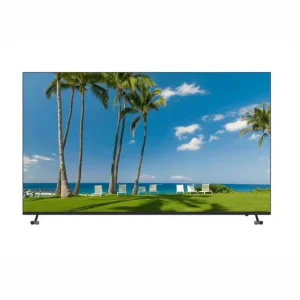
Explore our high-yield production line TV units available for private-label customization, bulk procurement, and SKD/CKD regional distribution.

Executive Summary: Navigating Global LED & QLED TV Manufacturing Ecosystems
A comprehensive strategic breakdown of display backlighting advancements, global OEM supply dynamics, unit economics, and scalable sourcing frameworks.
Macro Sourcing Dynamics: CBU vs SKD vs CKD
Global consumer electronics procurement requires balancing finished-goods import duties with local assembly capabilities. Operating as a Tier-1 OEM/ODM manufacturer in Guangzhou, our operations support CBU (Completely Built Unit), SKD (Semi-Knocked Down), and CKD (Completely Knocked Down) pipelines. Procurement officers leverage CKD kits to achieve import tariff reductions from 25% down to 5-8% in emerging regions across Latin America, Africa, and Southeast Asia.
Shift to Quantum Dot (QLED) Architectures
The global television marketplace is rapidly transitioning from standard Direct-LED (DLED) backlights to Quantum Dot Enhancement Film (QDEF) architectures. QLED technology provides B2B brand owners with premium color performance (95%+ DCI-P3 gamut coverage) at a fraction of OLED panel costs. Sourcing QLED models directly from source factories grants regional distributors the margin buffer necessary to compete with multinational tier-1 brands.
Optoelectronic Architecture & Display Engineering Roadmap
Understanding the optical physics, chipset configurations, and backlighting mechanics that differentiate commercial LED/QLED television hardware.
Quantum Dot Optical Matrix
Quantum dots are inorganic semiconductor nanocrystals ranging from 2 to 10 nanometers. When excited by blue DLED backlights, they emit precise monochromatic red and green light. This narrow Full-Width at Half-Maximum (FWHM) spectral output expands color volume, dramatically reducing optical color crosstalk compared to conventional yellow phosphor LEDs.
SoC & Mainboard Architecture
Our OEM smart TVs integrate high-performance quad-core ARM Cortex-A55 chipsets combined with Mali-G52 GPU cores. Supporting hardware-level decoding for AV1, HEVC/H.265, and VP9, our mainboards feature dedicated AI PQ (Picture Quality) engines capable of real-time super-resolution upscaling, noise reduction, and dynamic contrast curve optimization.
Triple OS Platform Ecosystems
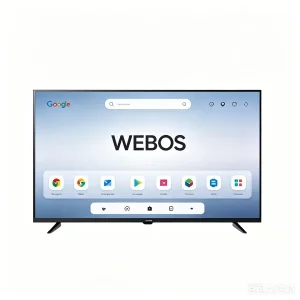
To cater to regional licensing demands, our TV manufacturing infrastructure supports three primary operating systems: Official Android TV (Google TV) with DRM L1 certification (Netflix/Prime Video 4K), LG webOS TV featuring the Magic Remote pointer interface, and high-performance customized open-source Android systems for cost-sensitive markets.
| Performance Specification | Standard DLED TV | High-Yield QLED TV | Commercial Grade OLED TV |
|---|---|---|---|
| Color Gamut Coverage | 72% NTSC (~80% sRGB) | 95% - 98% DCI-P3 | 99% DCI-P3 / 100% sRGB |
| Peak Luminance (Brightness) | 220 - 300 nits (cd/m²) | 350 - 600+ nits | 500 - 800 nits (Per-pixel) |
| Contrast Ratio (Native) | 1200:1 - 4000:1 | 5000:1 - 6000:1 | ∞:1 (Infinite Contrast) |
| Backlight Lifespan (MTBF) | > 30,000 Hours | > 50,000 Hours | > 30,000 Hours (Organic decay) |
| Production Cost Efficiency | Ultra Budget Tier | Optimal Price/Performance | Premium High-End Tier |
| Commercial Durability | Standard Plastic Enclosure | Frameless Alloy / Glass Options | Ultra-Slim Glass Substrate |
Global Enterprise Procurement & Vertical Market Solutions
Tailored TV engineering solutions designed to satisfy rigorous commercial requirements across hospitality, retail, and industrial environments.
Hospitality & Hotel Engineering
Custom hotel firmware integrations include customizable splash boot screens, background channel mapping locking, volume limit caps, and RJ45/IPTV system compatibility. Frameless 43-inch to 55-inch models represent the optimal form factor for modern hotel suite wall mounting.
KTV, Sports Bars & Commercial Venues
High-traffic commercial spaces require physical display protection. Our 85-inch to 100-inch commercial display series incorporates 4mm high-impact tempered explosion-proof glass, heat-dissipating aluminum alloy chassis, and anti-glare coatings to withstand continuous daily operation.
Private-Label Retail Brands
Empowering regional importers to build native electronics brands. We deliver complete OEM customization: silk-screen front logos, custom UI launcher skins, brand-printed remote controls, user manuals in 15+ languages, and reinforced export-grade honeycomb cartons.
Display Technology Roadmap & Future Manufacturing Horizons (2025–2030)
Strategic foresight on how Mini-LED backlighting, Quantum Dot materials, and AI-driven image processing are redefining next-generation television manufacturing.
1. Convergence of Mini-LED Backlighting & QLED
The display industry is accelerating the integration of Mini-LED local dimming arrays with Quantum Dot films. By downsizing traditional LED backlight chips to sub-200 micron dimensions, manufacturing lines can incorporate 512 to 2,048 discrete local dimming zones. This hybrid technology delivers 1,500+ nits peak brightness and true black levels while eliminating OLED burn-in risks.
2. On-Device AI Neural Processing Units (NPU)
Next-generation mainboard SOC designs are integrating hardware NPUs capable of 4.5 TOPS (Trillion Operations Per Second). Future smart TVs will execute real-time frame interpolation (MEMC), automated ambient light color temperature tuning, dynamic audio acoustic room calibration, and voice recognition directly on-device without cloud latency.
3. Zero-Bezel Unibody Metal Architectures
Industrial design continues to move toward absolute borderless visual presentation. Advanced bending and stamping technologies allow aluminum alloy backplates to double as structural bezels. This increases screen-to-body ratios beyond 98.5% while enhancing passive thermal dissipation across high-luminance panel surfaces.
4. Sustainable Circular Manufacturing & EU Energy Compliance
With international regulations such as the European Union's updated Energy Efficiency Index (EEI) taking effect, our research and development focuses on zero-standby power supply units (<0.5W consumption), halogen-free flame retardant PCB boards, and 100% recyclable cardboard packaging structures.
Global Supply Chain Quality Control & Tariff Optimization Frameworks
Rigorous manufacturing quality control standards combined with international compliance certifications for frictionless customs entry.
International Certification Compliance
All export units manufactured at our Guangzhou facilities are built to meet target market regulations. Our display products carry certified test reports for CE (LVD/EMC), FCC Part 15, RoHS Directive 2011/65/EU, CB Scheme, and EnergyStar specifications.
SKD / CKD Assembly Modularization
For overseas partners operating regional assembly facilities, we provide structured CKD modular packaging. A typical CKD kit bundle includes: Grade-A Open-Cell Panel, TV Mainboard, Power Supply Board, Backlight LED Strips, Cabinet Frame, Speakers, Remote, and Fasteners.
Multi-Stage Quality Inspection Protocols
Every batch undergoes zero-tolerance quality inspection protocols prior to container sealing: Panel Pixel Inspection (Zero dead pixel policy), High-Voltage Isolation Safety Test, 4-Hour High-Temperature Aging Burn-in, Drop Test (ISTA-1A standard), and RF Tuner Sensitivity Analysis.
Frequently Asked Questions for B2B Enterprise Buyers
Direct technical and commercial answers addressing common OEM/ODM sourcing queries.
Is WEIER a direct TV manufacturer or a trading exporter?
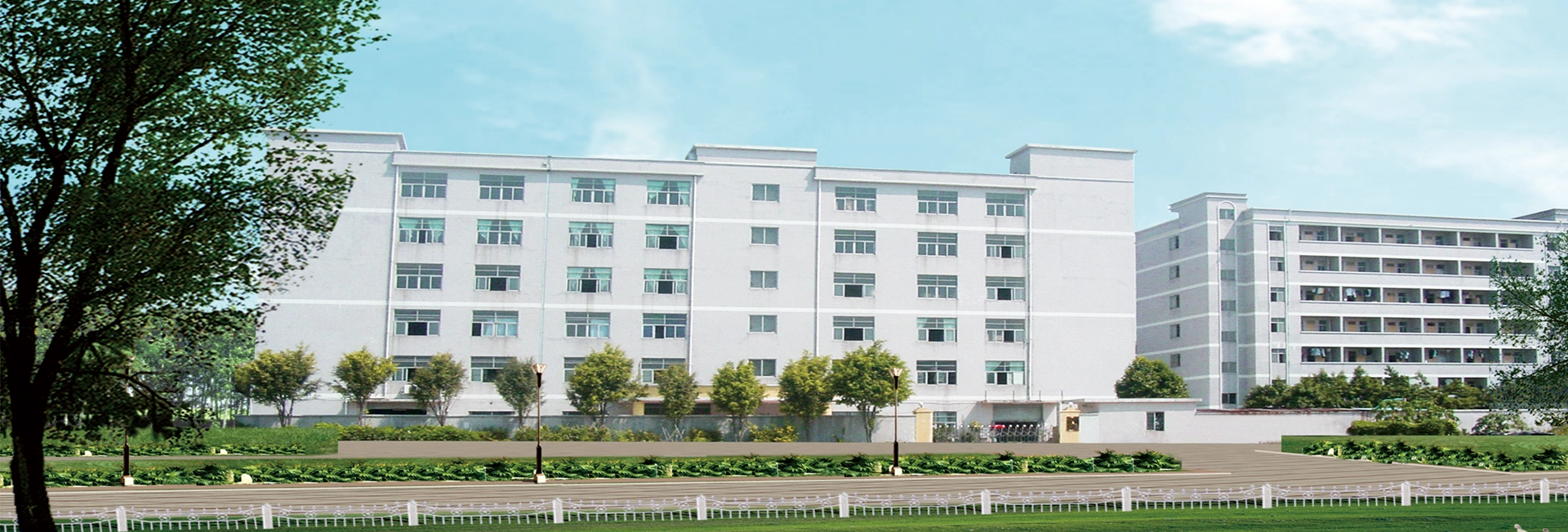
WEIER is the flagship brand of Guangzhou Wanteng Electronics Co., Ltd., a specialized source manufacturer founded in 1987. We operate a 60,000 square meter facility with six automated assembly lines in Huadu District, Guangzhou, producing over 50,000 finished TVs and 200,000 SKD/CKD sets monthly.
What optical performance metrics distinguish QLED from conventional DLED TVs?
QLED uses a Quantum Dot Film layer that reacts to blue backlight LEDs, producing pure monochromatic primary colors. This results in a wider color gamut (>95% DCI-P3 vs 72% NTSC on standard DLED), higher brightness efficiency (>400 nits), and significantly richer color volume without increasing power consumption.
How do SKD and CKD shipments optimize import logistics and customs duties?
Shipping fully built TVs (CBU) into many countries incurs tariffs upwards of 20% to 35% to protect local labor. By procuring SKD (partially assembled chassis + panel) or CKD (complete raw component kits), importers can clear customs under lower component tariff schedules (5% - 8%) while utilizing local assembly infrastructure.
What smart TV operating systems are available for OEM customization?
We supply licensed Google TV (Android TV OS) with official DRM L1 certification for global streaming platforms, LG webOS TV with Magic Remote support, and customizable Android platforms engineered for cost-sensitive markets or dedicated commercial/hospitality IPTV integration.
What is the standard Minimum Order Quantity (MOQ) and lead time for private-label orders?
Standard OEM MOQ is typically 1x40'HQ container per size (allowing 200 to 1,000 units depending on screen dimension). Sample validation units are completed within 7 to 10 days, while mass production container deliveries take 25 to 30 days following engineering specification sign-off.
High-Efficiency OEM Smart TV Models
Explore additional size options, WebOS configurations, and voice-enabled smart television platforms ready for export deployment.