Seattle Hospitality Spec
Enterprise display architectures engineered for hospitality suites, corporate boardrooms in Bellevue, and residential developments across Puget Sound.
Strategic convergence of cloud hyper-scalers, maritime logistics, and high-density hospitality across Puget Sound.
The Seattle metropolitan area—anchored by King, Pierce, and Snohomish counties—represents one of the most sophisticated enterprise computing and high-density commercial display ecosystems in North America. Home to global cloud titans, multinational retail enterprises, and a thriving luxury hospitality belt along Elliott Bay, Seattle imposes stringent requirements on smart television procurement. Corporate purchasers and institutional integrators within this corridor no longer view smart TVs as consumer video endpoints; rather, they evaluate them as cloud-connected edge terminals capable of seamless software containerization, centralized telemetry, and rigorous adherence to strict energy codes.
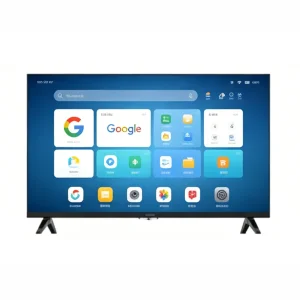
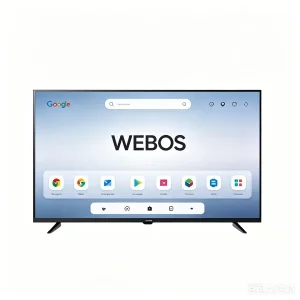
The Port of Seattle and the Northwest Seaport Alliance (NWSA) handle millions of TEUs annually, creating a direct supply chain artery linking Asian manufacturing hubs directly into regional logistics channels. In South Lake Union, Bellevue, and Redmond, enterprise commercial real estate continues to standardize on unified audio-visual platforms. Traditional generic operating systems frequently fail in these mission-critical deployments due to erratic update schedules, unvetted background telemetry, and fragile Bluetooth stack pairings. Consequently, regional system integrators increasingly demand licensed webOS Hub operating environments. Engineered on a carrier-grade Linux kernel with LG-backed ecosystem stability, webOS provides enterprise-grade memory isolation, reliable HTML5 application runtimes, and standardized IP control over local networks.
By eliminating multiple tiers of North American distributors and trading intermediaries, Seattle-based procurement teams, property developers, and hotel management groups gain direct engineering access to our Guangzhou manufacturing campus. This direct B2B OEM pipeline guarantees locked Bills of Materials (BOM), custom pre-flashed enterprise firmware, dedicated ATSC 3.0 NextGen TV hardware tuners, and fixed compliance with Washington State Clean Buildings Performance Standards (HB 1257).
Modular Linux framework, hardware-accelerated Chromium rendering engine, and secure cloud API integration.
webOS Hub executes web applications built on Enact—an ultra-performant React-based framework tailored specifically for TV platforms. In hospitality and corporate signage deployments across Seattle, HTML5 web portals run with hardware GPU acceleration, delivering 60 FPS transitions without thread blocking or memory leaks during months of continuous runtime.
Powered by Realtek and Amlogic high-efficiency 64-bit multi-core processors with dedicated ARM Mali graphics, our boards support hardware HEVC/H.265, VP9, and AV1 decoding at 4K@60Hz with HDR10 Pro and Dolby Vision processing. Dynamic frame rate matching preserves fluid sports and broadcast cinema playback without thermal throttling.
Featuring LG's patented gyroscope-driven RF Magic Remote with voice command input, webOS Hub allows guests and meeting presenters to navigate user interfaces via fluid pointing. Enterprise firmware configurations allow integrators to lock down mic arrays, bind custom hotkeys, or disable telemetry for zero-trust private networks.
A rigorous architectural comparison between webOS Hub, Android TV (AOSP), and Google TV for commercial procurement.
| Evaluation Parameter | OEM webOS Hub (LG System) | Android TV (AOSP 11/12/13) | Google TV (Commercial Cert.) |
|---|---|---|---|
| Kernel & Architecture | Custom Linux Kernel 5.4 / Enact App Runtime | Android Linux Kernel / ART VM | Android Linux Kernel with Google Mobile Services (GMS) |
| Commercial UI Lock & Boot Logo | Native BIOS Boot Partition Locking | Vendor Mainboard Patch Required | Strict GMS Restrictions; Locked UI Framework |
| Pointer / Gyro Navigation | Native Magic Remote RF Integration | Emulated Mouse Driver (Lag Prone) | D-Pad Centric; Limited Pointer Acceleration |
| Hospitality / Hotel Pro:Centric APIs | Direct Emulation & IP Management APIs | Custom APK Middleware Required | Difficult Custom Integration (Consumer Centric) |
| North American Tuner Support | ATSC 1.0 & ATSC 3.0 NextGen TV Hardware Ready | Hardware Dependent (Demands Custom Drivers) | Compliant Tuner Required via Approved Vendor |
| Memory Footprint & Leak Resiliency | Extremely Light; WebKit/Chromium Sandboxed | Moderate; Periodic Garbage Collection Janks | Heavy RAM Demands (Needs 2GB-3GB Minimum) |
| Washington Energy Code Compliance | < 0.5W Standby with Deep Sleep Wake-on-LAN | Variable by Mainboard Manufacturer | Background Sync Overhead Increases Standby Draw |
Engineered hardware and custom software profiles designed specifically for Pacific Northwest operational environments.
For cloud architecture labs, open-plan collaborative spaces, and boardrooms across South Lake Union, downtown Bellevue, and Redmond. Our webOS displays feature customized RS-232C and IP control interfaces, seamless wireless screen casting via Apple AirPlay 2 and Miracast, and secure zero-touch network registration that prevents corporate data leakage.
High-end boutique hotels and international chains in Seattle demand immersive guest room entertainment. Our webOS Hub TVs integrate customizable welcome screens, interactive room service portals, secure guest credentials wiping upon checkout, and encrypted Cast connections that allow travelers to stream personal content without entering logins on the TV.
Seattle leads the nation in modern PropTech-enabled residential towers. Our borderless QLED and LED webOS units integrate seamlessly into centralized property management apps, displaying tenant notices, package delivery alerts, and community scheduling directly via locked home dashboard tiles.
60,000 m² modern manufacturing infrastructure delivering unmatched supply reliability to the North American market.
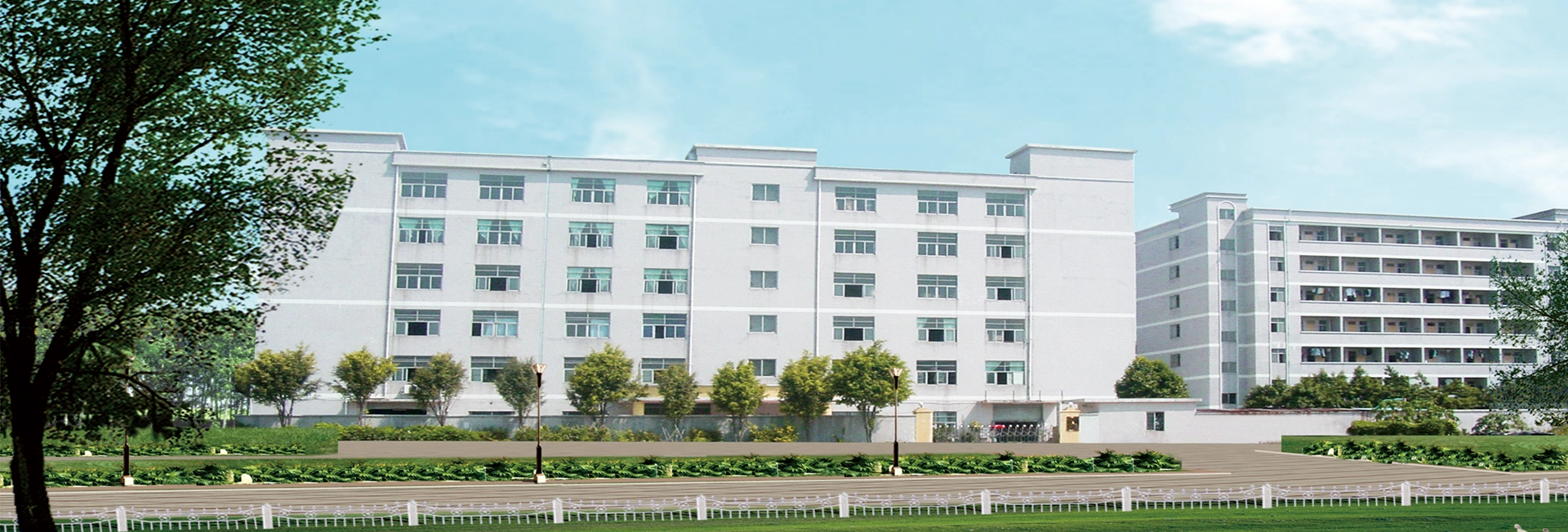
Guangzhou Wanteng Electronic Co., Ltd. (operating globally under the premier WEIER brand) represents four decades of precision television engineering and high-volume consumer display manufacturing. Operating from our expansive industrial complex in Huadu District, Guangzhou, our facility houses six automated high-speed SMT assembly lines, cleanroom optical bonding workshops, and robotic aging test lines. We produce over 50,000 completely built units (CBU) each month, complemented by an auxiliary capacity of 200,000 Semi-Knocked Down (SKD) and Completely Knocked Down (CKD) modular kits for local assembly partners worldwide.
For Seattle procurement directors and global brand managers, dealing directly with WEIER eliminates broker layers and volatile component switching. Every production batch is tethered to locked Bill of Materials (BOM) contracts. We source Grade-A Open-Cell LCD and QLED panels exclusively from tier-one fabrication giants including LG Display, BOE, and CSOT. Our optical cleanroom lines ensure zero-dead-pixel thresholds, uniform edge-lit and direct-lit LED backlighting (DLED) matrices, and calibrated color gamuts exceeding 95% DCI-P3 on quantum-dot configurations.
Every commercial display undergoes a 4- to 8-hour continuous thermal run at 40°C with automated stress testing across ATSC RF tuners, HDMI 2.1 switching ports, and Wi-Fi throughput.
Our surface-mount mainboard production operates under class-10,000 ESD standards, eliminating micro-cracks in BGA solder balls and guaranteeing 50,000+ hour MTBF for commercial 16/7 and 24/7 duty cycles.
From die-cast aluminum framing, silkscreen corporate logos, and molded packaging to pre-installed custom boot animations, custom launcher webOS apps, and remote controller engraving.
Engineered to satisfy federal safety standards, RF radiation limits, and regional green building efficiency quotas.
All export models engineered for the US Pacific Northwest undergo strict electromagnetic interference testing in anechoic chambers to guarantee FCC Part 15 Subpart B compliance. This ensures zero RF harmonic disruption with corporate Wi-Fi 6E/7 access points or hospital telemetry devices.
In accordance with Washington State Title 194-24 WAC and Energy Star 8.0, our intelligent power management units (PMU) throttle backlights based on ambient lux sensors and drive deep-sleep standby draw below 0.5 Watts, helping real estate projects secure LEED Gold and Platinum certifications.
Our power supplies and flame-retardant enclosures comply with UL 62368-1 electrical and thermal safety standards. Full HDCP 2.2 and 2.3 hardware cryptographic keys are burned into secure board eFuses, guaranteeing uninterrupted 4K streaming from Netflix, Disney+, and corporate digital rights pipelines.
Anticipating display trends, unified IoT ecosystems, and next-generation broadcast protocols for 2026 and beyond.
As the smart visual terminal landscape evolves, WEIER's engineering department maintains an active technical roadmap focused on software-hardware convergence. Commercial display installations in the Pacific Northwest represent substantial capital expenditure cycles often planned for 5- to 7-year life expectancies. Consequently, our ongoing R&D pipeline integrates next-generation protocols to insulate commercial buyers against premature obsolescence.
Upcoming firmware revisions for our webOS Hub lineup include full native support for Matter over Thread and Wi-Fi. In smart hospitality and multi-family residential applications across Greater Seattle, the television will act as an edge IoT border router, orchestrating in-room smart thermostats, motorized shades, and digital keyless access locks through the LG ThinQ dashboard without requiring redundant third-party gateway hardware.
On the hardware front, our Guangzhou production lines are scaling Mini-LED backlight arrays featuring localized full-array dimming (FALD) with over 1,000 discrete zones. This delivers OLED-level black levels, high 1,200-nit peak luminance for sunlit Pacific Northwest glass atrium architectural installations, and long operational lifespans immune to organic burn-in. Simultaneously, ATSC 3.0 NextGen TV hardware decoders are being incorporated natively onto our standard ATSC tuner boards, bringing 4K HDR over-the-air broadcasting, interactive emergency alerting, and targeted commercial programming to commercial clients in King County.
Explore our complete commercial line ranging from 32-inch high-density units to 100-inch architectural displays.
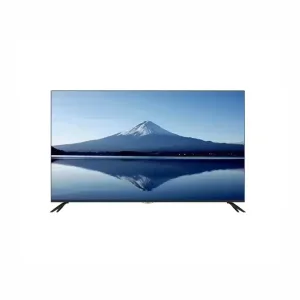
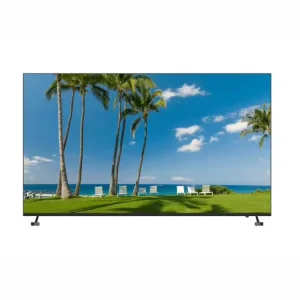
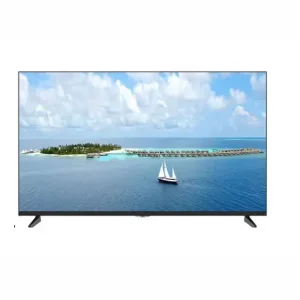
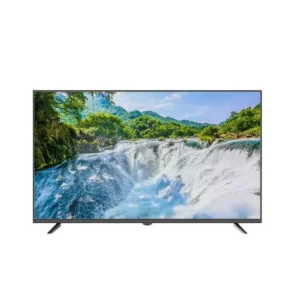

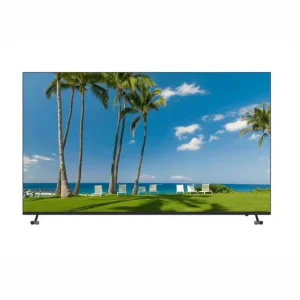
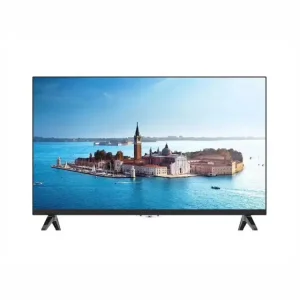
Comprehensive technical and commercial clarity directly from our factory engineering team.
Connect directly with our senior factory engineering specialists to obtain commercial pricing, request golden evaluation samples, or configure custom firmware profiles for your enterprise deployment.
Send Inquiry Now