Featured Flagship Hardware
Osaka Commercial & Premium Flagship Series
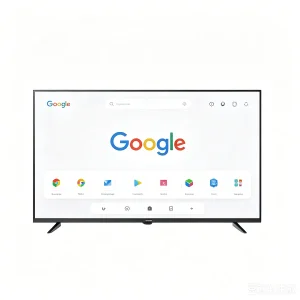
Engineered to Japanese industrial standards, featuring native Google TV integration, ultra-narrow bezels, and HDR quantum calibration.
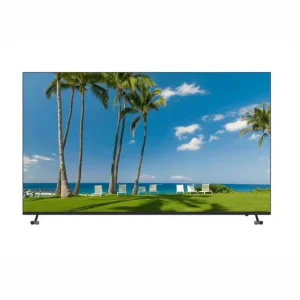
Osaka High-End Suite: High-Quality 85-inch 4K QLED Android Smart Voice TV, Flagship Large Screen
Explore Specifications
OEM 75-inch 4K QLED Android Smart Voice TV, Ultra HD Large Screen for Osaka Commercial Engineering
Explore Specifications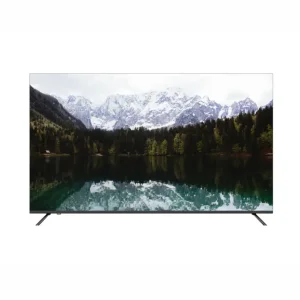
High-Quality 65-inch 4K OLED Self-Emissive Smart TV with Dolby Vision for Osaka Premium Accommodations
Explore Specifications
Industry Whitepaper
Strategic Overview: The Smart Display Landscape in Osaka & Kansai
An analytical deep dive into procurement behavior, technological shifts, and the transition toward unified Google TV ecosystems.
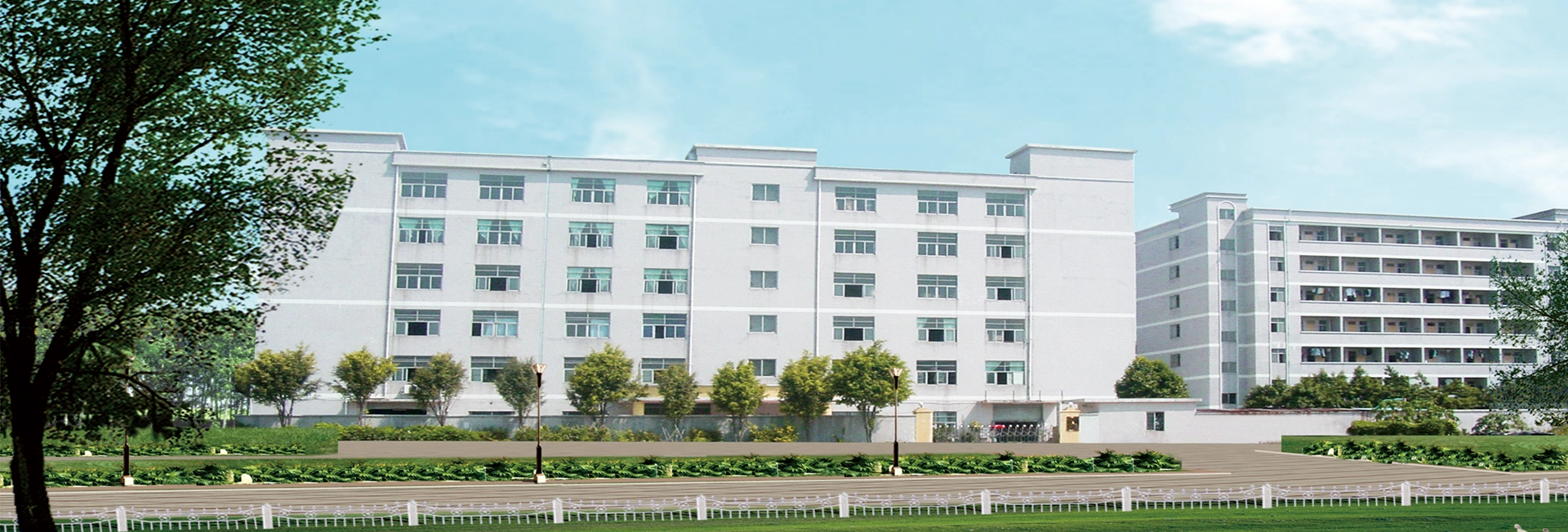
The Kansai metropolitan region, centered on Osaka, presents an extraordinarily demanding environment for consumer electronics and commercial audio-visual displays. As Japan’s historic merchant capital gears up for major international exhibitions, expansive urban redevelopment projects, and an unprecedented boom in inbound luxury tourism, the demand for enterprise-grade, certified smart display panels has seen exponential growth. Traditional Japanese proprietary display interfaces are rapidly ceding market share to globally standardized operating systems. Among these, the Google TV operating system (built on certified Android TV platforms) has emerged as the definitive benchmark for enterprise cross-platform flexibility, cloud device management, and frictionless user streaming.
For OEM and ODM buyers operating within Osaka—spanning commercial hotel operators in Umeda and Namba, system integrators outfitting high-rise enterprise headquarters along Midosuji, and regional electronics distributors—standard domestic procurement routes often involve substantial retail markup and inflexible hardware-software customization. WEIER (Guangzhou Wanteng Electronic Co., Ltd.), an established source television manufacturer operating since 1987, fills this structural gap by offering complete direct-from-factory customization tailored strictly to Japanese technical specifications (including VCCI electromagnetic compliance, PSE electrical security, Japanese digital ISDB-T tuner compliance, and customized localized UI packages).
35+ Yrs
Manufacturing Experience
60,000 m²
Integrated Production Hub
250,000+
Monthly CBU/CKD Capacity
99.8%
QC Line Pass Rate
Engineering Solutions
Tailored Macro Architecture for Osaka B2B Infrastructures
Engineered to eliminate operating friction across commercial hospitality, smart conference facilities, and digital retail spaces.
Hospitality PMS & Cast Optimization
Seamless integration with Pro:Centric and custom hotel property management systems (PMS). Multilingual Google Assistant profiles support Japanese, English, Mandarin, and Korean, allowing international tourists in Osaka easy access to personalized streaming without saving residual personal credentials.
Corporate Boardroom Ecosystems
Native Google Workspace display compatibility with encrypted Chromecast Built-in and Miracast. Features anti-glare high-haze panel surface treatments (Haze 25%) engineered specifically for brightly lit Japanese corporate office architecture across Osaka's financial hubs.
24/7 Digital Signage & Retail Durability
Commercial high-reliability motherboards built with solid-state electrolytic capacitors and auxiliary airflow thermal pathways. Certified for 16/7 or 24/7 uninterrupted operation in high-density underground shopping complexes and transportation interchanges like Umeda Station.
Deploying Smart Display Projects in Osaka?
Connect with our technical design team for custom motherboard layouts, bezel branding, or complete CBU/SKD container estimates.
Global Technology Trends
Next-Gen Google TV Technical Roadmap (2025–2028)
Anticipating hardware, OS, and edge-AI evolutions to ensure your product pipeline maintains a structural market advantage.
Phase 1: Present
Amlogic T962X3 + Google TV OS 12/14
Quad-core Cortex-A55 architecture coupled with ARM Mali-G31 GPU. Integration of AV1 hardware decoding and native Far-Field Voice mic matrices for touch-free command processing.
Phase 2: 2025 H2
Quantum Mini-LED Integration
Transitioning beyond traditional DLED backlights toward 512+ localized Mini-LED dimming zones, delivering peak brightness of 1,200 nits and cinematic contrast ratios suited for HDR10+ and Dolby Vision IQ.
Phase 3: 2026
Edge-AI PQ & Local NPU
Motherboards equipped with dedicated 2.0+ TOPS NPU (Neural Processing Unit) for real-time upscaling of legacy standard-definition Japanese broadcast content to clean 4K output.
Phase 4: 2027+
Matter & Smart Home Convergence
Google TV transforms into the core central hub for Matter-certified IoT devices, enabling integrated temperature, access control, and smart office orchestration through one unified display unit.
Commercial Catalogue
Comprehensive OEM Display Solutions for Osaka Integrators
High-yield manufacturing across LED, QLED, and webOS/Android platforms, configured for global and regional deployment.
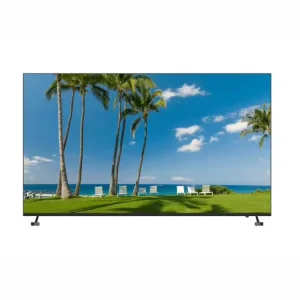
Osaka Commercial: 100-inch 4K Explosion-Proof Smart TV with Tempered Glass Screen for Hotels & KTV
View Model Details
Osaka Edition: 43-inch 4K QLED Google Smart TV, Google TV Export Network TV Factory
View Model Details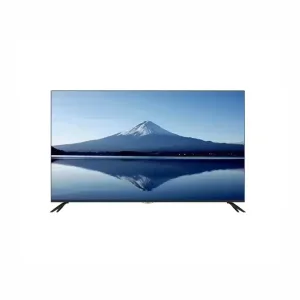
Osaka Retail Series: Wholesale Frameless 50-inch 4K Q-LED Android Smart TV, Ultra HD HDR
View Model Details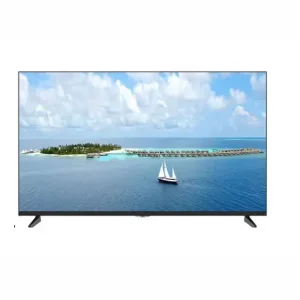
High-Quality 55-inch 4K QLED Android Smart TV with Frameless Design, Dolby Vision Osaka Selection
View Model Details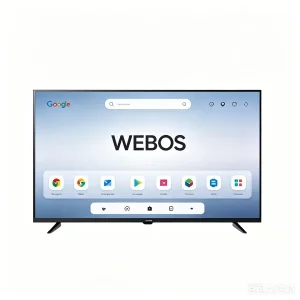
OEM 43-inch 4K UHD webOS Smart TV with AI, Source Manufacturer for Osaka Hotels & Commercial
View Model Details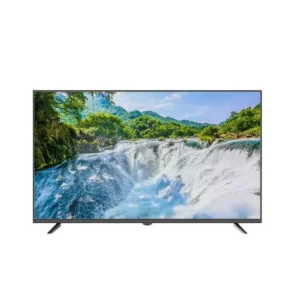
High-Quality 43-inch Borderless FHD Android Smart TV Wholesale Custom for Osaka Engineering Projects
View Model Details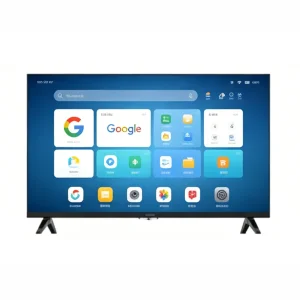
OEM 32-inch Full HD webOS Smart TV, LG System, for Osaka Compact Apartments & Hotel Bedrooms
View Model Details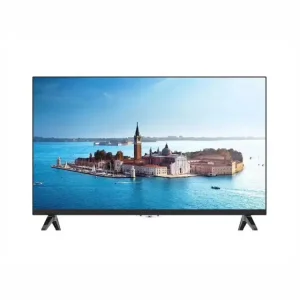
OEM Borderless 32-inch High-Definition Android Smart TV Wholesale for Osaka Supermarket Chains
View Model Details
Technical & Procurement FAQ
Frequently Answered Questions for Osaka B2B Importers
Detailed answers regarding Japanese regulatory compliance, panel grading, and custom software injection.
Do WEIER Google System TVs meet technical compliance for the Japanese market? +
Yes. All OEM smart televisions engineered for import into Osaka and broader Japan can be configured with certified PSE (Product Safety of Electrical Appliance & Material) components, VCCI Class B electromagnetic compatibility standards, and full Radio Act (TELEC) certification for embedded dual-band Wi-Fi and Bluetooth wireless modules. Furthermore, mainboards can be specified with certified ISDB-T digital ground tuners to receive local Japanese broadcast standards alongside Google TV streaming applications.
Can our company customize the boot logo, pre-installed APKs, and launcher UI for commercial hotel projects in Osaka? +
Absolutely. As an authentic source manufacturer, our software engineering department handles customized Android firmware builds. We can inject custom boot animations, brand wall art, lock specific system settings for hospitality mode, integrate PMS API protocols, and pre-configure Japanese OTT streaming services (such as TVer, U-NEXT, and AbemaTV) straight from our clean-room assembly lines.
What panel grades are used, and how does WEIER prevent dead pixels? +
WEIER collaborates directly with premier panel fabricators (including BOE, CSOT, and Innolux). For export to quality-sensitive territories like Osaka, we mandate Open Cell Grade A+ panels conforming to ISO 13406-2 Class I zero-defect thresholds. Every panel passes through three distinct automatic optical inspection (AOI) stages, followed by an intensive 4-hour dynamic high-temperature aging test before final structural housing closure.
What is the minimum order quantity (MOQ) and production lead time for sea shipment to Osaka Port? +
For fully custom OEM orders (branded silk-screen logos, branded cartons, custom remote controllers), our standard MOQ starts at 500 units per size, with flexible mixed-model 40ft HQ container loading plans available. Mass production lead time is typically 25 to 30 days post-sample signoff. Ocean freight shipping transit from Guangzhou Port/Shenzhen Port directly to the Port of Osaka typically requires only 4 to 6 days, offering rapid turnaround for supply replenishment.
Do you offer SKD or CKD shipping options for local assembly in Japan? +
Yes. For clients possessing local assembly facilities or specialized customs reduction schemes in Japan, WEIER maintains a monthly CKD (Completely Knocked Down) and SKD (Semi-Knocked Down) packaging capacity exceeding 200,000 units. We provide complete technical assembly blueprints, screw torque documentation, wiring harness schematics, and clean-room assembly coaching.