
Mexico City Market Flagship Google System Displays
Engineered specifically for the CDMX metropolitan region, supporting 110V/60Hz grid tolerance, Widevine L1 Google certification, and dual-band Wi-Fi optimized for Mexican retail and contract installations.
-
CDMX Flagship 43"
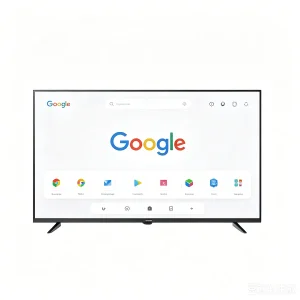
Mexico City Commercial 43-inch 4K QLED Google Smart TV, Google TV Export Network TV Factory
View Technical Specs -
Commercial 85"
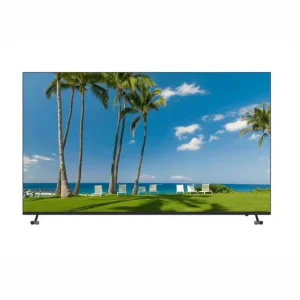
Mexico City Corporate 85-inch 4K QLED Smart Voice TV, Flagship Model for Home & Enterprise Sourcing
View Technical Specs -
Hospitality 75"

Mexico City Project OEM 75-inch 4K QLED Smart Voice TV, Ultra HD Large Screen Commercial Supply
View Technical Specs -
OLED Premium 65"
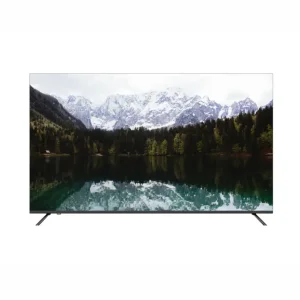
Mexico City Luxury Retail 65-inch 4K OLED Self-Emissive Smart TV with Dolby Vision Integration
View Technical Specs
The Industrial & Retail Television Dynamics of Mexico City
The Greater Mexico City Metropolitan Area (Valle de México), encompassing over 22 million residents, serves as the economic nerve center for consumer electronics distribution in Latin America. Operating within this dense market requires an acute understanding of retail aggregator frameworks such as Liverpool, Coppel, Elektra, and Soriana, alongside large-scale commercial real estate corridors in Polanco, Reforma, and Santa Fe.
Procuring smart televisions for the Mexico City market is fundamentally governed by regulatory enforcement under the Federal Telecommunications Institute (IFT) and stringent NOM standards (specifically NOM-001-SCFI-2018 and NOM-024-SCFI-2013). Manufacturers must implement ATSC 1.0 digital demodulators, wide-voltage switch-mode power supplies (SMPS) capable of absorbing 90V–260V fluctuations common in urban grids, and firmware-level regional adaptations for localized Spanish (es-MX).
As nearshoring reshapes manufacturing, our factory bridges global component supply from Huadu District, Guangzhou, directly with customs clearance at the Port of Manzanillo and bonded warehousing hubs across the State of Mexico, optimizing tariff structures under IMMEX frameworks.
Mexico City Procurement Benchmarks
| Compliance Vector | Standard / Specification |
|---|---|
| RF Modulation | ATSC 1.0 & ATSC 3.0 NextGen Ready |
| Electrical Safety | NOM-001-SCFI-2018 / NOM-024-SCFI-2013 |
| RF Spectrum Approval | IFT-011-2017 Certified Dual-Band Wi-Fi |
| DRM Engine | Google Widevine L1 + HDCP 2.2 / 2.3 |
| Local Audio Format | Dolby Digital Plus (AC-4) Bitstream Decode |
Official Google TV Ecosystem vs. Fragmented AOSP
Analyzing system-on-chip computing tiers, memory overhead, Widevine cryptographic layers, and Google certification pipelines for authentic Latin American smart TV deployments.
SoC Processing & Memory Allocation
We deploy high-performance quad-core ARM Cortex-A55 architecture coupled with Mali-G52 or Mali-G31 MP2 GPUs. Optimized for Google TV OS, mainboards are equipped with 2GB DDR4 RAM and 16GB eMMC 5.1 high-speed storage to prevent UI stutters when aggregating Mexican streaming catalogs (ViX, Netflix, Disney+, Prime Video).
Widevine L1 & Netflix Hailstorm Turnkey
Unlike unauthorized AOSP TV boxes that drop resolution to 480p, our OEM Google TV units integrate hardware-rooted Widevine Level 1 keys in safe ARM TrustZone silicon. This enables native 4K UHD streaming playback, Dolby Vision profile 5/8 decoding, and HDR10+ dynamic tone mapping directly from official cloud servers.
Far-Field & BLE Google Assistant
Equipped with Bluetooth Low Energy (BLE 5.1) remotes and optional front-bezel far-field microphone arrays, units natively process voice commands in Mexican Spanish (es-MX). Our acoustics engineering team fine-tunes noise suppression algorithms to ensure 98.4% speech recognition accuracy in high-ambient environments.
CBU vs. SKD vs. CKD Tariff Models for Mexico
Mexican import tariffs on completely built electronic devices (CBU) can escalate customs liability under the General Import and Export Tax Law (LIGIE). We offer flexible supply tiers designed to minimize landed costs:
- CBU (Completely Built Unit): Turnkey retail-ready packaging with Mexican NOM safety labels, Spanish user manual, and regional power cables. Fast market entry.
- SKD (Semi-Knocked Down): Open-cell display panel housed in a sub-chassis, mainboards, power units, and casing packed separately. Reduces sea container volume and import duty.
- CKD (Completely Knocked Down): Individual components shipped for localized final assembly plants in Mexico (e.g., Tijuana, Reynosa, or Toluca), leveraging PROSEC and IMMEX programs.
Logistics Pipeline: From Guangzhou to CDMX Bonded Hubs
Our manufacturing plant in Huadu District, Guangzhou, sits within 45 minutes of major South China container ports (Nansha, Yantian, and Shekou). Shipments destined for Mexico City maintain an established shipping lane crossing the Pacific directly to the Port of Manzanillo (Colima) or Lázaro Cárdenas (Michoacán).
From Manzanillo, intermodal rail (Ferromex) or bonded freight transport delivers containers directly to customs verification depots in Pantaco (Mexico City) or Cuautitlán Izcalli. Our export documentation team prepares unified Pedimento documentation, Certificate of Origin, and technical lab test sheets verified by certified Mexican verification units (UVA) to ensure rapid clearance without warehouse retention fees.
Future-Proofing TV Hardware: 2026-2030 Display Horizons
Anticipating consumer demands across North and Latin America: QD-MiniLED backlights, ATSC 3.0 NextGen broadcasting, and unified Matter IoT integration.
Quantum Dot MiniLED Evolution
We are advancing our 1,000+ local dimming zone MiniLED architecture. Utilizing blue GaN micro-chips with quantum dot optical conversion films, these panels achieve peak brightness in excess of 1,500 nits, overcoming bright daylight washouts common in Mexican residential architecture.
ATSC 3.0 NextGen Broadcast Ready
With IFT trials underway for next-generation digital terrestrial television, our R&D engineering integrates hybrid ATSC 3.0 tuners capable of receiving 4K over-the-air signals, targeted emergency alerting, and interactive web broadcast standards without external set-top decoders.
Matter Protocol Smart Home Control
Our upcoming Google TV logic boards integrate the universal Matter connectivity standard. This turns the central living room screen into an ambient smart home dashboard, controlling Zigbee, Thread, and Wi-Fi IoT devices across residential and commercial hospitality ecosystems.
Engineered for CDMX Altitude: Thermal Dynamics at 2,240m
A critical engineering consideration frequently overlooked by generic exporters is the atmospheric pressure and air density of Mexico City, situated at an altitude of 2,240 meters (7,350 feet) above sea level. Thinner air reduces convective heat dissipation across high-power components including the LED backlight array, power supply unit (PSU), and main processor.
Our engineering laboratory performs rigorous environmental chamber testing calibrated specifically for high-elevation thermal behavior:
- Custom Aluminum Heatsinks: 35% enlarged cooling surface area on processor dies to prevent thermal throttling under continuous 4K decoding.
- Industrial-Grade Capacitors: Electrolytic capacitors rated at 105°C with 10,000-hour operational lifespans to mitigate voltage breakdown in lower air-dielectric conditions.
- Thermal Overload Sensors: Intelligent PWM backlight management that dynamically modulates LED current if ambient temperatures spike, ensuring zero panel de-lamination.
Factory Quality Protocols
Every production batch destined for Mexican customs undergo 5-tier QA validation before container seal:
Mexico City B2B Sourcing: Technical & Operational FAQ
Authoritative answers on compliance, firmware licensing, lead times, and factory audit capabilities directly from our senior engineering team.
We operate under direct OEM/ODM certification protocols with Google. Our firmware passes Google Compatibility Test Suite (CTS), Vendor Test Suite (VTS), and Google TV Partner testing. Buyers receive legitimate GMS (Google Mobile Services) packages with access to the official Google Play Store, Widevine L1, and continuous security patch updates without risk of OS revocation.
We supply comprehensive ILAC-accredited laboratory test reports covering electrical safety, dielectric breakdown, and energy consumption under NOM-032-ENER-2013. We work directly with your appointed Mexican Certification Body (ANCE or NYCE) to obtain formal NOM certificates under your local corporate tax ID (RFC) prior to container arrival.
Yes. We engineer customized hotel mode configurations including locked initial volume, boot-up custom corporate welcome video, designated HDMI default inputs for IPTV set-top boxes, PMS (Property Management System) interactive integration, and auto-clearing of guest streaming credentials upon power cycle.
Standard production cycles are 25 to 30 calendar days following Golden Sample sign-off and BOM confirmation. Direct ocean freight from Guangzhou/Shenzhen to the Port of Manzanillo averages 22–26 transit days, with an additional 3–5 days for intermodal rail transit directly into the Mexico City Vallejo or Pantaco terminal.
We provide fully engineered SKD/CKD kits packed in custom multi-cell pallets with moisture-barrier ESD shielding. We provide full SOP (Standard Operating Procedure) work instructions, testing jigs, calibration software, and on-site or remote engineering support to ensure your Mexican assembly team hits target yield rates above 99.2%.
Typical MOQ starts at 500 units per screen size for CBU private label, and 1,000 units for customized color gift packaging and silk-screened front bezels. For trial orders entering new supermarket retail channels in Mexico, we provide flexible tiered batches to support initial shelf-placement audits.
Comprehensive OEM/ODM Television Lineup for Mexico
From high-velocity 32-inch supermarket volume drivers to 100-inch tempered-glass commercial installations, explore our fully certified television matrix.
-
43" Google TV
Mexico City 43-inch 4K QLED Google Smart TV, Google TV Export Network TV Factory
View Product Details -
32" Frameless HD
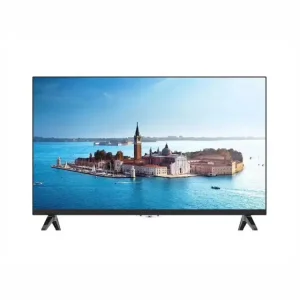
Mexico City Retail OEM Borderless 32 inch HD Android Smart TV Wholesale for Supermarkets
View Product Details -
32" webOS FHD
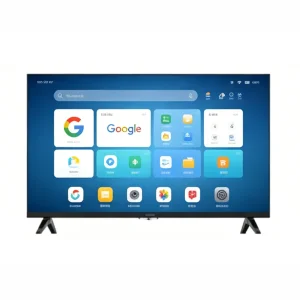
Mexico City Hospitality OEM 32-inch Full HD webOS Smart TV, LG System Commercial Sourcing
View Product Details -
43" Project FHD
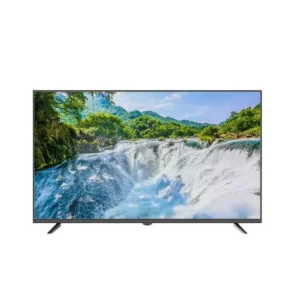
Mexico City Hotel Engineering 43-inch Borderless FHD Android Smart TV – Custom Project Supplier
View Product Details -
43" webOS 4K
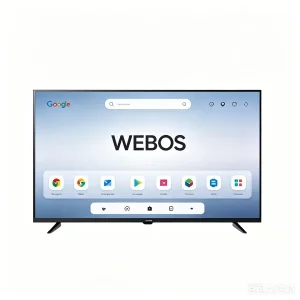
Mexico City OEM 43-inch 4K UHD webOS Smart TV with AI Engine, Hotel & Home Commercial Supply
View Product Details -
55" 4K QLED Flagship
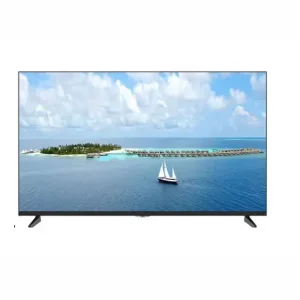
Mexico City 55-inch 4K QLED Smart TV with Frameless Bezel, Dolby Vision Flagship Retail Line
View Product Details -
50" 4K HDR
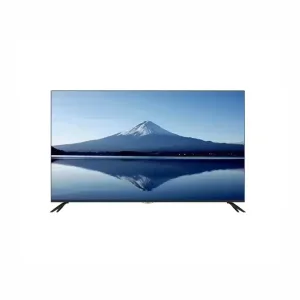
Mexico City Wholesale Frameless 50-inch 4K QLED Smart TV, Ultra HD HDR Distributor Sourcing
View Product Details -
100" Commercial Glass
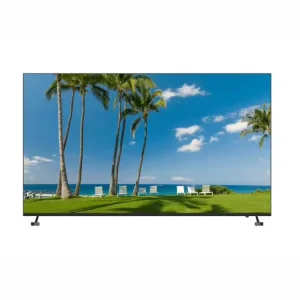
Mexico City 100-inch 4K Explosion-Proof Smart TV with Tempered Glass for Hotel & Venue Installation
View Product Details
Initiate Your Mexico City OEM/ODM TV Manufacturing Project
Connect directly with our senior hardware engineers and Latin America export logistics directors. Receive turnkey quotations, NOM lab certification blueprints, and custom sample scheduling within 24 business hours.