Featured High-Performance Display Lineup
Explore our core flagship QLED, OLED, and customized commercial display solutions optimized for global wholesale, export compliance, and private-label integration.

Global Supply Chain & Manufacturing Scalability
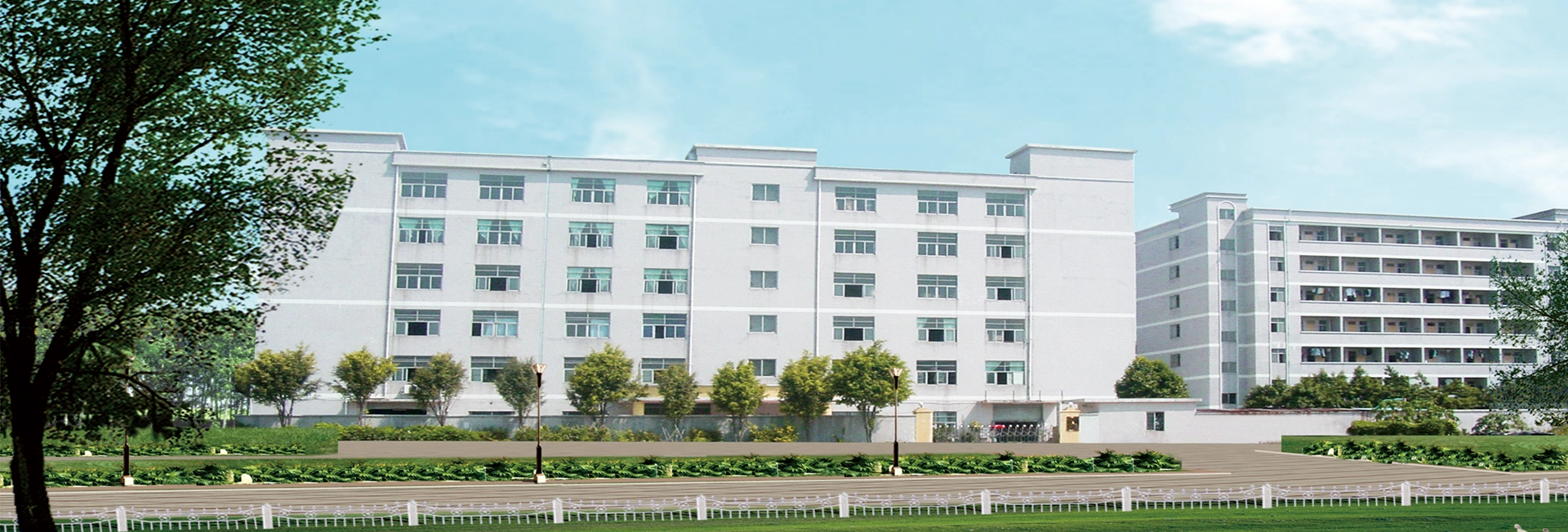
Operational prowess derived from over three decades of television fabrication in Guangzhou, delivering high reliability to volume importers and assemblers worldwide.
The Quantum Dot Paradigm: Macro Industry Solutions
A rigorous examination of optical conversion layers, photonic engineering, and how QLED matrices solve commercial display degradation compared to legacy architectures.
Precision Spectral Purity
Quantum Dot Enhancement Film (QDEF) integrates cadmium-free semiconductor nanocrystals measuring between 2 to 10 nanometers. When illuminated by high-intensity blue GaN LEDs, these inorganic clusters emit highly saturated green and red wavelengths.
This achieves up to 98% DCI-P3 color gamut coverage and significantly wider color volume than standard White-LED LCDs, rendering color shifts minimal even under extreme viewing vectors.
Thermal & Burn-In Immunity
In high-usage settings like hotel lobbies, control rooms, and sports viewing venues, organic emissive substrates (OLED) face severe pixel wear and irreversible burn-in when running static logos for 16-24 continuous hours.
Our QLED TV architectures utilize solid-state inorganic crystalline films backed by robust aluminum heat-dissipation chassis, sustaining over 1,000 nits peak luminance across tens of thousands of runtime hours without luminance deterioration.
Cost Efficiency vs. Premium OLED
Tier-1 consumer brands and commercial integrators require premium optical performance without untenable BOM (Bill of Materials) multipliers. Quantum Dot systems bridge this commercial divide.
By leveraging established Gen 8.5 and Gen 10.5 TFT LCD substrate glass production lines, QLED displays achieve flagship-tier contrast and color depth at a 30% to 45% production cost delta compared to large-format OLED panels.
Localized Regulatory Compliance & Engineering Support
Ensuring seamless market entry through destination-specific digital tuner compliance, firmware tailoring, and strict international standard certifications.
North America (ATSC 3.0)
FCC certified chassis engineered with integrated ATSC 1.0/3.0 NextGen TV broadcast tuners. ETL safety listings, California Energy Commission (CEC) standby power compliance, and customized UL-compliant power modules.
Europe (CE / DVB-T2)
CE-RED compliant RF modules, RoHS/WEEE environmentally safe packaging, ErP Tier 2 energy efficiency certifications, and multi-language DVB-T2/C/S2 digital demodulators tuned for EU broadcasting standards.
Latin America (ISDB-T)
Equipped with native ISDB-T Ginga middleware tuners suited for Brazil, Argentina, Colombia, and regional telecom ecosystems. Surge-protected power boards rated for fluctuating electrical infrastructures.
Africa & Asia (SKD/CKD)
Providing custom CKD/SKD assembly kits with standardized test jigs, modular tooling layouts, and regional factory technician training to reduce import tariffs under domestic assembly incentive policies.
Localized Commercial & Enterprise Application Scenarios
Strategic hardware-software combinations designed for hospitality, mission-critical monitoring, entertainment franchises, and smart retail ecosystems.
Smart Hospitality & Hotel Ecosystems
Modern luxury and business hotels require centralized screen networks that double as digital concierge terminals. Our QLED units support customized webOS and Android-based hospitality PMS protocols (such as Pro:Centric and IPTV middleware).
- Volume-limiting controls and guest room-specific boot logos
- Auto-clear user credential engines on checkout
- Anti-theft enclosure design and integrated RF pass-throughs
Commercial Arenas, KTVs & Public Venues
High foot-traffic leisure sectors present severe physical hazards to consumer screens. For karaoke lounges, commercial sports bars, and transport hubs, standard acrylic TV panels crack or scratch easily under accidental impacts.
- Optically bonded 4mm to 7mm explosion-proof tempered glass surfaces
- Anti-glare, anti-fingerprint hydrophobic top coatings
- Reinforced cold-rolled steel enclosures withstand vibration
Digital Signage & High-Luminance Retail
Retail displays face ambient illumination washout from high-lumen commercial LED spotlights. Standard 250-nit screens appear dull and desaturated, diminishing advertising recall.
- Engineered Direct-LED (DLED) backlights delivering 500 to 1,000+ nits
- Precision Quantum Dot wavelength filtering sustains brand identity color accuracy
- Integrated SoC platforms capable of uninterrupted 18/7 digital looping
Display Technology Roadmap & Strategic Outlook
A multi-year engineering trajectory charting the transition from optical films to self-emissive electroluminescent quantum nano-structures.
Mini-LED + QDEF Hybrids
Pairing microscopic Mini-LED backlight arrays (over 1,000 local dimming zones) with Quantum Dot film to deliver OLED-matching deep black levels alongside extreme HDR highlights exceeding 1,500 nits.
Cadmium-Free Perovskite QD
Migrating from InP (Indium Phosphide) substrates to non-toxic Perovskite quantum dots, achieving a narrower full-width at half-maximum (FWHM) spectral emission line for 100% Rec.2020 color replication.
Electroluminescent QD-LED (AMQLED)
Eliminating backlight panels entirely. True self-emissive quantum dots excited directly by electrical currents, combining the infinite contrast of OLED with inorganic longevity and zero burn-in risk.
AI Optical Neural Engines
Integrating localized neural network coprocessors directly into the display scalar boards for real-time edge frame generation, scene-by-scene dynamic tone mapping, and automated ambient color balance.
Direct Sourcing Catalog · Commercial Display Options
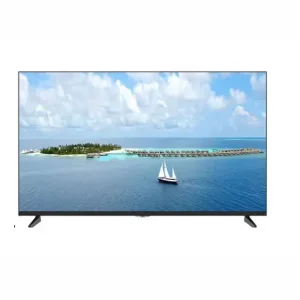
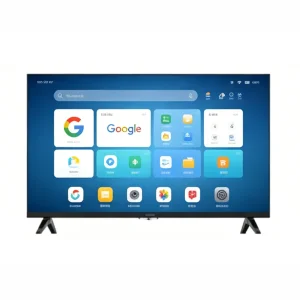
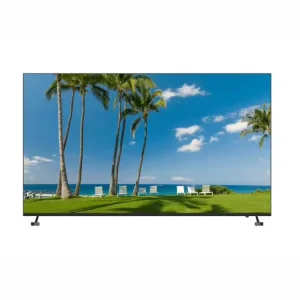
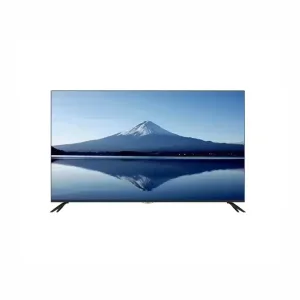
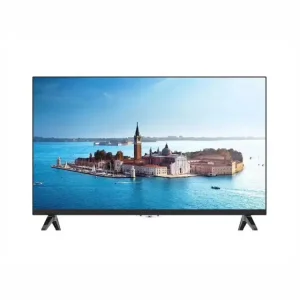
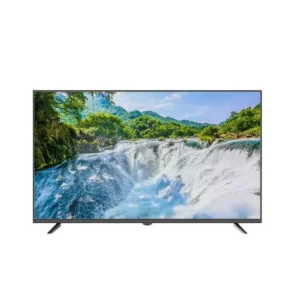
Browse additional standardized OEM configurations available for direct container load orders, SKD packaging, or bespoke institutional customization.
Frequently Asked Technical & Sourcing Questions
Essential operational insights covering factory audits, OEM lead times, panel grading, and custom operating system certifications.
What is the minimum order quantity (MOQ) for custom OEM/ODM Quantum Dot TVs?
For custom private-label CBU orders featuring client silk-screen branding, bespoke packaging, and tailor-made firmware boot screens, our standard MOQ is typically 500 units per screen size. However, for specialized commercial projects (e.g., 85-inch or 100-inch hotel models) or initial trial orders, smaller batch allocations can be evaluated based on panel availability.
How do you verify panel authenticity and grade in mass manufacturing?
We source Open Cell substrates directly from verified global panel leaders including BOE, CSOT, LG Display, and HKC. Every incoming lot undergoes automated optical inspection (AOI) to ensure A-grade quality (zero bright pixel defects, sub-pixel uniformity, and strict color consistency) prior to cleanroom backplane lamination.
Can you supply certified Google TV and official webOS platforms?
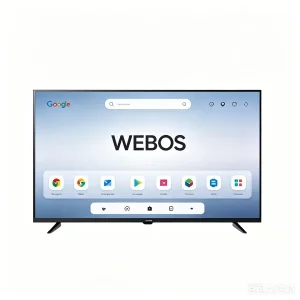
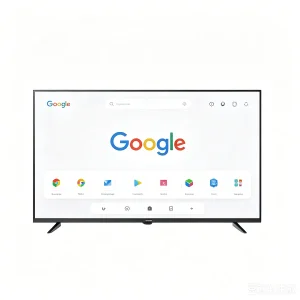
Yes. As an authorized engineering partner, we produce fully licensed Google TV (including Play Store, Netflix, YouTube 4K, and Widevine L1 DRM integration) as well as LG webOS Hub systems. All licensed solutions receive official over-the-air (OTA) software patch support, eliminating regional app store lockouts.
What are the freight cost and customs duty benefits of SKD and CKD kits?
SKD (Semi-Knocked Down) and CKD (Completely Knocked Down) kits reduce maritime freight volume by up to 60% per container compared to bulky pre-assembled TV boxes. Moreover, countries in South America, North Africa, and Southeast Asia levy substantially lower tariff rates on raw electronic components versus completely built consumer electronics.
What quality testing protocols occur prior to container seal?
Every single TV completes an active 4-hour high-temperature dynamic burn-in test, followed by high-voltage insulation tests, drop-impact drop tests for master export cartons, and drop-voltage reboot cycles. Independent third-party inspection agencies (SGS, TÜV, Intertek) are routinely hosted in our Guangzhou facility for final pre-shipment sign-offs.
How does Quantum Dot compare to OLED in long-term commercial reliability?
While OLED provides native pixel-level dimming, its organic light-emitting polymers degrade faster when driven at maximum brightness, posing burn-in risks on fixed interfaces. In contrast, inorganic Quantum Dot crystals deliver higher sustained peak luminance (1000+ nits) without degradation, making QLED the superior choice for high-ambient retail, hospitality, and commercial signages.