Featured Sourcing Catalog
Engineered Display Solutions Ready for Global Supply
Explore tier-1 open-cell panel integration, robust motherboards, and fully licensed smart platforms engineered for competitive wholesale procurement.
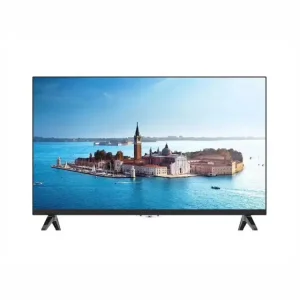
OEM Borderless 32 inch high-definition Android smart TV
View Product Specs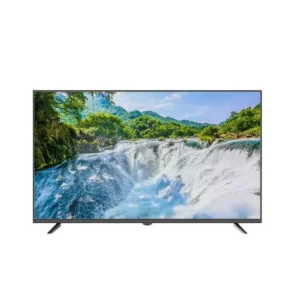
High-Quality 43-inch Borderless FHD Android Smart TV
View Product Specs
OEM 75-inch 4K QLED Android Smart Voice TV
View Product Specs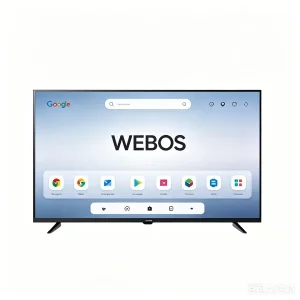
OEM 43-inch 4K UHD webOS Smart TV with AI
View Product Specs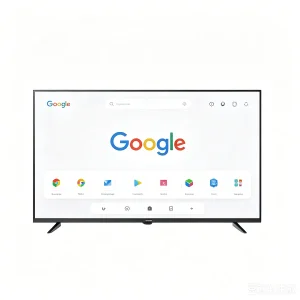
High-Quality 43-inch 4K QLED Google Smart TV
View Product Specs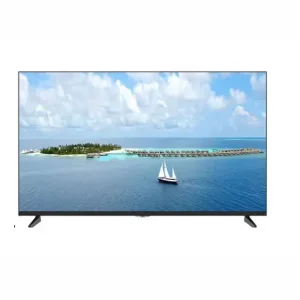
High-Quality 55-inch 4K QLED Android Smart TV
View Product Specs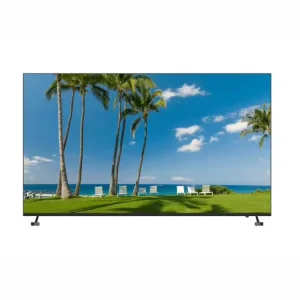
High-Quality 100-inch 4K Explosion-proof Smart TV
View Product Specs
Strategic Industrial Report
Global Macro Landscape: The Evolution of Panel on TV Manufacturing
An authoritative analysis of glass fab generation dynamics, supply chain consolidation, open-cell architectures, and shifting procurement paradigms across international borders.
Gen 8.5 & Gen 10.5 Substrate Economics
The global television industry has transitioned permanently toward large-generation liquid crystal substrate fabrication. High-generation lines (Gen 8.5, Gen 8.6, and Gen 10.5) optimize the mother-glass cut ratio, reducing cut-loss to under 3.8% for 43-inch, 65-inch, 75-inch, and 85-inch cuts, delivering unbeatable baseline cost efficiencies.
Open-Cell Trade vs. CBU Assembly
International tariff barriers have fundamentally restructured how Panel on TV products are shipped. While mature markets import Completely Built Up (CBU) units, developing markets heavily rely on semi-knocked-down (SKD) and completely-knocked-down (CKD) modules to evade protective import tariffs.
Platform Licensing & Ecosystem Compliance
A hardware display is no longer sufficient; the software stack defines market accessibility. Global smart TV deployment demands formal licensing alliances with certified providers—Google TV (with Android TV OS), LG webOS Hub, alongside international electromagnetic and safety certifications (CE, FCC, RoHS).
In modern industrial electronics, the term "Panel on TV" refers not merely to an assembled home appliance, but to the precision convergence of ultra-pure optoelectronic glass modules, Chip-On-Film (COF) bonding, precision light-guide assemblies, and software-delineated mainboard architectures. As flat-panel displays have consolidated into larger screen diagonals (reaching standard formats up to 75, 85, and 100 inches), procurement officers require transparent insight into raw glass grading (Grade A+ with zero bright-dot tolerance), polarizers, quantum-dot enhancement films (QEF), and heat dissipation chassis.
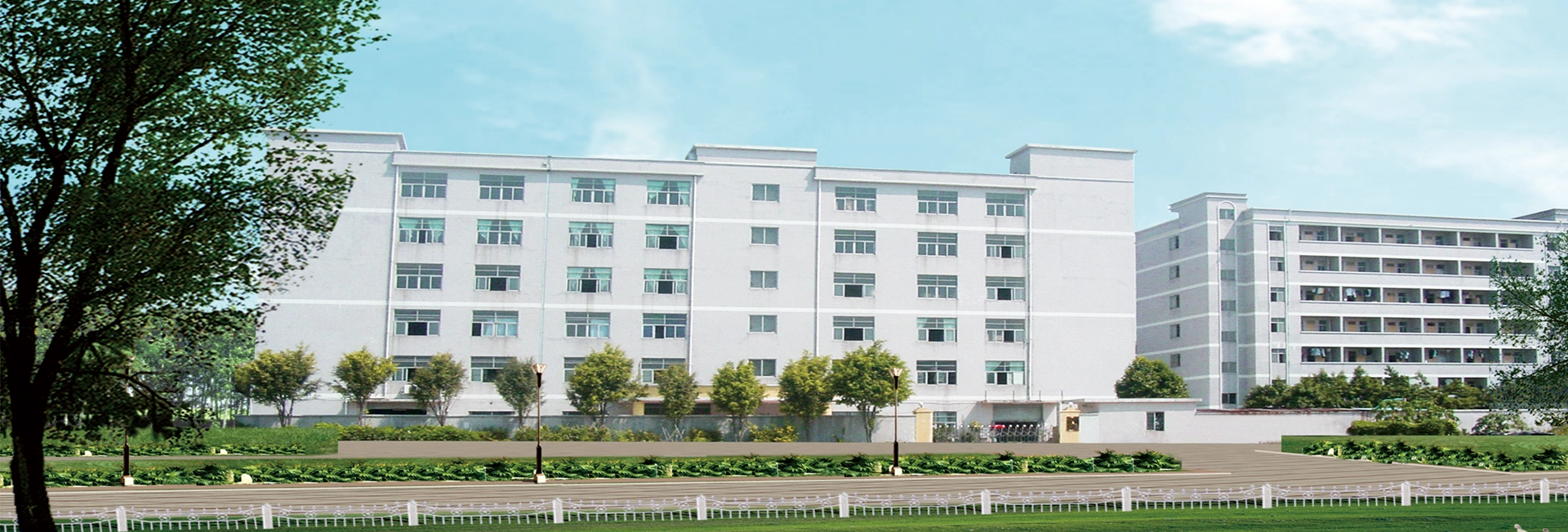
Guangzhou Wanteng (WEIER) Electronic Co., Ltd., operating from its 60,000 m² facility in Huadu District, Guangzhou, has stood as an engineering source node in this sector since 1987. With six automated lines and an active production ecosystem, WEIER provides the empirical bridge between raw upstream panel fabricators (such as BOE, CSOT, and HKC) and overseas brand holders demanding predictable mechanical tolerances and optical excellence.
Manufacturing Superiority
The Guangdong Supply Chain Advantage: Speed, Scale & Precision
Why the Pearl River Delta remains the global epicentre for high-yield television production and rapid customized turnaround.
Hyper-Localized BOM Clusters
Within a 50km radius of our Huadu factory, every core component—from injection-molded back cabinets, optical diffusion sheets, and LED backlight bars to SMT surface-mount motherboard fabs—is instantly procured, reducing lead times to zero inventory latency.
Rigorous Multi-Stage QA
Quality assurance is embedded at each automation touchpoint: Class 100 clean-room open-cell bonding, high-temperature dynamic burn-in testing chambers, drop-impact structural checks, and computerized colorimeter white-balance balancing.
Engineered CKD/SKD Tooling
We supply turnkey kit solutions designed specifically for regional assembly plants. Our custom foam-block packing, anti-static trays, pre-flashed memory ICs, and serialized harness connectors slash local line reject rates below 0.3%.
Export Port Connectivity
Situated minutes from major international deep-water logistics terminals (Nansha, Yantian, and Hong Kong ports), containers move from factory loading docks into maritime transit lines within 24 hours of final inspection sign-off.
Real-World Deployment
Tailored Engineering Across Diverse Commercial Verticals
Different environments impose radically unique thermal, optical, and operational demands. We configure display panels to conquer distinct functional criteria.
Hospitality & Guest Experience
Engineered with custom hotel-mode firmware locks, volume-limiting features, welcome-screen IP integration, and RJ45/IP-tuner interfaces. Displays seamlessly pair with central hospitality servers while ensuring guests enjoy intuitive, frameless aesthetic elegance in sizes from 32-inch to 55-inch.
High-Impact Commercial & KTV Venues
Venues characterized by high public traffic require specialized physical defense. Our 100-inch and 85-inch commercial monitors feature 4mm explosion-proof tempered glass surfaces, enhanced high-efficiency internal heatsinks, and anti-glare coatings, operating reliably for up to 18 hours daily.
Modern Consumer Home Theater
For mainstream retail and export programs, high dynamic contrast is mandatory. Utilizing Quantum Dot (QLED) nanoparticle filters and self-emissive OLED panels, our home consumer models deliver 95% DCI-P3 color reproduction, Dolby Vision HDR support, and responsive low-latency HDMI 2.1 game modes.
Forward Engineering
Emerging Global Industry Trends in Panel-on-TV Technology
Technological innovation continues to redefine display manufacturing, focusing heavily on solid-state optical enhancements and AI-assisted processing.
Mini-LED & Local Dimming Expansion
Mini-LED backlights boasting hundreds or thousands of independent full-array local dimming (FALD) zones are bridging the price-performance gap between conventional direct-LED (DLED) and expensive OLED panels, offering exceptional black levels at high peak luminance.
AI-Enhanced Picture Processing (NPU)
Next-generation mainboard SoCs incorporate dedicated Neural Processing Units (NPUs). These onboard processors analyze frame streams in real-time to perform intelligent super-resolution upscaling, scene-based noise reduction, and voice-command speech isolation.
Ecological Sustainability & Energy Codes
Stricter European ErP and North American Energy Star tiers require innovative low-standby SMPS (Switched-Mode Power Supply) modules, recyclable chassis alloys, halogen-free internal ribbon wiring, and ultra-efficient light redirection optics.
Procurement Engineering
The B2B Sourcing Playbook: Essential Technical Criteria
A systematic evaluation rubric for procurement managers to mitigate commercial risks, certify component longevity, and avoid margin erosion.
Optical & Glass Specifications
- Glass Source Verification: Insist on verifiable Grade A+ open-cell panels directly from tier-1 foundries (BOE, CSOT, AUO, HKC) to ensure pristine sub-pixel health.
- Luminance Metrics: Match nits rating strictly to environment: 200–250 cd/m² for economy residential; 350–500 cd/m² for premium HDR living spaces; 700+ cd/m² for commercial display boards.
- Backlight Geometry: Choose between edge-lit configurations (sleek ultra-thin profiles) versus Direct-LED / DLED arrays (superior backlight uniformity, enhanced longevity, and easier field maintenance).
Motherboard & Regional Compliance
- Digital Tuner Architectures: Verify hardware tuner demodulators match target territories: DVB-T2/S2/C (Europe, Africa, Middle East), ATSC 3.0 (North America), or ISDB-T (Latin America).
- Memory Allocation: Demand at least 1.5GB RAM + 8GB eMMC for standard Android platforms, and 2GB RAM + 16GB Flash for responsive 4K Google TV or webOS interfaces.
- Thermal Certification: Review MTBF ratings on electrolytic capacitors within the internal power supply unit under 40°C continuous ambient testing.
Direct Sourcing Lineup
Wholesale Television Models Ready for OEM / ODM Customization
Select your base form factor, specify branded silk-screening, boot animations, specialized packaging, and local tuner configurations.
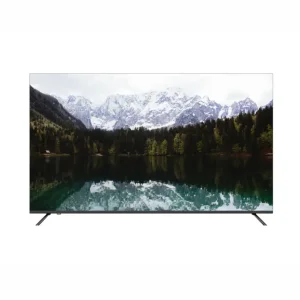
High-Quality 65-inch 4K OLED self-emissive Android smart TV
View Product Specs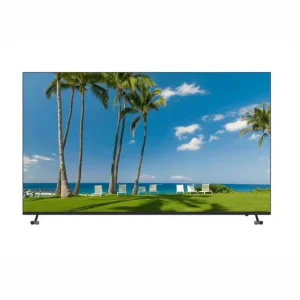
High-Quality 85-inch 4K QLED Android Smart Voice TV
View Product Specs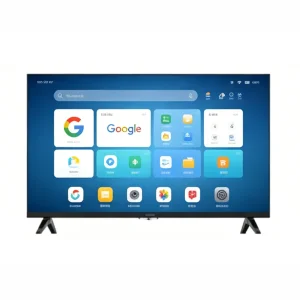
OEM 32-inch Full HD webOS Smart TV, LG System
View Product Specs
Wholesale Frameless 50-inch 4K Q LED Android Smart TV
View Product Specs
OEM 75-inch 4K QLED Android Smart Voice TV
View Product Specs
OEM 43-inch 4K UHD webOS Smart TV with AI
View Product Specs
High-Quality 55-inch 4K QLED Android Smart TV
View Product Specs
High-Quality 100-inch 4K Explosion-proof Smart TV
View Product Specs
Verification Integrity
Standard Operating Procedure: Quality Assurance Protocol
Explore how WEIER ensures flawless visual output and electrical resilience across millions of operational panel hours.
Phase 1: Clean-Room Panel Inspection
Before open-cell glass assemblies enter the main automated line, every raw unit passes through a Class 100 clean booth for microscopic dust particle scans, zero-bright-dot validation, and polarized uniformity checks.
Phase 2: Dynamic Burn-In & Aging
100% of finished TV units are routed through continuous high-temperature aging chambers for 4 to 8 hours under alternating dynamic color patterns, driving out early electrical component failure and testing thermal dissipation.
Phase 3: Drop, Vibration & Export Packing
Packaging undergoes ISTA-standard drop and continuous transit vibration evaluations. Reinforced multi-wall corrugated cartons and customized high-density EPS / EPE shock cushions guarantee zero transit transit fracture.
Technical FAQ
Frequently Asked Questions by Global Procurement Officers
Direct answers addressing open-cell grading, licensing models, MOQ structures, and local compliance requirements.
What is the difference between Grade A, A+, and recycled open-cell glass?
Grade A+ open-cell panels feature 100% zero bright dots, zero dead sub-pixels, and perfect luminance uniformity across all chromatic steps. Grade A may permit up to 1-2 minor dark sub-pixels unnoticeable from viewing distance. Recycled or salvaged panels exhibit uneven aging and high field return rates; WEIER strictly deploys brand-new Grade A/A+ glass directly from tier-1 foundries.
How are operating system licenses (Google TV & webOS) handled for OEM export?
Official Google TV and LG webOS installations require authorized brand authorization and MAC/DRM certification IDs. WEIER manages the certified software licensing workflow, ensuring your private brand passes Google Play Protect and Netflix/Prime Video 4K DRM HDCP 2.2 digital handshakes without remote deactivation risks.
Can you provide SKD or CKD kits to qualify for regional manufacturing incentives?
Yes. We currently ship upwards of 200,000 CKD/SKD units monthly to assemblers across Latin America, South Asia, and North Africa. We provide matched open-cell glass, backlight arrays, metal back-plates, plastic bezels, pre-flashed mainboards, wiring looms, and remote controls complete with standard work instructions (SOPs).
What is the standard Minimum Order Quantity (MOQ) for custom private labeling?
Standard OEM production runs start at one 20GP container (approximately 300–800 units depending on screen sizes). For enterprise brand partners establishing ongoing supply contracts or multi-size project procurement, trial sample batches can be coordinated via our engineering sales team.
How does WEIER guarantee panel safety during ocean shipping?
For finished CBU products, we utilize reinforced 5-ply kraft export cartons with customized honeycomb edging and EPS corner buffers. For open-cell CKD shipments, high-precision vacuum-formed plastic trays hold glass sheets in clean packs, loaded inside fumigated structural wooden crates capable of withstanding severe nautical roll.
Can buyers conduct on-site factory audits in Huadu, Guangzhou?
Yes, we welcome buyer delegations and third-party inspection agencies (SGS, TÜV, Intertek, Bureau Veritas) to inspect raw component intake, clean bonding lines, aging bays, and final container staging at our Guangzhou manufacturing facility.