Commercial Display & Smart Television Roster
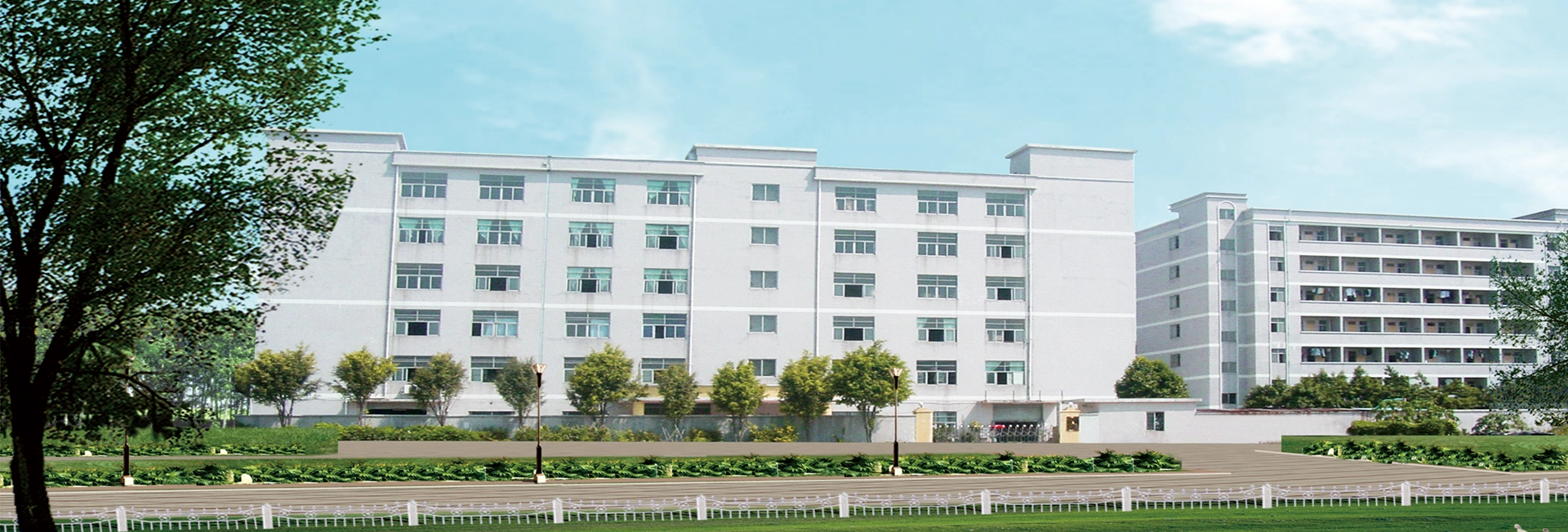
Explore source-engineered commercial TV units and high-reliability panels manufactured under rigorous ISO-compliant environments in Huadu District, Guangzhou.
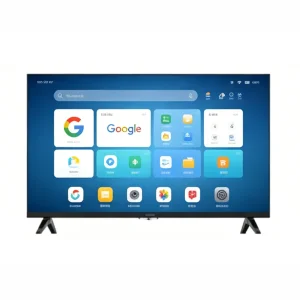
OEM 32-inch Full HD webOS Smart TV, LG System
Configure Specification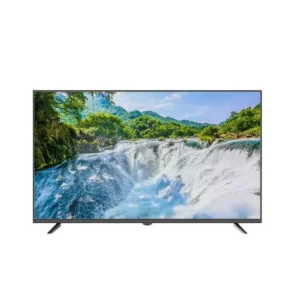
High-Quality 43-inch Borderless FHD Android Smart TV
Configure Specification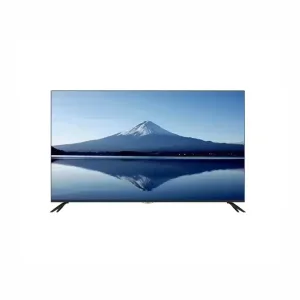
Wholesale Frameless 50-inch 4K Q LED Android Smart TV
Configure Specification
High-Quality 43-inch 4K QLED Google Smart TV
Configure Specification
OEM Borderless 32 inch HD Android Smart TV
Configure Specification
High-Quality 85-inch 4K QLED Android Smart Voice TV
Configure Specification
OEM 43-inch 4K UHD webOS Smart TV with AI Source
Configure Specification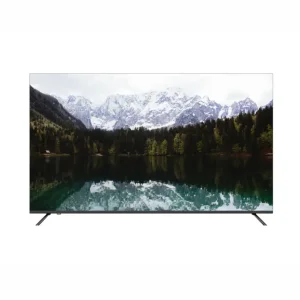
High-Quality 65-inch 4K OLED Self-Emissive Smart TV
Configure SpecificationThe Paradigm Shift in 300-Inch Ultra-Large Format Displays
Analyzing the technological transition from single-glass LCD limitations to active-matrix MicroLED architectures, seamless modular fabrication, and institutional supply chain dynamics.
Monolithic Glass Limits vs. Modular Synthesis
Standard Generation 10.5 and 11 LCD motherglass fabrication facilities face exponential yield collapse beyond 115 inches. True wholesale 300-inch display implementations (approx. 6.64 meters wide by 3.74 meters tall in standard 16:9 aspect ratio) require precision-engineered modular cabinets. Using Chip-on-Board (COB) or Micro-in-Package (MIP) surface architectures, factories assemble seamless visual planes with zero visible seam bezels, sub-millimeter planarity, and uniform chromatic calibration across millions of self-emissive subpixels.
Common Cathode Energy Efficiency
Power density management represents the primary operational barrier for massive displays. Modern 300-inch installations operating on traditional common-anode topologies generate massive thermal loads and excessive power consumption. Modern tier-1 factories implement independent common-cathode power distribution, providing segregated voltages to red, green, and blue diodes (2.8V for Red, 3.8V for Green/Blue). This architectural refinement cuts operational energy consumption by 32% to 40%, eliminating thermal runaway.
Guangzhou Wanteng (WEIER) Factory Capacity
Established in 1987 in Huadu District, Guangzhou, Guangzhou Wanteng Electronics Co., Ltd. (operating the international WEIER brand) provides over 30 years of OEM/ODM industrial manufacturing. With a 60,000 m² modern manufacturing campus and six high-speed automated SMT and assembly lines, our facility ships over 50,000 finished televisions and 200,000 SKD/CKD kits per month, engineering custom large-format solutions with certified BOM consistency.
300-Inch Television Industry Trends & Technological Roadmaps
A technical assessment of subpixel density, optical resin encapsulation, high-dynamic-range driver silicon, and video processing backbones powering modern ultra-large commercial displays.
COB (Chip-on-Board) vs. SMD Encapsulation
Traditional Surface-Mount Device (SMD) architectures suffer from mechanical fragility, high moisture susceptibility, and elevated pixel failure rates in installations exceeding 200 inches. Modern wholesale 300-inch television manufacturers utilize advanced Chip-on-Board (COB) flip-chip packaging. In this process, bare micro-scale LED chips are wire-bonded directly onto PCB substrates and hermetically sealed beneath an optically clear, nano-engineered epoxy resin. The result is a robust, IP65-rated frontal surface that resists impact, electrostatic discharge (ESD), dust, and moisture.
Flip-chip COB eliminates the golden wire bond, drastically expanding heat dissipation pathways through the PCB copper backplane. This translates to an operational Mean Time Between Failures (MTBF) exceeding 100,000 continuous hours—a mandatory benchmark for mission-critical command centers and luxury commercial installations.
Native 8K Scaling & Low Pixel Pitch (P0.7 to P1.2)
For a screen measuring 300 inches diagonal, pixel pitch determines minimum comfortable viewing distance and native resolution. At P0.78mm pixel pitch, a 300-inch 16:9 canvas delivers true native 8K Ultra-High Definition (7680 × 4320 pixels) without software interpolation. At P1.25mm pitch, the display achieves native 4K UHD (3840 × 2160 pixels) resolution, delivering razor-sharp text and crystal-clear imagery even at close viewing distances of 2.5 meters.
Wholesale buyers must evaluate pulse-width modulation (PWM) driver ICs capable of delivering 16-bit to 22-bit grayscale depth paired with 7,680 Hz refresh rates. This suppresses scanlines and moiré effects during high-speed studio broadcasting, dynamic sporting events, and XR virtual production workflows.
| Engineering Parameter | 300" MicroLED Direct-View (Tier-1) | Commercial Laser Projection (3-Chip DLP) | LCD Video Wall Matrix (4x4 75" Seamless) |
|---|---|---|---|
| Peak Luminance & Contrast | 1,200 – 2,500 nits | 1,000,000:1 True Black | 500 – 800 ANSI Lumens equivalent | 2,000:1 | 500 – 700 nits | 4,000:1 |
| Physical Seams / Optical Bezel | 0.00 mm (Monolithic seamless optical surface) | 0.00 mm (Optical blend zones required) | 0.88 mm to 3.5 mm grid disruption |
| Ambient Light Degradation | Virtually zero degradation (High optical contrast black matrix) | Severe contrast washout under standard ambient room lighting | Moderate anti-glare reflection (28% haze treatment) |
| Operational Lifespan (Half Brightness) | 100,000 Hours (Self-emissive inorganic crystals) | 20,000 Hours (Laser phosphor module degradation) | 50,000 Hours (LED edge/direct backlight decay) |
| Maintenance & Serviceability | 100% Front-Serviceable magnetic vacuum extraction | Optical recalibration, lens alignment, dust filter cycles | Rear-rack structural access required for inner panel swaps |
Global Sourcing Intent & Sector-Specific Deployments
Cross-examining the real-world operational environments driving wholesale bulk acquisitions of 300-inch architectural displays across six continents.
Ultra-Luxury Residential Estates
High-net-worth architectural estates require private cinema displays that render pristine 4K/8K HDR10+ and Dolby Vision content without the acoustic compromises or darkened-room limitations of front projectors. WEIER's 300-inch displays integrate with Crestron, Control4, and Savant home automation platforms, pairing ultra-quiet convection cooling with custom architectural trims.
Corporate Boardrooms & Auditoriums
Global Fortune 500 headquarters deploy 300-inch smart video walls for hybrid video collaboration, live financial telemetries, and executive shareholder assemblies. Dual-boot operating firmware (supporting secure corporate Android, webOS signage, or external Windows OPS compute modules) guarantees seamless interoperability with Microsoft Teams Rooms and Zoom Rooms.
Command & Control Centers (NOC/SOC)
Emergency management agencies, cybersecurity security operations centers (SOC), and transportation management authorities mandate continuous 24/7/365 uninterrupted uptime. Redundant power supplies with instantaneous hot-swap failover, dual-receiving-card loops, and zero electromagnetic interference (EMC Class B compliant) ensure continuous operational reliability.
Broadcast XR Studios & Luxury Retail
Television broadcast networks and luxury automobile flagships use high-nit 300-inch backdrops for immersive in-camera virtual production (ICVFX) and dynamic retail storytelling. A 7,680 Hz refresh rate combined with genlock synchronization eliminates rolling shutters, flicker, and color banding under studio camera focus.
Macro-Industry Solutions & Architectural System Integration
A rigorous turnkey methodology addressing structural weight calculation, ambient thermal management, signal distribution, and magnetic maintenance.
Structural Trusses & Static Load Optimization
A complete 300-inch direct-view modular display system typically weighs between 450 kg and 700 kg, depending on cabinet die-cast magnesium framing versus aluminum extrusion alloys. WEIER engineers calculate regional seismic dead-load formulas, supplying aerospace-grade interlocking mounting rails with micro-vernier three-axis alignment (X, Y, Z planarity adjustment down to 0.05 mm tolerances). This structural precision prevents cabinet shear and ensures uninterrupted visual planarity over years of operation.
Fiber-Optic AV-over-IP Signal Topology
Transmitting uncompressed 4K or 8K HDR signals over massive physical spaces presents signal attenuation hazards when using standard copper HDMI 2.1 cabling beyond 5 meters. Our institutional solutions feature direct 10G/40G fiber-optic transceivers utilizing SDVoE (Software Defined Video Over Ethernet) protocols. This enables zero-latency (sub-frame), uncompressed video matrixing from remote central equipment racks situated up to 300 meters away from the primary display plane.
Thermodynamic Flow & Acoustic Engineering
Large display walls installed in executive environments cannot tolerate noisy cooling fans. Our 300-inch architectural displays incorporate fanless convection cooling. Heat generated by driver ICs is routed directly into die-cast magnesium chassis frames that function as massive structural heatsinks. Thermal sensors regulate localized dynamic brightness algorithms, ensuring silent 0 dB operational acoustic envelopes.
Localized Support, SKD/CKD Logistical Guarantees & Certification
Overcoming global tariff barriers, ensuring port-of-entry compliance, and protecting high-value optical components across long-distance maritime freight.
SKD / CKD Supply Chain Duty Optimization
Importing fully assembled CBU (Completely Built Up) ultra-large format displays into markets such as Brazil, India, Egypt, or Nigeria often incurs punitive import duties ranging from 25% to 55%. As a qualified source factory, Guangzhou Wanteng (WEIER) supplies structured SKD (Semi-Knocked Down) and CKD (Completely Knocked Down) kits. We ship precision-sorted sub-assemblies—aluminum structural frames, calibrated driver boards, matched power modules, and tested display tiles—allowing local assembly partners to meet preferential domestic value-add thresholds.
Regulatory Clearance: CE, FCC & RoHS
Institutional projects require stringent laboratory-verified documentation. WEIER models maintain updated testing and compliance certificates under EU Directives (CE-EMC EN55032 Class B, LVD EN62368-1 electrical safety), North American standards (FCC Part 15 Subpart B commercial and residential compliance), and RoHS restriction of hazardous substances. Certificate packages with full test reports are provided directly to import verification teams for fast customs processing.
High-Spec Maritime Shock Protection Packaging
Micro-pitch modules are sensitive to mechanical shocks and moisture during transoceanic shipping. We utilize custom heavy-duty ATA-rated flight cases and reinforced fumigated export wooden crates lined with moisture-barrier vacuum packaging and closed-cell EPE shock-absorbent foam. Each consignment includes multi-axis drop-indicators and tilt-monitoring sensors to ensure full chain-of-custody integrity from our Guangzhou loading docks to destination ports.
Technical Roadmap: Next-Generation Innovations
Forecasting industrial advances in mass transfer technologies, quantum dot color conversion, monolithic silicon backplanes, and real-time AI neural upscaling engines.
Sub-30 Micron Fluidic Mass Transfer
The manufacturing cost curve for ultra-large 300-inch MicroLED displays is directly tied to mass transfer speed and yield. While legacy laser-assisted transfer systems mount approximately 25,000 chips per hour, next-generation fluidic assembly processes place over 10 million micro-diodes per hour with 99.999% placement accuracy. This manufacturing breakthrough will significantly lower wholesale prices, making ultra-large direct-view displays competitive with traditional projection across commercial enterprise tiers.
Monolithic QD-MicroLED Color Conversion
Current architectures rely on separate native Red, Green, and Blue gallium-nitride (GaN) and gallium-phosphide (GaP) semiconductors, each with distinct thermal expansion and degradation rates. Upcoming production lines use uniform ultra-blue GaN MicroLED matrices coated with ink-jet printed Quantum Dot (QD) photo-resist color-conversion layers. This ensures 100% uniform chromatic aging and expands the color gamut past 110% of BT.2020 color volume.
Real-Time AI Neural Upscaling Processors
Displaying sub-4K broadcast feeds across a 300-inch canvas can expose severe compression artifacts and soft edges. Advanced FPGA and ASIC video processors now incorporate edge-AI deep learning models trained on millions of high-resolution video frames. These neural engines reconstruct missing high-frequency details in real time, sharpening edge textures, synthesizing intermediate frames, and mapping standard dynamic range (SDR) into rich 12-bit HDR color spaces.
Frequently Asked Questions for Wholesale 300-Inch TV Buyers
Clear, direct answers regarding minimum order quantities, factory audit procedures, warranty coverage, and on-site engineering assistance.
Commercial Display & Export Smart Television Line
Procure certified smart displays directly from our Guangzhou facility. Complete OEM/ODM customization is available for boot screens, chassis silk-screening, tuner standards, and packaging.

OEM 75-inch 4K QLED Android Smart Voice TV
Configure Specification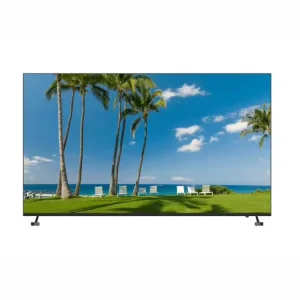
High-Quality 100-inch 4K Explosion-Proof Smart TV
Configure Specification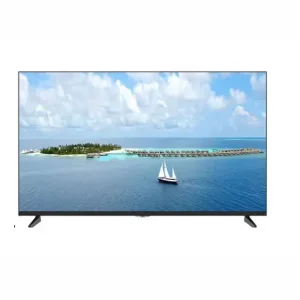
High-Quality 55-inch 4K QLED Android Smart TV
Configure Specification
High-Quality 65-inch 4K OLED Self-Emissive Smart TV
Configure Specification
High-Quality 85-inch 4K QLED Voice Control Smart TV
Configure Specification
OEM 43-inch 4K UHD webOS Smart TV with AI Source
Configure Specification
High-Quality 43-inch 4K QLED Google Smart TV
Configure Specification