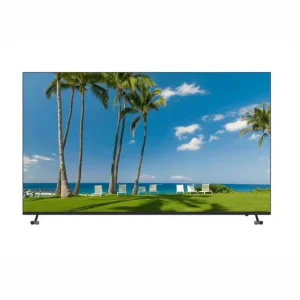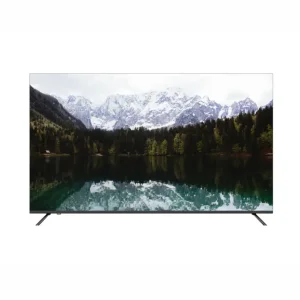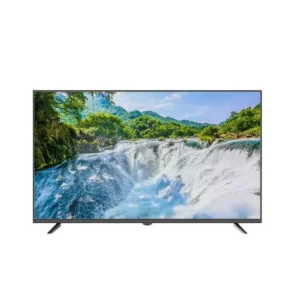
Engineered Ultra HD Display Solutions
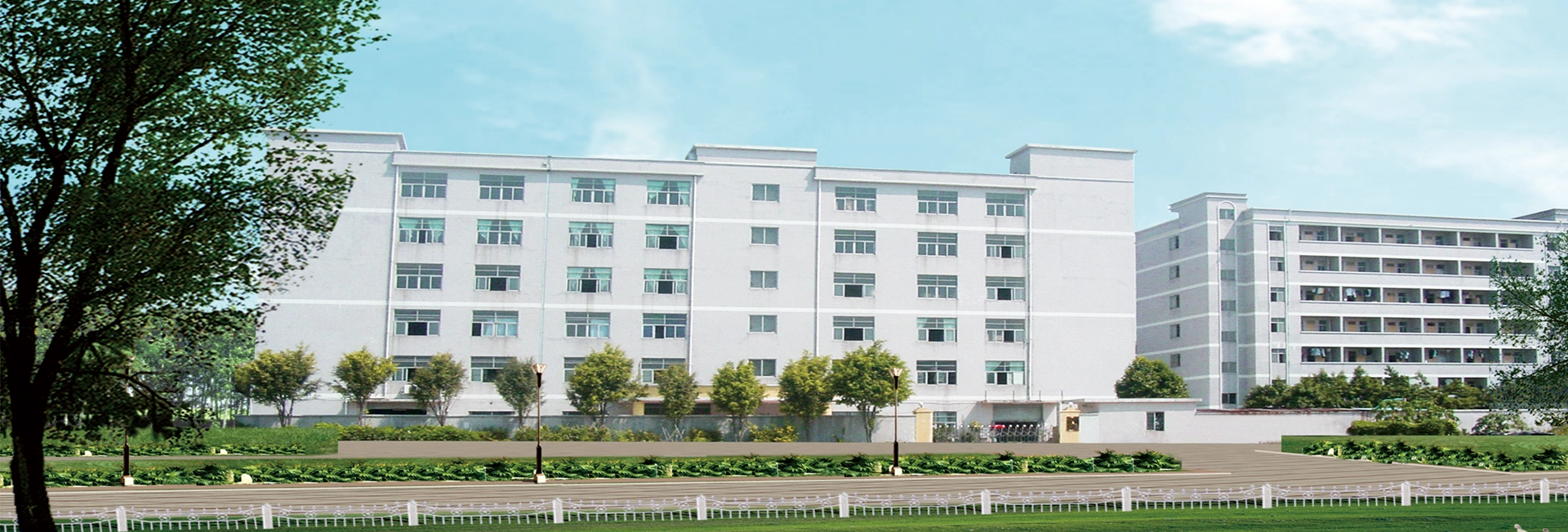
Direct from Guangzhou Wanteng (WEIER) Electronic Co., Ltd. automated cleanroom assembly lines.
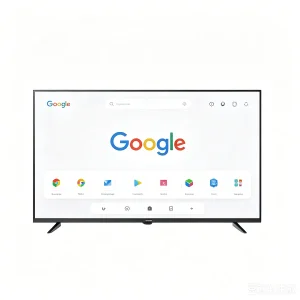

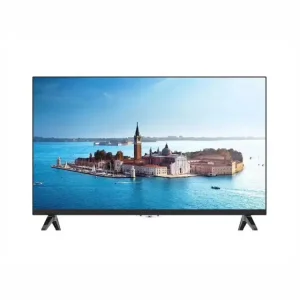
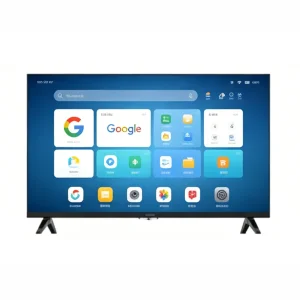
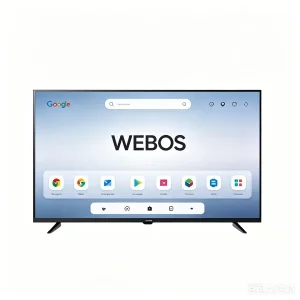
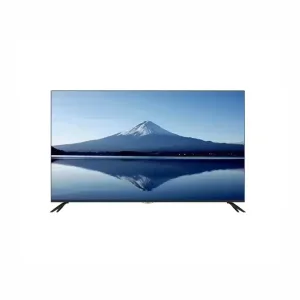
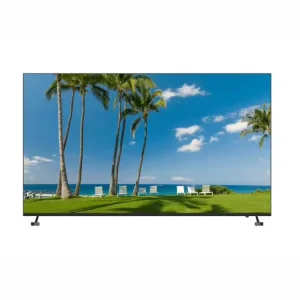
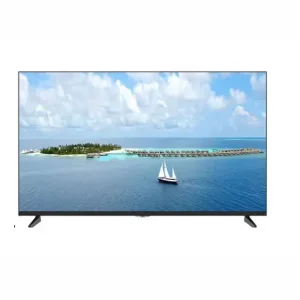
Global Ultra HD Television Landscape: Commercial & Industrial Paradigms
The strategic shift from legacy 1080p Full HD to high-density 3840×2160 pixels and next-generation smart display integration across global retail and enterprise sectors.
Macro Shift to 4K UHD
Ultra-high-definition resolution (3840×2160) is no longer a luxury tier; it has evolved into the baseline procurement standard worldwide. Broadcasters, OTT streaming platforms like Netflix and Prime Video, and console gaming platforms deliver native 4K HDR streams as default. As Open Cell glass substrate yields from Gen 8.5 and Gen 10.5 fabrication plants in mainland China have climbed above 96%, the bill-of-materials (BOM) cost differential between 1080p and 4K panels has shrunk below 8% in 43-inch, 50-inch, and 55-inch cuts. This technological parity makes 4K UHD the single most viable commercial choice for OEM procurement teams seeking margin protection and brand longevity.
Commercial & Hospitality Divergence
While consumer retail focuses heavily on industrial design aesthetics like bezels measuring under 1.0mm, ultra-thin profiles, and streaming ecosystem certification, the commercial B2B market demands enterprise-grade thermal stability and duty cycles. Hotel chains require embedded hospitality protocols, such as RF tuner RF distribution, wake-on-LAN (WOL), interactive IPTV content management systems (CMS), and LG webOS or Pro:Centric interfaces. Meanwhile, corporate boardrooms and public retail venues prioritize high ambient-light rejection, 400–500 nits high-luminance panels, explosion-proof tempered glass front layers, and automated scheduled power-cycling.
Regional Operating System Stratification
The worldwide OEM smart TV market has bifurcated into distinct OS ecosystems tailored to local regulatory and intellectual property frameworks. In North America and Western Europe, Google TV and official Android TV with full Widevine L1 encryption and CTS compliance are mandatory to unlock 4K Netflix, Disney+, and YouTube. In contrast, emerging markets in Latin America, Southeast Asia, and Africa balance cost and feature sets by deploying customized AOSP (Android Open Source Project) firmware alongside licensed webOS Hub solutions. As a tier-1 OEM factory, our direct engineering alliances enable seamless turnkey deployment across Google TV, webOS, and custom Android environments.
Architectural Engineering: Panel Physics, SoC Processing & Optical Layers
A granular look at the optical stacks, backlight diffusers, color volume enhancement, and processing silicon powering our OEM Ultra HD platforms.
Backlight Typologies: DLED vs. ELED
In our Huadu factory lines, we manufacture both Direct LED (DLED) and Edge-lit LED (ELED) backlight assemblies. DLED configurations utilize matrix arrays of high-flux optical lenses mounted across the entire rear chassis, achieving 92%+ field uniformity, superior thermals, and 300 to 500 nits sustained peak brightness. ELED architectures focus on ultra-thin aesthetic chasses (sub-7.9mm depth), utilizing precision laser-etched light guide plates (LGP) to channel luminance evenly across the active screen area while reducing raw shipping cube volume.
Quantum Dot (QDEF) Color Volume
Our 4K QLED lines incorporate a Quantum Dot Enhancement Film (QDEF) between the blue LED backlight array and the liquid crystal layer. When struck by 450nm wavelength blue photon excitation, cadmium-free inorganic nanocrystals emit pure red and green monochromatic light. This expands the color spectrum to over 95% DCI-P3 and 100% Rec. 709, preventing luminance bleaching in saturated scenes and providing an uncompromising visual experience for our premium tier 50", 55", 65", 75", and 85" TV lineups.
OLED Self-Emissive Micro-Architectures
For flagship high-end OEM clients, our factory provides pure self-emissive Organic Light Emitting Diode (OLED) TV assemblies in 55-inch and 65-inch configurations. By eliminating the liquid crystal matrix and backlight entirely, each of the 8.29 million pixels functions as an independent, switchable light source. This delivers absolute 0-nit true black levels, an infinite native contrast ratio (1,000,000:1), zero halo or backlight bleeding artifacts, and wide viewing angles exceeding 178 degrees without color shifting.
| Display Stack Component | Standard DLED UHD | Premium Quantum Dot (QLED) | Flagship Self-Emissive OLED | Commercial Explosion-Proof Tier |
|---|---|---|---|---|
| Panel Resolution | 3840 × 2160 (RGB) | 3840 × 2160 (RGB) | 3840 × 2160 (WRGB) | 3840 × 2160 (RGB) |
| Color Gamut Coverage | 72% NTSC / 88% sRGB | >95% DCI-P3 / 100% Rec.709 | >98.5% DCI-P3 / 74% Rec.2020 | 75% NTSC / Anti-Glare Treated |
| Peak Luminance (Nits) | 250 – 320 nits | 350 – 500 nits | 600 – 850 nits (3% window) | 380 – 450 nits |
| Response Time (GtG) | 8.0 ms | 6.5 ms | < 0.1 ms (Instantaneous) | 8.0 ms |
| Front Protection Layer | Polarizer / Anti-Glare 3H | Polarizer / Hard Coat 3H | Anti-Reflective Polarizer | 4.0mm High-Impact Tempered Glass |
| Targeted Deployment | Retail Supermarket / Bed | Home Theater / Living Room | Flagship Luxury Retail | Hotels / KTV / Public Lobbies |
Guangzhou Huadu Industrial Cluster: Supply Chain Resilience & Cost Arbitrage
How our vertically integrated 60,000 m² campus in Huadu District, Guangzhou drives down BOM volatility, optimizes component matching, and compresses prototype-to-delivery lead times.
Direct Open Cell Glass Sourcing
In the television manufacturing value chain, the Open Cell glass substrate constitutes 60% to 70% of total BOM costs. Established in 1987, Guangzhou Wanteng Electronics maintains long-term Tier-1 supply allocations with the world's leading semiconductor display foundries: BOE, CSOT (China Star Optoelectronics Technology), HKC, and Innolux. By procuring Open Cell glass directly in high-volume parent sheets and operating cleanroom COG (Chip-on-Glass) and FOG (Film-on-Glass) bonding internally, we eliminate middleman trading margins and shield brand buyers from sudden market price fluctuations.
Automated SMT & Board Customization
Our factory operates 6 high-speed automated Surface Mount Technology (SMT) production lines dedicated to mainboard fabrication. We engineer custom PCB designs pairing Realtek, MediaTek, and Novatek System-on-Chip (SoC) architectures with precise flash ROM, DDR RAM, and I/O port assignments. This allows us to alter hardware layouts rapidly—adding specific tuner architectures (such as dual ATSC 3.0 tuners for North America or integrated DVB-T2/S2 for European models) without retooling from third-party motherboard brokers.
Multimodal Freight Nexus & Lead Times
Situated in Huadu District, Guangzhou, our manufacturing facility is located less than 25 minutes from Guangzhou Baiyun International Airport and within a 2-hour trucking radius of major deep-water international shipping terminals: Nansha, Yantian, and Shekou ports. This proximity allows for agile container positioning, continuous export customs drayage, and streamlined transit schedules to North American, European, and South American ports, keeping production lead times between 20 and 30 calendar days for recurring OEM container lots.
Engineered for Demanding Environments: Localized Deployment Scenarios
From high-turnover luxury resort guest rooms to high-vibration mass-transit corridors and rugged retail settings.
Hospitality & Interactive Hotel IPTV
Equipped with integrated Hotel Mode, volume caps, security remote pairings, customized welcome on-screen graphics, and compatibility with global IPTV middleware (M3U, Xtream, Pro:Centric protocols). Our 32" to 55" models integrate seamless master power recovery and guest data auto-clearing upon checkout.
KTV & Public Entertainment Spaces
Venues with heavy public traffic risk impact damage. Our 100-inch and 85-inch commercial explosion-proof televisions integrate a 4.0mm optical-grade high-impact tempered glass panel directly bonded to the front chassis, withstanding direct blunt force impacts without panel rupture or optical distortion.
Retail Supermarket Digital Signage
Designed for continuous 16/7 and 24/7 playback cycles across retail and supermarket environments. Featuring specialized thermal management chasses, wide viewing angles for peripheral foot-traffic visibility, auto-boot USB looping media players, and high-efficiency power supplies that resist voltage fluctuations.
Corporate Conferencing & Gaming Hubs
Our flagship 4K QLED units feature low-input lag modes (<12ms), Auto Low Latency Mode (ALLM), dual-band 2.4/5GHz Wi-Fi, and Apple AirPlay / Google Cast wireless screen mirroring, transforming display panels into high-speed collaborative meeting room presentation hubs and gaming monitors.
Strategic Supply Modes: Complete Built Unit (CBU), SKD & CKD Engineering
Balancing import customs duties, container stuffing density, and local value-add requirements to maximize procurement profitability.
CBU (Completely Built Unit)
Ideal for brands entering new territories without local assembly facilities. Finished televisions are 100% aged, inspected, and packed in customized multi-color retail or heavy-duty corrugated brown export master cartons, complete with branded user manuals, remotes, and accessories. Unload the container directly into local distribution centers or fulfillment channels.
SKD (Semi-Knocked Down)
Designed for importers seeking lower import duty rates under regional preferential trade pacts (e.g., ASEAN, MERCOSUR, African AfCFTA). The television panel, chassis, and backlight remain intact as an optical sub-assembly, while mainboards, power modules, speakers, remotes, and plastic bezels are packed in bulk component boxes. This significantly lowers customs tariff tiers while keeping local assembly tooling simple.
CKD (Completely Knocked Down)
Our monthly CKD supply capacity exceeds 200,000 units. Every single component—Open Cell glass, back plates, diffuser films, reflector sheets, LED light bars, SMT boards, and fasteners—is packaged in high-density customized palletized trays. This configuration delivers maximum container freight efficiency (packing up to 300% more screens per 40HQ container compared to CBU) and unlocks the absolute lowest customs duties for established national assemblers.
International Compliance Ecosystem & Quality Governance Protocols
Rigorous multi-stage factory verification ensuring legal market entry, electromagnetic compatibility, and minimum return rates across all continents.
Global Tuner Compatibility
Broadcast signal demodulation differs by continent. Our OEM mainboards are engineered and certified to natively process ATSC 1.0/3.0 (North America), DVB-T/T2/C/S/S2 (Europe, Middle East, Africa, Oceania), ISDB-T (Latin America, Japan, Philippines), and DTMB (China, Hong Kong). Every tuner circuit incorporates surge-suppression filtering and active LNA gain optimization to maintain stable reception in fringe broadcast coverage areas.
CE, FCC, RoHS & Energy Audits
All export TV models undergo testing in accredited independent testing laboratories to hold valid CE, FCC, RoHS, CB Scheme, NOM (Mexico), and SASO (Saudi Arabia) certificates. Our engineering teams prioritize strict adherence to European ErP Tier 2 energy efficiency standards and U.S. Energy Star requirements, engineering low-power standby modes drawing under 0.5 Watts.
4-Stage Factory Reliability Testing
To maintain an RMA failure rate strictly under 0.3%, each batch undergoes our proprietary 4-stage QA protocol: (1) 100% incoming optical microscope inspection of Open Cell glass for bright/dead pixels; (2) High-temperature 45°C burn-in chambers under continuous video loop for 4 to 8 hours; (3) ISTA-1A drop, vibration, and impact packaging tests; and (4) High-voltage dielectric insulation and earth continuity safety checks on finished assemblies.
Future Roadmap: Mini-LED Dimming, Edge AI Silicon & Sustainable Manufacturing
Anticipating the technological disruptions and production efficiencies shaping the next 5 years of commercial and consumer television manufacturing.
Mini-LED Local Dimming
Our upcoming product pipeline integrates Mini-LED backlighting matrices featuring from 512 to over 2,048 independent local dimming zones. By shrinking LED emitters down to under 200 micrometers, light bleed and blooming are virtually eliminated while achieving peak luminance levels over 1,200 nits. This provides near-OLED contrast performance at half the manufacturing cost, establishing the next frontier for mid-to-high-end television brands.
On-Device NPU Image Upscaling
Next-generation television mainboards in our R&D queue integrate neural processing units (NPUs) directly into the SoC silicon. Operating real-time deep learning inference algorithms, these chipsets analyze incoming sub-4K broadcast streams on a frame-by-frame basis, intelligently reconstructing high-frequency spatial textures, sharpening edge clarity, and reducing MPEG block compression artifacts without introducing digital ringing noise.
Eco-Engineered Chassis Design
Responding to international ESG and extended producer responsibility (EPR) mandates, WEIER is redesigning chassis enclosures with 100% recyclable post-consumer resin (PCR) plastics, eliminating internal solvent-based painting, and replacing EPS foam packaging with 100% biodegradable moulded honeycomb paper pulp, reducing total lifecycle carbon footprints across export supply chains.
Frequently Asked Questions for Sourcing Directors
Authoritative technical, commercial, and operational guidance addressing core procurement concerns prior to container issuance.
WEIER is the proprietary export brand and manufacturing facility of Guangzhou Wanteng Electronics Co., Ltd., founded in 1987. We operate a self-owned 60,000 m² industrial production campus equipped with 6 automated cleanroom television assembly lines and high-speed SMT surface-mount lines located in Huadu District, Guangzhou, China. Global clients engage directly with our on-site factory engineering teams, eliminating trading middleman markups and guaranteeing transparent bill-of-materials integrity across every batch.
We offer three distinct platform architectures based on client market requirements: (1) Certified Google TV / Android TV (supporting Google Play Store, Widevine L1, Google Assistant voice search, and Netflix/Prime Video 4K playback); (2) Official LG webOS Hub (featuring the signature Magic Remote air-mouse interface, ThinQ AI ecosystem, and integrated hotel interactive suites); and (3) Customized AOSP (Android Open Source Project) firmware optimized for private enterprise branding, commercial digital signage, or value-driven retail distribution channels.
Yes. In addition to Fully Built Units (CBU), our dedicated CKD/SKD division supplies over 200,000 kits per month to local assembly factories in Egypt, Nigeria, Algeria, India, Brazil, Mexico, and Vietnam. We supply precision-engineered Open Cell glass, backlight optical sheets, chassis tooling, mainboards, power modules, wire harnesses, and assembly fasteners, alongside complete factory setup schematics, standard operating procedures (SOPs), and on-site engineering training if required.
OEM/ODM customization is comprehensive: (1) Physical hardware: front silk-screened logo, rear cabinet branding, custom bottom metal chin bezels, desktop stand mold design, and commercial VESA wall-mount brackets; (2) Firmware & Software: personalized boot-up logo, boot animation, default launcher wallpaper, embedded hotel welcome screens, pre-installed client APKs, and custom EDID television names; (3) Accessories & Packaging: branded voice air-mouse remotes, custom-printed multilingual instruction manuals, warranty cards, and 5-ply export color or brown master cartons.
Our television models are engineered to comply with major international regulatory frameworks. We maintain active certifications including CE (EMC and LVD directives), FCC Part 15 Class B (United States), RoHS Directive (hazardous substance restrictions), CB Scheme (IEC 62368-1 audio/video safety), and can assist in acquiring national certifications such as NOM (Mexico), SEC (Chile), INMETRO (Brazil), and SASO/CITC (Saudi Arabia). Complete accredited lab test reports are made available to verified procurement partners.
For standard OEM private-label branding on established tooling, our standard MOQ is one 20GP or 40HQ ocean container per screen size (typically 450 to 900 units for smaller sizes, or 120 to 300 units for 75" to 100" large displays). Initial pilot/trial orders may be negotiated with flexible MOQs to support initial market validation. Standard production lead times run between 20 to 30 calendar days following formal artwork signoff and commercial deposit receipt.
We exclusively assemble Grade-A Open Cell glass sourced directly from tier-1 global foundries, predominantly BOE, CSOT, HKC, and Innolux. We do not use refurbished or B-grade surplus cells. Every incoming panel is verified for zero dead pixels, zero scratch imperfections on the linear polarizers, and uniform luminance distribution before line release.
We provide a 1-year to 3-year limited hardware warranty based on contract specifications. For container-quantity orders, we supply 1% complimentary Free-Of-Charge (FOC) critical maintenance spare parts directly inside the container, including matched mainboards, power supply boards (PSU), LED backlight strips, remote controls, and speaker sets. Dedicated factory firmware engineers provide remote OTA software updates and diagnostic support via video or dedicated ticket support.
Yes. We routinely host international purchasing delegations, corporate QA directors, and independent third-party inspection firms (e.g., SGS, Bureau Veritas, TÜV Rheinland) at our Guangzhou Huadu factory. Auditors are granted direct access to inspect incoming warehouse components, SMT cleanrooms, the aging chamber facility, online assembly, drop-testing rigs, and finished pallet sealing. Real-time high-definition video audits can also be arranged.
Our logistics engineering department utilizes 3D CAD loading simulation software to calculate container distribution down to the millimeter, maximizing cubic space utilization while keeping weight within legal road limits. Larger displays (55-inch to 100-inch) are loaded with rigid vertical cardboard honeycomb bulkheads and tension strapping to eliminate horizontal motion, friction scuffing, and glass flex during ocean transit.
Commercial & Large-Format Ultra HD Television Portfolio
Explore production-ready specifications for enterprise, hospitality, retail, and commercial integration projects.