Industrial Catalog
Precision Engineering Series: Flagship Display Modules
Direct architectural, consumer, and hospitality displays manufactured to rigorous enterprise specifications with worldwide compliance validation.
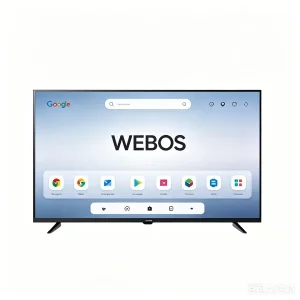
OEM 43-inch 4K UHD webOS Smart TV with AI, source manufacturer for home and hotel use, export Factory, Manufacturer
Configure Specifications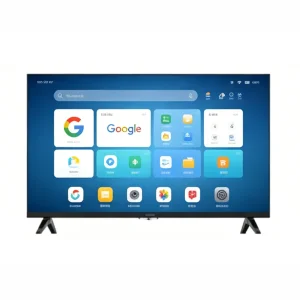
OEM 32-inch Full HD webOS Smart TV, LG System, for home, bedroom, hotel, commercial, and export use Suppliers, Supplier
Configure Specifications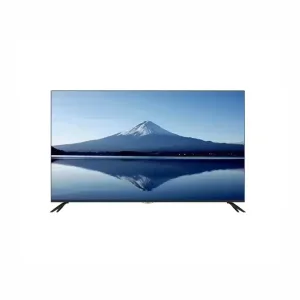
Wholesale Frameless 50-inch 4K Q LED Android Smart TV, Ultra HD HDR, for Home, Commercial, and Export Use Suppliers, Supplier
Configure Specifications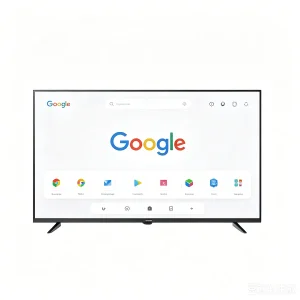
High-Quality 43-inch 4K QLED Google Smart TV, Google TV Export Network TV Factory Factory, Manufacturers
Configure Specifications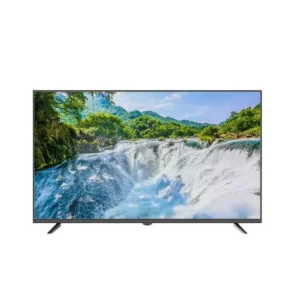
High-Quality 43-inch Borderless FHD Android Smart TV – Wholesale & Custom for Hotel, Supermarket & Engineering Projects
Configure Specifications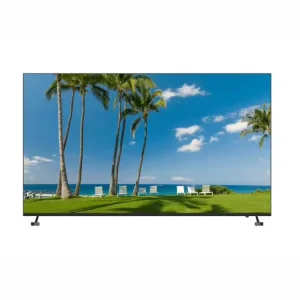
High-Quality 100-inch 4K Explosion-proof Smart TV with Tempered Glass Screen, Suitable for Hotels, KTVs, Commercial Use
Configure Specifications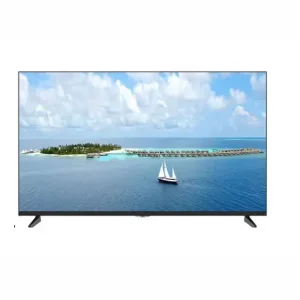
High-Quality 55-inch 4K QLED Android Smart TV with Frameless Design, Dolby Vision, Flagship Model for Commercial Export
Configure Specifications
Industry Intelligence
Transparent Display Dynamics: Transitioning from Novelty to Enterprise Infrastructure
A holistic evaluation of optical transmissive architectures, self-emissive TOLED, and how spatial integration is unlocking multibillion-dollar commercial value.
45%-55%
Standard Transmissivity
< 1.0 ms
Pixel Response Speed
100,000 hrs
Industrial MTBF Rating
38.4%
Projected CAGR to 2030
The commercial display market is undergoing a paradigm shift. Transparent Television (Transparent TV) technology—once limited to high-concept exhibitions and speculative trade shows—has reached production-grade maturity. Moving beyond conventional liquid crystal modules (LCM) with high backlight diffusion, the vanguard of the market is anchored by Transparent Organic Light-Emitting Diodes (T-OLED) and edge-lit Micro-Mesh substrates. Because T-OLED relies on self-luminous cathode-anode matrices rather than a bulky rear optical array, it achieves optical transmittances upwards of 40% to 50%, transforming physical screens into architectural glass when powered down.
This structural transformation directly answers modern architectural and commercial design mandates: dematerialization. In corporate command rooms, luxury storefronts, and multi-modal transit systems, traditional black monolith displays interrupt line-of-sight and reduce spatial openness. An engineered OEM transparent screen delivers augmented graphics, telemetry overlays, and broadcast data seamlessly integrated across ambient sightlines.
Self-Emissive Matrix Physics
By eliminating polarizing light filters and non-transmissive backplates, organic layers emit true RGB light directly through transparent cathode conductors, retaining deep black contrast and broad viewing angles without perimeter light spill.
Edge-Driven Circuit Topology
Power delivery, timing controllers (T-CON), and system-on-chip processing logic are fully relocated inside precision extruded structural bezels or detached floor bases, ensuring 0% optical obstruction across the visual active area.
Dynamic Ambient Correction
Enterprise OEM units feature real-time photometric sensors paired with intelligent gamma adaptation algorithms that calculate background luminescence and modulate pixel output to eliminate visual washout in high-lux daylight environments.
Procurement Strategy
Global Enterprise Sourcing Architecture
Key risk-mitigation parameters and technical criteria applied by global Tier-1 system integrators and commercial procurement teams.
Optical Transmissivity vs Contrast Preservation
Global procurers balance transparency percentages with contrast ratios. While 60% transmissive panels offer visual clearance, they can cause graphic degradation in front-lit rooms. Optimized specifications use a balanced 42%-48% optical index with polarized anti-glare lamination to maintain image crispness.
System-on-Chip (SoC) Ecosystem Compatibility
Turnkey enterprise integration requires native multi-OS compatibility. Enterprise procurement mandates firmware-level support for Android Open Source Project (AOSP), LG webOS Signage, Google TV architecture, and enterprise RS232/Crestron networked control channels.
Modular SKD & CKD Engineering
To reduce international freight overheads and mitigate local destination tariffs (such as in LATAM, EMEA, or India), leading procurement teams require factories to ship structural housings, bare Glass Open Cells, and SMD PCB arrays in high-density CKD/SKD configurations.
Thermal Dissipation & Operational Endurance
Transparent displays run extended duty cycles. Because glass matrices cannot feature standard rear-mounted fans or aluminum heat vanes without blocking light, procurement specifications require integrated micro-heat pipes and high-thermal-conductivity ceramic dissipation coatings concealed inside perimeter chassis rails to guarantee continuous 24/7 reliability without thermal drift.
Production Agility
China Industry 4.0: Supply Chain Resilience & Production Scale
How the Huadu-Guangzhou electronics cluster combines advanced component sourcing, precision automation, and end-to-end quality validation.
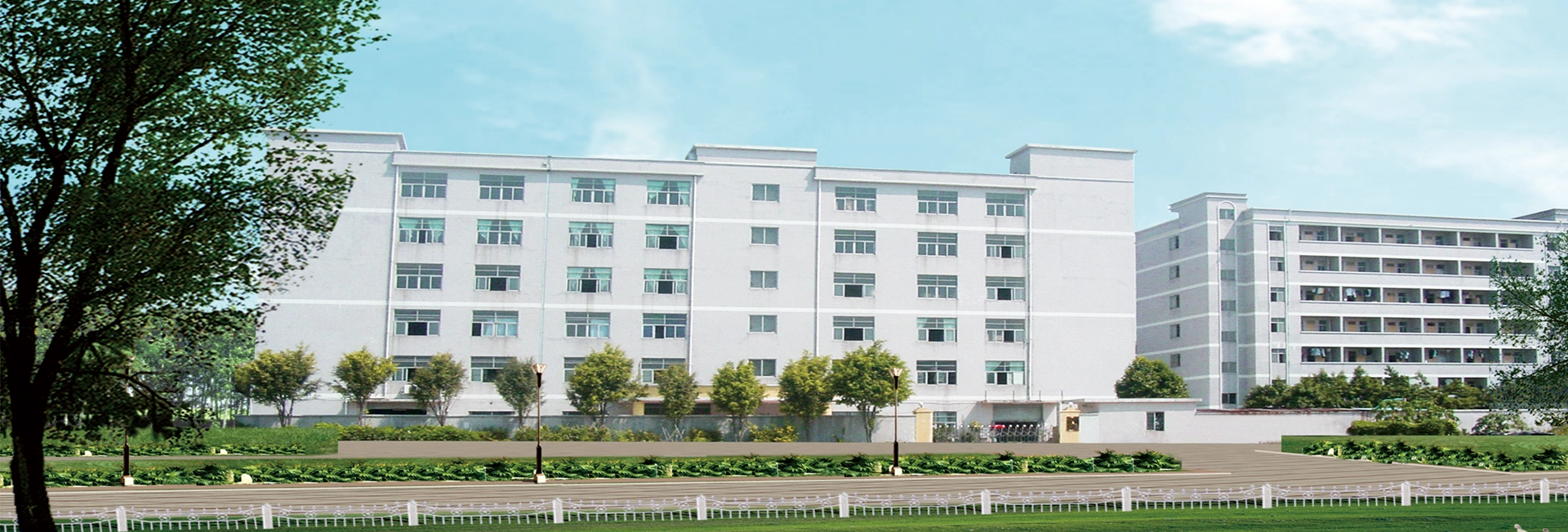
China produces the vast majority of the world's precision optoelectronic components. Operating in Huadu District, Guangzhou, our manufacturing hub sits at the heart of South China's display cluster. This close integration allows bare panel glass, specialized timing controllers, high-frequency SMT motherboards, and CNC frames to be sourced and assembled with zero supply delay, dramatically shortening prototyping cycles.
Class-100 Cleanroom Lamination
Transparent open cells must remain completely free of airborne particulates to maintain structural clarity. Our automated Class-100 dust-free lamination cells use robotic alignment arms to seal structural tempered safety glass, anti-reflective coatings, and capacitive touch sensors without surface defects.
Bespoke Structural Industrial Design
Our engineering services go beyond standard plastic enclosures. We provide custom CAD/CAM aluminum unibody extrusion, rear bracket integration, and ceiling-suspended or floor-bolted mounting kits tailored for transit and luxury retail installations.
Traceable Testing Protocol
Every transparent TV module undergoes 72 hours of continuous high-temperature aging, automated sub-pixel inspection, vibration testing for export durability, and full electromagnetic compatibility screening to meet CE, FCC, and RoHS standards.
Deployment Scenarios
Commercial Display Applications
Examining field-tested performance where transparent digital displays deliver clear functional advantages over standard screens.
Luxury Retail & Interactive Vitrines
Transparent OLEDs serve as display window glazing. Physical merchandise placed behind the glass remains visible, while floating transparent graphics, dynamic price tags, and interactive touch promotions showcase product details without obscuring the item itself.
Next-Gen Smart Mobility & Transit
Replacing traditional train and metro carriage window panes with specialized 55-inch transparent displays. Commuters see real-time route diagrams, station wayfinding, and geo-targeted alerts overlaid directly across the moving outdoor scenery.
Corporate Boardrooms & Tech Centers
Floor-to-ceiling transparent display partitions replace standard glass dividers. These screens run video conferences and interactive whiteboard software with full gesture control, maintaining an open office look when idle without blocking sightlines.
Museums & Exhibition Vitrines
Historic artifacts placed in climate-controlled transparent vitrines gain an educational layer. Historical context, 3D wireframe reconstructs, and animated narratives appear directly in front of the artifact, blending physical pieces with dynamic digital media.
Knowledge Base
Frequently Asked OEM/ODM Sourcing Inquiries
Direct answers from our engineering and export departments addressing critical hardware choices, customization, and factory operations.
How does a Transparent OLED fundamentally differ from a standard transparent LCD?
A transparent LCD relies on external ambient lighting or perimeter backlights behind the panel to make images visible, and typically achieves only 10% to 15% optical clarity. In contrast, Transparent OLED uses self-emissive organic pixels without an edge-light diffusion plate, achieving 40% to 50% true transparency. Transparent OLED produces its own light, delivering brighter graphics and wide viewing angles without requiring an enclosed light-box behind the screen.
What hardware and software options are customizable for OEM orders?
We provide full-spectrum customization. Structurally, we adjust the chassis aluminum profile, custom-tint the front glass, add anti-glare coatings, integrate 10-point PCAP touch foils, and manufacture custom floor-stand or ceiling brackets. Electronically, we customize the mainboard interface (HDMI, DP, RS232, RJ45) and tailor system firmware with your custom boot logo, localized language defaults, network protocols, and specific OS builds (Android Open Source, Google TV, or webOS).
How are fragile transparent glass panels safely packaged for long-distance maritime export?
Export display safety relies on custom multi-tier shock-absorbing packaging. Fully built units are cushioned inside custom-molded high-density EPE foam profiles, vacuum-sealed with desiccant packets, and packed in reinforced double-wall corrugated cartons. For bulk shipments, finished units or SKD kits are packed into fumigated export-grade plywood crates with corner corner-reinforcements, shock indicators, and tilt-watch monitors to prevent damage during container transport.
Can our engineering team conduct third-party on-site audits at your Guangzhou facility?
Yes. We welcome third-party factory audits, including ISO, BSCI, and client-appointed inspection teams (such as SGS, TÜV, or Bureau Veritas). Your technical personnel can inspect our surface-mount (SMT) lines, dust-free assembly cleanrooms, high-temperature aging chambers, and outbound quality-assurance packaging bays at our Huadu District manufacturing base in Guangzhou.
What are your standard minimum order quantities (MOQ) and sample lead times?
For custom engineering evaluations and proof-of-concept projects, our sample lead time typically ranges from 7 to 15 working days depending on glass size and touch-panel requirements. Production run MOQs depend on the platform: standard large-screen production runs typically start at 50 to 100 units, while full container load (FCL) orders provide the best freight and cost efficiencies for global distribution.
Export Series
Commercial Network & Large-Format TV Lineup
High-volume commercial televisions, smart hotel screens, and high-brightness displays built for global export distribution.

OEM 75-inch 4K QLED Android Smart Voice TV, Ultra HD Large Screen Commercial Export Series
Configure Specifications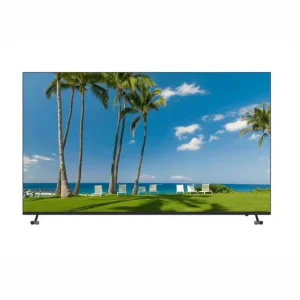
High-Quality 85-inch 4K QLED Android Smart Voice TV, Ultra-HD Flagship Commercial TV
Configure Specifications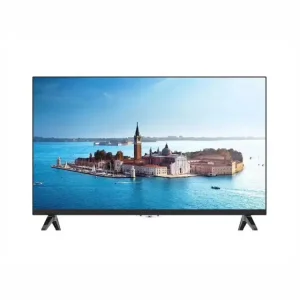
OEM Borderless 32-inch High-Definition Android Smart TV for Supermarkets & Network Chains
Configure Specifications
65-inch Self-Emissive True Black OLED Display for Next-Gen Command & Retail Systems
Configure Specifications
Commercial 43-inch webOS Powered AI Smart System for International Hotel Chains
Configure Specifications
Frameless 50-inch 4K QLED HDR Matrix Display for Enterprise Integration Projects
Configure Specifications
100-inch Ultra-Large Tempered Protective Glass Screen for Public Venues & KTV
Configure Specifications