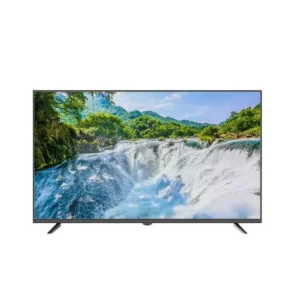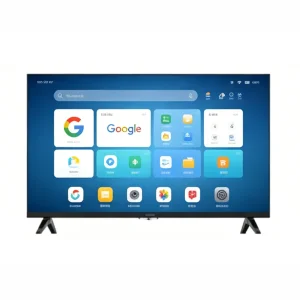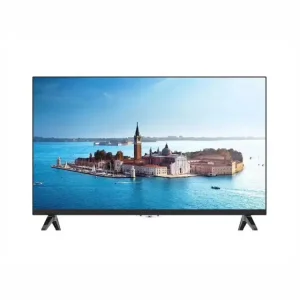
High-Precision OEM Commercial & Smart Screen Assemblies
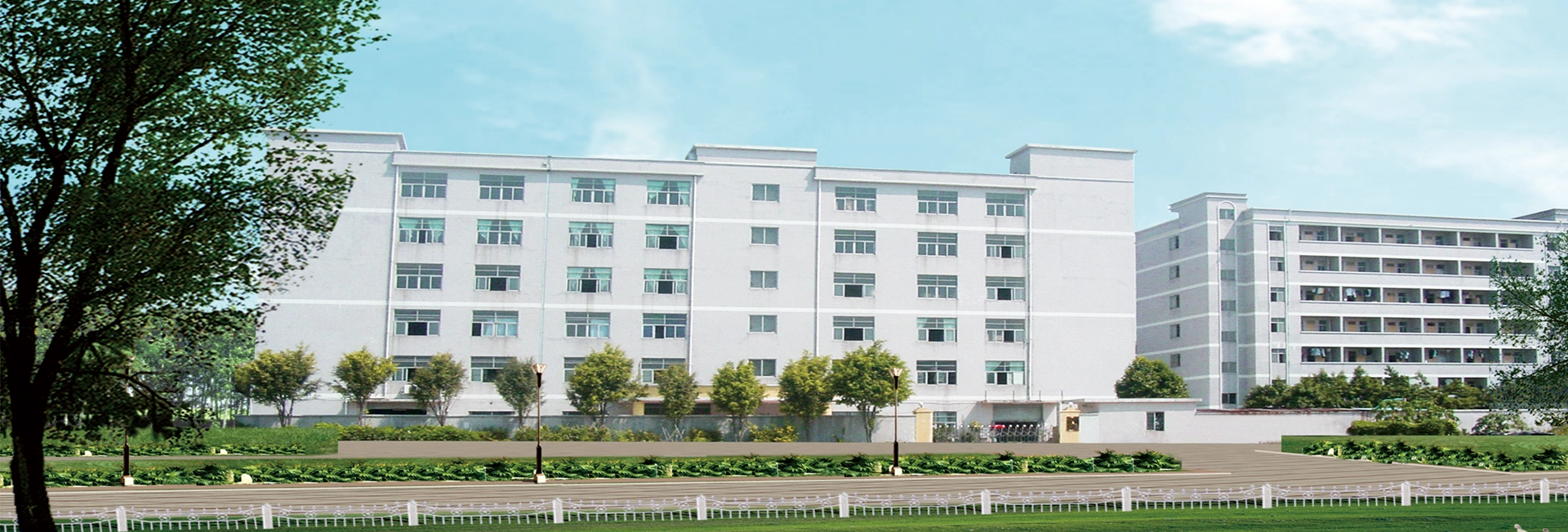
Engineered at our 60,000 m² Guangzhou production facility, balancing ultra-narrow bezel industrial design, advanced HDR image processing, and factory-direct platform customization.
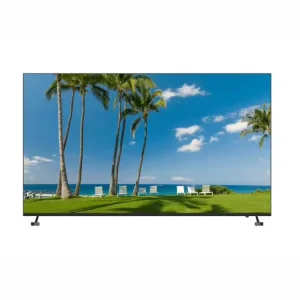

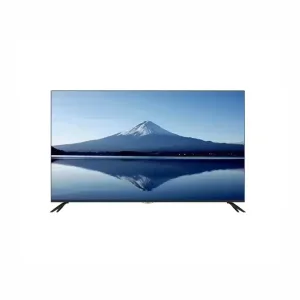
The Architecture of Modern Flat Panel Screen Television Manufacturing
A deep analysis of open-cell yield economics, optical backlight laminations, SoC firmware pipelines, and the operational convergence of consumer and enterprise display platforms.
Tier-1 Open-Cell Glass Integration
The foundation of any high-yield panel screen TV factory lies in its direct Tier-1 open-cell supply contracts. Guangzhou Wanteng Electronic (WEIER) maintains direct procurement allocations with industry-defining glass foundries including BOE, CSOT (China Star Optoelectronics Technology), HKC, and Innolux. By sourcing pristine Class-A glass substrates without pre-mounted backlight units (BLUs), our SMT cleanrooms precision-bond source driver ICs (Chip-on-Film, COF) directly onto the glass. This eliminates sub-tier distributor markups, guarantees zero dead-pixel standards across full runs, and ensures our OEM partners receive consistent chromaticity and gamma responses from lot to lot.
Optical Backlight Engineering: DLED vs QDEF
Backlight architecture governs luminous efficiency, thermal longevity, and contrast fidelity. Our engineering lab specializes in two primary optical paths:
- Direct-Lit LED (DLED) with Optical PMMA Lenses: Engineered with calculated pitch-to-depth optical ratios (OD 18–25mm) ensuring 85%+ illumination uniformity across sizes from 32-inch to 100-inch without hot-spotting or edge vignetting.
- Quantum Dot Enhancement Film (QDEF): Employs cadmium-free quantum nanocrystals stimulated by blue GaN LEDs to synthesize hyper-pure green and red spectral peaks, exceeding 93% DCI-P3 color gamut for commercial retail and digital signage.
SoC Processing Engines & Decoders
Modern panel televisions function as decentralized computational hubs. WEIER partners with premier silicon vendors such as MediaTek (MT9612/MT9638), Realtek, and Novatek. High-throughput quad-core ARM Cortex-A55 architecture coupled with Mali-G52/G57 GPUs provides the compute overhead required for hardware-accelerated AV1 decoding, real-time MEMC (Motion Estimation, Motion Compensation) frame synthesis, and low-latency HDR tone mapping. This architecture underpins buttery-smooth navigation across streaming interfaces while maintaining low standby power compliance (<0.5W) under international energy regulations.
Localized Engineering Adaptations & Industrial Use Cases
Screen panels do not operate in a vacuum. A television deployed in a coastal hotel faces radically different electrical, environmental, and RF parameters than one inside an air-conditioned European living room.
Hospitality & Hotel PMS Interactivity
For large engineering projects and international hospitality chains, off-the-shelf consumer televisions pose operational security risks and administrative nightmares. Our OEM hospitality range features specialized mainboard firmwares featuring:
- Cloning via USB/Cloud: Rapid cloning of channel lists, picture profiles, and master network credentials across hundreds of rooms.
- Volume Limiting & Startup Restrictions: Programmable maximum sound decibels to prevent adjoining-room disturbance, forced boot-channel injection, and automatic credential wipe upon guest check-out.
- Custom Hospitality Protocol Emulation: Integration with PMS gateways (Pro:Centric and proprietary IPTV middleware) over RJ45 or Coaxial RF distributions.
Explosion-Proof Tempered Glass Enclosures
In high-occupancy commercial venues—including KTV lounges, sports bars, public transit lobbies, and interactive educational facilities—traditional plastic polarizer surfaces are prone to blunt-force fractures and liquid ingress. Our 100-inch and large-format commercial series integrate 4mm optical-grade high-borosilicate tempered safety glass bonded directly to the aluminum alloy chassis bezel. This architecture withstands steel ball impact testing (IK08/IK09 standards), resists scratching (7H pencil hardness scale), and features specialized anti-glare (AG) surface diffusion layers to maintain legible 4K playback under harsh ambient floodlights.
Grid Fluctuations & Wide-Voltage Power Supply (90V–260V)
In developing regions across Latin America, Sub-Saharan Africa, and Southeast Asia, unstable electrical infrastructure is the single greatest cause of field failures. Conventional 110V or 220V linear power boards frequently suffer capacitor blowout under rapid brownouts and voltage surges. WEIER engineers proprietary wide-voltage switched-mode power supplies (SMPS) operating seamlessly across 90V to 260V AC, reinforced with dual metal-oxide varistors (MOV) capable of absorbing surge currents up to 4KV. For equatorial rural micro-grids, we additionally manufacture native 12V/24V direct-current (DC) solar-compatible television circuits.
Tropicalization & Coastal Anti-Corrosion (Conformal Coating)
Displays installed in coastal resorts or high-humidity regions (Southeast Asia, Caribbean Basin) face salt-fog galvanic corrosion and parasitic fungus short-circuits. Our engineering lines implement precision selective automated conformal coating on PCBA motherboards and power converters, sealing micro-traces against airborne saline moisture. Thermal heat sinks are extruded from anodized AL6063 aerospace alloy rather than stamped raw steel, extending display operational lifespan past 50,000 continuous hours without corrosion degradation.
The Pearl River Delta Display Cluster & Vertical Factory Integration
Why global brands and project importers partner with Guangzhou Wanteng Electronic: complete control from raw injection pellets and bare glass to container manifest.
The 50-Kilometer Ecosystem
Situated in Huadu District, Guangzhou, our facility operates at the nexus of the world's dense display component ecosystem. Within a 50-kilometer radius sits the entire bill-of-materials (BOM): Class 100/1000 optical cleanroom substrate slitters, LED semiconductor packagers, high-speed SMT placement tooling factories, injection molders for structural rear covers, and corrugated honeycomb export carton plants. This proximity reduces component lead times from weeks to hours, dampening global supply chain shocks and allowing rapid BOM reconfiguration during unexpected international semiconductor allocations.
Fixed BOM Traceability & SMT Precision
A primary failure mode when dealing with trading intermediaries is "BOM drift"—the unauthorized substitution of panel grades or power components across subsequent production batches. At WEIER, once golden samples achieve buyer sign-off, every component specification is cryptographically locked into our enterprise resource planning (ERP) system. Our in-house surface-mount technology (SMT) lines feature Fuji and Yamaha high-speed placement heads operating alongside 3D automated optical inspection (AOI) to verify microscopic solder fillets, eliminating cold-solder failures and ensuring repeatable field reliability.
Guangzhou Freight Hub & Sea Port Proximity
Speed to market is governed by maritime logistics. Our Huadu factory provides seamless freight corridors to Guangzhou Port (Nansha Terminal), Shenzhen (Yantian/Shekou), and Hong Kong international air hubs. Finished goods or CKD packs transition from warehouse loading docks to vessel holds in under 24 hours. This strategic geography cuts domestic drayage expenses, mitigates container detention risks, and gives our international clients reliable vessel booking windows even during peak pre-holiday export seasons.
Multi-Platform Smart TV OS Deployment Strategies
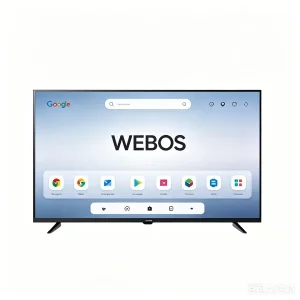
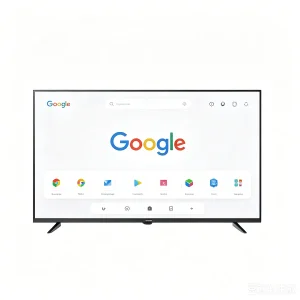
Selecting the correct operating system is as crucial as picking the display panel. We supply certified builds across Google TV, LG webOS Hub, and Android Open Source (AOSP).
| Evaluation Parameter | Google TV (Official Certified) | webOS Hub (LG Ecosystem) | Android AOSP (Open Platform) |
|---|---|---|---|
| Primary Target Markets | North America, Western Europe, Oceania, Tier-1 LATAM | Europe, Middle East, Australia, Hospitality Integrations | Africa, South Asia, Central America, Regional B2B Channels |
| App Store & Ecosystem | Google Play Store (10,000+ TV-optimized apps) | LG Content Store with pre-certified premium VOD | Sideload APKs, Independent App Stores (Aptoide, etc.) |
| DRM & Content Licensing | Widevine L1 + PlayReady (4K Netflix, Prime, Disney+) | Hardware DRM Certified (Native 4K Netflix/YouTube) | Typically Widevine L3 (SD/HD Streaming), highly customizable |
| Voice & IoT Protocol | Google Assistant, Chromecast Built-in, Matter Support | ThinQ AI, Magic Remote Pointer, Apple AirPlay 2 | Infrared/Bluetooth Voice remotes, custom voice engines |
| Hardware Spec Demands | Quad-Core A55, Min 1.5GB/2GB RAM, 8GB/16GB eMMC | Dedicated webOS Silicon, Min 1.5GB RAM, 8GB Flash | Flexible: Scalable from 1GB+8GB up to multi-core configurations |
| OEM Customization Scope | Strict UI guidelines; brand logo on bezel, boot splash | Custom branding, personalized Magic Remote, brand boot | Complete launcher overhaul, custom pre-installed APKs, hotel UI |
Global Supply Chain Structuring: CBU, SKD, and CKD Tariff Engineering
Import tariffs on consumer electronics vary enormously across geopolitical economic zones. Choosing the correct supply modality can lower landed unit costs by 15% to 35%.
CBU: Completely Built Up
Fully assembled, calibrated, packaged televisions shipped ready for retail distribution. Ideal for: Markets with negligible tariff differentials between finished displays and raw sub-assemblies (e.g., EU, UAE, certain South American ports). CBU eliminates local manufacturing capital investments, reduces importer technical risks, and guarantees 100% factory-level quality compliance right out of the unboxed container.
SKD: Semi Knocked Down
Displays are partially assembled into primary sub-systems (e.g., pre-tested open-cell panel and backlight enclosure pre-combined, packaged alongside separate motherboards, power supplies, speakers, and chassis plastics). Ideal for: Countries incentivizing local employment through preferential customs duties without requiring high-capital cleanroom investments. SKD requires modest screwdriver-assembly lines at destination.
CKD: Completely Knocked Down
Components shipped at the elemental level: bare open-cell glass, optical diffusers, LED light bars, bare chassis frames, loose SMT mainboards, wiring harnesses, screws, and flat-packed cartons. Ideal for: Tariff-protected powerhouse markets like Nigeria, Egypt, India, Brazil (Manaus Free Trade Zone), and Argentina. Provides our overseas partners with maximum ocean freight density (up to 3x units per 40ft HQ container) and lowest possible import duty brackets.
Stringent Factory QC Protocols & Global Compliance Clearances
From electrostatic discharge (ESD) prevention to multi-regional tuner calibrations, our Huadu plant subjects every production lot to exhaustive engineering gates.
4-Hour 100% Thermal Aging Chamber Testing
Infant mortality in consumer electronics typically manifests within the initial hours of thermal equilibrium. Unlike cut-rate assemblers that perform random sample testing, WEIER runs every assembled TV unit through our automated high-temperature aging chambers for 4 continuous hours at 40°C ± 2°C with cyclical dynamic stress video loops. This isolates weak solder joints, verifies power supply thermal dissipation, and ensures pristine display driver stability before packaging.
Worldwide RF Tuner Calibration Standards
A global export TV factory must master worldwide terrestrial, cable, and satellite RF transmission standards. Our high-frequency signal generators calibrate mainboard tuners to exact regional bandwidths:
- DVB-T2 / DVB-C / DVB-S2: Europe, Middle East, Africa, Central Asia.
- ATSC 1.0 / ATSC 3.0 (NextGen TV): United States, Canada, Mexico, South Korea.
- ISDB-T (SBTVD): Brazil, Argentina, Peru, Philippines, and broader South America.
Comprehensive International Certifications
Navigating customs clearance without delays requires full documentation. Our export catalog holds complete, current certification archives: CE (RED, LVD, EMC) for European trade borders; FCC Part 15 Class B for North American retail compliance; RoHS & REACH hazardous material compliance; CB Scheme testing for global cross-recognition; plus regional certifications such as NOM (Mexico), SASO (Saudi Arabia), and INMETRO standards.
Engineering the Future: Display Horizons (2025–2030)
How our R&D team is preparing private-label brands for the next generation of visual intelligence, energy constraints, and modular architectures.
Mini-LED Full Array Local Dimming (FALD)
As conventional edge-lit and standard direct-lit architectures reach their contrast limits, our engineering roadmap transitions high-tier OEM programs to Mini-LED backlight arrays. Utilizing thousands of microscopic sub-millimeter LEDs partitioned into 500 to 2,000+ independently controlled local dimming zones, this technology produces peak luminance levels surpassing 1,500 nits. This unlocks breathtaking HDR highlights and near-zero haloing effects, rivaling self-emissive OLED contrast at significantly lower manufacturing costs and zero risk of static image burn-in.
Edge AI Neural Processing Units (NPU)
The next evolutionary leap in image enhancement is onboard neural processing. WEIER's next-generation smart motherboards embed dedicated NPUs capable of up to 4 TOPS (Trillion Operations Per Second) of machine-learning inference. Rather than applying uniform sharpness algorithms, the NPU performs real-time semantic scene classification—distinguishing human facial skin tones, grassy sports fields, starry night skies, and on-screen text subtitles to apply localized dynamic range adjustments and intelligent 8K/4K super-resolution upscaling frame-by-frame.
Ultra-Low Carbon Footprint & Bio-Circular Resins
Stricter European Union Eco-Design mandates and global corporate ESG requirements demand a radical rethinking of television structural enclosures. Our R&D facility has qualified PCR (Post-Consumer Recycled) polycarbonate chassis plastics achieving UL94-V0 flame retardancy while reducing virgin fossil plastic usage by 45%. Concurrently, our ultra-efficient backlight driving circuits lower active power consumption by 22%, ensuring future-proof compliance with tightening EU Energy Efficiency Index (EEI) Class-A and Class-B standards.
Direct Engineering Inquiries & Sourcing Specifications
Straight answers to complex architectural and logistical questions posed by senior procurement teams and international brand directors.
How does Guangzhou Wanteng ensure zero dead pixels across high-volume container runs?
We source exclusively Grade-A+ open-cell glass directly from primary foundries (BOE, CSOT, HKC). During cleanroom COF bonding and final assembly, every single display passes three independent optical inspections: automated dark-field chromaticity cameras, full-screen pure red/green/blue/white visual checks under darkened hoods, and final pre-packaging functional scans. We operate under strict ISO 13406-2 Class I / Class II defect thresholds per client contract specifications.
Can you provide customized boot logos, bespoke launcher APKs, and custom remotes?
Yes. Full OEM/ODM private-label customization is our core competency. For orders reaching standard production MOQs (typically 500 units for mid/large sizes), our firmware engineers burn your custom boot animations, lock default launcher layouts, configure custom hotel management software, and imprint your brand logo on the front bezel, back cover, gift box, user manuals, and customized infrared or Bluetooth voice-control remotes.
What is the standard lead time for trial orders versus repeat 40ft HQ container orders?
Golden sample development and customized firmware builds typically require 10 to 15 business days. Once tooling and artwork are approved, repeat full container-load (FCL) orders average 25 to 30 days for CBU units. For SKD/CKD kits, lead times can be compressed to 18 to 22 days due to reduced testing and assembly bottlenecks on our mainlines.
How do you safeguard fragile open-cell glass during international ocean transit in CKD shipments?
Bare open cells are transported in high-density anti-static cleanroom foam trays inside hermetically sealed vacuum moisture-barrier bags, stacked within heavy-gauge plywood crating reinforced with steel corners. Shock-watch and tilt-watch indicator sensors are fixed to each crate. Backlight units, chassis frames, and electronic boards are segregated in independent export-grade corrugated cartons to avoid abrasion and pressure fractures.
Explore Our Full Range of OEM Commercial & Household Televisions
Select an engineering platform below to initiate custom sample procurement, obtain detailed BOM cost breakdowns, or schedule an on-site Guangzhou factory audit.