Primary OEM Industrial & Commercial Television Systems
Select from our verified production lineup. All standard units support non-smart mainboard modifications, custom scaler architecture, and hospitality firmware locks.
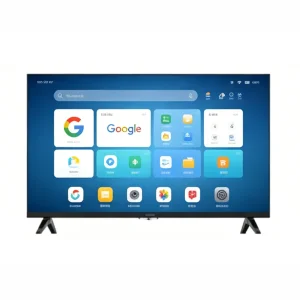
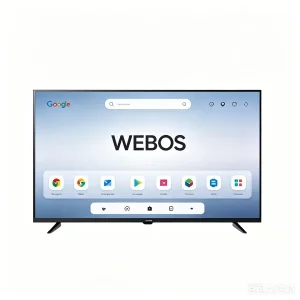
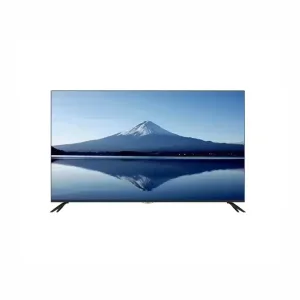
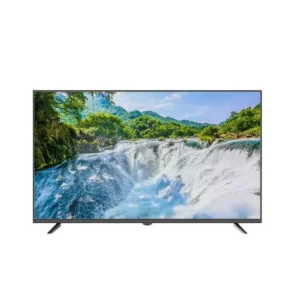
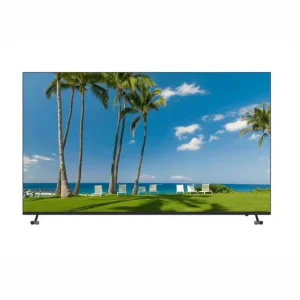

The Non-Smart TV Renaissance: Critical Demand in Global Commercial & Industrial Systems
While consumer electronics markets obsess over connected operating systems, algorithmic telemetry, and content aggregation, international institutional procurement is experiencing an aggressive counter-trend. Global enterprise buyers, healthcare systems, defense facilities, and system integrators are systematically stripping consumer smart platforms from their procurement protocols in favor of dedicated OEM Non Smart TVs.
Zero Telemetry & Absolute InfoSec
Consumer smart TVs running connected operating systems continuously transmit packet metadata, automatic content recognition (ACR) metrics, and Wi-Fi access tokens. In government agencies, banking hubs, and command centers, connected TVs represent unacceptable network attack surfaces. Pure non-smart display architecture delivers physical air-gap security with 0% network breach vulnerability.
Elimination of Software Obsolescence
Consumer Android and proprietary TV OS platforms face deprecation within 24 to 36 months, leading to memory bloat, app launch latency, and abandoned security patching. Non-smart industrial monitors employ dedicated hardware scalers with ultra-fast boot cycles (< 2.8 seconds), maintaining identical responsiveness over 7 to 10 years of continuous commercial deployment.
Pure Media Player Modular Pairing
System integrators in commercial advertising, transportation terminals, and quick-service restaurants prefer feeding signals via high-reliability external media players (BrightSign, SpinetiX, Raspberry Pi, industrial x86 micro-PCs). Non-smart displays eliminate internal OS overhead, eliminating software handshake conflicts and CEC handoff anomalies.
Architectural Comparison: Commercial Non-Smart TV vs. Consumer Smart TV
For professional procurement teams, selecting between smart and non-smart panels is an engineering calculation involving capital expenditures (CAPEX), software maintenance overhead (OPEX), and customs tariff classification dynamics.
| Evaluation Parameter | OEM Industrial Non-Smart TV | Consumer Smart TV (Android / webOS) | B2B Operational Advantage |
|---|---|---|---|
| Boot-to-Signal Latency | < 2.5 Seconds (Direct LVDS/V-by-One pass) | 18.0 - 45.0 Seconds (OS boot, initialization) | Instant operational readiness for public venues |
| Network Attack Vector | Non-Existent (Physical Layer Excluded) | High (Vulnerable to OS malware, open ports) | Meets strict HIPAA, ISO 27001, and military criteria |
| Cold-Boot Recovery | 100% Deterministic (Power-On Auto Wake) | Inconsistent (Often resets to smart launcher) | Essential for automated power-grid control timers |
| Mainboard Thermals | Low TDP (4.5W - 8W heat dissipation) | High TDP (15W - 35W multi-core SOC load) | Prevents thermal throttling; extends capacitor lifespan |
| Import Tariffs (SKD/CKD) | Optimized duty bracket (Pure display module) | Higher tariff classifications (Smart computing node) | Saves 8% to 22% in destination customs duties |
| OS Licensing & Royalty | $0 Royalty / No mandatory account setups | Mandatory OEM license fees & update telemetry | Direct BOM reduction passes on to gross margin |
China Factory 4.0: Supply Chain Resilience & Direct BOM Cost Control
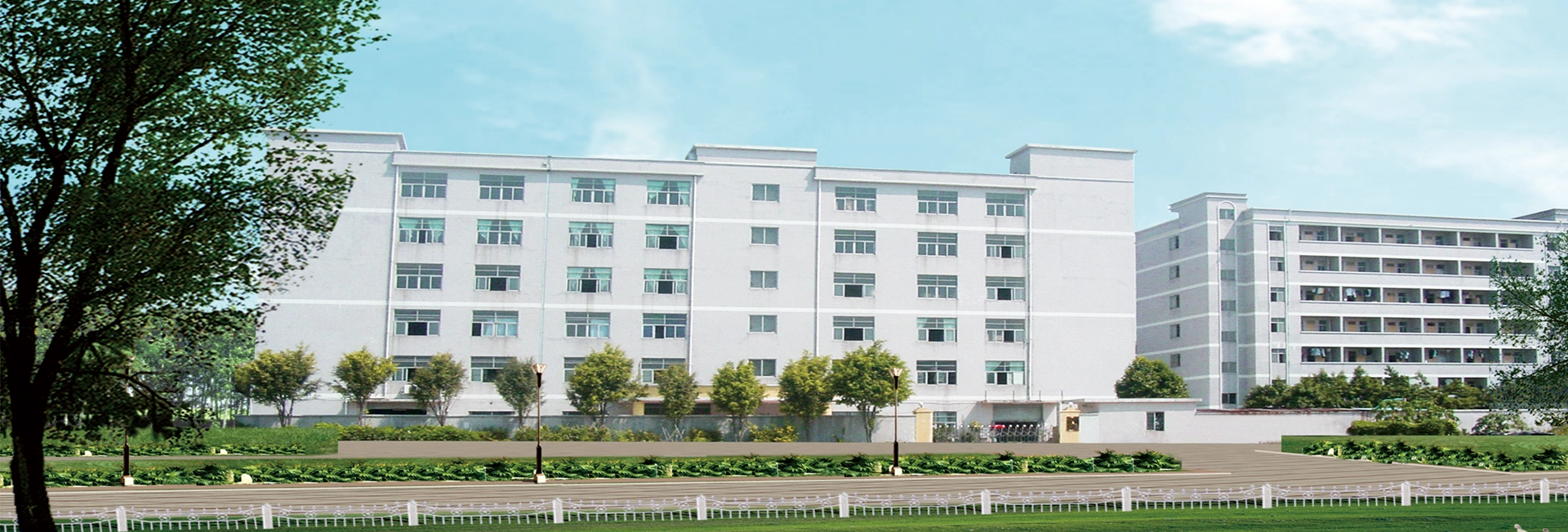
Operating from Fenghuang Anzhi Industrial Area in Huadu District, Guangzhou, WEIER (Guangzhou Wanteng Electronic Co., Ltd.) combines decades of display manufacturing heritage with modern automated assembly protocols. Our 60,000-square-meter facility bridges upstream glass fabrication directly to downstream export shipping lines.
Tier-1 Open-Cell Glass Direct Partnerships
Through long-term direct master contracts with BOE, CSOT, Innolux, HKC, and LG Display, WEIER procures Grade-A open-cell panels without intermediary broker fees. This guarantees pixel-perfect panels (Zero Bad Pixels standard options available) and protects overseas brands from unpredictable spot-market price volatility.
Class-10,000 Cleanroom Optical Backlight Bonding
Dust contamination during optical diffuser and light guide plate (LGP) assembly is the leading cause of panel return rates. Our temperature and humidity-controlled cleanroom lines employ automated COG (Chip-On-Glass) and FOG (Film-On-Glass) bonding systems, maintaining internal dust contamination under 0.03% across mass production runs.
In-House SMT Mainboard Tooling & Custom Firmware
Unlike assembly-only shops, WEIER designs and places surface-mount components on dedicated non-smart TV scalers (MStar/Novatek architectures). Our embedded firmware engineering team writes custom boot animations, sets EDID handshakes, disables non-essential remote codes, and permanently locks volume ranges for institutional security.
Localized Application Scenarios: Commercial, Industrial, and Hospitality Deployments
Standard consumer TVs fail rapidly when subjected to industrial operation hours, elevated ambient dust, fluctuating line voltages, and physical handling. WEIER designs specific hardware profiles tailored to specialized commercial use cases worldwide.
Hospitality Hotel Guestrooms & Healthcare Facilities
Hotels and medical centers demand displays that prevent guests from altering system configurations, pairing rogue Bluetooth connections, or leaving private personal streaming credentials behind. Our OEM Non Smart TVs feature Industrial Hotel Mode: default start-up volume capping, channel remapping, custom welcome splash screens, and RS-232 / RJ-12 master control communication for centralized property management systems (PMS).
24/7 CCTV Monitoring Centers & Security Control Rooms
Security surveillance requires displays capable of running uninterrupted 24 hours a day, 365 days a year without pixel burn-in or capacitor degradation. Our industrial non-smart monitoring screens feature dynamic anti-burn-in pixel shifting algorithms, reinforced heat-sink backplates, and wide-viewing angle IPS panels with composite BNC inputs and HDMI 2.0 loop-through compatibility.
Retail Digital Signage & Quick-Service Restaurant Menu Boards
Food service and retail environments expose displays to ambient grease, dust, and continuous commercial illumination requirements. Our non-smart screens provide high-luminance backlights (450 to 700 nits options), anti-glare coatings, and portrait/landscape orientation mounting support, seamlessly receiving real-time scheduled updates from external cloud media players.
Education Classrooms & Institutional Training Rooms
Educational institutions require robust, low-maintenance screens that function predictably as presentation targets for laptops, document cameras, and wireless casting adapters. Non-smart engineering guarantees that no software updates fail minutes before a lecture, providing instant input auto-detection across HDMI, VGA, and USB playback.
SKD & CKD Kits: Unlocking Tariff Optimization for Global Importers
For importers and national distributors in regions such as Latin America (Brazil, Argentina, Colombia), Africa (Nigeria, Egypt, Kenya), and South Asia, shipping fully assembled Complete Built Units (CBU) often incurs prohibitive import duties ranging from 20% to 45%. WEIER specializes in precision SKD (Semi Knocked Down) and CKD (Completely Knocked Down) kits.
SKD (Semi Knocked Down) Supply
The LCD panel is pre-assembled with the backlight chassis, while mainboards, power units, speakers, plastics, and accessories are packed into high-density master cartons. This significantly lowers labor time on local assembly lines while reducing container freight volume by up to 40% compared to CBU shipping.
CKD (Completely Knocked Down) Architecture
For large-scale domestic TV manufacturers aiming to maximize local value addition and satisfy national industrialization quotas. Open-cell glass, backlight LED strips, diffuser films, bezels, screws, and mainboards are shipped in bulk custom pallets. A 40HQ container can accommodate up to 2,800+ units of 32-inch sets in CKD format.
Factory Technical Transfer & Standard Operating Procedures
WEIER does not simply ship parts; our engineering division provides comprehensive Standard Operating Procedures (SOP), clean-bench layout blueprints, optical alignment calibration jigs, and on-site or video-link assembly technician training to guarantee local zero-defect yields matching our Guangzhou plant standards.
Multi-Stage Quality Auditing: Zero-Defect Manufacturing Protocols
Every production lot undergoes our standardized 5-tier quality inspection cycle before releasing export customs documentation. We welcome third-party international inspection agencies (SGS, TÜV, Bureau Veritas) to inspect during mass production or container loading.
1. IQC Optical Inspection
100% incoming open-cell inspection under optical microscope benches to verify zero particle ingress, uniform polarization layers, and sub-pixel switching consistency.
2. 4-Hour Burn-In Thermal Test
100% of manufactured mainboards and LED backlights undergo full-screen high-temperature thermal cycling stress tests (45°C ambient) to eliminate early capacitor or diode failures.
3. High-Voltage Surge Test
Dielectric breakdown and AC high-pot testing (3,000V AC isolation) to ensure power supply units resist unexpected industrial grid voltage surges and electrical brownouts.
4. Drop & Vibration Stress
ISTA-1A certified drop testing and simulated sea freight mechanical vibration to guarantee export honeycomb cartons and custom molded EPS foam protect internal glass in transit.
Frequently Asked Questions: OEM Non Smart TV Sourcing
Key commercial, technical, and regulatory clarity for overseas purchasing managers and project procurement directors.
Why do commercial enterprise buyers specify Non-Smart TVs over Smart TVs?
Can WEIER produce customized Non-Smart TVs with dedicated Hotel Mode firmware?
What are the Minimum Order Quantities (MOQ) for custom OEM private labeling?
Which global TV tuner broadcasting standards do your mainboards support?
What is the advantage of sourcing SKD or CKD kits over fully finished CBU sets?
What international quality certifications do your displays comply with?
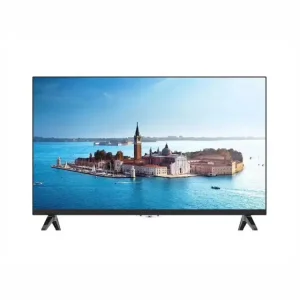
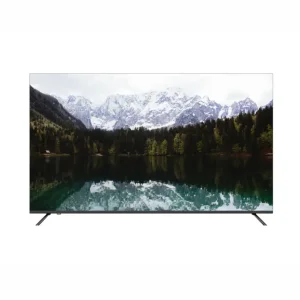
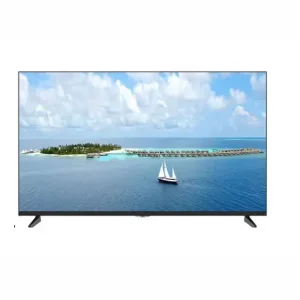
Enterprise Display Models: Large-Format, Borderless & Custom Commercial Tiers
Engineered for high-traffic environments, commercial boardrooms, luxury hotel suites, and retail display networks.
Specify Your Non-Smart Display Project with WEIER Engineers
Connect directly with our engineering division in Huadu District, Guangzhou. Receive complete bill-of-materials (BOM) quotations, panel cut sheets, SKD container packing plans, and customized hotel firmware specifications within 24 business hours.