Primary OEM/ODM Direct-Lit & Smart TV Production Models
Standardized chassis, customizable open-cell panel pairings, and precision-engineered LED-behind-screen optical arrays ready for containerized overseas shipment.
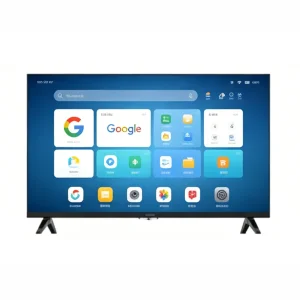
OEM 32-inch Full HD webOS Smart TV, LG System, for home, bedroom, hotel, commercial, and export use Suppliers, Supplier
Configure Specification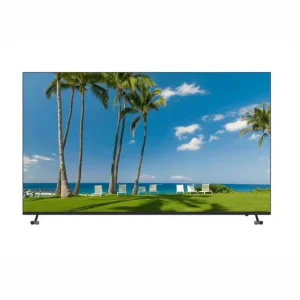
High-Quality 85 -inch 4K QLED Android Smart Voice TV, ultra-high definition large screen, flagship model for home and commercial use, export only. Suppliers, Manufacturer
Configure Specification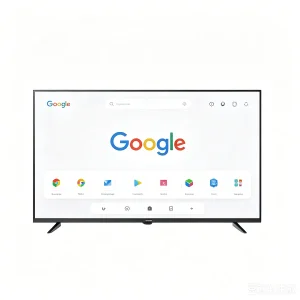
High-Quality 43-inch 4K QLED Google Smart TV, Google TV Export Network TV Factory Factory, Manufacturers
Configure Specification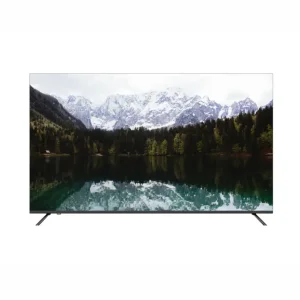
High-Quality 65-inch 4K OLED self-emissive Android smart TV with Dolby Vision HD TV Factory, Manufacturers
Configure Specification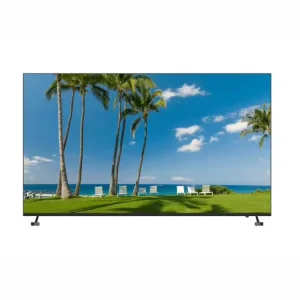
High-Quality 100-inch 4K Explosion-proof Smart TV with Tempered Glass Screen, Suitable for Hotels, KTVs, Commercial Use, and Export Supplier, Manufacturers
Configure Specification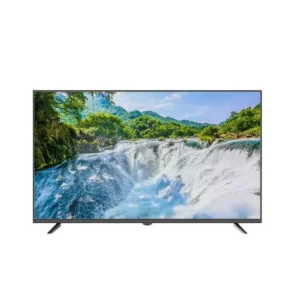
High-Quality 43-inch Borderless FHD Android Smart TV – Wholesale & Custom for Hotel, Supermarket & Engineering Projects Supplier, Manufacturer
Configure Specification
OEM 75 -inch 4K QLED Android Smart Voice TV, Ultra HD Large Screen, Home/Commercial/Export TV Factories, Manufacturers
Configure Specification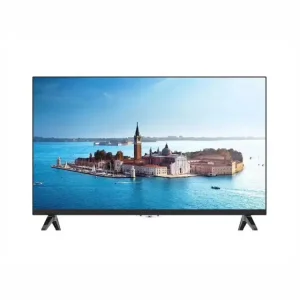
OEM Borderless 32 inch high-definition Android smart TV wholesale for supermarkets, high-definition network TVs Factory, Supplier
Configure SpecificationDirect Backlit (DLED) vs. Edge-Lit (ELED): The Science Behind Modern OEM Television Illuminance
In television manufacturing terminology, LED Behind TV refers strictly to direct backlighting architectures—where the Light Emitting Diode array is positioned perpendicularly across the full spatial backplane of the Liquid Crystal Display (LCD) glass panel. Understanding the optical and thermal trade-offs between Direct-Lit (DLED) and Edge-Lit (ELED) systems is critical for commercial importers and consumer electronics brands calculating bill of materials (BOM), shipping cubic meters (CBM), and long-term Field Failure Rates (FFR).
Optical Cavity & Optical Distance (OD)
Standard DLED architectures utilize optical distances ranging from OD20 to OD35, balancing spatial depth with secondary PMMA lens beam expansion angles (typically 160° to 175°). This ensures luminance uniformity exceeding 85% without hot spots or yellow-edge chromatic fringing, eliminating the warping risks endemic to acrylic Light Guide Plates (LGP).
Thermal Dissipation & Aluminum Backplates
Placing LED bars directly behind the LCD substrate allows direct mechanical coupling to the galvanized steel (SECC) or aluminum chassis. This thermal path maintains LED junction temperatures (Tj) below 75°C under continuous 24/7 drive currents, extending panel half-life (L50) beyond 50,000 operational hours in high ambient heat.
Cost Yield & Assembly Resilience
DLED eliminates high-cost extruded polymethyl methacrylate (PMMA) optical light guide plates prone to shipping degradation and thermal warping. By relying on reflective paper, secondary wide-angle optical lenses, and micro-diffuser sheets, DLED maximizes structural yields during SKD/CKD handling across volatile ocean-freight transit.
| Architecture Metric | Direct-Lit DLED (Behind TV) | Edge-Lit ELED (Perimeter) | Mini-LED Full Array (FALD Behind TV) |
|---|---|---|---|
| LED Array Topology | Perpendicular planar matrix (horizontal strips) | Single/Dual lateral edge light bars | High-density matrix (>1,000–10,000 micro-dies) |
| Optical Thickness (Chassis Depth) | 50 mm – 85 mm (Robust commercial) | 9 mm – 25 mm (Ultra-slim profile) | 20 mm – 45 mm (Precision optical cavity) |
| Peak Luminance Range | 250 – 450 cd/m² (Typical B2B/Retail) | 220 – 350 cd/m² (Thermal constrained) | 800 – 2,000 cd/m² (HDR10+ / Dolby Vision) |
| Luminance Uniformity | 85% – 92% (No edge bleed) | 70% – 80% (Edge vignetting common) | 92% – 98% (Dynamic multi-zone dimming) |
| BOM Cost Index (Relative) | Base (1.0x - Most cost-effective) | 1.25x – 1.40x (LGP & heat sink cost) | 2.20x – 3.50x (Driver ICs & micro-LED cost) |
| Mechanical Durability (SKD/CKD) | Exceptional (Zero brittle acrylic LGP) | Moderate (Prone to plate displacement) | High (Surface-mounted matrix module) |
Global Industrial Landscape: Tariff Engineering, SKD/CKD Shifts & Regional Demand
The international supply chain for flat-panel televisions has evolved from complete built-up unit (CBU) exports to multi-tier, modular supply arrangements. As sovereign regulatory regimes adjust import tariffs to protect domestic assembly industries, OEM suppliers must provide flexible manufacturing configurations engineered for local value addition.
North American Compliance
Focus centers on FCC Part 15B RF mitigation, UL 62368-1 electrical isolation, and California Energy Commission (CEC) Title 20 power limits, alongside ATSC 1.0/3.0 NextGen tuners and Google TV ecosystem licensing.
European Eco-Design & ErP
Stringent compliance with EU 2019/2021 energy efficiency indexing (EEI), WEEE circularity declarations, CE LVD/EMC directives, and DVB-T2/C/S2 integrated tuner mainboards for multi-lingual broadcast reception.
Latin America Tariff Balancing
Navigating Brazil's Manaus Free Trade Zone (PPB) rules and Mercosur tariff barriers through custom Semi-Knocked-Down (SKD) and Completely-Knocked-Down (CKD) packing schemes, saving 15% to 35% in landing duties.
Middle East & African Grids
Wide-voltage switch-mode power supplies (SMPS) capable of withstanding 90V–290V fluctuating input grids, paired with high-surge 4kV varistors to prevent field board failure in emerging markets.
China Factory Supply Chain Resilience: The Greater Bay Area Cluster Advantage
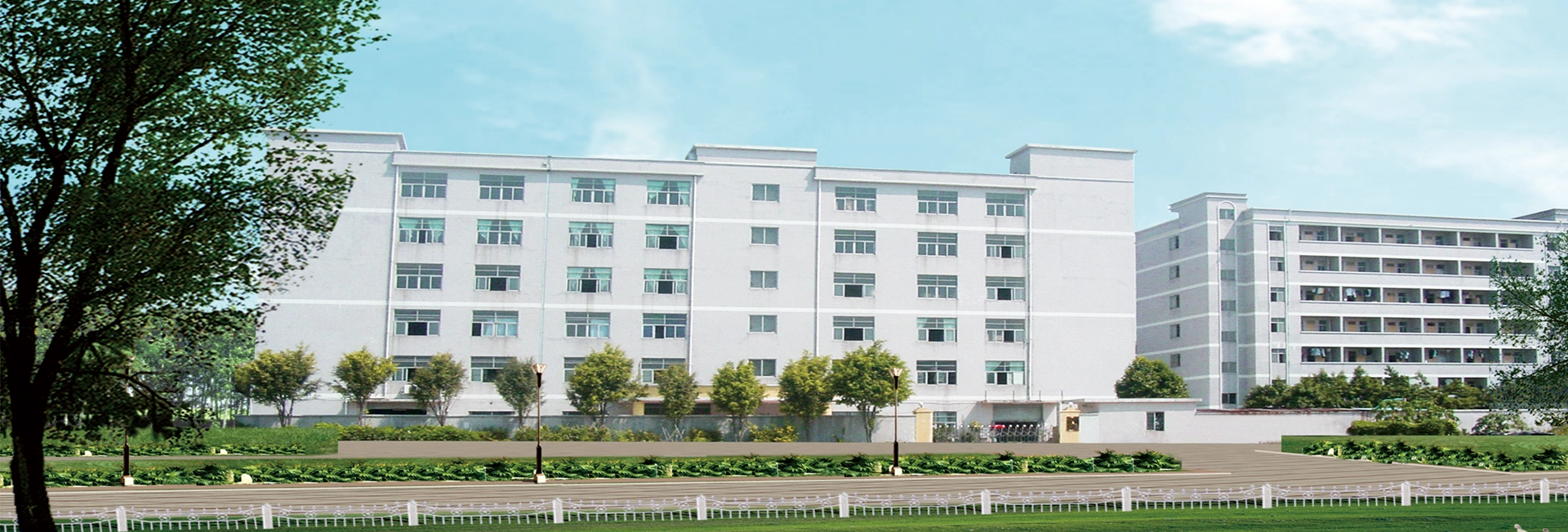
Located in Huadu District, Guangzhou, Guangzhou Wanteng Electronic Co., Ltd. (WEIER) leverages the world's most concentrated display ecosystem. Operating within a 50-kilometer radius of leading panel fabrication foundries and semiconductor packaging centers, our facilities achieve rapid prototyping, uncompromised component traceability, and dynamic cost optimization.
Tier-1 Open-Cell Glass Allocation
Direct contractual allocations with world-leading TFT-LCD glass fabricators—including BOE, CSOT (China Star Optoelectronics Technology), HKC, and Innolux. We secure Grade-A, zero-bright-dot panels, matching a-Si TFT and Oxide TFT substrates with custom backlighting designs.
High-Speed SMT & LED Packaging
Our automated surface-mount technology (SMT) lines populate LED drive light strips utilizing high-lumen-per-watt (130–160 lm/W) flip-chip and CSP (Chip Scale Package) diodes. Dedicated optical lens dispensers ensure ±0.02 mm placement accuracy, preventing field lens detachment and optical haloing.
Precision Sheet Metal Tooling
In-house structural stamping for chassis backplates guarantees precise mechanical tolerances for borderless and frameless enclosure configurations. High-rigidity backplates shield delicate COF (Chip on Film) tab ICs from torsion and bending stresses during ocean container handling.
Technology Roadmap: The Evolution from DLED to Mini-LED, Quantum Dots & AI Local Dimming
The continuous pursuit of infinite contrast ratios and wide color gamuts (WCG) without the degradation and burn-in risks of OLED has accelerated innovation in backplane illumination. The LED-behind-panel architecture serves as the fundamental launchpad for next-generation consumer and commercial visual systems.
Quantum Dot Enhancement Films (QDEF)
By layering cadmium-free nanocrystal quantum dot films between the direct-lit blue LED array (450 nm) and the liquid crystals, our QLED panels achieve over 95% DCI-P3 color coverage. This architecture generates pure primary red and green emissions while maintaining thermal stability.
Mini-LED Full Array Local Dimming (FALD)
Migrating from traditional 10–24 zone DLED to 512, 1,152, and 2,048-zone active-matrix (AM) Mini-LED architectures. Real-time sub-millisecond local current modulation suppresses halo artifacts while unlocking 1,500+ nits specular highlights for True HDR mastering.
Zero-OD Optical Collimation
R&D into micro-lens arrays (MLA) directly molded onto LED packaging allows optical distances to drop from OD25 down to OD5 and zero-OD. This enables factory partners to market televisions boasting the extreme slimness of edge-lit displays with the superior contrast of full backplane arrays.
Engineering for Environment: Localized Application Scenarios
Television backlighting and chassis thermal engineering cannot rely on a single uniform standard. Operating environments—ranging from dust-heavy retail venues to high-humidity coastal resort suites—require specific panel configurations, custom backlight drivers, and reinforced enclosures.
Hospitality & Hotel IPTV Systems
Designed for 16/7 continuous guest room operation. Configured with commercial-grade webOS or Android platforms supporting Pro:Centric and Lynk DRM, customizable boot video branding, volume-limiting locks, RJ45 IP control, and flame-retardant rear casing (UL94-V0).
Commercial Retail & Supermarkets
High-traffic retail showcases demand enhanced 400+ nit DLED backlights to combat overhead fluorescent illumination. Paired with wide-viewing-angle IPS/ADS open cells and 4mm explosion-proof tempered front glass for high-traffic impact resilience.
Industrial Security & Control Rooms
Engineered for genuine 24/7 continuous surveillance monitoring. Upgraded low-ESR solid electrolytic capacitors, enhanced chassis heat fins, anti-burn-in pixel shifting algorithms, and multi-channel HDMI/BNC connectivity prevent image retention and system lockups.
Next-Gen High-Refresh Gaming
Direct backlighting tailored for zero-blur gaming lines. Supporting native 120Hz/144Hz panel refresh rates via MEMC (Motion Estimation, Motion Compensation), Variable Refresh Rate (VRR), Auto Low Latency Mode (ALLM), and HDMI 2.1 eARC integration.
Localization Support, Frequency Tuners & Global Compliance Assurance
Entering regional electronics markets requires strict regulatory alignment with local electromagnetic compatibility (EMC), RF safety, environmental hazardous substances, and broadcast reception standards. Our factory provides end-to-end documentation, testing coordination, and firmware adaptation for rapid customs clearance.
Global Broadcast Tuner Modularity
Mainboards are pre-certified with regional front-end RF demodulators: DVB-T2/C/S2 (Europe, Middle East, Africa), ATSC 1.0/3.0 (North America, South Korea), and ISDB-T (Latin America, Japan, Philippines). CI+ 1.4 conditional access modules integrated upon request.
Smart OS Legal Licensing
Eliminate customs seizure and copyright liability. Full official factory authorization for Google TV (Android 11/12/14 GTV) with pre-certified Widevine L1, Netflix 4K, and Prime Video, or official LG webOS Hub ecosystems with original Bluetooth Magic Remote synchronization.
Energy Star & ErP Certification
Power supply architectures calibrated to achieve <0.5W ultra-low standby power consumption. High-efficiency primary-side regulation (PSR) converters and adaptive backlight dimming profiles allow private-label brands to achieve high ratings under updated EU Energy Labeling and US Energy Star v8.0 benchmarks.
From Engineering Brief to Port Loading: The 6-Stage OEM Workflow
A battle-tested production framework honed over three decades, ensuring zero variation between approved Golden Samples and 40HQ containerized mass shipments.
Engineering Specification
Analysis of target market demographics, broadcast tuner requirements, UI operating system, open-cell glass choice (IPS vs. VA), and desired optical brightness levels (250 to 500+ nits).
Mainboard & Power Layout
Matching high-speed SoC silicon (MediaTek / Realtek) with customized 2-in-1 or 3-in-1 power-backlight driver boards engineered to withstand regional grid voltage fluctuations.
Optical Cavity Calibration
Optical simulation of LED emitter pitch, secondary PMMA lens curvature, and diffuser sheet stack-up to guarantee over 85% illuminance uniformity without optical banding.
Golden Sample Sign-Off
Production of functional pre-production prototypes featuring client brand silkscreening, customized boot animations, remote control silk-print, and drop-tested gift-box packaging.
Automated Mass Assembly
Assembly across six high-speed cleanroom lines, incorporating 100% automated optical inspection (AOI), color temperature balance alignment, and mandatory 4-hour high-temperature aging chambers.
Export Logistics & CBM Optimization
Custom palletizing or high-cube nesting for CBU units or compact high-density SKD/CKD packaging, maximizing container loading factors to minimize per-unit ocean freight expenditure.
Frequently Asked Questions: Sourcing from OEM TV Manufacturers
Critical procurement insights regarding panel tiers, optical configurations, minimum order quantities, and after-sales support protocols.
What is the primary difference between DLED and ELED in OEM production?
DLED (Direct-Lit) arranges LED light bars uniformly across the rear chassis behind the LCD glass, using wide-angle lenses to illuminate the screen. ELED (Edge-Lit) places LED strips along the edges, using an acrylic Light Guide Plate (LGP) to redirect light. DLED delivers higher peak brightness, superior thermal longevity, lower BOM cost, and eliminates edge backlight bleeding, whereas ELED offers an ultra-thin physical cabinet.
What open-cell panel brands are integrated into your smart TV lines?
We maintain long-term Tier-1 glass procurement relationships with BOE, CSOT (TCL China Star), HKC, Innolux, and AUO. We supply both IPS (In-Plane Switching) / ADS panels for ultra-wide viewing angles and VA (Vertical Alignment) panels for deep native contrast ratios (up to 5000:1). All panels undergo incoming quality control (IQC) verifying Grade-A zero-bright-dot standards.
Can you provide SKD and CKD television shipments for local factory assembly?
Yes. We are a major global supplier of SKD (Semi-Knocked Down) and CKD (Completely Knocked Down) television kits, shipping over 200,000 sets monthly. SKD packages typically include open-cell glass pre-mounted in front bezels with loose mainboards, power boards, speakers, and cables. CKD supplies bare mechanical parts, unbonded open cells, and SMD light bars for high-tariff markets like Egypt, India, Nigeria, and Brazil.
Which smart TV operating systems are legally licensed for export?
We supply three primary platforms: (1) Certified Google TV (Android TV 11/12/14) with native Google Play, Google Assistant voice control, and pre-integrated Widevine L1 Netflix 4K certification; (2) Official LG webOS Hub with Magic Remote cursor pointing; and (3) Cost-optimized AOSP (Android Open Source Project) Android for regional commercial displays and price-sensitive channels.
What is the typical Minimum Order Quantity (MOQ) for private-label OEM orders?
Standard MOQ for complete private-label branding (custom silkscreen logo, bespoke gift box packaging, custom remote control print, and customized OS boot animation) starts at one 20GP container (approx. 400 to 800 units depending on screen sizes from 32" to 75"). Mixed-size container loading is supported for trial verification orders.
What international certifications do your televisions carry?
Our export models are engineered to comply with major global import frameworks, including CE (LVD, EMC, RED directives for the European Union), FCC Part 15 Class B (United States), RoHS Directive (hazardous substances limits), CB Scheme (international safety certification), SASO (Saudi Arabia), and NOM (Mexico). Verified test reports from accredited labs (SGS, TUV, Intertek) are available to importing partners.
High-Performance Commercial & Premium Flagship Series
Direct factory pricing on large-format QLED, frameless hospitality panels, and ultra-high-definition displays engineered for global brand distributors.
High-Quality 65-inch 4K OLED self-emissive Android smart TV with Dolby Vision HD TV Factory, Manufacturers
Request Factory Quote
High-Quality 100-inch 4K Explosion-proof Smart TV with Tempered Glass Screen, Suitable for Hotels, KTVs, Commercial Use, and Export Supplier, Manufacturers
Request Factory Quote
High-Quality 43-inch Borderless FHD Android Smart TV – Wholesale & Custom for Hotel, Supermarket & Engineering Projects Supplier, Manufacturer
Request Factory Quote
OEM 75 -inch 4K QLED Android Smart Voice TV, Ultra HD Large Screen, Home/Commercial/Export TV Factories, Manufacturers
Request Factory Quote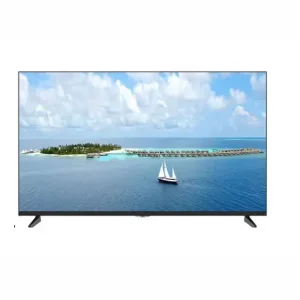
High-Quality 55-inch 4K QLED Android Smart TV with Frameless Design , Dolby Vision, Flagship Model for Home, Commercial, and Export Use Factories, Manufacturer
Request Factory Quote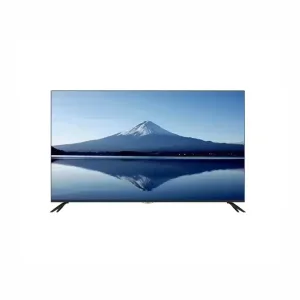
Wholesale Frameless 50-inch 4K Q LED Android Smart TV, Ultra HD HDR, for Home, Commercial, and Export Use Suppliers, Supplier
Request Factory Quote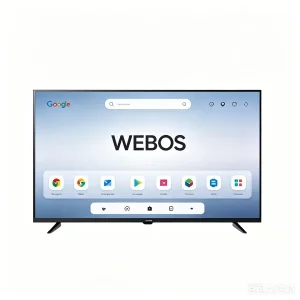
OEM 43-inch 4K UHD webOS Smart TV with AI, source manufacturer for home and hotel use, export Factory, Manufacturer
Request Factory Quote
High-Quality 85 -inch 4K QLED Android Smart Voice TV, ultra-high definition large screen, flagship model for home and commercial use, export only. Suppliers, Manufacturer
Request Factory QuoteInitiate Your OEM/ODM Smart TV Production Project
Partner with Guangzhou Wanteng Electronic Co., Ltd. (WEIER) for transparent manufacturing, rigorous Quality Control protocols, and factory-direct pricing on CBU, SKD, and CKD smart TV orders.