Engineered Display Lineup for OEM Sourcing
Explore flagship smart display platforms engineered with tier-1 open-cell panels, customized SoC motherboards, and modular mechanical tooling for global distribution.

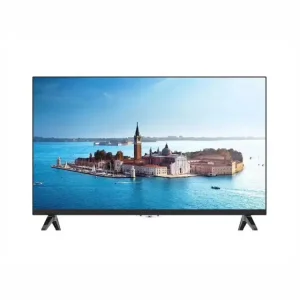
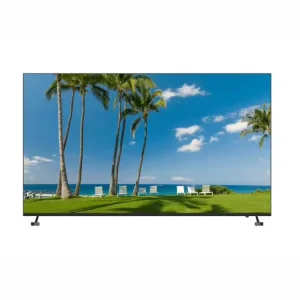
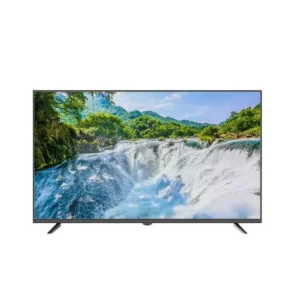
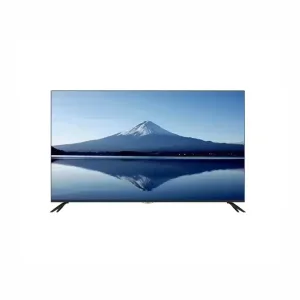
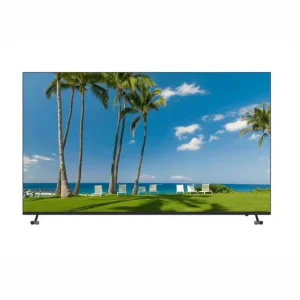
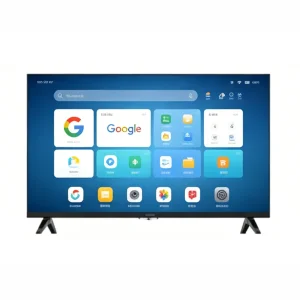
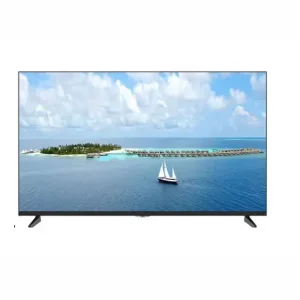
The Paradigm Shift in OEM LCD & LED Television Manufacturing
From commodity CCFL panel assembly to sophisticated quantum-dot matrix architectures and carrier-grade embedded operating systems, the global television manufacturing paradigm requires deep supply-chain integration.
Next-Gen Optical Stacks
The progression from Edge-lit (E-LED) backlights to Direct-lit (D-LED) optical arrays and localized Quantum Dot Enhancement Films (QDEF) has democratized Wide Color Gamut (WCG) coverage beyond 95% DCI-P3. OEM manufacturers must continuously balance optical distance (OD20 vs. OD35) with slim bezels and thermal dissipation efficiency across high-brightness applications.
Global Open-Cell Rationalization
Consolidation among Tier-1 glass panel foundries (CSOT, BOE, HKC, Innolux) has transformed the OEM procurement paradigm. Leading television suppliers no longer rely on spot-market buys; they maintain strategic volume commitments for G8.5 and G10.5 substrate cuts, ensuring consistent sub-pixel uniformity, high yield rates, and zero-dead-pixel standards for private-label distributors.
Tri-Platform Operating Matrix
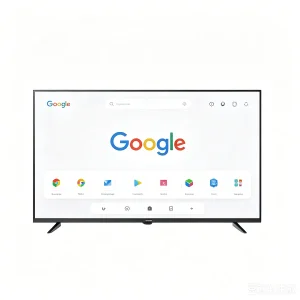
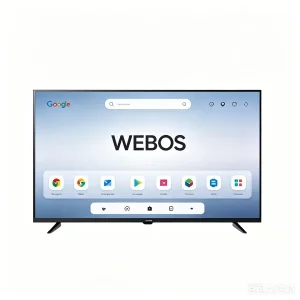
Software has superseded baseline hardware as the ultimate consumer battleground. Modern OEM factories must provide native firmware validation across three mainstream ecosystems: Google TV (Android 11/12/14 GMS certified), LG webOS Hub with Magic Remote interoperability, and lightweight AOSP distributions tailored for cost-optimized regional streaming deployments.
Addressing Global B2B Buying Intent: CBU vs. SKD vs. CKD Logistics
Enterprise procurement directors must navigate customs tariff schedules, localized industrialization decrees, and regional logistics infrastructure when planning cross-border consumer display manufacturing.
CBU (Completely Built Unit)
Ideal for established regional retail chains, commercial hotel deployments, and importers operating in markets with flat import duty structures. Units are factory-calibrated, 100% packaged in drop-tested gift boxes, and pre-loaded with localized firmware, allowing immediate retail shelf-placement upon container discharge.
- Zero domestic assembly overhead or cleanroom requirements.
- Uniform factory warranty with end-to-end component traceability.
- Optimized for low-to-medium tariff jurisdictions (e.g., North America, EU).
SKD (Semi-Knocked Down)
The strategic midpoint for emerging markets with tiered customs duties (e.g., Egypt, Nigeria, Brazil). Displays are shipped with the front cabinet and open-cell panel pre-laminated, while motherboards, power supplies, speaker assemblies, and back covers are packaged in modular bulk containers.
- Substantial savings of 12% to 25% on ad valorem customs duties.
- Low tooling entry barrier: requires only basic ESD-safe manual assembly lines.
- Protects delicate open-cell glass from transit contamination and micro-fractures.
CKD (Completely Knocked Down)
Engineered for high-volume domestic manufacturers seeking maximum local-content certification. Components arrive as individual bare PCBs, raw metal backplates, optical sheets, LED light bars, plastic injection shells, and unpackaged open-cell glass requiring cleanroom bonding.
- Maximizes domestic tax incentives and regional manufacturing subsidies.
- Substantially cuts ocean freight cubic meters (CBM) per finished TV.
- Requires Class 10,000 cleanroom facilities and COG/FOG bonding infrastructure.
Enterprise-Grade Display Architectures Across Global Verticals
Consumer televisions fall short in harsh commercial environments. Our OEM engineering matrix customizes motherboard layout, thermal venting, panel hardening, and software locking across target industry segments.
Hospitality & Commercial Accommodations
Custom hotel display architectures featuring Pro:Centric and IPTV middleware compatibility. Features include volume-limiting controls, customized interactive welcome portals, secure RF/IP channel mapping, isolated guest privacy wiping on power-cycle, and dedicated commercial RJ45/RS232 central management.
High-Traffic Public & Entertainment Venues
Engineered for sports bars, KTV establishments, gaming lounges, and public transport hubs. Displays incorporate 7H hardness explosion-proof tempered glass optically bonded to the bezel, metal back-chassis enclosures, and anti-glare coatings to withstand impact and continuous ambient lighting.
Supermarket & Mass Retail Private Labels
Value-engineered for high-volume turnover in competitive retail networks. Emphasizes sleek frameless bezels, energy-efficient power topologies conforming to EU ErP Lot 5 standards, customized regional packaging, and multi-lingual UI/remote setups matching national consumer demographics.
International Regulatory Compliance & Factory Inspection Standards
Cross-border consumer electronics trade hinges upon strict statutory compliance. Every chassis and mainboard leaving the production floor undergoes rigorous electromagnetic, safety, and operational testing.
| Target Region | Mandatory Certifications | Testing & Technical Benchmarks | OEM Factory Implementation |
|---|---|---|---|
| European Union (EU) | CE (LVD/EMC), RED, RoHS 2.0, REACH, ErP Lot 5 | EN 62368-1 audio/video safety; EN 55032 Class B RF emissions; standby power consumption under 0.50W with active network management. | Lead-free SMT soldering lines; automated eco-standby firmware timeouts; full toxicological traceability reports for injection plastics. |
| North America (US & CA) | FCC Part 15B, UL 62368-1, Energy Star 8.0, ICES-003 | Conducted and radiated emissions verification; high-voltage surge withstand (differential and common mode); fire-retardant 94V-0 cabinet resin. | Shielded tuner cages; dedicated low-noise power-supply isolation; UL-traceable flame-retardant back chassis molding. |
| Latin America (LATAM) | NOM (Mexico), Anatel (Brazil), SEC (Chile), IRAM | ISDB-T / ATSC tuner decode stability; high-humidity tolerance testing (95% RH at 40°C); broad input voltage tolerance (90V-260V AC). | Wide-range switch-mode power supply (SMPS) topologies; tropicalized conformal PCB coatings protecting circuits from mold and moisture. |
| Middle East & Africa | SASO (Saudi Arabia), G-Mark, SABS, SONCAP | Extreme ambient thermal survival (50°C continuous operation); unstable electrical grid surge suppression up to 3000V. | Heavy-duty metal heat sinks on Main ICs; dual-stage varistor surge suppression circuits on input AC filters. |
Display Technology Architectural Matrix
Compare baseline engineering parameters to determine the optimum performance-to-cost tier for your private label or brand distribution program.
| Display Stack | Peak Luminance | Color Gamut | Contrast Ratio | MTBF Lifespan | OEM Cost Index | Target Market Application |
|---|---|---|---|---|---|---|
| Standard D-LED (Direct) | 200 – 280 nits | 72% NTSC (Rec.709) | 3,000:1 (VA) / 1,200:1 (IPS) | 30,000 Hours | Tier 1 (Base Economy) | Mass retail, budget supermarket lines, entry hospitality units (32"-43"). |
| QLED (Quantum Dot) | 350 – 500 nits | 95%+ DCI-P3 | 5,000:1 (VA Direct) | 50,000 Hours | Tier 2 (+25% over D-LED) | Flagship living room lines, executive boardroom displays (50"-85"). |
| Commercial Explosion-Proof | 300 – 450 nits | 85% NTSC (Wide Gamut) | 4,000:1 (Tempered) | 50,000 Hours | Tier 3 (+40% over D-LED) | KTV rooms, bars, public transit terminals, educational displays (65"-100"). |
| Self-Emissive OLED | 800 – 1,000 nits | 99% DCI-P3 | Infinite (True Black) | 30,000 Hours | Tier 4 (Premium Luxury) | High-end custom integration, luxury home theater, pro color-grading (55"-65"). |
Frequently Answered Technical & Contract Questions
Clear, direct answers from our factory engineering and international trade logistics teams on key variables influencing volume orders.
What is the typical Minimum Order Quantity (MOQ) for custom tooling and branding?
For standard silk-screened front logos, custom gift box packaging, and personalized boot animations utilizing our existing public injection molds, our baseline MOQ is typically one 20GP container (approx. 350-800 units depending on screen size). Custom private-mold chassis tooling requires minimum runs of 10,000 units to amortize tooling and mold-die fabrication costs.
How does the factory address official licensing for Google TV, webOS, and Dolby?
We work directly with certified platform solutions providers (Mstar, Realtek, Novatek, MediaTek). Clients opting for official Google TV must possess active Android EDLA/GMS licensing agreements or sign through our authorized ODM license pools. Dolby Vision and Dolby Atmos require active royalty clearances, which can be invoiced transparently per unit on the commercial bill of lading.
What incoming and outgoing quality control protocols are applied to open cells?
Every batch of open-cell glass undergoes 100% optical inspection under polarized inspection lights to screen for Mura, gate-driver failures, and dead pixels. Our policy guarantees Tier-1 Grade A+ performance (ISO 13406-2 Class II standard, maximum 0 bright / 2 dark sub-pixels). Finished units undergo a mandatory 4-hour continuous burn-in aging test at 40°C before final acoustic, high-pot, and packaging drop testing.
Can you support split shipments or provide SKD packing with customized master cartons?
Yes. For SKD logistics, we engineer specialized heavy-duty honeycomb carton crates with ESD-shielded interior trays that optimize ocean container volume while preventing panel vibration during maritime transport. Spare parts (FPC cables, power ICs, driver boards, LEDs) are packaged at a standard 1% free-of-charge contingency ratio per container.
Commercial & Smart Television Export Solutions
Review our specialized configurations including tempered explosion-proof panels, self-emissive OLED platforms, and voice-enabled smart television architectures.