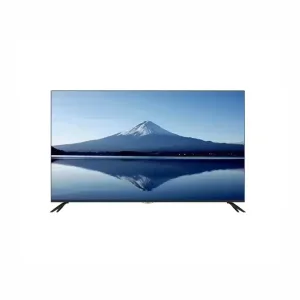
Flagship Commercial & Residential Display Series
Direct-from-factory production lines featuring 4K UHD, QLED wide color gamut arrays, tempered safety glass, and multi-region smart operating firmware for global distribution.
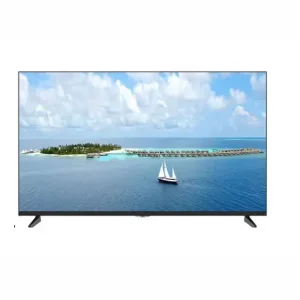
High-Quality 55-inch 4K QLED Android Smart TV with Frameless Design, Dolby Vision
Inquire Sourcing Specs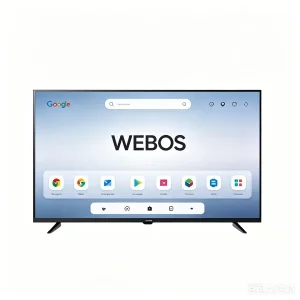
OEM 43-inch 4K UHD webOS Smart TV with AI, Source Manufacturer for Home and Hotel
Inquire Sourcing Specs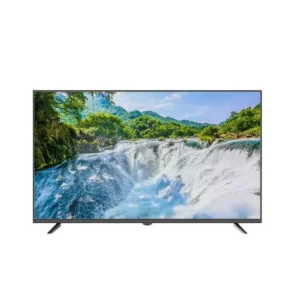
High-Quality 43-inch Borderless FHD Android Smart TV Wholesale Custom for Hotel & Supermarkets
Inquire Sourcing Specs
OEM 75-inch 4K QLED Android Smart Voice TV Ultra HD Large Screen for Export
Inquire Sourcing Specs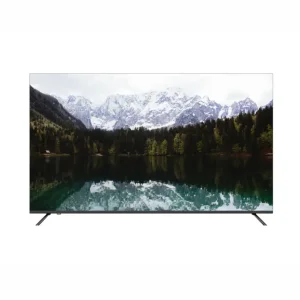
High-Quality 65-inch 4K OLED Self-Emissive Android Smart TV with Dolby Vision
Inquire Sourcing Specs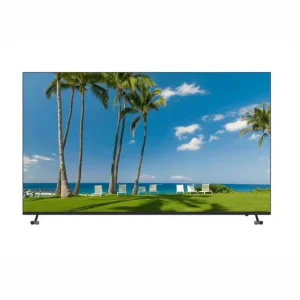
High-Quality 85-inch 4K QLED Android Smart Voice TV Ultra-High Definition Large Screen
Inquire Sourcing Specs
High-Quality 100-inch 4K Explosion-Proof Smart TV with Tempered Glass for Hotels & KTV
Inquire Sourcing Specs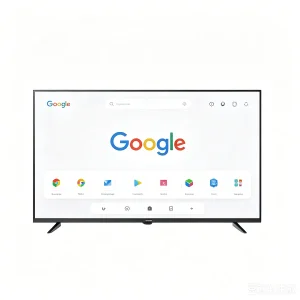
High-Quality 43-inch 4K QLED Google Smart TV Export Network TV Factory
Inquire Sourcing SpecsThe 70-Inch LED TV Market: Strategic Glass Substrates & Value Polarization
Why the 70-inch diagonal display has transitioned from an irregular niche cut into an indispensable procurement bridge between 65-inch mainstream retail and 75-inch premium commercial displays.
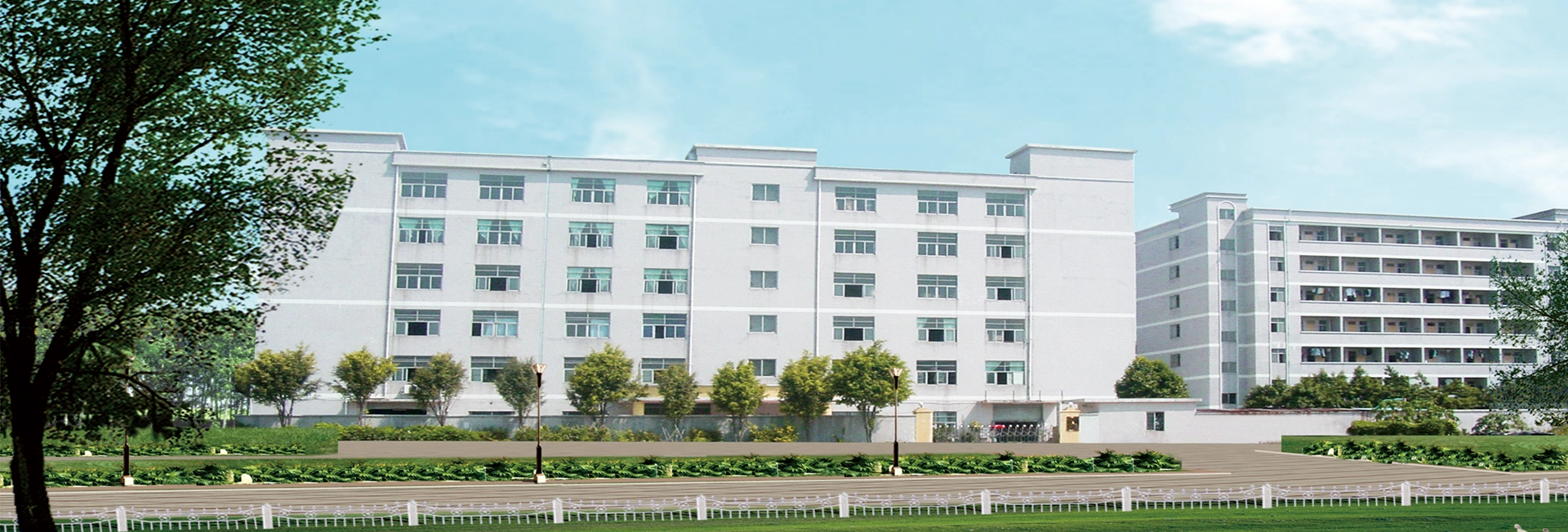
Fully integrated Huadu District campus housing Class 1,000 dust-free cleanrooms and high-speed SMT assembly.
6 automated production lines supporting rigorous continuous burn-in and optical spectrometer QA checks.
Precision modular kit logistics supporting tariff optimization for assemblers across Mercosur, Africa, and ASEAN.
Continuous television engineering in Guangzhou since 1987, operating with zero trading intermediaries.
In modern optoelectronics manufacturing, display sizing is dictated by the mother glass substrate economics of Generation 8.5 (2200 × 2500 mm), Generation 8.6 (2250 × 2600 mm), and Generation 10.5 (2940 × 3370 mm) fabrication facilities. While 65-inch panels have traditionally leveraged 8.5G substrates at an 8-cut configuration, the rapid deployment of Gen 8.6 fab capacity by tier-1 panel foundries has made the 70-inch (diagonal 177.8 cm) 16:9 active display area an exceptionally efficient cut. With active display dimensions measuring approximately 1549.4 mm (H) × 871.5 mm (V), a 70-inch television yields over 1,350,300 mm² of viewing surface. This represents roughly a 16% display real estate increase over a standard 65-inch screen, providing consumer and commercial audiences with noticeably superior immersion at a bill-of-materials (BOM) delta of less than 9% over 65-inch assemblies.
For international electronics distributors, brand aggregators, and hospitality engineering project contractors, procuring from an experienced OEM 70 inch LED TV factory and manufacturer offers an immediate hedge against market oversaturation in 55-inch and 65-inch commodity classes. Over the past five years, consumer purchasing habits have shifted dramatically toward larger centerpieces for home cinemas, smart sports bars, conference hubs, and video-assisted classrooms. Concurrently, supply chain volatility necessitates working directly with source factories that possess primary allocation rights for Open-Cell panels from foundries such as BOE, CSOT, HKC, and Innolux. As Guangzhou Wanteng (WEIER) Electronic Co., Ltd. has demonstrated since 1987, direct factory engineering eliminates trading broker margins, preserves firmware integrity across production lots, and ensures deterministic delivery timelines for 40HQ maritime container shipments.
Gen 8.6 Glass Yield Optimization
By synchronizing cutting schemes on Gen 8.6 glass, panel utilization efficiency exceeds 93%, directly transferring bill-of-materials savings to importers seeking high margins in mid-to-high tier retail programs.
High-Luminance DLED & QLED Arrays
Equipped with customized optical lens arrays and quantum dot enhancement films (QDEF), reaching 350 to 500 nits typical luminance with color gamut performance reaching up to 95% DCI-P3.
Frameless Metal Bezel Architecture
Three-sided bezel-less (frameless) structural aesthetics utilizing stamped aluminum alloy backplates for superior torsional rigidity, ultra-slim profile depth, and accelerated passive thermal dissipation.
Certified OS Ecosystem Provisioning
Fully compliant integration of Google TV (Android 11/12/14), webOS Hub, and pure AOSP platforms with Widevine L1, HDCP 2.2/2.3, Netflix, and Prime Video pre-licensing capabilities.
Global Sourcing Matrix: CBU, SKD, and CKD Tariff Engineering
A structured engineering breakdown designed for supply chain directors, brand managers, and import clearance specialists calculating Total Cost of Ownership (TCO).
Purchasing large-format televisions in commercial volumes involves navigating severe tariff variations, shipping cube constraints, and customs tariff code classifications. Complete Built Units (CBU - HS Code 8528.72) are optimal for quick time-to-market in markets with low finished-goods duty barriers. However, across high-tariff regions such as Brazil, Argentina, India, Egypt, Nigeria, and parts of the European Union, standard import duties on finished televisions can range between 25% and 60%. This economic reality necessitates working with an OEM manufacturer with deep mastery of Semi-Knocked-Down (SKD) and Completely-Knocked-Down (CKD) logistics.
At Guangzhou Wanteng (WEIER) Electronic Co., Ltd., our engineering methodology breaks down the 70-inch LED TV into modular sub-assemblies optimized for freight packing densities and local customs assembly verification:
| Supply Model | Bill of Materials (BOM) Inclusion | 40HQ Container Capacity (70") | Import Duty Profile | Factory Technical Support Level |
|---|---|---|---|---|
| CBU (Completely Built Unit) | 100% finished TV, giftbox, remote, stands, wall brackets, certified power cable. | ~140 - 160 units | Standard finished electronic goods tariff (Highest). | Zero local assembly required; 100% plug-and-play factory QA. |
| SKD (Semi-Knocked Down) | Pre-assembled Open-Cell + Backlight module; separate mainboard, PSU, casing, and accessories. | ~260 - 320 units | Intermediate component tariff (Typical 8% - 15% reduction). | Requires basic screw assembly, wiring harness connection, and final casing closure. |
| CKD (Completely Knocked Down) | Raw Open-Cell in specialized vacuum crates, bare DLED light bars, optical sheets (diffuser, prism), SMT mainboards, plastic injection parts. | ~500 - 650 units | Raw parts / industrial inputs tariff (Lowest, often 0% - 5%). | Requires Class 10,000 cleanroom, COG/FOG tab bonding oversight, and automated aging rigs. |
Beyond packaging modes, institutional buyers evaluate suppliers based on component reliability indices. A dependable 70-inch television is only as reliable as its internal thermal architecture. Because a 70-inch backplane houses high-density Direct-LED (DLED) bars consuming up to 180W to 240W of system power, improper heat dissipation can induce localized thermal degradation, leading to optical diffuser warping, yellow-tint color shifting, and premature LED driver MOSFET failures. WEIER implements heavy-gauge SECC or aluminum back structures coupled with thermal interface phase-change pads directly behind high-amperage power management ICs, guaranteeing continuous operating lifespans exceeding 50,000 MTBF hours under ambient temperatures up to 45°C.
Engineered Displays for Diverse Enterprise Deployments
From enterprise hotel management integration to high-traffic retail surveillance and digital menu installations, WEIER tailors hardware firmware to specific operational requirements.
Hospitality & Guest PMS Control
Integrated Hotel Mode firmware protocols enabling custom boot logos, welcome banners, centralized volume limits, remote channel map cloning via USB/IP, and RJ45/RS232 command string compatibility for automated property management systems.
Explosion-Proof Tempered Glass Enclosures
For high-traffic entertainment venues, bars, schools, and transit lobbies, screens feature 3mm to 4mm high-transmission anti-shatter chemically tempered front glass resisting surface impacts up to 7H Mohs hardness without optical fidelity loss.
Commercial Digital Signage & Retail 16/7
Optimized for retail supermarket chains, QSR digital menus, and sports wagering arenas. Upgraded power supplies ensure continuous 16/7 or 24/7 runtimes with portrait mode orientation support and programmable on/off timers.
Enterprise Conference & Screen Mirroring
Seamless low-latency wireless casting through dual-band 2.4G/5GHz Wi-Fi (802.11ac/ax) supporting Miracast, Apple AirPlay, and DLNA. Equipped with multiple HDMI 2.1 inputs with eARC audio bypass to external corporate soundbars.
Educational & Smart Campus Broadcasting
TÜV-certified low blue-light hardware filters and flicker-free DC dimming backlights protect student vision during extended lectures, backed by metal anti-vandal chassis mountings compatible with standard VESA 400×400 or 600×400 mm armatures.
Global Tuner Standards & Regulatory Compliance Matrix
Worldwide market access demands strict adherence to regional RF transmission standards, environmental directives, and energy efficiency mandates.
A primary failure point in consumer electronics sourcing is RF tuner mismatch and uncertified electromagnetic interference (EMI). A 70-inch television intended for export to Europe will be entirely non-functional on terrestrial broadcast networks in the United States or Colombia unless properly specified at the silicon tuner and demodulator tier. Guangzhou Wanteng (WEIER) Electronic Co., Ltd. architects mainboard hardware with multi-standard tuners catering directly to destination jurisdiction requirements:
| Target Destination / Region | Demodulator & RF Tuner Spec | Audio & Codec Decoding | Required Market Certifications | Operating System Preference |
|---|---|---|---|---|
| Europe & UK (EU, EEA, Britain) | DVB-T2 / C / S2 (H.265 / HEVC Main 10) | Dolby Digital Plus (MS12), AC-4, MPEG-H | CE (RED/LVD/EMC), RoHS, REACH, ErP Tier II | webOS Hub / Google TV / Android TV |
| North America (USA, Canada, Mexico) | ATSC 1.0 & ATSC 3.0 (NextGen TV), QAM | Dolby AC-3, Dolby Atmos Passthrough | FCC Part 15B, UL 62368-1, Energy Star, CEC Title 20 | Google TV (Official Certified) / webOS |
| Latin America (Brazil, Argentina, Chile) | ISDB-T (ABNT NBR 15604) / Ginga Middleware | AAC-LC, HE-AAC v1/v2 | Anatel (Brazil), NOM (Mexico), SEC (Chile) | Android 11/12 Smart TV / AOSP Customized |
| Middle East & Africa (GCC, SADC, ECOWAS) | DVB-T2 / S2 (FTA Satellite Pre-Tuned) | MPEG-1/2 Audio, Dolby Digital | SASO (Saudi), COC, SONCAP (Nigeria), CB Scheme | Android TV / Multi-language UI (Arabic/French/Swahili) |
| Asia-Pacific (Southeast Asia, Oceania) | DVB-T2 with Emergency Warning System (EWS) | Dolby Audio, AAC Stereo | RCM (Australia/NZ), SIRIM (Malaysia), SDPPI (Indonesia) | Google TV / webOS / Customized Launcher |
In addition to broadcast signal processing, international safety compliance is audited at our factory floor. All WEIER export models are built with flame-retardant 94V-0 grade printed circuit boards (PCBs), isolation optical couplers meeting 3,000V AC dielectric withstand tests, and lead-free soldering adhering stringently to EU RoHS Directive 2011/65/EU and WEEE scrap recovery protocols. Complete certificate copies (CE, FCC, RoHS, CB) are provided directly to qualified buyers to guarantee smooth commercial customs clearance without inspection impounds.
Technological Roadmap: Next-Gen Display Innovation
Anticipating shifts in solid-state illumination, machine-learning upscaling algorithms, and smart-home protocol unification from 2025 to 2030.
Mini-LED Direct Matrix Local Dimming
Migrating from standard edge/direct LED arrays to active-matrix Mini-LED backlights boasting over 576 to 1,152 individual local dimming zones, delivering OLED-rivaling 1,000,000:1 contrast ratios without screen burn-in vulnerabilities.
Neural Network AI-PQ & Frame Rate Boosting
Integration of advanced quad-core SoC platforms (MediaTek Pentonic / Realtek RTD) featuring embedded Neural Processing Units (NPUs) dedicated to real-time noise reduction, edge sharpening, and MEMC (Motion Estimation, Motion Compensation) 120Hz/144Hz simulation.
Matter & Open IoT Protocol Convergence
Transforming the large screen from a passive streaming device into a primary household IoT dashboard, fully compliant with Matter over Thread, Apple HomeKit, Google Home, and Alexa ecosystem voice command arrays.
Ecological & Carbon Neutral Packaging
Eliminating expanded polystyrene (EPS) styrofoam in favor of 100% biodegradable molded honeycomb pulp inserts, reducing ocean freight volume displacement by 14% while lowering import carbon border tax liability.
Frequently Asked B2B Sourcing Questions
Direct answers to technical, commercial, and logistical inquiries submitted by international procurement agents and TV brand builders.
Is WEIER a genuine television manufacturer or an export trading intermediary?
Guangzhou Wanteng (WEIER) Electronic Co., Ltd. is a verified primary source factory established in 1987 in Fenghuang Anzhi Area, Huadu District, Guangzhou, China. We operate over 60,000 m² of physical production plants, featuring six high-speed automated SMT and TV assembly lines with an average monthly output of 50,000 finished units and 200,000 CKD/SKD kits. Buyers deal directly with our in-house engineering and production management teams.
What screen grades and dead pixel tolerances apply to 70-inch production runs?
We source Open-Cell panels exclusively from Grade A+ allocations from leading foundries (CSOT, BOE, HKC, Innolux). Our standard factory acceptance criteria enforces zero bright dots (ZBD) and a maximum of less than two micro dark dots along screen peripheries, far exceeding ISO 13406-2 Class II tolerances. Full optical spectrometer testing verifies luminance uniformity greater than 80% across the active area.
Can WEIER supply official licensed Google TV and webOS with DRM Widevine L1?
Yes. As an authorized engineering partner, we deliver fully licensed Google TV (Android 11 / 14) and LG webOS Hub platforms. These configurations include hardware-level Widevine L1 encryption keys, HDCP 2.2/2.3 handshakes, official Google Play Store access, and pre-certified Netflix, YouTube, and Amazon Prime Video streaming at native 4K UHD resolutions.
What are the minimum order quantities (MOQ) and lead times for OEM private-label projects?
For custom private-label CBU orders (including branded silk-screened bezels, custom boot screen animation, tailored packaging giftboxes, and branded remote controls), standard MOQ is one 40HQ container (approximately 140–160 units for 70-inch models). For trial orders or multi-size split container consolidation, lower MOQs can be negotiated. Standard mass production turnaround is 25 to 30 days upon BOM signoff and deposit receipt.
Do you provide SKD / CKD assembly line design and tooling support for local factories?
Yes. For overseas assemblers establishing local value-add factories to benefit from domestic industrial tariffs, WEIER supplies comprehensive CKD engineering packages. This includes vacuum-sealed Open-Cell handling fixtures, SOP (Standard Operating Procedure) assembly video manuals, calibrated optical testing software, burn-in aging racks, and dispatch of senior technical engineers for on-site line commissioning.
Can buyers conduct independent third-party factory audits (SGS, TÜV, Intertek)?
We welcome international inspection delegations and independent audit entities (SGS, Bureau Veritas, TÜV Rheinland, Intertek) to inspect our Huadu, Guangzhou facility. Audits may cover social accountability, ISO 9001 quality management, electro-static discharge (ESD) flooring verification, high-pot grounding tests, and container loading supervision.
Explore Our High-Volume Export Display Lineup
Compare commercial displays, premium living room screens, and hospitality editions engineered for dependable performance across global markets.
OEM 75-inch 4K QLED Android Smart Voice TV Ultra HD Large Screen for Export
Inquire Sourcing Specs
High-Quality 65-inch 4K OLED Self-Emissive Android Smart TV with Dolby Vision
Inquire Sourcing Specs
High-Quality 85-inch 4K QLED Android Smart Voice TV Ultra-High Definition Large Screen
Inquire Sourcing Specs
High-Quality 100-inch 4K Explosion-Proof Smart TV with Tempered Glass for Hotels & KTV
Inquire Sourcing Specs
High-Quality 43-inch 4K QLED Google Smart TV Export Network TV Factory
Inquire Sourcing Specs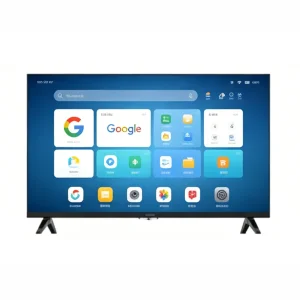
OEM 32-inch Full HD webOS Smart TV LG System for Bedroom, Hotel, Commercial
Inquire Sourcing Specs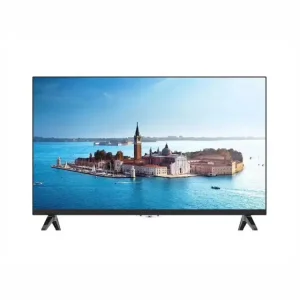
OEM Borderless 32-inch High-Definition Android Smart TV Wholesale for Supermarkets
Inquire Sourcing Specs