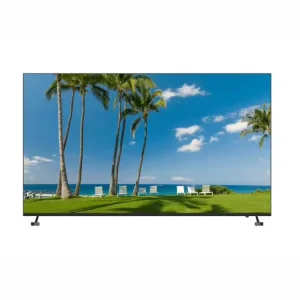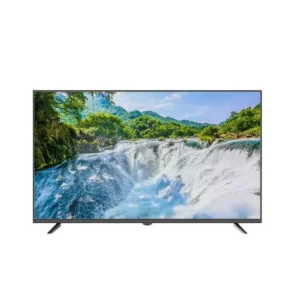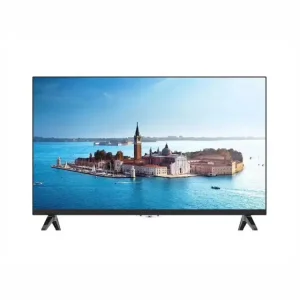
Featured OEM/ODM Television Showcase
Turnkey CBU, SKD, and CKD manufacturing lines configured for global export markets. Explore our standardized and customizable chassis platforms.
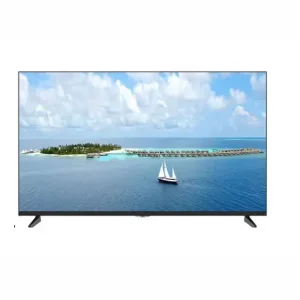
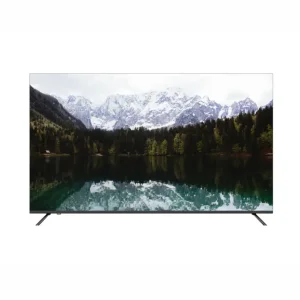
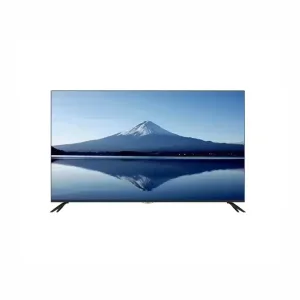

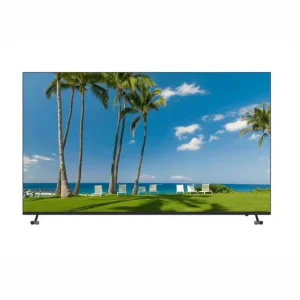
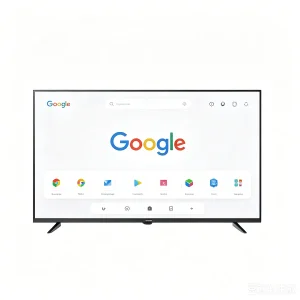
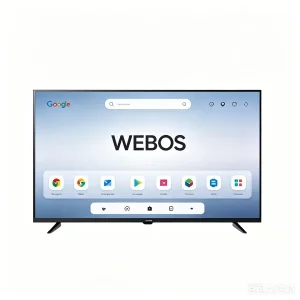
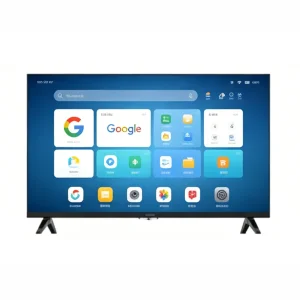
The Strategic Dominance of the 55-Inch Smart TV in Global Trade
Analyzing why the 55-inch display diagonal represents the definitive global nexus between panel manufacturing efficiency, freight cubic utilization, and consumer purchase elasticity.
In the global consumer electronics landscape, the 55-inch LED smart TV occupies the uncontested commercial sweet spot—often referred to by display industry analysts as the "Golden Diagonal." For private-label brand operators, retail procurement directors, and tier-1 hospitality contractors, sourcing 55-inch displays requires balancing advanced visual architectures (such as Quantum Dot LED, high-dynamic-range direct backlighting, and localized dimming arrays) against stringent margin profiles and international regulatory frameworks. Since 1987, Guangzhou Wanteng Electronics Co., Ltd. (operating under the global export brand WEIER) has spearheaded the industrialization of consumer and commercial televisions from its manufacturing center in the Huadu District of Guangzhou, China.
The fundamental economic viability of the 55-inch segment is directly tied to the generation cycle of glass substrate fabrication facilities. In modern Generation 8.5 (G8.5: 2200mm × 2500mm) and Generation 10.5 (G10.5: 2940mm × 3370mm) TFT-LCD fabrication plants, 55-inch panels achieve near-zero substrate trim loss. A standard G8.5 mother glass cuts into exactly six 55-inch panels with over 93% mother glass area efficiency. In G10.5 fabs, multi-model glass (MMG) cutting permits eight 55-inch panels combined with smaller cuts, driving down the unit cost of Grade-A Open Cell panels. As a direct-sourcing original equipment manufacturer, WEIER leverages strategic allocation contracts with top-tier glass foundries—including BOE, CSOT (China Star Optoelectronics Technology), HKC, and AUO—guaranteeing our international OEM partners stable supply lines, zero-dead-pixel standards, and superior price-to-performance metrics even during volatile panel pricing cycles.
Guangzhou Source Factory: Structural Supply Chain Advantages
How geographical clustering, vertical integration, and in-house component fabrication slash lead times and compress bill-of-materials costs for global importers.
Clustered Component Sourcing
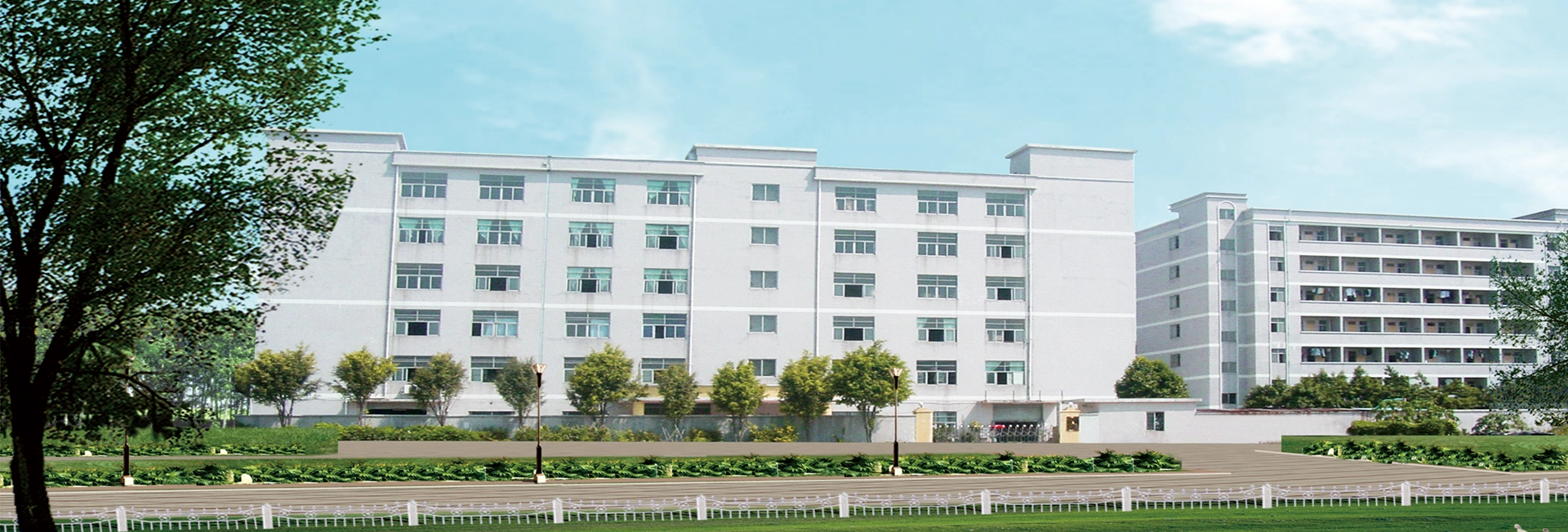
Located in the Greater Bay Area electronics super-cluster, our Huadu campus operates within a 50-kilometer radius of specialized precision tooling shops, optical light-guide plate (LGP) extruders, and SMT circuit board manufacturers. This geographic density eliminates inter-provincial shipping bottlenecks and insulates our procurement pipeline against unexpected raw material delays.
Full In-House Tooling & Molding
Unlike assembling brokers who outsource mechanical enclosures to third parties, WEIER controls dedicated injection molding presses and metal stamping machines. We design and mold proprietary bezel-less (frameless) front bezels, rear covers, and structural aluminum alloy pedestal stands. This guarantees airtight acoustic resonance cavities, optimal heat dissipation, and zero plastic warping over extended product lifespans.
Class 10,000 Cleanroom Panel Bonding
Open Cell bonding is the single most delicate step in smart TV production. Our facility houses high-precision COF (Chip-on-Film) and TAB (Tape-Automated Bonding) production cells operating in Class 10,000 cleanroom environments. We maintain strict static-free, temperature-controlled, and humidity-stabilized environments to prevent particulate contamination between the diffuser plate, optical sheets, and the liquid crystal glass.
Comprehensive Procurement Benchmark: Source Factory vs. Export Intermediaries
| Critical Sourcing Metric | WEIER Direct Manufacturing Facility | Standard Export Trading Company |
|---|---|---|
| Bill of Materials (BOM) Control | Fixed BOM locked upon sample sign-off; genuine Grade-A panels from BOE/CSOT | Variable BOM; common component substitution between seasonal assembly batches |
| Supply Chain Transparency | Direct physical audits, video factory verifications, engineer-to-engineer R&D access | Hidden third-party subcontractors; limited engineering visibility and indirect relay |
| Knockdown Logistics (SKD/CKD) | Engineered CKD packing (density-optimized jigs, individual bubble/foam trays, 200k/mo) | Limited or non-existent CKD engineering; unable to manage local assembly lines |
| Global Tuner & Compliance | Factory-calibrated ATSC 3.0, DVB-T2/S2, ISDB-T tuners; native CE, FCC, RoHS certifications | Generic off-the-shelf boards often lacking regional RF optimization and formal lab certs |
| Smart OS Royalty Compliance | Direct licensing with Google TV, webOS Hub, and official Android AOSP ecosystems | Uncertified cracked ROMs susceptible to remote OS blacklisting and DRM downgrades |
Engineering Blueprint: 55-Inch Hardware & OS Architectures
Deep-dive technical breakdown of display backlighting, processing SoCs, acoustic chambers, and global operating software platforms.
Display Physics & Backlight Engineering
In the 55-inch class, picture fidelity relies heavily on backlight topology. WEIER offers two high-efficiency backlighting configurations tailored to client positioning:
- Direct-lit LED (DLED) with Optical Matrix: Designed for high luminous uniformity (>85%), DLED utilizes a grid of high-voltage SMD LED dies paired with wide-angle PMMA optical lenses. This architecture guarantees a minimum surface luminance of 280 to 350 nits (cd/m²) for residential living rooms and up to 450+ nits for brightly illuminated commercial installations.
- Quantum Dot (QLED) Nanocrystal Enhancers: For flagship retail programs, we integrate a Quantum Dot Enhancement Film (QDEF) between the LED backplate and the Open Cell. Excited by short-wavelength blue LEDs, the cadmium-free nanoparticles emit pristine red and green spectral peaks, elevating DCI-P3 color gamut coverage to ≥95% and Rec.709 coverage to 100%.
- Native Contrast & Viewing Angles: Utilizing advanced Vertical Alignment (VA) and In-Plane Switching (IPS/ADS) panel structures, our 55-inch models achieve static contrast ratios of 4000:1 to 5000:1, with 178° horizontal and vertical viewing cones.
System-on-Chip (SoC) & Memory Bandwidth
The responsiveness of smart TV user interfaces is governed by the underlying mainboard architecture. We engineer our 55-inch mainboards with industry-standard silicon solutions from MediaTek, Realtek, and Amlogic:
- Processing Cores: 64-bit Quad-Core ARM Cortex-A53 / Cortex-A55 architecture paired with Mali-G31 or Mali-G52 multi-core graphics processing units, capable of decoding 4K HEVC/H.265, VP9, and AV1 video streams at 60 frames per second.
- Memory Allocations: Flexible DDR3/DDR4 RAM configurations ranging from 1.5GB to 2GB, alongside high-speed eMMC 5.1 onboard flash storage options (8GB, 16GB, or 32GB) to handle app caching and OS updates without system latency.
- HDR Decoding Engines: Integrated hardware image post-processors supporting HDR10, HLG (Hybrid Log-Gamma), and optional Dolby Vision licensing for dynamic frame-by-frame luminance and chroma metadata correction.
Standardized OEM 55-Inch 4K UHD LED Smart TV Specifications
| Hardware Subsystem | Commercial / Residential Standard Tier | Flagship QLED / Hospitality Tier |
|---|---|---|
| Active Screen Size | 54.6 inches diagonal (1209.6 mm × 680.4 mm) | 54.6 inches diagonal (1209.6 mm × 680.4 mm) |
| Native Resolution | 3840 × 2160 Pixels (4K Ultra HD) | 3840 × 2160 Pixels (4K Ultra HD) |
| Aspect Ratio & Refresh Rate | 16:9 widescreen; 60Hz native refresh rate | 16:9 widescreen; 60Hz native with MEMC / optional 120Hz DLG |
| Display Color Depth | 1.07 Billion colors (8-Bit + FRC) | 1.07 Billion colors (10-Bit native optical pipeline) |
| Color Gamut (DCI-P3) | ≥ 72% NTSC (Typical) | ≥ 93% DCI-P3 (Quantum Dot Film Enhanced) |
| Audio Output | 2 × 8W or 2 × 10W Stereo Box Speakers | 2 × 10W Integrated Bass Reflex Chambers with Dolby Audio |
| Wireless Connectivity | Wi-Fi 2.4GHz b/g/n + Bluetooth 4.2 / 5.0 | Dual-Band Wi-Fi 2.4G/5GHz (802.11ac) + Bluetooth 5.1 LE |
| Physical I/O Ports | 3 × HDMI 2.0 (1 with ARC), 2 × USB 2.0, RJ45 LAN, AV In, Optical SPDIF, Earphone Out | 3 × HDMI 2.1 (eARC, ALLM), 2 × USB (1 × 3.0), RJ45 Gigabit LAN, Optical Digital Out, CI+ Slot |
| Power Supply | AC 100-240V ~ 50/60Hz (Wide Voltage Design) | AC 100-240V ~ 50/60Hz with Surge & Lightning Protection (6kV) |
Localization Support & Compliance Safeguards
Navigating global RF broadcasting protocols, electrical safety mandates, environmental directives, and digital content DRM licensing.
Regional RF Tuner Standards
A television is only as viable as its regional receiver compliance. WEIER builds mainboards integrated with certified regional demodulators: DVB-T2/C/S2 for the European Union, the United Kingdom, Central Asia, and Africa; ATSC 3.0 / ATSC 1.0 with Clear QAM for North America; ISDB-T (with full Ginga middleware support) for Brazil, Argentina, and broader Latin America; and DTMB for Greater China.
Audio, Video & DRM Licensing
Avoid customs seizures and app store blacklisting. We deliver export televisions compliant with digital rights management: Widevine L1 certification enabling 4K Netflix and Amazon Prime Video playback; legitimate Dolby Audio MS12 and Dolby Vision royalty clearance; HDMI Adopter-compliant silicon; and HDCP 2.2/2.3 copy-protection handshake protocols on all external HDMI interfaces.
Statutory Electrical & Eco Standards
We maintain active certifications to ensure frictionless customs clearance: CE (LVD/EMC/RED) and RoHS/REACH for the EU; FCC Part 15 Class B and ETL/UL 62368-1 for North America; NOM-001-SCFI for Mexico; Anatel for Brazil; and SASO / G-Mark for Gulf Cooperation Council countries. In standby mode, all power boards consume <0.5W in strict adherence to EU ErP Lot 26 ecodesign directives.
B2B Procurement Realities: CBU vs. SKD vs. CKD Supply Models
How international electronics importers structure knockdown shipments to slash tariff duties from 35% down to 0-5% while establishing regional manufacturing footprints.
CBU (Completely Built Unit)
Fully assembled, factory-tested, calibrated, and retail-packaged inside full-color gift boxes. Best suited for regional markets with low imported consumer electronics tariffs (e.g., UAE, certain Latin American duty-free zones, and regional distributors without local assembly infrastructure). Typical container load factor for 55-inch CBU in a 40-foot High Cube (40HQ) is approximately 380 to 420 units.
SKD (Semi-Knocked Down)
The display panel is pre-integrated with the front bezel and backlight module in our cleanroom, while mainboards, power boards, speakers, and mechanical accessories are packed in segregated sub-assemblies. This model minimizes local assembly capital expenditures while qualifying buyers for intermediate tariff reductions (common in Egypt, Nigeria, and select South American nations).
CKD (Completely Knocked Down)
Open Cell glass packed in specialized anti-static high-density wooden crates, plastic housings nested to maximize cubic efficiency, and raw electronic circuit boards supplied with complete production jigs and testing fixtures. CKD optimizes container loading by 300% (up to 1,200+ units of 55-inch per 40HQ), granting importers duty reductions from 35% to 0–5% in heavily protected manufacturing economies like India and Brazil.
Target Application Engineering for 55-Inch Displays
From ruggedized public hospitality environments to high-precision enterprise conference hubs, we tune firmware and mechanical hardware to match application requirements.
Hospitality & Property Management
55-inch smart TVs configured with proprietary Hospitality Mode software. Our custom ROMs support central PMS (Property Management System) cloning via USB or IP, guest data wipe upon checkout, customized hotel welcome splash screens, maximum volume locking to prevent neighboring room disturbance, and customized physical I/O lockouts for secure guest room installations.
Commercial Retail & Digital Signage
Engineered for 16/7 or 24/7 continuous duty cycles. We equip commercial 55-inch models with reinforced thermal heat sinks, high-reliability electrolytic capacitors rated for 105°C, automatic power-on timers, portrait/landscape orientation switching, and customizable boot loops for standalone retail advertisement networks and supermarket digital displays.
High-Traffic & KTV Venues
For public entertainment, gaming lounges, and bars where physical impacts occur, we integrate 3mm or 4mm chemically strengthened, explosion-proof tempered glass directly over the liquid crystal panel. Surface hardness exceeds 7H on the Mohs scale, protecting against impacts, beverage splashes, and aggressive cleaning solvents without compromising touch response or optical contrast.
Six-Stage Quality Assurance & Reliability Testing
Every production lot destined for global export undergoes strict multi-tier quality control based on ISO 9001 and MIL-STD-105E AQL inspection protocols.
1. Optical Open Cell Inspection
Incoming liquid crystal glass panels are checked 100% on automated optical inspection (AOI) benches under pure white, black, red, green, and blue backgrounds to eliminate bright spots, dark sub-pixels, mura imperfections, and polariser scratches before mechanical chassis assembly begins.
2. 4-Hour Dynamic High-Temp Aging
100% of assembled 55-inch smart TVs are routed through an enclosed high-temperature aging chamber maintained at 40°C ± 5°C. Sets run continuous full-load video loops for a minimum of 4 to 8 hours to force infant mortality failure in mainboard SoCs, LED backlights, and power supply switches.
3. Drop, Vibration & Drop Impact Rig
Packaged production samples are tested on ISTA-1A certified test benches. Units endure multi-axis simulated road transportation vibration for 120 minutes, followed by a 10-point freefall drop test (1 corner, 3 edges, 6 faces) to guarantee zero glass fracture or internal connector detachment during sea freight transit.
4. High-Voltage Insulation & Hi-Pot
To protect end consumers and pass international electrical safety inspections, every single unit is tested via dielectric breakdown equipment (Hi-Pot test) at 3750V AC between the active AC mains terminals and the exposed chassis ground, confirming total insulation integrity.
5. Chroma & White Balance Calibration
Automated optical colorimeters (Minolta CA-410 series) interface directly with the factory service menu via serial RS-232/I2C commands to calibrate the color temperature of each unit to 6500K (Standard), 9300K (Cool), or 11000K, locking color coordinates (x=0.313, y=0.329) within narrow Delta-E boundaries.
6. Firmware & DRM Key Burning Verification
Automated testing stations confirm the cryptographic injection of unique MAC addresses, Widevine L1 keys, HDCP keys, and Google GMS credentials. The validation system confirms that no clone keys are written and that the recovery partition responds correctly to factory reset commands.
Technological Roadmap: The Next Era of 55-Inch Television Engineering
How edge AI image processing, Mini-LED local dimming arrays, and unified smart home protocols are transforming B2B display specifications.
Mini-LED Backlighting Integration
As manufacturing yields improve, traditional DLED backlights are transitioning toward Mini-LED matrix configurations. By packing over 1,000 to 5,000 sub-millimeter LED chips grouped into hundreds of discrete local dimming zones, 55-inch models achieve peak brightness levels exceeding 1,000 nits, true deep blacks approaching OLED contrast ratios, and complete elimination of halo blooming around bright objects.
On-Device AI NPU Super-Resolution
Next-generation TV mainboards integrate dedicated Neural Processing Units (NPUs) capable of up to 1.5 to 3.0 TOPS (Trillion Operations Per Second). These AI silicon engines perform real-time frame-by-frame deep-learning super-resolution, dynamically sharpening legacy 720p and 1080p broadcast streams up to native 4K clarity while eliminating compression noise and color banding.
Matter & IoT Smart Home Ecosystems
The convergence of smart home communication protocols under the open-source Matter standard transforms the 55-inch living room screen into an ambient IoT dashboard. Featuring Thread and dual-band Wi-Fi connectivity, upcoming OEM firmware builds allow the television to act as a Matter Controller, facilitating cross-brand control of smart lighting, climate sensors, and security cameras directly on the display.
Frequently Asked Questions for Sourcing Directors
Essential technical, financial, and logistical details answered directly by our export engineering division.
What is the standard Minimum Order Quantity (MOQ) for an OEM custom brand order?
For customized 55-inch models carrying private-label silk-screened front logos, custom boot animations, branded user manuals, and customized full-color retail packaging, our standard MOQ is one 20-foot GP container (approx. 180 to 200 units) or one 40-foot HQ container (approx. 380 to 420 units CBU). For CKD and SKD knockdown supply lines, the typical batch MOQ starts at 500 units per chassis iteration.
How do you guarantee that Open Cell panels are 100% Grade-A without dead pixels?
WEIER maintains long-term primary distribution contracts directly with BOE, CSOT, and HKC. We do not purchase secondary market, reclaimed, or refurbished panels. Every batch arrives sealed with original factory barcoding and is verified against strict zero-dead-pixel criteria (0 bright dots, ≤2 dark sub-dots across the entire panel area) before cleanroom bonding begins.
Can you provide legitimate Google TV, Android TV, and webOS Hub certifications?
Yes. We deliver officially licensed Google TV software platforms complete with pre-installed Netflix, YouTube, Prime Video, and Widevine Level 1 DRM compliance, as well as official webOS Hub systems with Magic Remote voice control. We assist brand owners through the formal approval processes required by Google (GMS certification) and LG webOS partner programs.
What is the typical production lead time from deposit payment to port delivery?
For initial OEM orders involving new artwork design, silk-screen plates, and packaging proofing, lead times typically range from 30 to 35 calendar days following artwork sign-off and deposit receipt. For repeat container orders utilizing standardized tooling and established BOM configurations, production is completed within 20 to 25 days FOB Guangzhou or FOB Shenzhen.
What after-sales spare parts policy and warranty coverage do you provide?
We provide a standard 12-month to 24-month factory warranty on mainboards, power boards, and optical modules. For full-container export orders, we supply 1% complimentary FOC (Free of Charge) critical functional spare parts, including complete mainboard PCBs, power supply boards, remote controls, LED backlight strips, and speaker units to support your local after-sales maintenance operations.
Are overseas buyer delegations allowed to conduct physical on-site audits?
Yes. We welcome international clients, third-party inspection agencies (such as SGS, BV, TÜV, and Intertek), and technical auditing teams to inspect our Guangzhou campus. We arrange full line inspections, cleanroom tours, aging-room verifications, and pre-shipment container loading supervision to give you confidence in our manufacturing quality.
Explore Additional Production Lines & Form Factors
Broaden your brand lineup with our companion screen diagonals, commercial display units, and specialty explosion-proof display models.