Top-Tier OEM/ODM 4K Smart TV Engineering Lineup
Direct factory-assembled configurations engineered across 32-inch to 100-inch form factors, integrating high-contrast open-cell glass, customized DLED/QLED arrays, and licensed firmware.
High-Quality 43-inch Borderless FHD Android Smart TV – Wholesale & Custom for Hotel, Supermarket & Engineering Projects
Configure Specs
High-Quality 85-inch 4K QLED Android Smart Voice TV, Ultra-High Definition Large Screen Flagship Model
Configure Specs
High-Quality 43-inch 4K QLED Google Smart TV, Google TV Export Network TV Factory Sourced
Configure Specs
OEM 75-inch 4K QLED Android Smart Voice TV, Ultra HD Large Screen Commercial & Export Grade
Configure Specs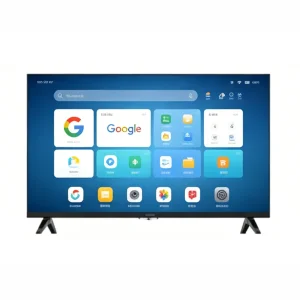
OEM 32-inch Full HD webOS Smart TV, LG System Licensed for Bedroom, Hotel & Commercial Integration
Configure Specs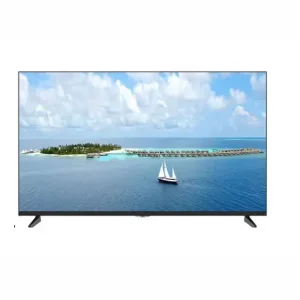
High-Quality 55-inch 4K QLED Android Smart TV Frameless Design, Dolby Vision Flagship Model
Configure Specs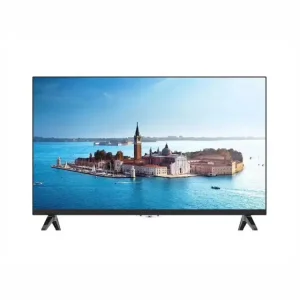
OEM Borderless 32-inch High-Definition Android Smart TV Wholesale for Supermarkets & Retail Lines
Configure Specs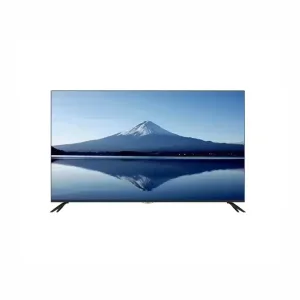
Wholesale Frameless 50-inch 4K QLED Android Smart TV, Ultra HD HDR Commercial & Consumer Class
Configure SpecsThe Global Commercial Reality of OEM/ODM 4K HDR Smart Displays
Understanding macroeconomic panel volatility, shifting system-on-chip architectures, and the strategic decoupling of hardware assembly from brand intellectual property.
Evolving Panel Tiering & Gen-8.5/10.5 Fabs
The global smart display market is fundamentally dictated by the yield efficiency of centralized Gen 8.5, Gen 8.6, and Gen 10.5 TFT-LCD and OLED fabrication lines in Mainland China. Tier-1 OEM builders bypass spot-market middlemen, leveraging direct procurement agreements with BOE, CSOT, and HKC. This grants direct access to Grade-A open-cell substrate with zero defective pixels, predictable gamma tracking, and resilient long-term cost structures across volatile freight cycles.
Democratization of Dynamic HDR Standards
High Dynamic Range (HDR) is no longer confined to premium retail flagships. Consumer, enterprise, and hospitality demand has mandated standard HDR10, HLG, and license-certified Dolby Vision decoding into competitive B2B product tiers. Tier-1 ODM factories integrate multi-core SoCs equipped with dedicated neural processing engines (NPUs) that execute real-time frame-by-frame metadata tone mapping without overloading system memory.
CKD & SKD Decoupling Strategies
Import tariffs on Completely Built-Up (CBU) televisions routinely exceed 25% to 50% across key emerging markets such as India, Brazil, Nigeria, and Egypt. Leading OEM factories function not merely as final assembly plants, but as precision logistics and kitting powerhouses. Supplying engineered Semi-Knocked-Down (SKD) and Completely-Knocked-Down (CKD) configurations with custom mechanical jigs allows local brand partners to clear customs under minimal component duties.
Technology Roadmap & Display Architecture
Comprehensive architectural breakdown of backlighting architectures, high-performance silicon, quantum-dot films, and video processing algorithms engineered at WEIER Wanteng.
Quantum Dot Color Purity
Our QLED display configurations utilize specialized cadmium-free quantum dot enhancement films (QDEF) excited by narrow-spectrum blue LEDs. This achieves greater than 95% coverage of the cinematic DCI-P3 color space and over 75% Rec.2020, delivering high saturation stability without chromatic drift even at peak sustained brightness levels exceeding 450 to 800 nits.
Advanced SoC Processing
Powered by cutting-edge MediaTek, Realtek, and Amlogic 64-bit multi-core architectures (ARM Cortex-A55 and A73 clusters). Hardware features include Mali-G52/G57 GPU blocks, dedicated AV1/VP9/HEVC 4K@60fps 10-bit decoders, low-latency DDR4 memory interfaces, and isolated cryptographic eMMC storage ensuring Widevine L1 compliance.
MEMC & Latency Reduction
Integrated Motion Estimation Motion Compensation (MEMC) circuits perform hardware frame insertion to elevate 24fps/30fps signals to smooth 60Hz and simulated 120Hz playback. Coupled with Auto Low Latency Mode (ALLM) and HDMI 2.1 eARC variable refresh capabilities, our PCBA designs maintain input lag below 9.5 milliseconds for next-gen console gaming.
Acoustic Engineering
Factory-customized acoustic chambers feature dual neodymium high-excursion box drivers (10W to 15W per channel). Mastered with Dolby Atmos and DTS Studio Sound DSP filtering, the audio profile achieves spatial acoustic dispersion, crisp dialogue intelligibility, and zero mechanical chassis buzz across high sound pressure levels.
| Display Architecture | Color Gamut (DCI-P3) | HDR Dynamic Standards | Native Contrast Ratio | Target Lifespan (MTBF) | Typical Applications |
|---|---|---|---|---|---|
| Direct-Lit LED (DLED) Standard | 80% – 85% | HDR10, HLG | 1200:1 – 3000:1 | 30,000 Hours | Mass Retail, Supermarkets, Hospitality Tiers |
| QLED Quantum Dot Array | 95% – 98% | HDR10+, Dolby Vision | 4000:1 – 6000:1 | 50,000 Hours | Mid-to-High Consumer, Commercial Boardrooms |
| Self-Emissive 4K OLED | 99% True DCI | Dolby Vision IQ, HDR10+ | Infinite (1,000,000:1) | 40,000 Hours | Flagship Luxury Retail, Studio Master Class |
| Commercial Explosion-Proof DLED | 85% – 90% | HDR10 Industrial Tone | 3500:1 | 60,000 Hours | KTV, Sports Bars, Public Information Hubs |
China Supply Chain Resilience & The Guangzhou Ecosystem
How WEIER Wanteng Electronics leverages three decades of vertical industrial clustering in Huadu District, Guangzhou to deliver structural cost agility and unyielding lead-time control.
Vertical Component Integration
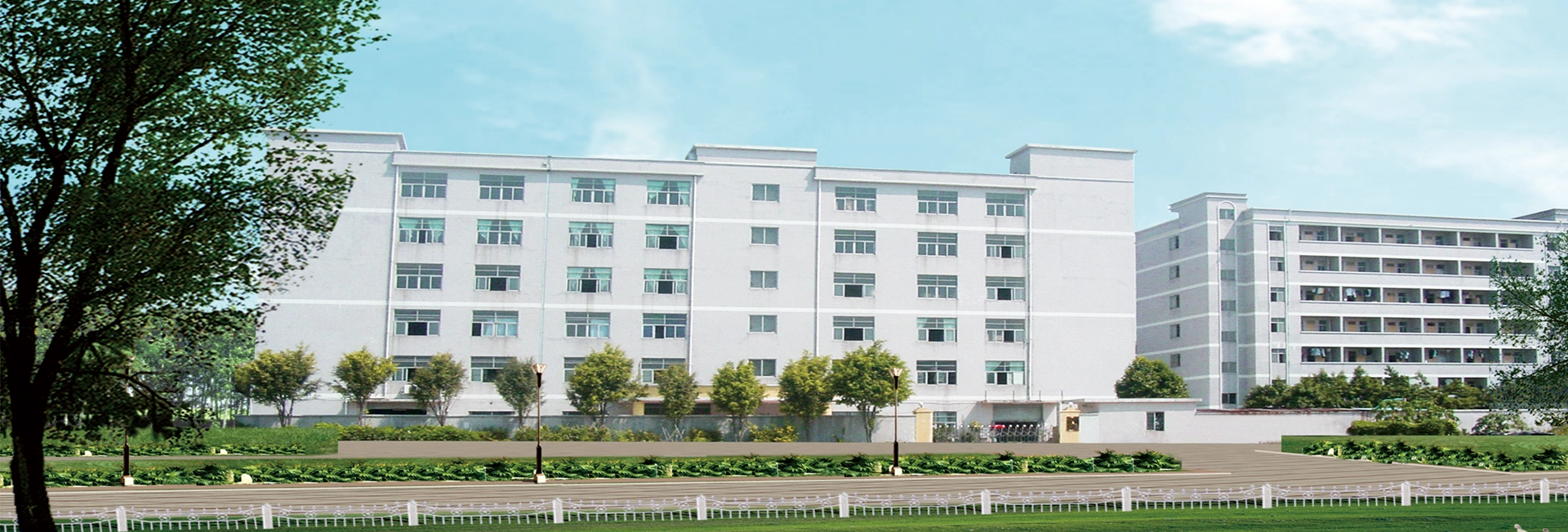
Unlike trading syndicates that assemble subcontracted modules, our 60,000 m² facility features in-house high-speed SMT surface-mount lines, plastic injection tooling for frameless bezels, sheet metal back-plate stamping, and Class 10,000 cleanroom optical bonding booths. Eliminating third-party sub-tier margins allows us to deliver up to 12% to 18% greater BOM efficiency for private-label brand owners.
Stringent Multi-Stage Aging Protocol
Every batch moving across our six automated production tracks is subjected to an exhaustive quality regime. Finished displays pass through an inline 4-hour dynamic high-temperature thermal stress chamber operating at 40°C ± 2°C with continuous signal cycling. This process forces premature infant-mortality component dropouts before carton packaging, suppressing field failure rates below 0.3%.
Multimodal Port Hub Logistics
Located in Huadu District, Guangzhou, our manufacturing center operates within minutes of the Pearl River Delta’s premier container transport arteries. Direct access to Guangzhou Nansha, Shenzhen Yantian, and Hong Kong ports provides continuous vessel schedules and flexible container drayage. Even during global supply shocks, our buffer warehouses guarantee consistent dispatch timelines for high-volume overseas shipments.
Specialized B2B Application Scenarios & Customization
Smart TVs are not one-size-fits-all. WEIER configures customized optical parameters, physical enclosures, and specialized operating system kernels to match target commercial environments.
Hospitality & Luxury Hotels
Features custom hotel PMS compatibility, interactive welcome portals, master volume limiting, channel map locks, and automated guest privacy wiping on checkout. Compatible with centralized IPTV gateway systems across RJ45 or dual-band Wi-Fi without requiring external set-top boxes.
Commercial Venues & KTV
Equipped with 7H hardness explosion-proof tempered glass bonded directly to the display bezel. Designed for sports bars, entertainment facilities, and public institutions where panels require physical protection against accidental impacts, liquids, and abrasive cleaning agents.
E-Sports & Console Gaming
Tuned with ultra-low latency game engine modes, Variable Refresh Rate (VRR) compliance, and custom gaming OSD overlays. Provides high frame rate fluidity, black equalizer tuning for shadow visibility, and HDR tone mapping tailored to modern gaming consoles.
Retail Signage & Supermarkets
Designed for continuous 16/7 or 18/7 commercial duty cycles with enhanced thermal heat sinks. Features USB auto-boot video playback loops, scheduled power ON/OFF automation, landscape/portrait mounting support, and high-efficiency power supplies that satisfy strict ERP Tier-II requirements.
Firmware Licensing, Tuner Standards & Regulatory Compliance
Navigating global RF broadcasting protocols, digital rights management, and international safety compliance from a single certified manufacturing base.
Certified Multi-OS Deployment
We provide authorized, legally licensed operating systems tailored to regional consumer expectations. Options include official Google TV with certified Play Store, Widevine L1, and Google Assistant; LG webOS Hub with Magic Remote cursor support; and open-source Android AOSP platforms for customized branding, APK sideloading, and independent launcher control.
Universal RF Broadcast Tuners
Mainboard architectures are engineered with region-specific demodulators and silicon tuners. Configurations support DVB-T2/C/S2 across Europe, Central Asia, and Africa; ATSC 3.0 / ATSC 1.0 for North America; ISDB-T for Latin America and the Philippines; and DTMB for mainland Chinese ecosystems, ensuring flawless terrestrial signal decoding.
Comprehensive Import Certifications
All export models carry comprehensive international test certifications ready for customs clearance. This includes CE (LVD/EMC), FCC Part 15 Class B, RoHS Directive limits on hazardous substances, CB Scheme safety testing, and official intellectual property royalty compliance covering HDMI Licensing Administrator and Dolby Laboratories.
From Initial Specification to Loaded Container
Our structured six-stage New Product Introduction (NPI) workflow ensures repeatable precision, transparent lead-time tracking, and zero production surprises.
Phase 1: Engineering Matrix Brief
B2B clients specify target markets, required volume, screen dimensions, panel grades, tuner configurations, and OS ecosystem. Our sales engineers return an optimized BOM configuration and fixed pricing within 24 hours.
Phase 2: Industrial Design & UI Tooling
Clients provide silk-screen logos, remote control button maps, customized boot logos, packaging artwork, and user manual graphics. Our industrial design team generates engineering renderings and tooling mockups for sign-off.
Phase 3: Golden Sample Approval
A fully operational golden prototype is assembled on our pilot line, loaded with finalized firmware, and dispatched via express air freight for comprehensive physical and software validation by your technical team.
Phase 4: SMT & Automated Assembly
Upon sample sign-off, the agreed BOM is locked into our ERP system. High-speed SMT surface placement, open-cell optical bonding, and chassis assembly proceed across our six automated production tracks.
Phase 5: Burn-In & Optical QC
100% of finished units undergo 4-hour dynamic thermal aging, followed by optical colorimetry calibration, audio sweep testing, hipot safety insulation verification, and packaging drop-test certifications.
Phase 6: Containerization & Export
Units are packed in reinforced five-layer corrugated cartons with custom high-density EPS cushions. Goods are palletized and loaded directly into 40ft HQ containers with comprehensive customs documentation provided for smooth port clearance.
Specialized Large-Format, webOS & Commercial Displays
Explore commercial-grade explosion-proof displays, Google TV and webOS smart hubs, and frameless OLED configurations ready for private-label customization.
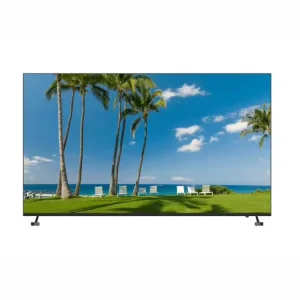
High-Quality 100-inch 4K Explosion-proof Smart TV with Tempered Glass Screen for Hotels, KTVs & Commercial Projects
Request Quotation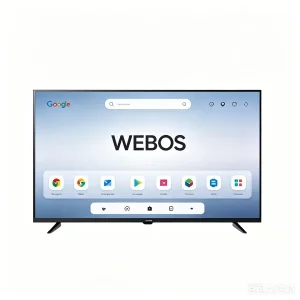
OEM 43-inch 4K UHD webOS Smart TV with AI Voice Remote, Source Manufacturer for Home & Hotel Deployment
Request Quotation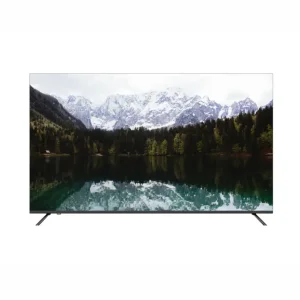
High-Quality 65-inch 4K OLED Self-Emissive Android Smart TV with Dolby Vision & Infinite Black Array
Request Quotation
High-Quality 85-inch 4K QLED Android Smart Voice TV, Flagship Large Screen for Luxury Residential & Boardrooms
Request Quotation
OEM 75-inch 4K QLED Android Smart Voice TV, Ultra HD Large Screen Home & Commercial Export Model
Request Quotation
High-Quality 55-inch 4K QLED Android Smart TV Frameless Industrial Bezel with Dolby Vision Dynamic Decode
Request Quotation
Wholesale Frameless 50-inch 4K QLED Android Smart TV Ultra HD HDR Commercial & Residential Standard
Request Quotation
High-Quality 43-inch 4K QLED Google Smart TV, Google TV Certified Global Network Export Edition
Request QuotationFrequently Asked Questions for B2B TV Buyers
Direct answers addressing open-cell sourcing, licensing royalties, minimum order quantities, and SKD/CKD assembly logistics.
What is the fundamental difference between an OEM contract factory and a trading firm in China?
An established source factory like WEIER Wanteng (founded in 1987) owns its physical industrial footprint (60,000 m² campus in Huadu, Guangzhou), operates surface mount technology (SMT) and automated assembly lines, and maintains direct bulk supply agreements with glass fabricators (BOE, CSOT, HKC). Trading firms subcontract production across third-party shops, introducing markups of 8% to 15%, variable bill-of-materials between production runs, and fragmented post-sales warranty accountability. Direct factory partnerships ensure locked BOM specifications and transparent factory-gate cost structures.
How do you manage intellectual property, Google GMS certifications, and Dolby licensing for custom brands?
We provide official licensing channels for Google TV, webOS Hub, HDMI Licensing Administrator, and Dolby Laboratories. When building under private-label brands, models can be cleared through our certified platform licenses or integrated via your brand's existing royalty agreements. Our engineering team assists with GMS test suite validation and Widevine L1 cryptographic key injection, ensuring streaming applications like Netflix, Prime Video, and YouTube operate in native 4K UHD with full compliance.
What are the minimum order quantities (MOQ) and production lead times for customized private-label orders?
For standard 32" to 55" mass models, baseline OEM MOQ begins at 500 units per size, enabling fully customized silk-screened front logos, user manuals, custom boot animations, and five-layer printed color gift boxes. For large flagship sizes (75", 85", 100"), our MOQ is flexible, beginning as low as 100 to 200 units to support specialized retail deployments. Standard lead time for repeat container orders is 25 to 30 days from confirmed panel deposit, with expedited 15-day turnarounds available during off-peak scheduling windows.
Can you provide SKD or CKD kits to lower import tariffs for local assembly operations?
Yes. We deliver over 200,000 SKD and CKD kits monthly to assembly partners across Latin America, Africa, and South Asia. Our CKD packages include open-cell glass packed in precision multi-tier clean crates, tested mainboard PCBAs, power modules, speaker chambers, matched remote controls, wire harnesses, and pre-cut chassis metals. We also supply custom assembly line jigs, screw mapping documentation, and engineering training to assist client factories with rapid local integration.
What quality assurance steps are taken to prevent dead pixels and screen backlight bleeding?
We exclusively procure Grade-A open cells that meet stringent zero-bright-dot standards. Prior to chassis bonding, open cells undergo automated multi-spectral optical inspection to detect sub-pixel defects. Backlight modules are designed with custom lens arrays and optical diffusers to maintain luminance uniformity above 85% across the entire active area, preventing backlight bleeding. After assembly, all units complete a continuous 4-hour dynamic thermal burn-in test before final packaging sign-off.