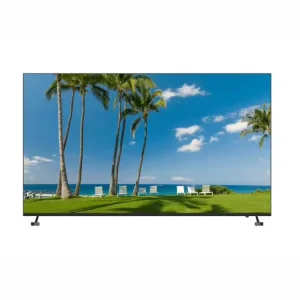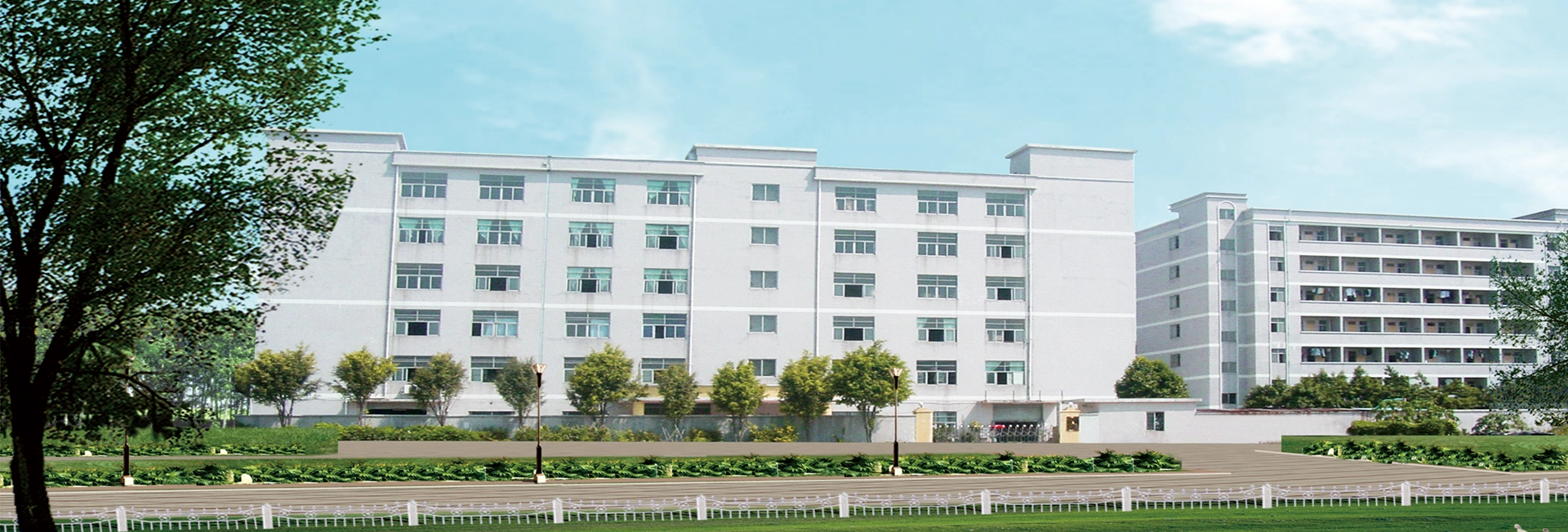
Featured Commercial & Household Display Solutions
Precision-engineered displays manufactured in our automated Huadu facility, optimized for supermarket distribution, hospitality networks, and customized OEM programs.
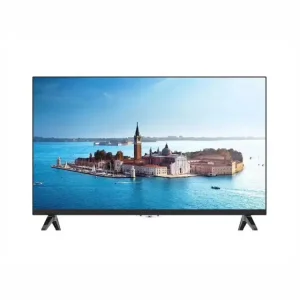
OEM Borderless 32 inch high-definition Android smart TV wholesale for supermarkets
View Specifications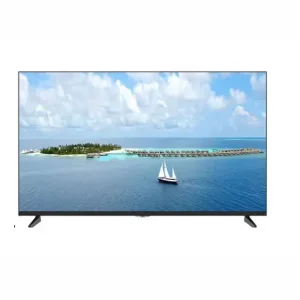
High-Quality 55-inch 4K QLED Android Smart TV with Frameless Design, Dolby Vision
View Specifications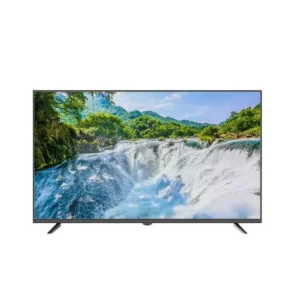
High-Quality 43-inch Borderless FHD Android Smart TV Wholesale Custom for Hotel Projects
View Specifications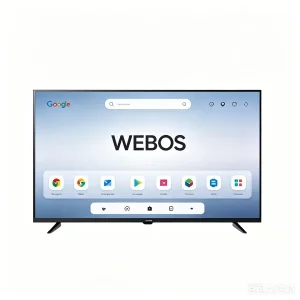
OEM 43-inch 4K UHD webOS Smart TV with AI, Source Manufacturer for Home and Hotel
View Specifications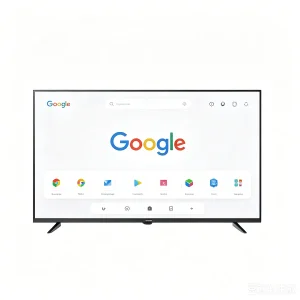
High-Quality 43-inch 4K QLED Google Smart TV, Google TV Export Network TV Factory
View Specifications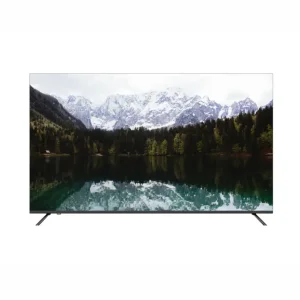
High-Quality 65-inch 4K OLED self-emissive Android smart TV with Dolby Vision HD
View Specifications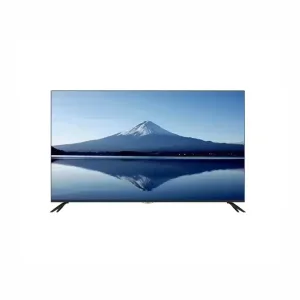
Wholesale Frameless 50-inch 4K Q LED Android Smart TV, Ultra HD HDR Commercial Use
View Specifications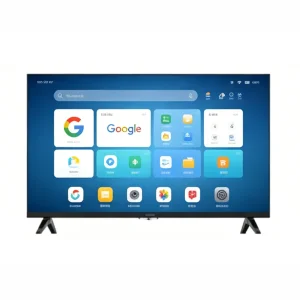
OEM 32-inch Full HD webOS Smart TV LG System for Bedroom, Hotel, Commercial Export
View SpecificationsThe Strategic Resurgence of 20-Inch Smart TV Architecture
While standard residential television markets gravitate toward 65-inch to 85-inch living room centerpieces, the global B2B procurement sector is experiencing an aggressive surge in compact display demand. The 20-inch smart TV footprint has transcended its historical status as an entry-level bedroom monitor to become an indispensable intelligent edge-terminal across specialized commercial, automotive, marine, and institutional infrastructures.
Micro-Footprint Spatial Optimization
Modern architectural models—including micro-apartments, modular student housing, compact boutique hotels, and maritime cabins—mandate low-profile audiovisual displays. A 20-inch form factor yields standard viewing distances of 1.0 to 1.8 meters without overwhelming compact architectural lines, while delivering native 1080p Full HD pixel densities that exceed those of standard 55-inch living room screens.
Ultra-Low Power & Off-Grid DC Compatibility
Commercial mobile ecosystems (recreational vehicles, long-haul commercial truck sleepers, solar-powered yachts, and off-grid remote encampments) require native DC 12V/24V power engineering. Our custom OEM mainboard architectures eliminate the 15-20% efficiency penalty of external DC-to-AC inverters, running continuously within 18W to 28W operating envelopes under dynamic backlight loads.
Dual-Purpose Smart Display Convergence
Modern enterprise procurement no longer differentiates strictly between television receivers and computer/CCTV monitors. The modern 20-inch smart TV operates simultaneously as a high-definition tuner terminal (ATSC 3.0, DVB-T2/S2, ISDB-T), an Android/Linux edge-computing kiosk, a POS secondary interactive display, and a security monitoring sub-station via HDMI CEC and low-latency auto-switching modes.
Navigating B2B Procurement Demands: CBU vs. SKD vs. CKD
International television procurement involves complex regulatory frameworks, dynamic import duty schedules, and severe panel grade variations. Understanding the operational engineering differences between shipment formats is vital for margin preservation.
| Deployment Model | Primary Engineering Profile | Tariff & Duty Optimization | Factory Support Scope | Target Buyer Segment |
|---|---|---|---|---|
| CBU (Completely Built Up) | 100% factory assembled, calibrated, packaged in retail or bulk master cartons with full drop-test certification. | Standard customs rates (typically 15% - 35% depending on destination nation trade pacts). | Complete end-to-end QC, incoming panel aging, automated optical inspection, burn-in validation. | Retail distributors, supermarket chains, hospitality integrators requiring plug-and-play stock. |
| SKD (Semi Knocked Down) | Pre-assembled LCD open-cell chassis with front bezel and back cover; mainboard, power unit, and speakers packed separately. | Reduces import tariff burdens by 40% - 60% in developing manufacturing zones (e.g., India, Brazil, Egypt). | Assembly tooling fixtures, screw-torque specifications, motherboard flashing jigs, technical SOP documentation. | Regional assembly factories with secondary SMT or manual mechanical assembly capabilities. |
| CKD (Completely Knocked Down) | Unassembled individual raw components: bare open-cell glass, backlight strips, chassis stampings, bare PCBs, cabling, hardware. | Maximum tariff avoidance (treated as raw industrial components, often 0% - 5% duties). | Clean-room open-cell bonding guidelines, automated optical inspection recipes, comprehensive testing equipment support. | Large-scale national electronics manufacturers leveraging government local-content manufacturing subsidies. |
Panel Grade Integrity: Zero Bright-Dot Guarantees
The primary procurement hazard in compact display production is the dumping of Grade-B or downgraded surplus open-cell panels by second-tier brokers. Our factory procures exclusively Grade-A IPS and VA panels directly from tier-one fabrication lines (BOE, HKC, Innolux, AUO). Every single 20-inch substrate undergoes automated dark-room pixel testing ensuring 100% compliance with ISO 9241-307 Class I/II specifications, eliminating pixel voids and backlight bleeding defects.
OS Ecosystem Compliance & Widevine L1 Licensing
Many low-cost factories deploy uncertified Android Open Source Project (AOSP) builds that fail Google Play Integrity and lack Widevine L1 cryptographic keys—capping video playback resolution at 480p on licensed platforms like Netflix, Prime Video, and Disney+. We engineer multi-tier OS solutions: officially certified Google TV and webOS builds with full DRM decryption, as well as stripped, locked-down commercial AOSP builds optimized for offline hotel IPTV and kiosk networks.
China Factory 4.0: Supply Chain Resilience & Huadu Hub Synergy
Guangzhou Wanteng Electronics (WEIER brand heritage since 1987) anchors a premier electronics manufacturing cluster in Huadu District, Guangzhou. Our 60,000 square meter intelligent campus delivers unmatched scale, cost elasticity, and engineering speed.
Unbroken operational engineering track record dating back to 1987, traversing CRT, CCFL LCD, edge-lit LED, and advanced Mini-LED/QLED eras.
Six automated high-speed SMT lines, Class-10,000 clean-room optical bonding workshops, and centralized multi-story logistics warehousing.
Producing 50,000 finished CBU display units and 200,000 specialized SKD/CKD kits every month for verified B2B partners across six continents.
Integration of AOI (Automated Optical Inspection), Chroma colorimeters, RF signal generators, and continuous 72-hour thermal stress chamber aging.
Immediate physical proximity to the Pearl River Delta's dense ecosystem of tooling, plastics injection, mainboard PCB fabrication, and packaging.
Rapid prototyping capability from initial CAD/BOM mechanical engineering sign-off to certified working samples ready for laboratory validation.
Engineering a Ruggedized 20-Inch Smart Display Specification
Designing a high-performance 20-inch smart TV requires balancing tight physical chassis constraints with intense thermal, acoustic, and electrical demands. Below is the exact technical engineering topology deployed across our OEM assembly runs.
Substrate & Optical Backlight
We leverage 19.5" to 20.0" active matrix TFT LCDs featuring IPS wide-viewing technology (178° horizontal and vertical). Panel luminance profiles range from 250 nits for domestic ambient spaces to 500+ nits for sunlight-exposed maritime bridge installations. Utilizing direct-LED (DLED) matrix backlighting with precision optical lenses ensures >85% uniformity without corner dimming.
Processing SoC & Memory Topology
Driven by specialized Realtek, MediaTek, or Amlogic quad-core ARM Cortex-A55 chipsets paired with Mali-G31/G52 graphics engines. Memory configurations are tailored to target OS requirements: 1GB RAM + 8GB eMMC 5.1 for streamlined commercial signage applications, scaling up to 2GB RAM + 16GB eMMC for high-bitrate streaming on Google TV and certified webOS platforms.
Global Tuner & Demodulator Stack
OEM orders can be populated with market-specific hardware demodulators on a unified mainboard layout: DVB-T2/C/S2 for Europe, Africa, and Middle Eastern corridors; ATSC 3.0/Clear QAM for the United States, Canada, and Mexico; and ISDB-T full-segment for Brazilian and Latin American networks. All tuners are fully shielded against high-frequency Wi-Fi/Bluetooth interference.
Global Deployment Verticals for 20-Inch Smart Screens
The unique scale of the 20-inch smart screen unlocks specialized installation topologies that large-screen TVs cannot physically navigate.
Recreational Vehicles & Marine
Shock-mounted components, conformal anti-corrosion PCB coating, and integrated DC 9V-32V surge protection prevent failure across marine environments and washboard roads.
Hospitality & Bedside Care
Equipped with customized hotel launcher skins, volume limiters, cloneable USB configurations, antimicrobial plastics, and isolated headphone output circuits for healthcare wards.
Smart Kitchens & Cabinetry
Ultra-slim profile designs with IP65-rated splash-resistant front tempered glass, capable of under-cabinet folding or flush-mount integration into luxury modular kitchen suites.
Security Monitoring & POS
Continuous 24/7 duty-rated panels with HDMI auto-sensing, portrait mode firmware rotation, and split-screen video display options for high-density surveillance stations.
Zero-Tolerance Quality Engineering & Export Compliance
Guangzhou Wanteng Electronics operates under strict ISO 9001:2015 quality management procedures. Every OEM consignment is backed by international test reports and on-site audit verification.
1. Inbound Material Control (IQC)
Every batch of open-cell glass, LED driver chips, power supplies, and structural steel brackets undergoes strict AQL 0.65 visual and electrical verification. Panels displaying micro-scratches, optical polariser bubbles, or borderline luminance values are rejected before reaching clean-room production lines.
2. In-Process Stress Aging (IPQC)
Assembled chassis assemblies enter continuous 4-hour to 8-hour dynamic aging chambers cycling between high-load white-screen, color-wash, and cold boot sequences. This rigorous process weeds out early component infant mortality across power regulators, high-voltage invertor stages, and SoC solder joints.
3. Final Packaging & ISTA Validation
Finished units are sealed into reinforced 5-ply kraft export cartons with customized high-density expandable polyethylene (EPE) shock padding. Finished master cartons endure rigorous ISTA-1A drop testing, 3-axis vibration testing, and high-humidity salt spray corrosion analysis prior to bill-of-lading approval.
Frequently Asked Questions for OEM Buyers
Straightforward engineering, logistics, and legal answers straight from our Huadu factory export management team.
What is the standard Minimum Order Quantity (MOQ) for custom-branded 20-inch smart TVs?
Can your factory provide 12V/24V DC wide-voltage power supplies for RV, solar, and marine applications?
How do you handle regional broadcast tuner standards across diverse export markets?
What operating system options are available, and how are updates and licensing handled?
Can international buyers audit your production facility in Guangzhou prior to order placement?
What are your standard shipping lead times for CBU and SKD/CKD container consignments?
Explore Additional Screen Sizes & Flagship Configurations
From compact commercial sub-screens to grand 100-inch architectural displays, our Huadu factory delivers unified component reliability and consistent firmware across every format.
OEM 43-inch 4K UHD webOS Smart TV with AI, Source Manufacturer for Home and Hotel
Explore Model
High-Quality 43-inch 4K QLED Google Smart TV, Google TV Export Network TV Factory
Explore Model
High-Quality 65-inch 4K OLED self-emissive Android smart TV with Dolby Vision HD
Explore Model
Wholesale Frameless 50-inch 4K Q LED Android Smart TV, Ultra HD HDR Commercial Use
Explore Model
OEM 32-inch Full HD webOS Smart TV LG System for Bedroom, Hotel, Commercial Export
Explore Model
OEM 75 -inch 4K QLED Android Smart Voice TV, Ultra HD Large Screen Commercial Export
Explore Model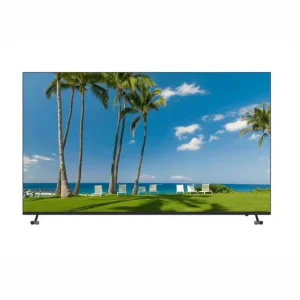
High-Quality 85 -inch 4K QLED Android Smart Voice TV Ultra HD Large Screen Flagship
Explore Model