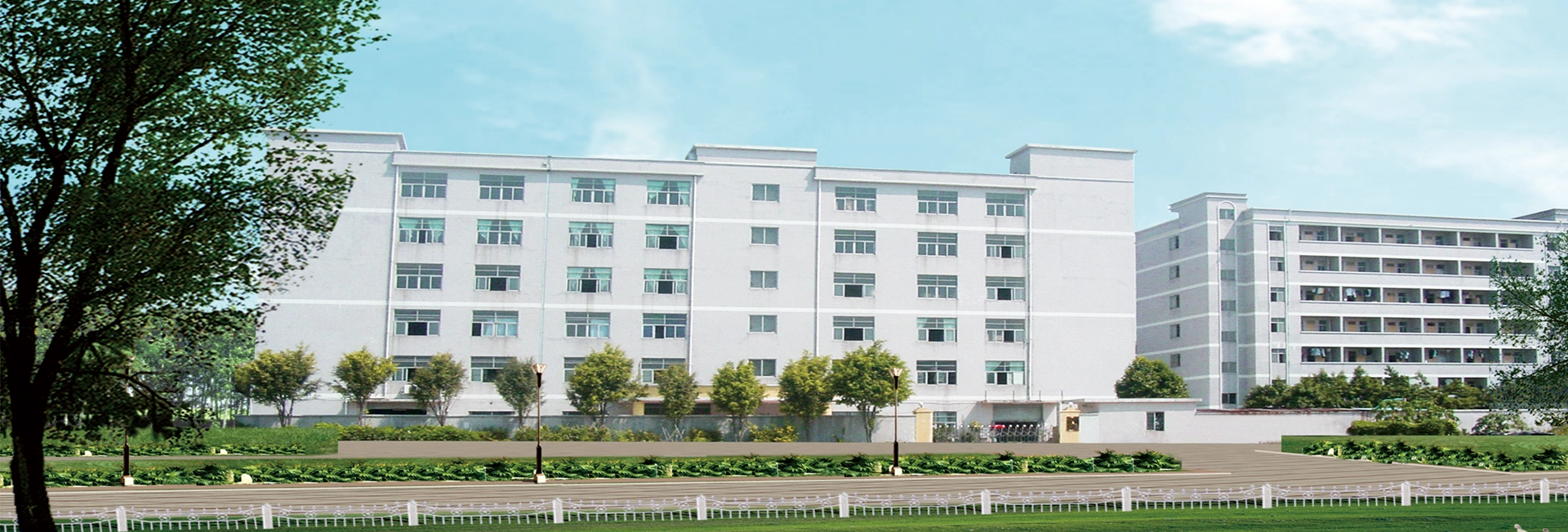
High-Yield ODM Streaming TV Hardware Lines
Turnkey, certified, and fully customized displays engineered for residential hubs, hypermarkets, and heavy commercial deployments.
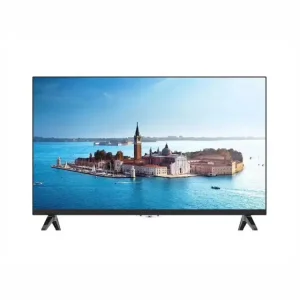
OEM Borderless 32" HD Android Smart TV for Supermarkets
View Specifications
OEM 75" 4K QLED Android Smart Voice Ultra HD TV
View Specifications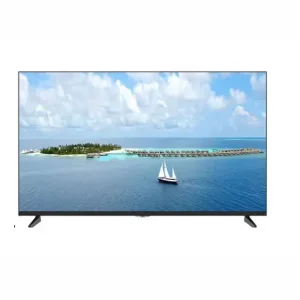
55" 4K QLED Frameless Android TV with Dolby Vision
View Specifications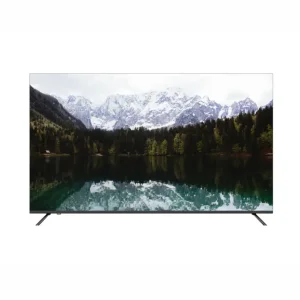
65" 4K OLED Self-Emissive Smart TV with Dolby Vision
View Specifications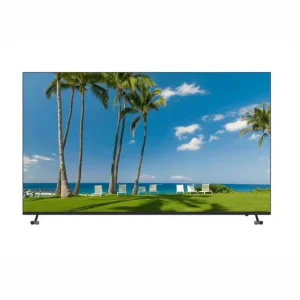
85" 4K QLED Voice Control Flagship Commercial Display
View Specifications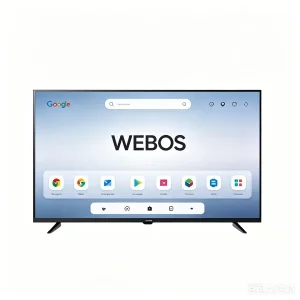
OEM 43" 4K UHD webOS Smart AI TV for Hotel & Commercial
View Specifications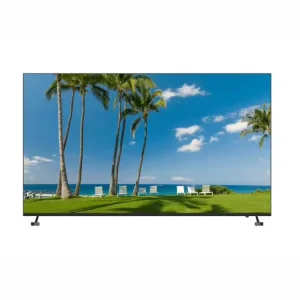
100" 4K Explosion-Proof Tempered Glass TV for Hospitality/KTV
View Specifications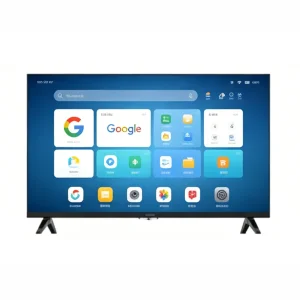
OEM 32" Full HD webOS Integrated Platform Smart TV
View SpecificationsMacro Architectural Solutions in Connected Television (CTV)
The structural shift from conventional broadcast displays to interactive, AI-driven Streaming TV endpoints requires deep factory-level integration across hardware, SoC, and operating stacks.
OTT Stack Customization & Middleware
We solve the operational fragmentation of CTV by integrating specialized Android TV, Google TV, and webOS firmware at the register level. Mainboards are tuned with hardware-enforced Widevine L1 and PlayReady DRM decryption pipelines, ensuring flawless UHD streaming for tier-1 SVOD/AVOD ecosystems with zero framerate jitter.
FAST & Monetization Channel Ingestion
Free Ad-Supported Streaming TV (FAST) requires low boot latency and dynamic ad insertion (DAI) optimization. Our firmware architectures accommodate custom launcher layouts, system-level programmatic ad slots, and customized electronic program guides (EPG), maximizing Average Revenue Per User (ARPU) for regional telecom operators and private-label distributors.
Enterprise Hospitality IPTV Management
For large hospitality infrastructure, our displays feature hardware-level Pro:Centric and commercial command protocol compatibility. Centralized IP-based video distribution allows system administrators to deploy custom brand portals, manage digital guest services, enforce volume thresholds, and execute remote automated firmware upgrades over LAN without field downtime.
Global Supply Chain Status: CBU vs. SKD/CKD Paradigm
Understanding tariff barriers, assembly economics, and high-volume component pipelines in the international television industry.
Tariff Hedging via SKD/CKD Engineering
High import tariffs on Completely Built Units (CBU) in markets such as India, Brazil, Egypt, and Nigeria necessitate localized assembly. WEIER delivers high-density Semi-Knocked Down (SKD) and Completely Knocked Down (CKD) kits with tailored mechanical packaging, precision Open-Cell glass cushioning, and pre-calibrated SMT boards to drop customs duties by up to 25–40%.
Tier-1 Open-Cell Glass Allocation
Panel costs account for 60% of total BOM value. Through long-term strategic allocations with leading optical fabs (BOE, CSOT, Innolux, AUO, LG Display), our factory maintains supply predictability, zero dead-pixel sorting protocols, and tight grade-A binning across DLED, QLED Quantum Dot, and self-emissive OLED panels.
Agile Cleanroom Line Conversion
Operating six automated assembly and optical bonding lines in Huadu District, Guangzhou, our manufacturing ecosystem scales rapidly from specialized 32-inch high-density runs to high-precision 100-inch architectural glass laminations, backed by automated optical inspection (AOI) and continuous 4-hour dynamic high-heat aging protocols.
Global Regulatory Architecture & Regional Customization
Exporting across six continents demands absolute adherence to global telecommunications, safety standards, and regional RF spectrum protocols.
RF Tuner Standards
Native hardware tuner integration covering ATSC 3.0 (North America), DVB-T2/S2/C (Europe, Africa, Mid-East), ISDB-T (Latin America), and DTMB, ensuring unassisted native terrestrial signal validation.
Certifications
Fully compliant with CE, FCC Part 15B, RoHS, ERP Energy Efficiency class guidelines, CB Scheme, NOM, and SASO, backed by clear documentation to prevent port clearance rejections.
OS & Codec Licenses
Pre-certified compliance paths for Dolby Audio, Dolby Vision, HDMI 2.1, DTS Studio Sound, alongside authorized GMS Android, Google TV, and certified webOS ecosystems with direct Google Play access.
Power & Climate Adaptation
Engineered power boards with wide-voltage tolerance (AC 90V–260V) designed to withstand sudden electrical brownouts and high-humidity tropical conditions across African and LATAM regions.
High-Yield Application Scenarios & Customization Vectors
Engineered display configurations matched directly to environmental stress, daily operational duty cycles, and visual performance demands.
Living Room Cinema & Connected Homes
4K QLED and self-emissive OLED panels paired with high-dynamic-range HDR10+, Dolby Vision IQ, and voice-assisted far-field microphones. Designed with ultra-thin frameless unibody bezels that integrate seamlessly into modern residential architectures.
Next-Gen E-Sports & Console Gaming
Native 120Hz/144Hz panel drive rates, Auto Low Latency Mode (ALLM), and Variable Refresh Rate (VRR) via HDMI 2.1 eARC bandwidth. Delivers instantaneous response times and tear-free visuals for consumer gaming clubs and interactive hospitality setups.
Hospitality, KTV & Heavy Public Venues
Explosion-proof 7H tempered-glass lamination engineered over massive 75" to 100" panels. Impervious to projectile impacts, liquid splashes, and aggressive cleaning solvents, paired with anti-glare coatings and 16/7 or 24/7 continuous-duty thermal structures.
Engineering Roadmap: Mini-LED, Edge AI & Cloud Native CTV
Guangzhou Wanteng (WEIER) continues advancing next-generation television displays through progressive hardware and silicon innovations.
Mini-LED Backlight & Local Dimming
Migrating commercial lineups from conventional edge-lit and direct-LED arrays toward 500–2,000+ zone Mini-LED active-matrix topologies. This delivers over 1,500 nits peak brightness, approaching OLED contrast ratios while maintaining long-term panel stability without burn-in risks.
NPU-Driven Edge-AI Picture Engines
Next-generation mainboards feature integrated Neural Processing Units (NPUs) capable of real-time frame-by-frame super resolution, AI voice denoising, automatic ambient luminance tone-mapping, and intelligent dynamic bitstream repair for compressed streaming video.
Matter Protocol & Smart Home Control
Unifying future firmware with universal IoT interoperability. By integrating Matter and Thread protocols into our wireless Wi-Fi 6/6E radio modules, the streaming television acts as an ultra-low-power, always-connected central control hub for whole-home automation.
Frequently Answered Technical & Sourcing Questions
Key technical considerations for international brand buyers, distributors, and technical project directors.
What differentiates a true source manufacturer from TV trading companies?
Source factories like WEIER (operating 60,000 m² in Huadu District, Guangzhou since 1987) own and maintain the surface-mount technology (SMT) lines, cleanroom optical assembly bays, and aging tunnels. We control the engineering Bill of Materials (BOM), lock component specifications post-approval, and avoid third-party trading markup while allowing direct engineering line audits.
How does WEIER guarantee wide-temperature stability and zero dead pixels?
Every Open-Cell panel undergoes cleanroom optical microscopy and computerized AOI grading before bonding. Once assembled, units face a 4-hour dynamic burn-in test inside heat-controlled aging tunnels to surface early diode or capacitor failures, ensuring a defect rate well below 0.3% upon port arrival.
Which operating systems can be licensed and flashed for export markets?
We provide full hardware and firmware integration for official Google TV (Android 11/12/14) with GMS licensing, pure AOSP lightweight platforms for price-sensitive wholesale, and authorized webOS Hub installations featuring LG's ThinQ voice architecture and content ecosystems.
Can our engineering team specify custom SoC, RAM, and storage arrays?
Yes. Depending on your software footprint and performance targets, we configure multi-tier architectures from cost-optimized Realtek and Novatek chipsets (1GB RAM + 8GB eMMC) up to premium high-performance Amlogic or MediaTek platforms (2GB/3GB RAM + 16GB/32GB eMMC) supporting hardware AV1 and VP9 decoding.
What are the packaging and logistic optimizations for SKD vs. CKD orders?
For SKD, we pack pre-assembled front cabinets and panels separately from back covers, mainboards, and power units to conserve volume. For CKD, components, including loose Open-Cell glass packed in heavy-duty specialized wooden crates with desiccant systems, maximize container fill rates up to 200–300% over finished CBU shipments.
How is DRM licensing (Widevine L1, Netflix, Amazon Prime) managed for OEM brands?
We manage firmware-level hardware key injection inside a secure facility. Our Google TV and webOS solutions come factory-provisioned with approved HDCP 2.2/2.3 keys and Widevine Level 1 DRM cryptographic signatures, enabling true native 4K playback across all major subscription streaming platforms.
Certified Display Hardware Ready for Immediate Production
Connect with our engineering desk in Guangzhou to request physical samples, tooling specifications, and bulk container quotations.
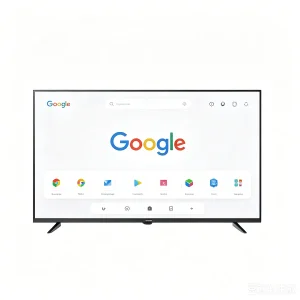
43" 4K QLED Google Smart TV Platform for Export
View Specifications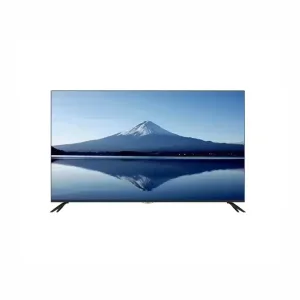
50" 4K QLED Frameless Android TV with HDR Ecosystem
View Specifications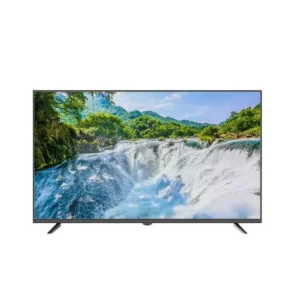
43" Borderless FHD Android Smart TV for Hotels & Projects
View Specifications
75" 4K QLED Commercial Large-Format Display
View Specifications
65" Pure Black OLED Flagship Display Unit
View Specifications
100" Ultra-Large Explosion-Proof Commercial Display
View Specifications
32" Frameless Android Fast-Assembly SKD/CBU Unit
View Specifications