High-Yield Commercial & Residential Display Systems
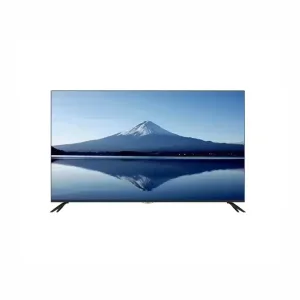
Direct manufacturer deployment covering borderless retail form factors, commercial explosion-proof panels, self-emissive OLEDs, and quantum-dot architectures tailored for global export mandates.

The Architecture of Modern ODM Television & Display Panel Supply
In an era of rapid panel generation iterations (G8.5 to G10.5 fabs), global supply chain turbulence, and stringent regional energy directives, selecting an Original Design Manufacturer (ODM) requires an audit of physical engineering capability, open-cell yield stability, and embedded software licensing governance.
Class-100 Cleanroom Open-Cell Bonding
Our Huadu automated cleanrooms eliminate sub-micron particulate contamination during direct panel COF (Chip-On-Film) and COG (Chip-On-Glass) bonding. By partnering directly with Tier-1 glass fabricators (BOE, CSOT, HKC, Innolux), we bypass secondary glass traders, guaranteeing Grade A+ zero-bright-dot substrate integrity across every container shipped.
- Automated ACF conductive film alignment
- Continuous temperature & pressure logging
- Optical AOI inspection for zero pixel leakage
Triple OS Mainboard Engineering
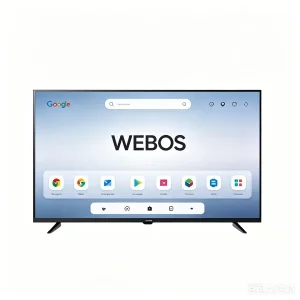
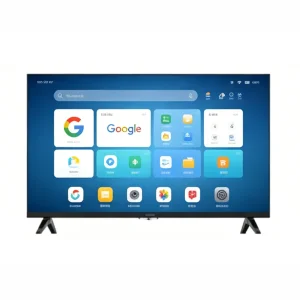
We solve the global software fragmentation crisis. Rather than forcing clients into proprietary, uncertified firmware builds, WEIER provides turnkey solutions across Android Open Source Project (AOSP), official Google TV ecosystem with certified GMS/Widevine L1, and licensed webOS Hub solutions complete with Magic Remote cursor protocols.
- Realtek, Novatek & MediaTek high-speed chipsets
- Netflix, Prime Video & Disney+ 4K L1 certification
- Integrated OTA cloud firmware maintenance
SKD / CKD Global Tariff Engineering
Navigating complex customs tariffs in Brazil, India, Egypt, Nigeria, and Turkey demands precision knock-down manufacturing. Our engineering facility delivers custom-tested SKD (Semi Knocked Down) and CKD (Completely Knocked Down) television packs, complete with custom jig designs, testing protocols, and SOP training videos.
- Up to 65% freight volume savings per 40HQ
- 100% pre-flashed mainboards & matched harnesses
- On-site assembly line engineering setup support
Display Technology Roadmap: LCD, QLED, OLED & Mini-LED
A deep engineering audit comparing physical luminous efficacy, color gamut volumes (DCI-P3 / BT.2020), thermal throttling profiles, and manufacturing bill-of-materials (BOM) implications across modern TV display topologies.
| Display Panel Architecture | Color Space Coverage | Peak Luminance & Contrast | Optical Architecture & Backlight | ODM Target Procurement Sector |
|---|---|---|---|---|
| Direct-Lit LED (DLED) Standard Mass Volume |
72% NTSC / ~82% sRGB | 220 – 300 nits Static Contrast 1200:1 – 3000:1 |
PMMA secondary optical lens array, 24V/36V drive, cost-optimized optical distance (OD20-OD35). | Supermarket private labels, mass-market budget lines, government public tender tenders. |
| Quantum Dot LED (QLED) High Dynamic Range |
95% – 98% DCI-P3 Wide Color Gamut |
350 – 500 nits Local Contrast Boost with HDR10+ |
Quantum Dot Enhancement Film (QDEF) layered over blue LED pump array, producing ultra-pure R/G peaks. | Mid-to-high tier private brand retail, home cinema displays, premium hospitality installations. |
| Self-Emissive OLED Panel Ultra-Flagship Tier |
>99% DCI-P3 / 80% BT.2020 | 800 – 1000 nits (Peak 3%) Infinite Static Contrast (0.0005 nits black) |
Organic self-luminous sub-pixels without backlight unit. Zero light haloing, ultra-slim 4.2mm depth profile. | Boutique brand flagships, executive suites, studio video colorists, luxury residential integrations. |
| Mini-LED Local Dimming (OD5) Next-Gen Hybrid |
98% DCI-P3 / 85% BT.2020 | 1000 – 1600 nits Dynamic Contrast >1,000,000:1 |
Active-matrix drive with 384 to 1,152 individual local dimming zones; GaN micro-chips on aluminum PCB. | Competitive e-sports displays, bright sunlight commercial venues, flagship brand centerpieces. |
| Commercial Armored Tempered Reinforced Spec |
85% NTSC / 92% sRGB | 400 – 550 nits High-Haze Anti-Glare Coating |
3mm - 4mm 7H chemically strengthened tempered glass optically laminated to open cell via explosion-proof OCA. | Karaoke (KTV) lounges, public transit concourses, bars, school auditoriums, sports arenas. |
Open-Cell Selection
Direct allocation of mother-glass sheets cut with strict A-grade standards, ensuring zero sub-pixel defects, uniform liquid crystal cell thickness, and minimal color shift at 178° viewing angles.
Chassis Dissipation
Thermal CFD-modeled aluminum backplates preventing localized hotspots around the T-CON board and LED driving bars, sustaining a mean time between failures (MTBF) exceeding 50,000 hours.
AI Picture Processing
Hardware-level color engine calibrating gamma curves, 3D LUT matrices, dynamic noise reduction (3D DNR), and motion estimation/motion compensation (MEMC) for tear-free 60Hz/120Hz playback.
Stress & Burn-In Testing
Continuous 48-hour 45°C high-humidity elevated-voltage burn-in testing on 100% of finished lots before palletizing, guaranteeing immediate plug-and-play reliability across overseas distribution depots.
Supply Chain Resilience: The Pearl River Delta Manufacturing Ecosystem
Why Tier-1 global television brands consolidate manufacturing in Guangzhou: the confluence of sub-tier component clustering, localized raw materials, zero-mile logistical buffering, and high production agility.
Open-Cell Cluster Proximity
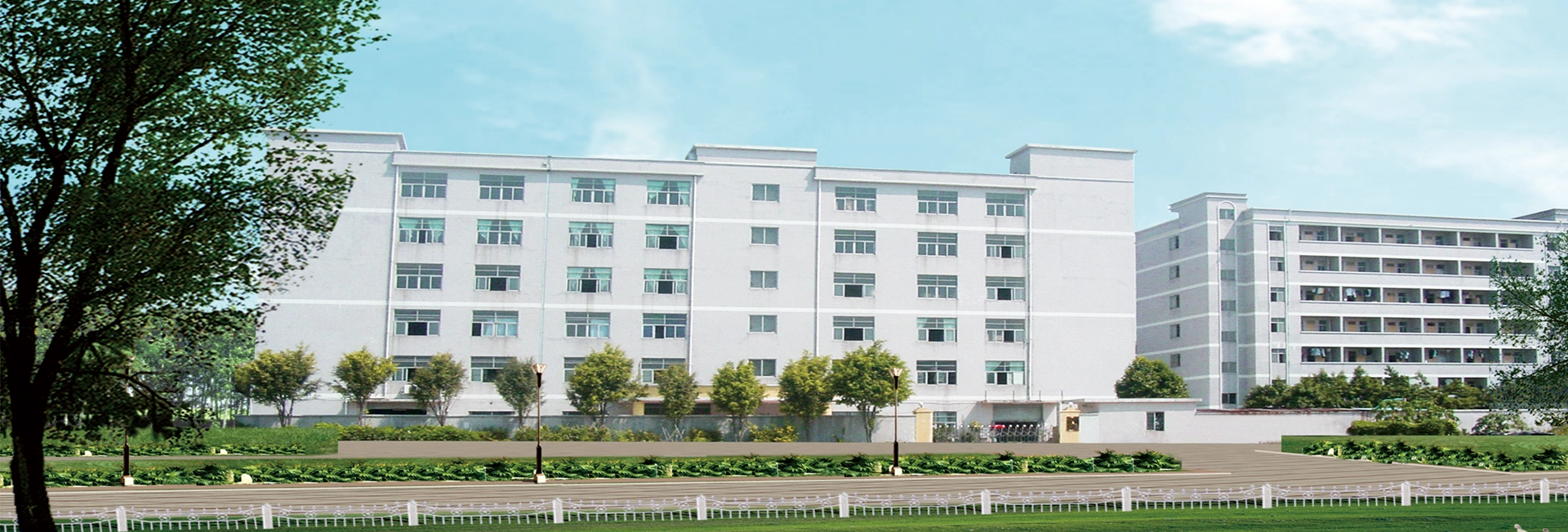
Located in Huadu District, Guangzhou, WEIER sits within a two-hour logistics ring connecting BOE's B9/B17 fabs, CSOT's T6/T7 facilities, and HKC's display complexes. This geographic adjacency eliminates inter-provincial freight glass-breakage risks and grants daily just-in-time (JIT) glass replenishment during supply crunches.
In-House Tooling & SMT Lines
We do not outsource fundamental tooling or mainboard surface mounting. Operating in-house high-speed SMT lines, automated injection-molding presses, and metal stamping units ensures rapid cycle times from CAD/CAM prototypes to mass production—reducing product launch cycles from 6 months to 28 days.
Port & Freight Optimization
Proximity to Nansha, Huangpu, Shenzhen Yantian, and Hong Kong ports allows multi-port container dispatch. Custom palletization engineering maximizes container volumetric load factors: our slim-bezel models fit up to 880 units of 32-inch or 240 units of 65-inch sets per 40ft High Cube container, slashing landed shipping costs per unit.
BOM Transparency & Price Hedging
Long-term strategic forward contracts with panel glass and IC vendors protect our procurement clients against spot-market panel price spikes. We offer open, unbundled BOM engineering, giving international brand managers visibility into every IC, capacitor, power board, and mechanical bracket used in production.
Localized Engineering: Custom Hardware & Firmware Architectures
A standard consumer television will fail rapidly in hospitality, industrial, or tropical environments. WEIER engineers dedicated hardware variants built specifically for your sector's mechanical, electrical, and content security realities.
Hospitality & Hotel IPTV Deployments
Hotels require strict control over consumer misuse, volume limitation, custom welcome screens, and seamless PMS (Property Management System) integration. We build native Pro:Centric and commercial IPTV protocols directly into firmware.
- Hotel Mode menu lock & maximum volume capping
- USB clone feature for rapid 500-room uniform setup
- Auto-clearing user credentials at guest check-out
KTV, Nightclub & High-Impact Venues
Entertainment venues face beverage spills, projectile impacts, and constant vibration. Our commercial 100-inch and large-format lines feature 4mm tempered blast-proof front glass with optical bonding to stop internal condensation and impact fractures.
- IK08 to IK10 mechanical impact certification
- Conformal-coated PCBs resisting smoke and moisture
- Heavy-duty reinforced VESA industrial mounting plates
Tropical & High-Humidity Environments
Exporting to Southeast Asia, Africa, and Latin America exposes electronics to ambient humidity exceeding 90% and wide power grid swings (90V–280V). We build custom broad-input switch-mode power supplies (SMPS) with integrated lightning arrestors.
- 4.5kV surge & over-voltage protection modules
- Anti-fungal conformal resin coating on copper traces
- Rust-inhibited galvanized steel chassis fixtures
Regulatory Compliance & Worldwide Digital Tuner Standards
A TV cannot clear customs or operate cleanly without the exact localized RF demodulator and telecommunication homologation. WEIER designs mainboards pre-certified for global broadcast systems and electromagnetic standards.
Europe & Middle East: DVB-T2/S2/C
Equipped with high-sensitivity silicon tuners supporting H.265/HEVC video decoding, CI+ (Common Interface) conditional access slots for paid channels, and full conformance with European CE (EMC/LVD), ERP Tier II energy efficiency labels, and RoHS chemical hazardous substance standards.
North America: ATSC 1.0 / ATSC 3.0
Mainboards calibrated for USA, Canada, and Mexico broadcast protocols, incorporating 8VSB modulation, Dolby Digital AC-4 audio pass-through, Closed Captioning (EIA-608/708), and full certification under FCC Part 15 Class B, UL 62368-1, and California CEC energy requirements.
Latin America: ISDB-T Ginga
Engineered for Brazil, Argentina, Colombia, Chile, and Peru. Features hardware demodulators supporting ABNT NBR 15601 and ARIB STD-B31, with middleware execution of Ginga-NCL interactive data broadcasting and official Anatel / NOM safety regulatory filings.
Africa & Asia: Universal Multi-Standard
Dual-tuner DVB-T2/C with integrated analog ATV (PAL B/G, D/K, I, SECAM) backward compatibility for areas migrating to digital broadcasts. Pre-screened for SASO (Saudi Arabia), SONCAP (Nigeria), and PVOC (Kenya) export clearance inspections.
Frequently Answered Technical & Operational Inquiries
Direct technical feedback from our engineering directors on panel grades, customization limits, SKD packaging architectures, and contract manufacturing compliance.
What is your exact panel sorting grade and dead-pixel policy?
WEIER enforces a strict Grade A+ standard across all new builds. We source primary open-cell glass directly from Tier-1 foundries (BOE, CSOT, HKC) under ISO 13406-2 Class II specifications. For commercial and flagship tiers, we ensure 100% zero bright dot (0 ZBD) and less than two micro-dark subpixels only visible under direct dark-room testing.
Can you supply fully licensed Google TV and webOS with GMS certification?
Yes. We hold direct ODM authorization pathways for official Google TV (with full Google Mobile Services, Google Assistant voice remote, Widevine L1, and Netflix 4K certification) and LG webOS Hub licensing (complete with LG Magic Remote support, ThinQ AI integration, and certified Apple AirPlay 2 protocols). We handle all software licensing filings on your behalf.
What are the minimum order quantities (MOQ) and production lead times?
For fully custom private-brand CBU (Completely Built Unit) projects—including silk-screened bezels, molded remotes, custom boot animations, and multilingual retail color cartons—our baseline MOQ is one 20GP container (approx. 400-800 sets depending on screen size). Lead times run 25 to 30 days upon final artwork approval and deposit confirmation.
How does WEIER support SKD/CKD assembly at the client's local factory?
We supply modular SKD/CKD kits engineered for local import duty reduction. Each pack includes pre-tested open cells in specialized shockproof vacuum packaging, pre-programmed mainboards, matching wire harnesses, power boards, and speaker arrays. We also send our assembly engineers on-site to configure bonding jigs, test benches, and quality control lines for high initial yields.
Can you provide custom industrial chassis and explosion-proof glass?
Yes. Our mechanical team develops custom metal and plastic enclosures, ranging from ultra-slim frameless bezels (under 1.2mm borders) to ruggedized 4mm tempered blast-proof front panels with optical bonding. These configurations are suited for public displays, karaoke venues, transportation hubs, and hotel environments needing high impact protection.
How do you handle spare parts allocation and after-sales support?
Standard export orders include 1% free-of-charge (FOC) fast-wear spare parts, including pre-flashed mainboards, power boards, remote controls, backlight LED strips, and speaker modules. For larger ongoing brand contracts, we establish regional buffer stock agreements and offer direct remote engineering support with our Huadu firmware teams.
Enterprise-Grade Display Catalog & Procurement Selection
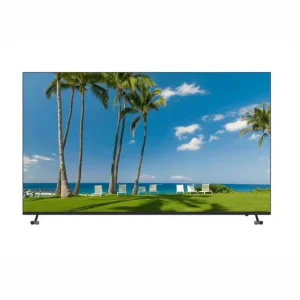
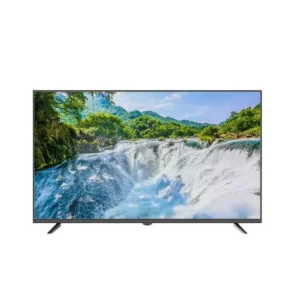
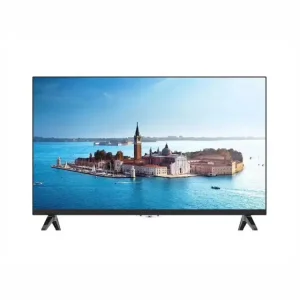
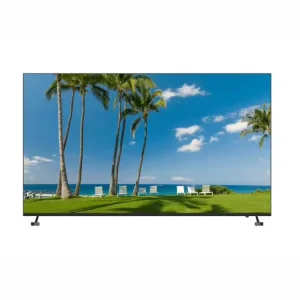
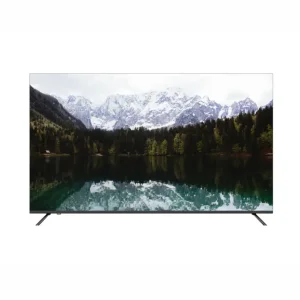
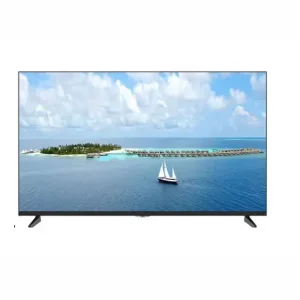
Review our core export configurations below. Every system can be branded with your identity, regional tuner profiles, and operating system packages.