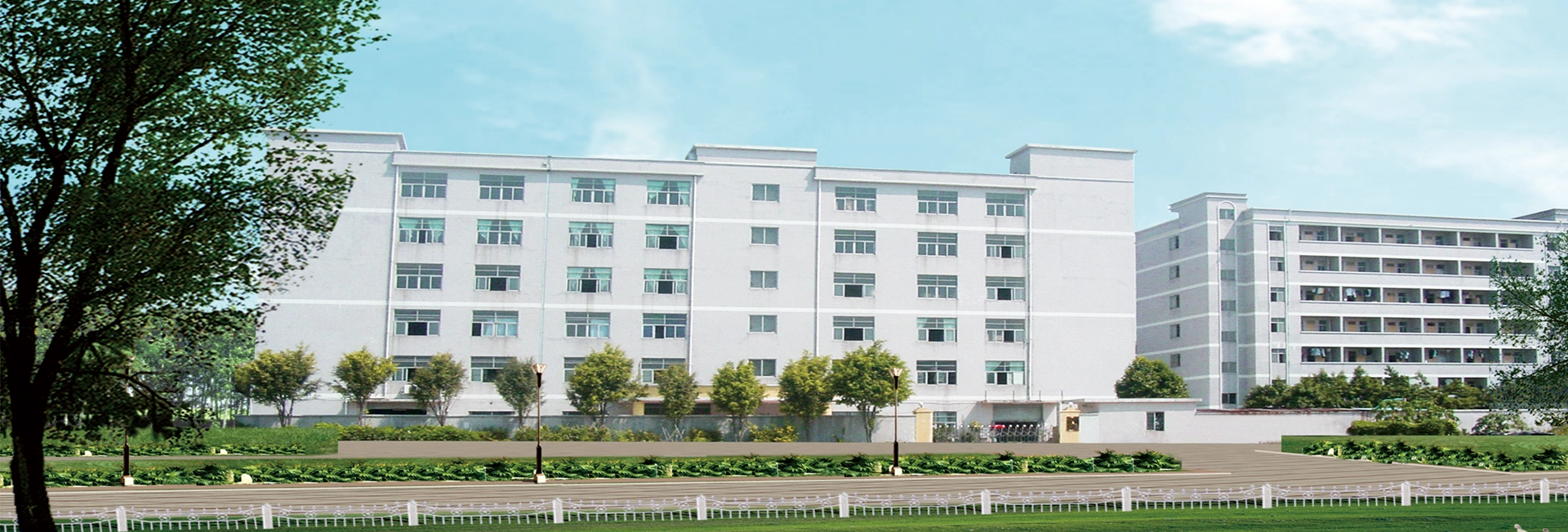
High-Spec ODM Large Display Engineering
Explore flagship commercial-grade televisions, explosion-proof units, and smart network matrices engineered for modern B2B, hospitality, and replacement applications.

Unpacking the "Old Big Screen TV" Sourcing Phenomenon
How global procurement teams navigate legacy display retrofits, commercial infrastructure replacements, and custom ODM manufacturing in a rapidly standardizing 4K/8K panel market.
In global B2B procurement lexicon, the search query "ODM Old Big Screen TV Factories & Suppliers" represents a nuanced commercial intent rarely understood by consumer-facing brands. Institutional buyers, hotel chains, public transportation bureaus, educational authorities, and regional electronics distributors often face a multi-million-dollar dilemma: how to replace, modernize, or retrofit thousands of aging large-format displays without completely rebuilding wall chassis, custom cabinetry, legacy AV matrices, and power distribution infrastructures.
First-generation large flat panels (ranging from early 42-inch and 50-inch plasma units to thick cold-cathode fluorescent lamp [CCFL] backlit LCDs manufactured between 2005 and 2015) possess bulky physical enclosures, high thermal outputs, specific VESA mounting standards, and discrete input configurations (including VGA, BNC composite, component YPbPr, SCART, and RS-232 serial control protocols). When these units reach end-of-life, sourcing modern consumer displays creates acute installation friction. Modern slim televisions lack commercial chassis rigidity, have down-firing audio unsuitable for acoustic wall recesses, and feature fragile edge-lit glass prone to mechanical damage.
This is where specialized ODM (Original Design Manufacturer) factories bridge the critical operational gap. Headquartered in Huadu District, Guangzhou, Guangzhou Wanteng (WEIER) Electronic Co., Ltd. (established in 1987) represents the pinnacle of industrial television manufacturing evolution. With over three decades of screen engineering expertise, 60,000 m² of specialized production plants, and six high-speed automated production lines producing over 50,000 finished televisions and 200,000 SKD/CKD kits monthly, WEIER engineers tailored solutions that modernize legacy large-screen installations into ultra-reliable, high-efficiency commercial powerhouses.
Form-Factor & VESA Adaptation
Legacy commercial displays relied on non-standardized rear chassis, heavy steel framing, and recessed anchor points. Modern ODM engineering re-engineers structural backplates to drop seamlessly into pre-existing hotel casework, digital signage totems, and institutional framing without architectural redesign.
- Customized heavy-gauge SGCC galvanized steel back-covers
- Universal multi-pitch VESA compatibility (200x200 up to 800x600mm)
- Optimized front-bezel dimensions to mimic legacy wall clearances
Hybrid I/O & Legacy Protocol Interfacing
Replacing displays in high-security facilities, broadcast environments, and existing hospitality rooms requires bridging historical analog/digital video signals with modern HDMI 2.1 eARC, Ethernet, and fiber optic audio.
- Optional RS-232 and IP-based central control integration
- Legacy BNC/VGA/YPbPr support alongside HDCP 2.2/2.3 HDMI
- Integrated TV tuners: DVB-T2/S2, ATSC 3.0, ISDB-T, and analog DTMB
Thermal & Power Efficiency Retrofitting
Older 55" to 85" commercial screens drew 350W to 700W, generating immense heat that degraded internal electronics and strained cooling systems. Modern direct-lit (DLED) and QLED systems drop power demand by up to 72%.
- Industrial MTBF ratings exceeding 50,000 continuous hours
- Wide-range voltage power supplies (90V–264V AC) with surge suppression
- Convection passive cooling eliminating noisy chassis fan failures
Scale, Precision, and Certified Output
Operating since 1987, Guangzhou Wanteng Electronics Co., Ltd. (WEIER) represents the standard in OEM/ODM television and commercial display engineering.
Stringent Quality Audits
Every batch undergoes panel pixel testing, high-temperature environmental burn-in (aging) for 4 to 12 hours, vibration stress simulation, drop tests, and high-voltage insulation tests to satisfy zero-defect mandates.
CBU, SKD & CKD Logistics
To help international clients minimize prohibitive import tariffs and comply with domestic assembly regulations, our factory supports Complete Built Units (CBU), Semi-Knocked-Down (SKD), and Completely Knocked Down (CKD) configurations.
Three Tier-1 OS Architectures
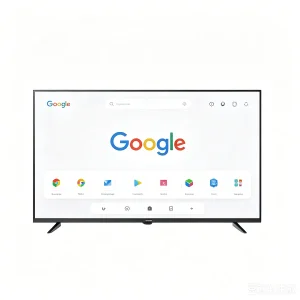
Select the ideal smart software stack for each target market: customized open Android for specialized engineering/signage APKs, licensed Google TV for retail consumer engagement, or intuitive webOS for hospitality and corporate boardrooms.
Global Supply Chain Status: From CRT/CCFL Legacy to Intelligent Matrices
An in-depth perspective on how global display supply ecosystems have evolved over the past four decades, and where smart procurement leaders capture maximum value.
1. The Evolution from Thick Panels to Edge-to-Edge QLED Engineering
In the late 1990s and early 2000s, commercial "big screen" displays were defined by 40-inch to 60-inch rear-projection CRT units, followed by high-draw plasma displays and thick CCFL-lit LCD screens. These units dominated hospitality suites, airport terminals, sports venues, and educational auditoriums. However, maintaining these systems today has become nearly impossible due to the obsolescence of high-voltage inverter boards, CCFL cold lamps, and proprietary scalar ICs.
Forward-thinking supply chain directors do not simply replace these with standard retail TVs. Consumer-grade televisions are engineered for an average usage profile of 4 to 6 hours daily, with operating temperatures bounded between 15°C and 30°C. In contrast, commercial retrofits demand continuous 16/7 or 24/7 duty cycles, dust-proof internal airflow design, commercial grade anti-glare panel coatings, and high-brightness backlights (up to 400–700 nits) to combat high ambient glare in transit hubs and hotel atriums.
2. Navigating the Post-LCD Fab Consolidation
Over the last five years, global Generation 8.5, Gen 10.5, and Gen 11 TFT-LCD panel fabrication has consolidated predominantly within mainland China. Legacy panel fabrications in Japan and South Korea have pivoted heavily toward high-end mobile OLED and specialty micro-LED arrays. For global importers, partnering directly with a South China-based source manufacturer like Guangzhou Wanteng (WEIER) provides unrivaled upstream panel access, fixed bill of materials (BOM), and shielding from raw panel market volatility (Open Cell price fluctuations).
By leveraging long-term strategic contracts with tier-1 panel fabricators (including BOE, CSOT, HKC, and Innolux), WEIER ensures that every batch of commercial televisions—from compact 32-inch units up to massive 100-inch explosion-proof displays—features A-Grade zero-bright-dot panels, optimized subpixel structures, and uniform color temperature calibration.
Localization Support & International Compliance Assurances
Streamlined customs clearance, regional broadcast tuning, and rigid electromagnetic safety compliance across six continents.
North America (FCC & Energy Star)
Export models are certified under FCC Part 15 Class B to ensure zero interference in dense commercial and residential environments. Advanced standby circuitry maintains power consumption below 0.5W, satisfying California Energy Commission (CEC) Tier II and federal Energy Star mandates.
- ATSC 1.0 & 3.0 NextGen TV broadcast tuners integrated
- ETL / UL electrical safety construction standards
- Closed captioning (EIA-608/708) compliance
European Union (CE, RoHS & ErP)
Full CE certification adhering to the Low Voltage Directive (LVD 2014/35/EU), Electromagnetic Compatibility (EMC 2014/30/EU), and Radio Equipment Directive (RED 2014/53/EU). Completely lead-free and hazardous-substance compliant under RoHS 2.0 (2011/65/EU and 2015/863).
- DVB-T2/C/S2 digital tuners with CI+ slot options
- New EU Energy Label Eco-design regulation optimization
- Full WEEE recycling documentation support
Latin America, Africa & APAC Tuners
Over two decades of direct shipping experience to Brazil, Colombia, Argentina, Nigeria, Kenya, Egypt, and Southeast Asia. We supply custom motherboards tuned specifically to regional terrestrial transmission standards and volatile electric grid conditions.
- ISDB-T for South America; DVB-T2 for Africa & Southeast Asia
- Surge-protected power supply modules resisting lightning & brownouts
- Multi-language OSD firmware: Spanish, Portuguese, Arabic, French, Swahili
Engineered for Demanding Commercial Environments
From high-impact entertainment complexes to round-the-clock security operations, our display systems are built for specific operational stresses.
Hospitality & Hotel Retrofits
Replacing bulky legacy TVs in guestrooms without altering millwork. Integrated hotel management software features include customizable welcome screens, lockable volume limits, USB clone programming, and direct Pro:Centric or webOS hospitality protocol interfacing.
High-Traffic Venues, KTV & Bars
Nightlife, sports lounges, and public transport hubs demand screens that withstand accidental collisions, liquid splashes, and aggressive cleaning solvents. Our explosion-proof models feature chemically tempered optical glass rated up to 7H hardness, directly bonded over high-luminance 4K panels.
Supermarket Networks & Digital Signage
Deploying continuous promotional video loops across hundreds of supermarket aisles. Motherboards equipped with auto-power recovery, hardware watchdog timers, and dedicated Android digital signage CMS compatibility ensure seamless playback without technician intervention.
Precision 4-Stage OEM/ODM Engineering Lifecycle
A proven, end-to-end industrial process guaranteeing zero variance between approved engineering samples and container-volume shipments.
Engineering Brief & Specification Matrix
Collaborative definition of screen size, panel chemistry (DLED, QLED, OLED), target regional power and broadcast tuners, I/O terminal orientation, and industrial chassis specifications.
PCB & Tooling Customization
Mainboard design layout, scalar optimization, customized silk-screen branding, remote control button mapping, launcher UI customization, and custom boot-logo firmware flash.
Automated Assembly & Burn-In Aging
Mass production across six automated assembly lines in our Huadu plant. Every individual unit undergoes rigorous thermal chamber aging, panel defect screening, and safety leakage tests.
Export Packaging & Customs Logistics
Drop-tested 5-ply reinforced export packaging, pallet optimization for 40ft HQ containers, SKD/CKD parts coding, and complete certification clearance filing (CE, FCC, RoHS, SASO).
Technology Roadmap: The Next Decade of Large Screen Displays
How our factory is integrating Quantum Dots, Mini-LED backlighting arrays, edge-AI image upscaling, and circular manufacturing standards into modern OEM/ODM programs.
1. Mini-LED and Micro-Zone Full-Array Local Dimming (FALD)
The traditional distinction between high-cost commercial OLED displays and economical LCD panels is narrowing rapidly due to the democratization of Mini-LED backlights. Our R&D department in Guangzhou is rolling out commercial chassis equipped with over 512 to 2,048 independent local dimming zones. This provides peak brightness ratings exceeding 1,200 nits and contrast ratios rivaling self-emissive OLED panels—without the susceptibility to permanent static pixel burn-in that limits OLED deployment in commercial digital signage.
2. Embedded Neural Processing Units (NPU) for Edge AI Upscaling
One of the primary challenges in legacy large-screen display retrofits is content resolution mismatch. Many commercial CCTV feeds, legacy hotel video distribution channels, and enterprise streaming feeds are limited to 720p or 1080p resolution. WEIER's next-generation Google TV and webOS smart mainboards integrate dedicated AI-PQ (Picture Quality) engines. These processors analyze incoming frame noise in real time, reconstruct edge fidelity, enhance contrast gradients, and intelligently upscale standard-definition legacy content onto pristine 4K and 8K glass without introducing visual motion artifacts.
3. Eco-Design Directives and Circular Manufacturing
As global environmental regulations (such as the EU's Right to Repair initiatives and expanded EPR frameworks) become stricter, the commercial display industry is moving away from glues and irremovable adhesives. Our new chassis architecture utilizes snap-lock and modular screw-fastened chassis designs. This modularity allows field technicians to replace mainboards, power boards, or T-Con logic chips in under five minutes, drastically reducing electronic waste and maximizing capital expenditure lifespan for institutional buyers.
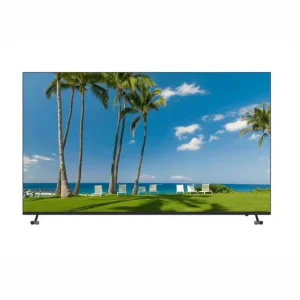
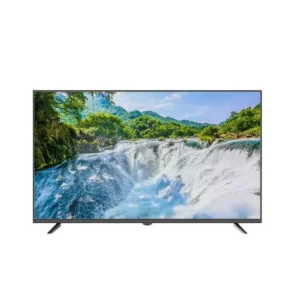
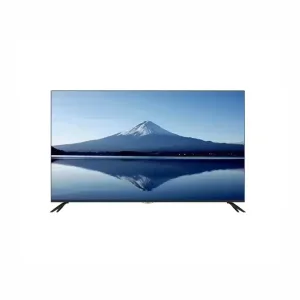
Commercial Series: Ready for Global Deployment
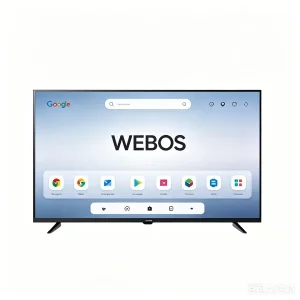
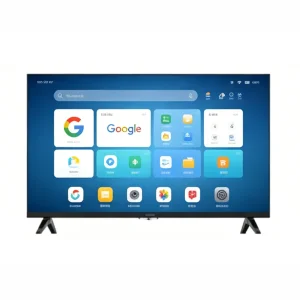
Select from our complete range of high-definition, 4K UHD, webOS, and explosion-proof commercial displays manufactured under strict ISO9001 and CE/FCC protocols.
Frequently Asked Questions: Global Sourcing & Engineering
Essential guidance for brand managers, electronics importers, and engineering contractors auditing ODM TV capabilities.
Is WEIER a direct factory or an intermediary export agent?
Guangzhou Wanteng (WEIER) Electronic Co., Ltd. is a bona fide source manufacturing factory established in 1987. Located in Fenghuang Anzhi Area, Huadu District, Guangzhou, our facilities span over 60,000 m² of modern industrial workshops and six automated production lines. Buyers deal directly with factory management, line engineers, and quality assurance personnel with complete transparency.
How does WEIER accommodate legacy display retrofit specifications?
Our engineering team can customize the structural metal backplate, VESA mounting holes, bezel dimensions, and connector terminal layouts. If your project demands legacy inputs (such as composite video, VGA, or RS-232 serial control) combined with modern 4K panels and smart operating systems, our mainboard engineers can design a hybrid motherboard tailored to your infrastructure.
What is the difference between CBU, SKD, and CKD order configurations?
CBU (Complete Built Unit) are 100% finished televisions packed in retail boxes ready for the showroom floor. SKD (Semi-Knocked-Down) typically provides the tested panel pre-assembled with bezel, while mainboards, power boards, and accessories are packed separately. CKD (Completely Knocked Down) supplies all raw parts un-assembled, maximizing container load volume and qualifying for significant tariff savings in markets such as India, Nigeria, Brazil, and Egypt.
Which smart TV platforms are officially supported for OEM branding?
We provide three primary operating systems based on your market positioning: Android TV (ideal for custom APKs, private enterprise signage, and competitive price points), Google TV (featuring certified voice search, Google Play Store, and global streaming apps), and webOS (celebrated for its intuitive pointer remote control and commercial hospitality stability).
What are the minimum order quantities (MOQ) and lead times?
Standard OEM production runs start from one 20ft container (or mixed 40ft HQ configurations across sizes from 32" to 100"). For new private-label clients seeking market pilot tests, flexible initial trial orders are accommodated. Typical production lead time is 25 to 35 days from firmware/artwork sign-off and deposit confirmation.
Can international buyers conduct on-site factory audits?
Yes. We welcome customer delegations and accredited third-party auditing firms (such as SGS, TÜV Rheinland, Bureau Veritas, or Intertek) to inspect our Huadu District facilities, witness live production, review incoming panel QC labs, and inspect aging test chambers prior to container loading.