Engineered Large-Screen Display Solutions
Standard, specialized, and semi-custom display models ready for private-label brand integration, hospitality ecosystems, and mass volume commercial deployment.
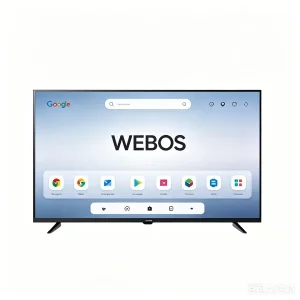
OEM 43-inch 4K UHD webOS Smart TV with AI
Configure Model
High-Quality 85-inch 4K QLED Android Smart Voice TV
Configure Model
High-Quality 100-inch 4K Explosion-proof Smart TV
Configure Model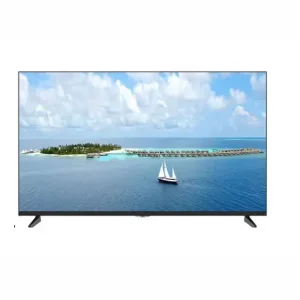
High-Quality 55-inch 4K QLED Android Smart TV Frameless
Configure Model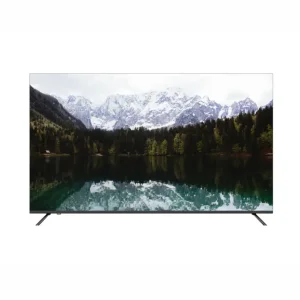
High-Quality 65-inch 4K OLED Self-Emissive Android Smart TV
Configure Model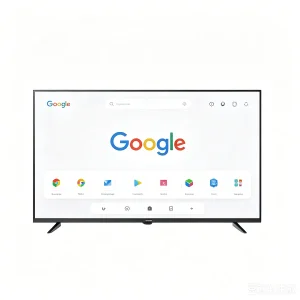
High-Quality 43-inch 4K QLED Google Smart TV
Configure Model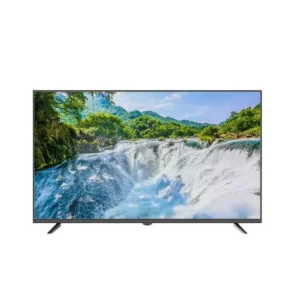
High-Quality 43-inch Borderless FHD Android Smart TV
Configure Model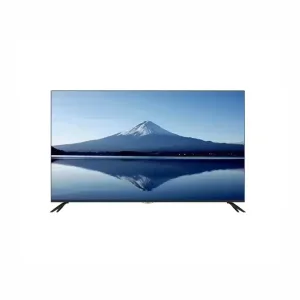
Wholesale Frameless 50-inch 4K Q-LED Android Smart TV
Configure ModelGlobal Macro Landscape: Largest OLED TV Manufacturing & Mother-Glass Economics
The worldwide commercial and domestic appetite for extra-large self-emissive displays has restructured display manufacturing economics. Beyond consumer retail, the largest OLED panels serve mission-critical applications where infinite contrast, pixel-level dimming, and instantaneous gray-to-gray response are non-negotiable.
In the contemporary display manufacturing landscape, high-tier original design manufacturing (ODM) for OLED televisions is defined by direct tier-1 upstream alliances, proprietary board-level thermal engineering, and multi-OS firmware governance. As panel foundries optimize Generation 8.5 (2200mm × 2500mm) and Generation 10.5 (2940mm × 3370mm) mother-glass substrate yields, large-format OLED sizes—specifically 55-inch, 65-inch, 77-inch, 83-inch, and 97-inch cuts—have crossed the feasibility threshold for private-label brand deployment and specialized enterprise rollouts.
Unlike legacy liquid crystal display (LCD) assembly that relies on bulky edge-lit or direct-backlight diffuse arrays with quantum dot enhancement films (QLED), true large-format OLED screens leverage self-emissive organic stacks. The industrial ODM challenge does not merely lie in securing raw display glass; it requires mastering the mechanical enclosure rigidity, precision automatic surface-mount technology (SMT) for ultra-thin profiles, custom FPGA timing controllers (T-CON), and sophisticated Anti-Burn-In (Pixel Refresher / Logo Luminance Limiter) firmware integration.
Technical Substrate Comparison: WOLED vs. QD-OLED vs. Commercial Mini-LED
| Parametric Attribute | White OLED (WOLED + Color Filters) | Quantum Dot OLED (QD-OLED) | Direct-Array Mini-LED / QLED |
|---|---|---|---|
| Luminance Architecture | Self-Emissive WRGB Organic Stack | Blue Organic Light with Printed Quantum Dots | InGaN Micro-Emitters with Local Dimming Zones |
| Black Level & Contrast | Absolute Zero True Black (∞ : 1) | Absolute Zero True Black (∞ : 1) | Dependent on Local Dimming Zones (Halo Effect) |
| Peak HDR Luminance | 800 – 1,300 nits (MLA II Generation) | 1,000 – 1,500 nits (Top Tier) | 1,500 – 3,000+ nits (Extreme Ambient Fit) |
| Color Gamut Coverage | 98% DCI-P3 / 75% BT.2020 | 99.5% DCI-P3 / 90% BT.2020 | 95% DCI-P3 / 80% BT.2020 |
| Panel Thermal Dissipation | Graphene / Dual-Layer Aluminum Substrate | Direct Heatsink Contact Backplate | Perimeter Passive Chassis Convection |
| Target Sourcing Sector | Hospitality, Studio Reference, High-End Living | Color-Critical Gaming, Executive Commercial Suites | High-Ambient Sunlight Retail, 24/7 Signage |
From an ODM manufacturer perspective, the selection of the underlying panel architecture directly drives power distribution requirements. Large OLED panels demand isolated switch-mode power supplies (SMPS) capable of instantaneous dynamic current delivery without introducing electrical ripple into high-speed LVDS or V-by-One signal pathways. Guangzhou Wanteng Electronics (WEIER) addresses these constraints through customized PCB layout geometry and multi-stage power rectification, ensuring enterprise stability across erratic global power grids.
Turnkey ODM Engineering: From Motherboard SMT to Cleanroom Cell Bonding
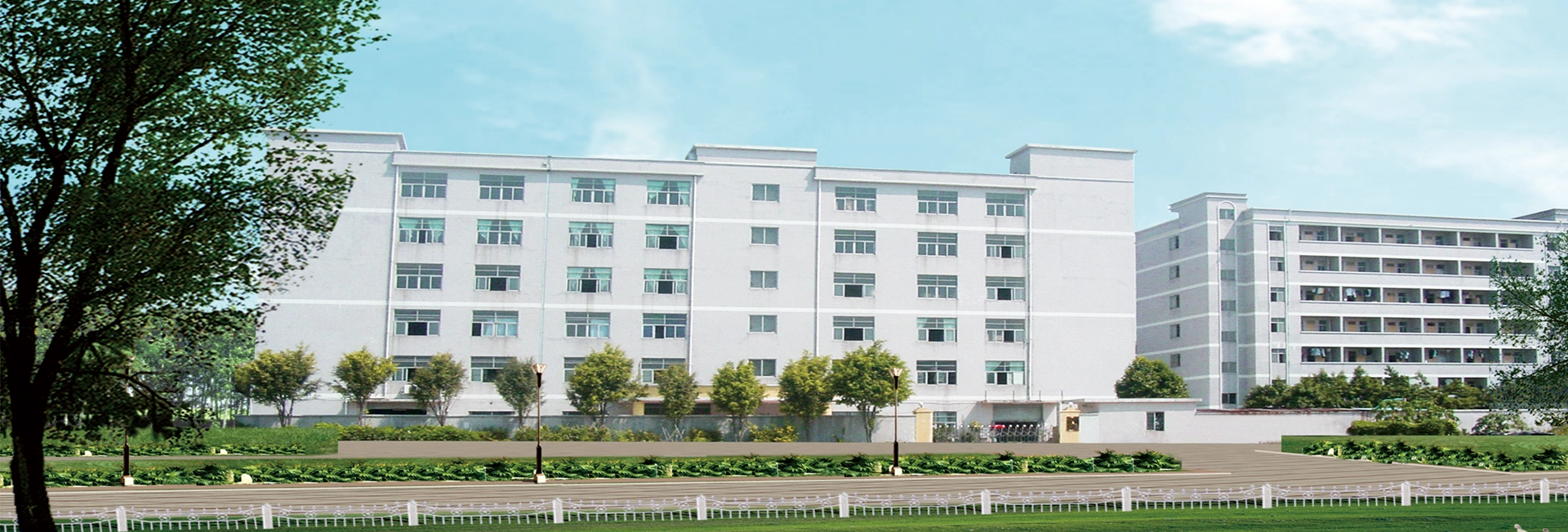
Building televisions for international brand holders since 1987. We combine high-volume production economics with rigorous component qualification across Huadu District, Guangzhou.
Cleanroom COG & COF Bonding
Large OLED panels require micro-precision Chip-On-Glass (COG) and Chip-On-Film (COF) bonding under Class 1,000 dust-free environmental standards. Our automated optical inspection (AOI) lines catch microscopic alignment tolerances before final panel encapsulation.
Custom Thermal Architecture
OLED pixel longevity inversely correlates with sustained thermal stress. We engineer aerospace-grade aluminum backplates and multilayer graphite thermal dissipation sheets that drop peak junction temperatures across ultra-large 65"+ displays by up to 8.5°C.
Triple-OS Firmware Porting
Complete licensing and software certification infrastructure across Google TV (Android TV 12/14), LG webOS Hub, and customized AOSP platforms. We deliver turnkey boot animations, custom remote codes, hotel IPTV protocols, and tailored UI launchers.
Zero Dead-Pixel Panel Binning
We enforce Grade A+ panel inspection criteria. Every commercial unit undergoes high-stress burn-in screening, 256-level grayscale uniformity analysis, and colorimeter white-balance calibration to achieve Delta E < 1.5 out of the factory box.
CBU, SKD & CKD Global Logistics
Avoid prohibitive import tariffs and optimize container cube utilization. We ship complete built-up units (CBU) or semi-knocked-down (SKD) and completely-knocked-down (CKD) kits with high-density anti-shock packaging, complete with assembly jigs and test SOPs.
Full Regulatory Pre-Compliance
Certified manufacturing facilities compliant with CE (LVD/EMC), FCC Part 15 Class B, RoHS Directive 2011/65/EU, CB scheme, and ERP Tier 2 power consumption regulations, enabling frictionless international customs clearance.
Technology Roadmap: MLA, Tandem Stacks & Inkjet-Printed OLED
The next five years will redefine large-screen visual performance. Our Guangzhou R&D engineering lab evaluates forthcoming panel breakthroughs to prepare turnkey manufacturing lines for our global OEM partners.
As the market expands from standard high-definition broadcast to immersive interactive environments, OLED hardware architecture is experiencing three major evolutionary waves:
1. Micro Lens Array (MLA) and META Technology
By positioning billions of microscopic convex lenses directly above the organic light-emitting layer, MLA recaptures internal reflections that were historically lost to total internal reflection. This optical innovation boosts peak light output by up to 70% (exceeding 2,100 nits) without increasing electrical load or thermal stress on the organic stack. In our ODM pipeline, MLA panels require precise thermal calibration curves within the mainboard timing controller to avoid localized thermal hotspots during prolonged display of static UI elements.
2. Tandem OLED & Blue Phosphorescence (PHOLED)
Traditional fluorescent blue emitters remain the efficiency bottleneck of self-emissive displays. The transition to two-stack tandem structures—stacking two distinct organic light-emitting diodes in series—effectively doubles luminance while cutting operating current. Furthermore, the commercial validation of blue phosphorescent emitters promises a 25% reduction in whole-panel system power draw. This is critical for meeting stringent European Union ErP lot 5 energy efficiency mandates for TVs above 65 inches.
3. Inkjet-Printed (IJP) OLED Mother-Glass Manufacturing
Vacuum thermal evaporation (VTE) with fine metal masks (FMM) has dominated small-to-medium displays, while open-mask WOLED dominated large TVs. The commercialization of Gen 8.5/Gen 10.5 Inkjet Printing allows organic materials to be deposited with near 90% material utilization efficiency (vs. ~20% in thermal evaporation). This breakthrough is projected to compress bill-of-materials (BOM) costs by 22% to 35%, opening up mass-market OEM procurement opportunities for 75" and 85" self-emissive screens.
Current Phase: High-Refresh & Smart Voice
Standardization of 4K 120Hz/144Hz VRR panels with MEMC image interpolation. Full hardware compatibility with Dolby Vision IQ, Dolby Atmos, and native far-field microphone arrays for conversational AI interfaces across Android and webOS.
Mid-Term Phase: Tandem PHOLED & Edge AI
Integration of multi-core NPUs (Neural Processing Units) on the TV mainboard capable of real-time low-resolution AI upscaling, object-based dynamic tone mapping, and automated ambient lighting room adaptation with ultra-low power standby.
Long-Term Phase: Printed Rollable Form Factors
Ultra-flexible polyimide substrates allowing zero-gap wall mounting, motorized rollable mechanisms, and transparent commercial display partitions for luxury automotive showrooms and luxury commercial storefronts.
Localized Application Scenarios: Engineered for High-Duty Operation
Different operational environments present wildly divergent structural, electrical, and optical challenges. Here is how our ODM manufacturing adapts core display technology to specific B2B and consumer vertical sectors.
Luxury Hospitality & Penthouse Suites
Equipped with customized hospitality firmware (Pro:Centric / Philips CMND protocol bridging), IP-over-Coax streaming compatibility, volume limiting, customized welcome screens, and automatic guest privacy cache clearing upon power reset.
Broadcast Studios & Mastering Suites
Calibrated for 99% DCI-P3 and REC.709 color coverage with true 10-bit color depth (1.07 billion colors). Low input lag and 3D LUT import support allow small broadcast networks and indie production studios to run client-facing reference monitoring.
Commercial Retail & Nightclub KTVs
High-traffic retail and nightlife entertainment require enhanced durability. We integrate anti-glare, 4mm explosion-proof tempered glass over high-brightness screens, housed in reinforced steel frames with anti-theft VESA mounting hardware.
Executive Boardrooms & Video Conferencing
Featuring 4K resolution at 120Hz, HDMI 2.1 eARC connectivity, multi-source picture-in-picture (PiP), zero-latency wireless projection (Miracast / AirPlay 2), and automated room control integration via RS-232C serial commands.
Macro Supply Chain Governance: Tariff Optimization via SKD & CKD
In high-tariff markets across Latin America, Africa, Southeast Asia, and India, importing fully assembled televisions (CBU) incurs import duties ranging from 20% to over 60%. Our modular manufacturing architecture solves this bottom-line hurdle.
Guangzhou Wanteng (WEIER) Electronic Co., Ltd. has pioneered a dependable knocked-down manufacturing ecosystem that enables regional distributors to establish cost-efficient local assembly facilities:
CBU vs. SKD vs. CKD Logistics Architecture
1. Complete Built-Up (CBU): 100% factory-assembled, tested, boxed in retail color cartons with customized brand accessories. Recommended for markets with low import differential tariffs on electronics (e.g., North America, EU member states).
2. Semi-Knocked-Down (SKD): The open-cell panel and backlight unit are pre-assembled in our cleanroom, while the mainboard, power supply, speakers, bezel trim, and packaging materials are packed separately in grouped batch containers. This reduces duty classifications while retaining pristine cleanroom panel integrity.
3. Completely-Knocked-Down (CKD): Maximum duty optimization. Every individual component—open cell glass, driver ICs, mainboards, power boards, metal chassis, wiring harnesses, screws, and packaging—is packed with extreme volumetric density. Our Huadu plant supports up to 200,000 CKD kits monthly, complete with assembly jigs, flashing fixtures, and comprehensive line training for your local technical personnel.
Customized Tuner Front-Ends
Global market penetration demands precise radio frequency (RF) compliance. We match demodulator ICs for DVB-T2/C/S2 (Europe/Africa), ATSC 3.0 / Clear QAM (North America), and ISDB-T (Latin America/Brazil) with full multi-lingual teletext and EPG support.
Surge & Wide-Voltage Tolerance
For emerging markets plagued by frequent voltage drops and electrical spikes, our power architectures support universal input voltages ranging from 90V to 264V AC, reinforced with 4kV lightning and electrostatic discharge (ESD) protection.
Private-Label Artwork & Tooling
Complete industrial design customization: stamped aluminum rear covers, custom metallic badge insignias, injection-molded remote controls with direct Netflix/YouTube/Prime hotkeys, and full retail color packaging with anti-puncture honeycomb corners.
Frequently Asked Technical & Commercial Questions
Essential insights for enterprise procurement officers, brand sourcing directors, and engineering project leads vetting television manufacturers.
What is the minimum order quantity (MOQ) for custom-branded OEM/ODM television projects?
How do you mitigate image retention and burn-in risks on large OLED displays?
What are the core differences between sourcing webOS Hub vs. Licensed Google TV?
Can WEIER supply SKD and CKD television kits with full local assembly support?
What certifications and quality inspection checkpoints are standard before shipping?
Can we conduct an on-site factory audit in your Guangzhou facility before placing mass orders?
Mass Production & Project-Ready Screen Portfolio
Select from our vetted lineup of commercial and residential televisions, available for immediate sample evaluation and mass OEM production schedules.
High-Quality 65-inch 4K OLED Self-Emissive Android Smart TV
Configure Model
OEM 75-inch 4K QLED Android Smart Voice TV
Configure Model
High-Quality 100-inch 4K Explosion-proof Smart TV
Configure Model
High-Quality 85-inch 4K QLED Android Smart Voice TV
Configure Model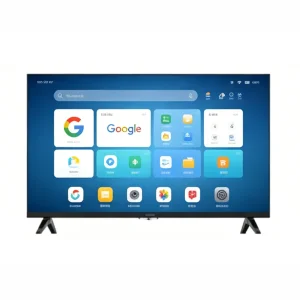
OEM 32-inch Full HD webOS Smart TV (LG System)
Configure Model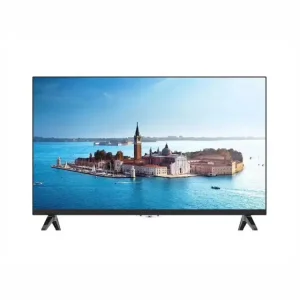
OEM Borderless 32-inch High-Definition Android Smart TV
Configure Model
High-Quality 55-inch 4K QLED Android Smart TV Frameless
Configure Model