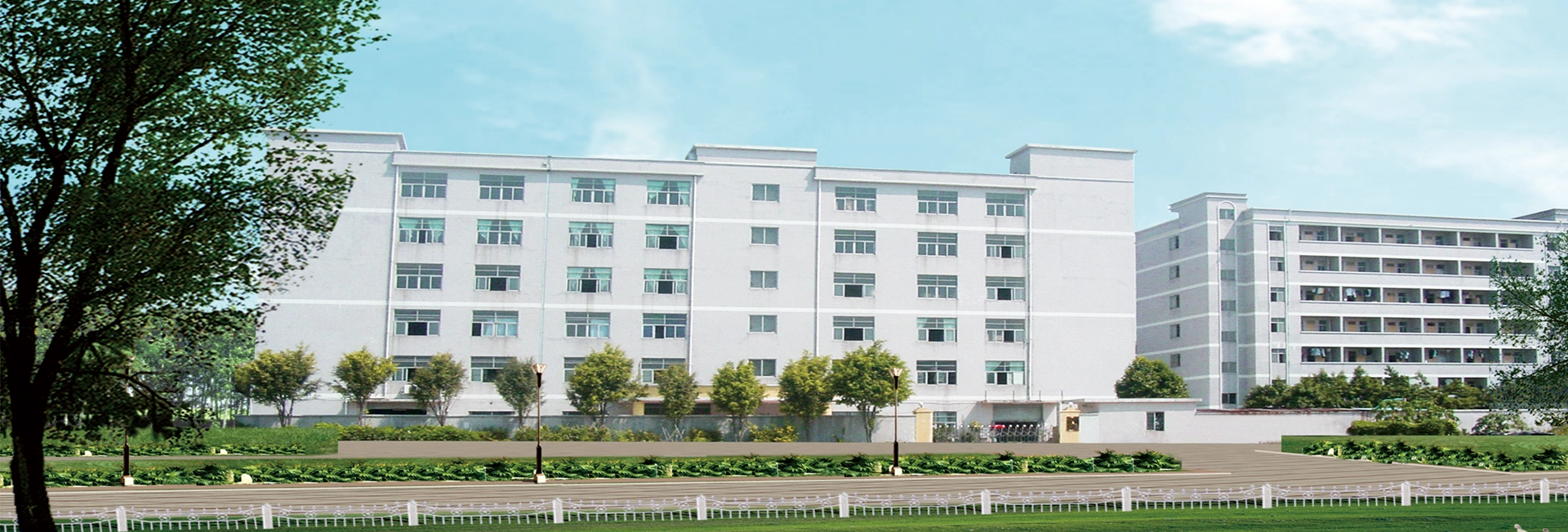
Engineered Commercial Flat Panel Displays & TV Walls
Direct factory-assembled commercial flat panel displays engineered for high-uptime command walls, retail digital signage matrices, hospitality entertainment suites, and enterprise conference rooms.
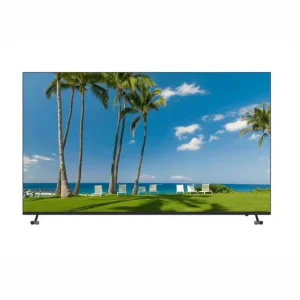
High-Quality 85 -inch 4K QLED Android Smart Voice TV, ultra-high definition large screen, flagship model for home and commercial use, export only. Suppliers, Manufacturer
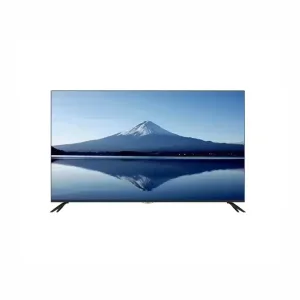
Wholesale Frameless 50-inch 4K Q LED Android Smart TV, Ultra HD HDR, for Home, Commercial, and Export Use Suppliers, Supplier
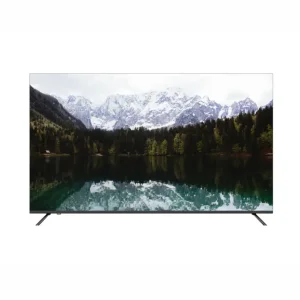
High-Quality 65-inch 4K OLED self-emissive Android smart TV with Dolby Vision HD TV Factory, Manufacturers
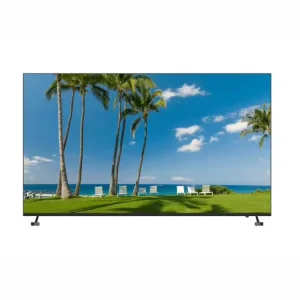
High-Quality 100-inch 4K Explosion-proof Smart TV with Tempered Glass Screen, Suitable for Hotels, KTVs, Commercial Use, and Export Supplier, Manufacturers
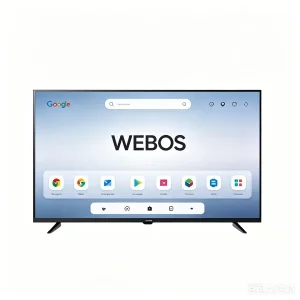
OEM 43-inch 4K UHD webOS Smart TV with AI, source manufacturer for home and hotel use, export Factory, Manufacturer
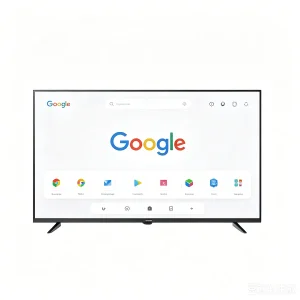
High-Quality 43-inch 4K QLED Google Smart TV, Google TV Export Network TV Factory Factory, Manufacturers
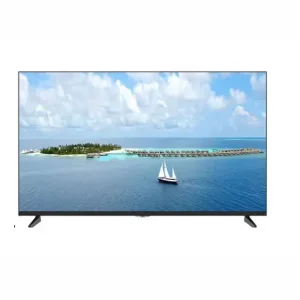
High-Quality 55-inch 4K QLED Android Smart TV with Frameless Design , Dolby Vision, Flagship Model for Home, Commercial, and Export Use Factories, Manufacturer
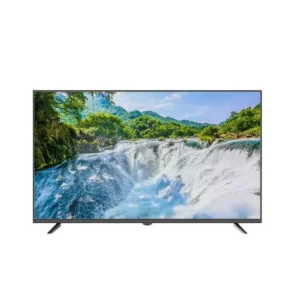
High-Quality 43-inch Borderless FHD Android Smart TV – Wholesale & Custom for Hotel, Supermarket & Engineering Projects Supplier, Manufacturer
Global Commercial Flat Panel TV Wall Market Status & Supply Ecosystem
An authoritative technical analysis of display fab outputs, regional customs policies, component supply chains, and the engineering shift toward high-resolution modular video wall architectures.
Display Fab Gen 8.5 & 10.5
Panel glass mother substrate fabrication in modern Generation 8.5 and 10.5 fabs has optimized cutting efficiencies for 43-inch, 55-inch, 65-inch, 75-inch, 85-inch, and 100-inch open cells. Direct glass slicing ensures high pixel yields, uniform liquid crystal alignment, and tight color chromaticity consistency across large-scale commercial TV wall deployments.
SKD & CKD Tariff Mitigation
In emerging markets across Latin America, Africa, and Southeast Asia, import duties on finished electronic goods (CBU - Completely Built-Up) frequently exceed 25% to 45%. Sourcing Semi-Knocked-Down (SKD) and Completely-Knocked-Down (CKD) modular TV wall kits allows enterprise distributors and assembly factories to reduce tariff exposure to single digits.
SoC Matrix Integration
The global commercial market is rapidly phasing out bulky external media player PCs in favor of integrated System-on-Chip (SoC) architectures. By embedding quad-core and octa-core processing units into flat panel mainboards running Android TV, webOS, or Google TV, multi-screen matrix synchronizations occur over low-latency IP infrastructures.
Continuous OEM/ODM flat screen TV and commercial matrix engineering since 1987 in Huadu District, Guangzhou.
Multi-facility industrial manufacturing campus housing class-10,000 cleanrooms and advanced SMT surface mount lines.
Fully tested commercial flat panel displays produced monthly across 6 high-speed automated assembly lines.
Export-grade kits delivered monthly to international overseas assembly plants for local assembly and market clearance.
Engineering Architecture Inside a Guangzhou Source Factory
From incoming panel glass COG bonding to 8-hour dynamic thermal aging tests, discover the industrial processes executed to produce long-lifespan commercial TV wall arrays.
1. Cleanroom Panel Handling and Optical Bonding
Flat panel TV walls engineered for multi-screen matrix configurations require flawless panel uniformity. In our Huadu manufacturing base, panel assembly occurs inside Class 10,000 dust-free cleanrooms. Technicians handle A-grade Open Cells (sourced from tier-one glass foundries) using automated vacuum end-effectors to eliminate micro-abrasions and electrostatic discharge (ESD).
For high-traffic commercial environments—such as hotel lobbies, sports lounges, and public transport hubs—we integrate automated Chip-On-Glass (COG) and Chip-On-Film (COF) bonding. For specialized applications like our 100-inch explosion-proof series, optical clear resin bonding laminates 4mm explosion-proof tempered glass directly to the panel polarizer. This structure resists mechanical impacts, thermal shocks, and moisture penetration while suppressing internal refractive reflections to preserve contrast ratios exceeding 5000:1.
2. Industrial Mainboard Engineering & Power Supply Ruggedization
Consumer televisions are rated for an average duty cycle of 6 to 8 hours daily. By contrast, commercial flat panel TV walls and security monitoring matrices operate on 16/7 or continuous 24/7 duty cycles. Achieving mean-time-between-failures (MTBF) exceeding 50,000 hours requires rigorous board-level electrical engineering:
- Wide-Voltage Switch-Mode Power Supplies (SMPS): Custom power topologies capable of handling 90V–260V AC fluctuations without dropping DC supply rails to the backlight driver arrays, preventing flickering in unstable electrical grids across South America and Africa.
- Thermal Heat Dissipation Sinks: High thermal conductivity extruded aluminum heatsinks attached to the system SoC, graphic pipeline processor, and LED backlight MOSFETs to suppress junction temperatures below 65°C under sustained load.
- Conformal Coating Protection: Automated robotic spray coating of micro-thin acrylic conformal layers over critical PCBA circuits, preventing oxidation, corrosion, and short circuits caused by ambient humidity and airborne pollutants.
3. Factory Quality Assurance Protocols: Thermal Aging & Calibration
Every commercial display manufactured on our six automated lines is routed into high-temperature aging chambers. Units undergo continuous 4-hour to 8-hour thermal stress cycles cycling high-dynamic color patterns, full-white raster fields, and cold-boot re-initialization scripts. During this burn-in stage, infrared imaging cameras monitor surface temperature gradients across the active display area.
Following thermal stress testing, panels pass through automated optical colorimetry calibration booths. High-speed spectrophotometers evaluate 25-point screen luminance uniformity, ensuring panel edge-to-center brightness variations remain below 5%. Multi-point Delta-E color profiling ensures that when multiple flat panel units are mounted adjacent to one another in a multi-screen video wall, chromaticity differences between screens are invisible to the naked human eye (Delta-E < 1.5).
Video Wall Signal Distribution & Hardware Topology
How engineering contractors, pro-AV integrators, and brand distributors construct modular flat panel TV walls using standardized digital transmission standards and precision mounting geometries.
Ultra-Narrow Bezel (UNB)
Physical bezel-to-bezel gaps ranging from 3.5mm down to 0.88mm on dedicated video wall commercial panels, alongside borderless/frameless 3-side edge designs for high-end digital signage arrays.
Daisy-Chain 4K@60Hz
Integrated DisplayPort 1.4 and HDMI 2.0 loop-through inputs enable multi-panel matrix video looping up to a 5x5 array without requiring expensive external video wall processors or distribution amplifiers.
Precision VESA Brackets
Heavy-duty cold-rolled steel bracket systems featuring 6-point independent micro-adjustment screws along X, Y, and Z axes to achieve absolute sub-millimeter planar alignment across all display edges.
Centralized Control (RS232/IP)
Bidirectional RS-232 serial control, RJ45 LAN protocols, and cloud CMS connectivity allow network operators to manage power sequencing, input switching, color temperatures, and status diagnostics remotely.
Engineered Deployments: High-Performance Applications
Targeted flat panel hardware and firmware configurations engineered to solve demanding optical, acoustic, and operational requirements across diverse enterprise environments.
Luxury Hospitality & Hotel TV
Engineered webOS and Android smart platforms featuring customized hotel mode firmware, welcome screen branding, PMS (Property Management System) integration, locked menu settings, and localized DRM volume capping for guest peace of mind.
High-Traffic Venues & KTV
Equipped with 4mm shatter-resistant explosion-proof tempered glass, anti-scratch surface treatments, reinforced metal back covers, and high-impact structural perimeter frames capable of enduring accidental impacts in public bars and night venues.
Supermarkets & Retail DOOH
High-brightness panels (500–700 nits) engineered with anti-glare polarizers to maintain crisp visibility under harsh fluorescent retail illumination, featuring automated power on/off timers and cloud USB/LAN auto-playback signage loops.
Security & Command Centers
Continuous 24/7 industrial operational ratings with built-in anti-burn-in pixel shifting algorithms, low-latency HDMI/VGA/BNC inputs, and active thermal heat dissipation channels for zero-downtime surveillance wall arrays.
Technology Roadmap: 2025–2030 Display Trends
Key technological shifts that OEM/ODM enterprise procurement teams, display brands, and engineering buyers must integrate to maintain sustainable market competitiveness.
Mini-LED COB Local Dimming
The transition from conventional Direct-LED (DLED) backlights to high-density Mini-LED arrays with Chip-On-Board (COB) technology. With over 2,000 discrete local dimming zones, commercial flat panel walls achieve true black levels, dynamic HDR contrast ratios approaching 1,000,000:1, and a 30% reduction in thermal generation.
Neural AI Edge Upscaling
Integrating dedicated NPU (Neural Processing Unit) cores into next-generation smart TV mainboards. Real-time machine learning algorithms perform spatial texture reconstruction, edge sharpening, and motion vector frame interpolation, upscaling legacy 1080p source video streams into crisp native 4K and 8K raster content across large-screen video walls.
Circular Carbon Compliance
Alignment with tightening global environmental directives including EU ErP Lot 5, RoHS-III, and Energy Star 8.0. Future TV wall engineering integrates halogen-free PCB substrate resins, 85% post-consumer recycled (PCR) chassis polymers, and sub-0.5W ultra-low standby power management ICs.
Buyer FAQ: Sourcing Flat Panel TV Walls & Commercial Displays
Direct answers to the most critical technical, commercial, and logistical questions posed by enterprise buyers, OEM brand managers, and government project contractors.
What distinguishes a true commercial flat panel TV wall display from a standard consumer TV?
Can WEIER supply SKD and CKD kits for local overseas factory assembly?
How does the factory resolve panel color temperature and brightness variations across a multi-screen array?
Which operating systems and smart TV platforms are available for custom ODM branding?
1. Google TV & Android TV: Fully certified platforms featuring Google Assistant voice control, Chromecast built-in, and authorized access to Google Play streaming services.
2. webOS Hub: Featuring the intuitive webOS interface with AI-assisted recommendations and LG ecosystem compatibility, popular across hotel, retail, and residential installations.
3. Open AOSP Android: Optimized for commercial digital signage networks, interactive kiosks, and command walls requiring customized APK installation, locked boot loops, and proprietary CMS connectivity.
What international testing certifications accompany WEIER commercial TV wall shipments?
Can international clients conduct third-party factory audits and pre-shipment container inspections?
Need Custom ODM Architectural Engineering for a Large Project?
Consult directly with our Guangzhou engineering directors to customize display panels, mainboards, firmware, bezel dimensions, or SKD/CKD import structures for your exact market specifications.
Commercial Display Models for Global Procurement
Explore commercial-grade televisions and display units ready for custom branding, hardware customization, specialized firmware flashing, and direct factory-container export.

OEM 75 -inch 4K QLED Android Smart Voice TV, Ultra HD Large Screen, Home/Commercial/Export TV Factories, Manufacturers
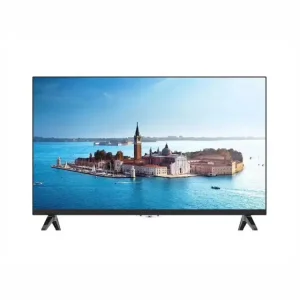
OEM Borderless 32 inch high-definition Android smart TV wholesale for supermarkets, high-definition network TVs Factory, Supplier
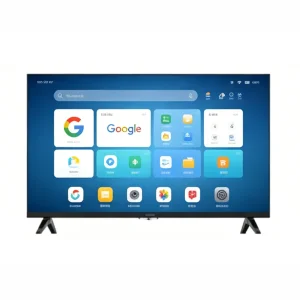
OEM 32-inch Full HD webOS Smart TV, LG System, for home, bedroom, hotel, commercial, and export use Suppliers, Supplier
High-Quality 100-inch 4K Explosion-proof Smart TV with Tempered Glass Screen, Suitable for Hotels, KTVs, Commercial Use, and Export Supplier, Manufacturers
High-Quality 85 -inch 4K QLED Android Smart Voice TV, ultra-high definition large screen, flagship model for home and commercial use, export only. Suppliers, Manufacturer
High-Quality 65-inch 4K OLED self-emissive Android smart TV with Dolby Vision HD TV Factory, Manufacturers
High-Quality 55-inch 4K QLED Android Smart TV with Frameless Design , Dolby Vision, Flagship Model for Home, Commercial, and Export Use Factories, Manufacturer