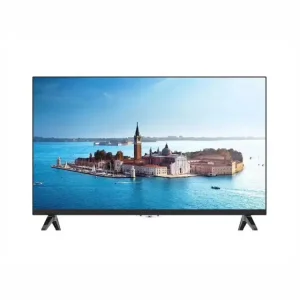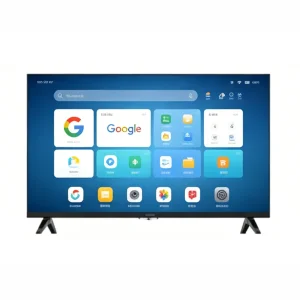
Flagship Commercial & Residential Smart Televisions
Explore our export-ready 32-inch to 100-inch smart TV lineup manufactured under certified ISO9001, CE, FCC, and RoHS standards with customized firmware and tier-one display panels.
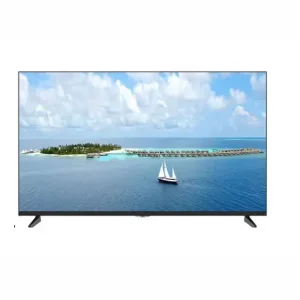
55-inch Frameless 4K QLED Android Smart TV with Dolby Vision
Source 55" QLED TV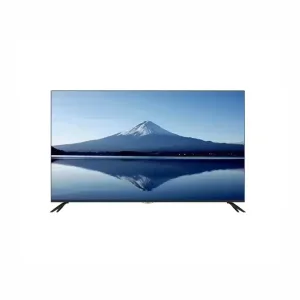
Wholesale Frameless 50-inch 4K Q-LED Android Smart TV Ultra HD
View 50" Specifications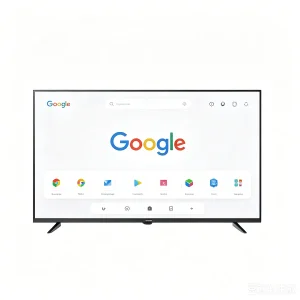
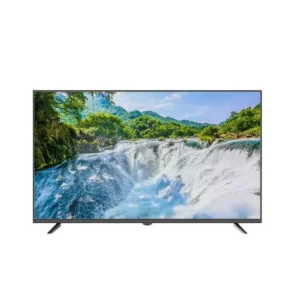
Borderless 43-inch FHD Smart TV for Hospitality & Engineering
Hospitality TV Details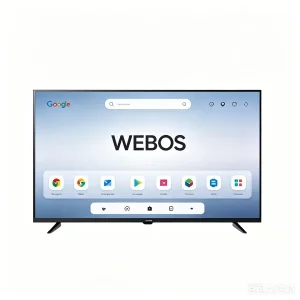
OEM 43-inch 4K UHD webOS Smart TV with AI Thin-Q Architecture
Source webOS 43" TV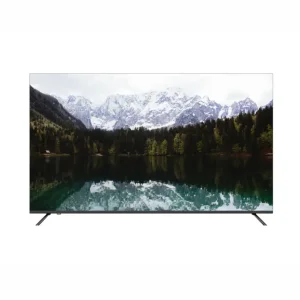
65-inch 4K OLED Android Smart TV with Dolby Vision Cinema Master
Inspect 65" OLED Unit
OEM 75-inch 4K QLED Android Smart Voice Controlled Large Screen
Evaluate 75" Program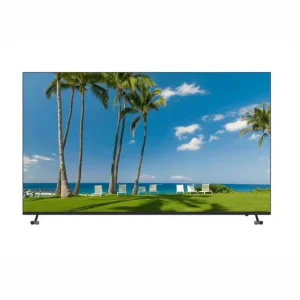
Flagship 85-inch 4K QLED Ultra-HD Commercial & Cinema TV
Deploy 85" Large FormatThe 55-Inch Matrix: Why QLED Architecture Dominates Global Procurement
A rigorous industrial appraisal of quantum dot nanocrystals, optical stacking, substrate yield efficiency, and why the 55-inch form factor remains the undisputed global sweet spot for B2B TV sourcing.
In consumer display economics, the 55-inch television is universally acknowledged as the global baseline for immersive viewing. From an industrial perspective, its prominence is driven by Gen 8.5 (2200 × 2500 mm) and Gen 10.5 (2940 × 3370 mm) TFT-LCD mother glass fabrication economics. A standard Gen 8.5 fabrication facility yields exactly six 55-inch cuts at an extraordinary glass utilization rate exceeding 93%, minimizing edge trim wastage and driving Bill-of-Materials (BOM) cost efficiency. For brand principals, regional importers, and enterprise procurers, partnering with a source OEM/ODM factory like WEIER (Guangzhou Wanteng Electronics Co., Ltd.) unlocks this economic sweet spot combined with state-of-the-art Quantum Dot Enhancement Film (QDEF) optoelectronic architectures.
Quantum Dot Nanocrystal Physics vs. Traditional White-LED Diffusers
Standard edge-lit or direct-backlight LCD panels utilize white phosphor-coated blue LEDs. This approach suffers from wide Full-Width at Half-Maximum (FWHM) spectral emission curves (~70nm to 90nm), resulting in severe color bleeding, desaturated crimsons, and polluted emerald greens. In WEIER’s ODM 55-Inch 4K QLED manufacturing cell, we integrate a micro-engineered QDEF substrate impregnated with inorganic semiconductor nanocrystals (Cadmium-Free Indium Phosphide InP cores surrounded by a Zinc Sulfide ZnS shell structure).
When excited by monochromatic 450nm deep-blue LED backlight arrays, these quantum dots resonate at discrete quantum confinement states. Particles sized at precisely 2.0 nanometers emit razor-sharp 530nm emerald green, while nanocrystals calibrated to 6.3 nanometers release monochromatic 630nm crimson red with an ultra-narrow FWHM of under 30nm. This delivers a pure Rec.2020 color gamut coverage upwards of 78% and DCI-P3 volumetric space coverage exceeding 96%, preserving master-grade color fidelity, HDR10+ dynamic tone mapping, and Dolby Vision metadata rendering across varied ambient lighting profiles.
Optical Stack Integrity
Multi-layered optical stacks comprising Micro-Prism Brightness Enhancement Films (BEF), Quantum Dot matrices, and anti-reflective polarization filters guaranteeing uniform luminescence up to 500 nits sustained and 800+ nits peak HDR.
- InP/ZnS environmentally safe nanocrystals
- Zero heavy-metal RoHS compliance
- 178-degree wide viewing IPS/VA alignments
Chassis & Thermal Balance
Aviation-grade aluminum alloy structural unibody backings coupled with stamped SECC electrolytic galvanized steel back-covers ensure rapid heat dissipation away from driver ICs and optical polarizers.
- Under 4.8mm ultra-slim borderless aesthetic
- Enhanced thermal conductivities (>180 W/mK)
- Long-term luminance half-life (>50,000 hrs)
AI-PQ Processing Cores
Equipped with high-performance multi-core ARM Cortex SoC chips (MediaTek Pentonic / Realtek platforms) delivering hardware-accelerated 4K upscaling, MEMC motion smoothing, and real-time contrast zoning.
- Dolby Vision IQ & HDR10+ Decoding
- Low-latency Auto Low Latency Mode (ALLM)
- Variable Refresh Rate (VRR) support
Engineered for Demanding Enterprise Deployments
From upscale residential suites to high-humidity luxury hotel corridors, discover how our custom 55-inch QLED platform is tailored for mission-critical installations globally.
1. Luxury Hospitality & Hotel PMS
Modern luxury resort chains demand more than a simple television; they require integrated interactive portals. Our 55-inch QLED hospitality series integrates commercial-grade power circuitry, anti-theft VESA mounts, and specialized system firmware.
- PMS Connectivity: Compatibility with Pro:Centric, Philips CMND, and custom REST API IPTV server infrastructures.
- Volume Limiting & Lock-Out: Built-in engineering menus preventing unauthorized sound amplification past guest thresholds.
- Personalized Welcome Splash: Auto-clearing guest credential cache on checkout for strict data privacy adherence.
2. High-End Residential Home Cinema
For consumer electronics retailers and private label distributor brands, our 55-inch QLED is the anchor SKU for living rooms and home cinema packages where high dynamic range is mandatory.
- Quantum Color Immersion: Enhanced black-level uniformity with local dimming matrices, eliminating edge-bleed backlight halos.
- Dolby Atmos Acoustic Chambers: Dual integrated box speakers utilizing neodymium magnets delivering spatial audio directly out of the box.
- Smart Home Ecosystem: Seamless integration into Google Assistant, Amazon Alexa, and Apple AirPlay environments.
3. Sports Lounges & Esports Arenas
Commercial sports betting parlors and esports facilities require high-luminance panels capable of continuous 16/7 operational duty cycles under glaring stadium lighting.
- MEMC 120Hz Processing: Hardware algorithmic frame insertion ensuring rapid puck, ball, and bullet movement remains pin-sharp.
- Anti-Glare Haze Coating: Front optical coatings dispersing specular ceiling reflections without degrading chromatic saturation.
- Multi-Port Synchronous Input: Quad HDMI 2.1 eARC connectors accommodating broadcast set-top boxes, media servers, and gaming rigs.
4. Corporate Boardrooms & Education
Modern enterprises transition away from outdated projection lamps to vibrant 55-inch commercial displays for video conferencing suites and executive huddle zones.
- Wireless Screen Casting: Zero-latency Miracast, AirPlay, and Chromecast protocols for BYOD collaboration without cable clutter.
- High Pixel Pitch Clarity: Pin-sharp 3840 × 2160 resolution rendering minute spreadsheet fonts and CAD vectors crisply.
- Automated Wake-on-Signal: RS-232 and IP network command listeners automatically powering screens on when HDMI video signals awaken.
5. Interactive Retail & Luxury Signage
Boutiques, department stores, and automotive showrooms deploy our 55-inch models to exhibit seasonal marketing collateral with ultra-vivid photorealism.
- Portrait or Landscape Versatility: Engineered cooling vents supporting multi-axis mounting orientations without heat trapping.
- USB Embedded Media Looper: Auto-boot video playback loops directly from secure internal flash memory storage.
- Tempered Glass Options: Available IK08-rated explosion-proof glass fronts guarding panels against accidental customer impact.
Guangzhou Huadu: Supply Chain Resilience & Global Kit Delivery
Harness the unparalleled manufacturing density of South China's Greater Bay Area display cluster to drastically cut lead times, mitigate tariff barriers, and safeguard production schedules.
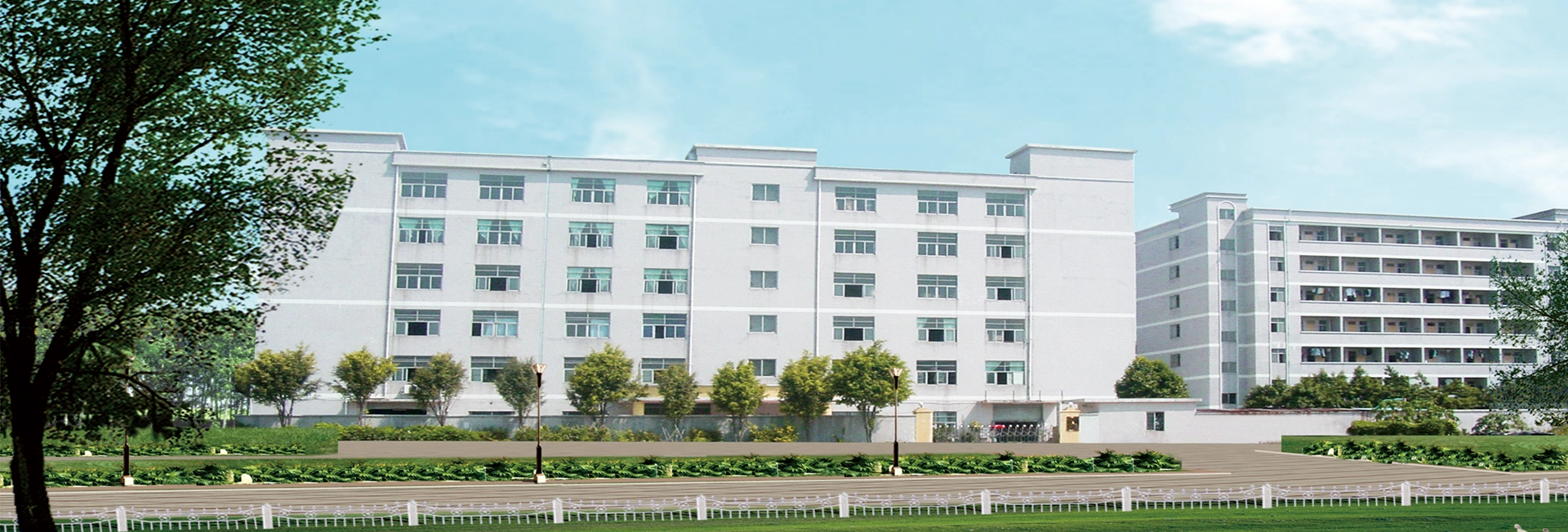
Operating since 1987 in Huadu District, Guangzhou, WEIER occupies the epicenter of the global flat-panel display supply chain. Situated within a 90-minute logistics radius of world-class panel substrate fabrication centers (CSOT, BOE, HKC, Innolux), precision injection molding plants, high-speed Surface Mount Technology (SMT) mainboard fabricators, and corrugated export packaging specialists, our Guangzhou factory transforms material inputs into finished displays with frictionless agility.
CBU vs. SKD vs. CKD: Solving the Global Import Tariff Matrix
International procurement requires nuanced fiscal engineering. High customs tariffs on Completely Built Units (CBU) in key import territories—such as Mercosur (Brazil, Argentina), North & Sub-Saharan Africa (Egypt, Algeria, Nigeria), South Asia, and the EU—can undermine retail competitiveness. WEIER neutralizes these duty walls through robust kit engineering programs:
CBU (Complete Built Unit)
100% factory-assembled, aged, calibrated, and packaged into retail color gift boxes. Suited for markets with favorable Finished Good import tariffs (North America, Middle East, Caribbean).
- Plug-and-play retail distribution ready
- Complete factory liability & zero local tooling required
- Optimized palletizing: Up to 380 units in a 40' HQ container
SKD (Semi-Knocked Down)
The screen panel is pre-integrated into the front-bezel chassis. Mainboards, power supplies, speaker modules, wire harnesses, stands, and remotes are packed in sub-assemblies.
- Drastically reduced import customs duty tiers
- Simple screwdriver assembly in destination country
- Avoids cleanroom requirements at local partner facility
CKD (Completely Knocked Down)
Every individual component—from raw LCD Open Cell glass, backlight optical sheets, SMT PCBA boards, down to chassis screws—is packed in high-density customized logistics trays.
- Lowest possible tariff categorization (often near 0%)
- Capacity up to 200,000 sets per month for local factories
- We supply standard SOP jigs, video guides, and testing equipment
Six-Stage Optical Metrology & Global Compliance Framework
Uncompromising quality validation systems engineered to pass strict customs inspections and Tier-1 retail incoming quality control (AQL 0.4 / 1.0 standard).
1. Open Cell Glass Inspection
100% automated optical inspection (AOI) screening for micro-scratches, line defects, and dead sub-pixels against Class 0 / Class 1 ISO panel criteria prior to bonding.
2. CA-410 Chromaticity Calibration
Every batch undergoes Konica Minolta CA-410 color analyzer calibration to verify white point coordinates (x=0.313, y=0.329 for D65) and gamma curve accuracy across 10-point scales.
3. Stress & Drop Simulators
ISTA-1A drop tests, 3-axis sinusoidal vibration sweeps, and chassis twist resistance ensuring internal ribbon connectors and optical diffusers endure rugged ocean freight voyages.
4. 72-Hour Burn-In Chambers
Continuous thermal aging under 45°C ambient temperature with 85% relative humidity running dynamic white-field and high-contrast color test patterns to eliminate infant mortality.
5. Comprehensive Regulatory Pass
Full CE-RED, FCC Part 15 Class B, RoHS directive compliance, UKCA, NOM, SDoC, and ErP Tier-2 power consumption benchmarks (<0.5W standby dissipation modes).
Engineering Roadmap: The Next Era of Quantum Dot Tech (2025–2030)
A strategic technological blueprint guiding forward-looking sourcing directors on where display architectures, backlights, and smart interfaces are evolving.
As display technology transitions over the coming half-decade, the 55-inch segment will remain the primary testing ground for next-generation optoelectronic innovations. Understanding this progression empowers brand procurement strategists to plan product lifecycles and firmware architectures years ahead.
| Timeline | Display Architecture | Backlight Technology | Key Innovations & Impact |
|---|---|---|---|
| 2025 - 2026 | Quantum Dot Enhancement Film (QDEF) | Mini-LED Full Array Local Dimming (FALD) | Transitioning to 1,024+ discrete local dimming zones on 55" models; peak luminance hitting 1,500 nits; zero halo effect for gaming and HDR cinema. |
| 2026 - 2027 | QD-OLED Hybrid Matrix Integration | Self-Emissive Blue OLED with Printed QD Filter | Elimination of liquid crystal layers; instant 0.1ms pixel response time; 99% DCI-P3 gamut without organic red/green degradation risks. |
| 2027 - 2028 | Electroluminescent QLED (AMQLED) | True Self-Emissive Quantum Nanocrystals | No backlight or OLED organic compounds. Cadmium-free quantum dots directly excited by electrical current for 100,000-hour operational lifespans. |
| 2028 - 2030 | Micro-LED on Glass Substrate (MiP) | Micro-LED Chips (<50μm) with QD Color Conversion | Sub-millimeter inorganic LED matrix; infinite dynamic contrast; transparent & flexible form-factors for architectural retail installations. |
Frequently Asked Questions for Sourcing Directors & Importers
Comprehensive, direct answers to the technical, operational, and commercial questions international procurement teams ask before issuing an RFQ or factory audit.
What is the typical Minimum Order Quantity (MOQ) for custom ODM 55-inch QLED TV projects?
For standard Complete Built Unit (CBU) private-label orders involving existing open tooling and customized silk-screen logo, customized boot screen, user manual, and master carton packaging, our standard MOQ is one 20-foot container (approximately 180 to 200 units) or one 40' HQ container (approximately 380 units). For brand-new bespoke structural tooling (custom injection molds for bezels, back-covers, or exclusive stands), the MOQ is typically 1,000 to 2,000 units with tooling amortized across production runs.
Which smart TV operating systems can WEIER license and integrate on the 55-inch QLED platform?
We provide full hardware-firmware integration for three premier TV operating systems: Official Google TV (Android 11/12/14 with Widevine L1, Google Play Store, Netflix 4K, and Prime Video pre-certified licenses), LG webOS Hub (including the Magic Remote pointer ecosystem, Thin-Q AI, and Apple AirPlay), and Open-Source AOSP Android (ideal for regional hotel PMS, offline digital signage, or custom APK installations without Google Mobile Services dependencies).
How does WEIER guarantee color consistency across sequential production batches?
We lock our Bill of Materials (BOM) strictly upon pre-production sample sign-off. We source A-grade Open Cell panels exclusively from premier panel partners (CSOT, BOE, HKC, Innolux) under long-term allocation contracts. Every production run undergoes automated batch chromaticity calibration using Konica Minolta optical analyzers. Backlight LED binning is restricted to identical color temperature bins (±150K tolerance), ensuring that a 55-inch unit produced in January matches a unit produced in October perfectly.
Can you supply SKD and CKD kits for local in-country assembly plants?
Yes. WEIER has over 20 years of experience packaging and shipping precision SKD and CKD kits to local assembly operations in Brazil, Argentina, Colombia, Egypt, Nigeria, and India. We provide high-density protective packaging that maximizes shipping volume, complete wiring harnesses, SMT mainboard testing jigs, firmware flashing tools, and comprehensive Standard Operating Procedure (SOP) video documentation to ensure rapid ramp-up in your local facility.
What is the standard production lead time from deposit payment to port dispatch?
Standard lead times for re-orders with existing confirmed artwork and firmware builds run between 25 and 30 calendar days from formal purchase order and deposit receipt. For first-time OEM orders requiring client brand artwork design, customized remote control tooling, and specialized boot animation compilation, lead time is typically 35 to 45 calendar days. Expedited production scheduling is available for project-based hotel tenders with tight handover deadlines.
How does WEIER handle international warranty, RMA, and spare parts support?
We provide 1% to 2% complimentary Faster-Moving Spare Parts (FOC) shipped inside every container. This includes replacement mainboards, power boards, remote controls, driver cables, and LED backlight bars. In addition, our Guangzhou technical engineering department provides direct remote engineering assistance, firmware patch compilation, and schematic circuit diagrams to support your local service centers.
Are overseas buyer delegations welcome to audit the Huadu manufacturing facility?
Absolutely. We actively encourage and host international buyer delegations, third-party inspection firms (SGS, TUV, Bureau Veritas, Intertek), and commercial engineering teams to inspect our 60,000m² manufacturing campus in Huadu District, Guangzhou. Our factory is conveniently located approximately 25 minutes from Guangzhou Baiyun International Airport (CAN). For procurement teams unable to travel, we host detailed live interactive video tours showing Open Cell SMT placement, dust-free cleanroom assembly, and aging chambers in real time.
Expanded Display Series for Full Product Line Coverage
Complement your 55-inch QLED core lineup with high-velocity small format models and grand architectural displays for commercial tenders and multi-tier consumer electronics catalogs.
100-inch 4K Explosion-Proof Commercial TV for Hotels & KTV
Source 100" Giant Screen