Direct-From-Factory Sourcing
High-Performance Flagship Smart Televisions
Explore our industrial-grade, ultra-large format commercial displays and high-fidelity smart televisions engineered for global deployment, hospitality operations, and premium consumer retail.
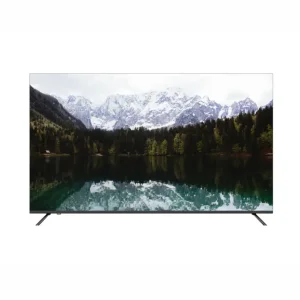
High-Quality 85 -inch 4K QLED Android Smart Voice TV, ultra-high definition large screen
View Product
High-Quality 100-inch 4K Explosion-proof Smart TV with Tempered Glass Screen
View Product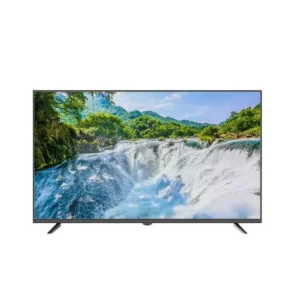
High-Quality 43-inch Borderless FHD Android Smart TV – Wholesale & Custom
View Product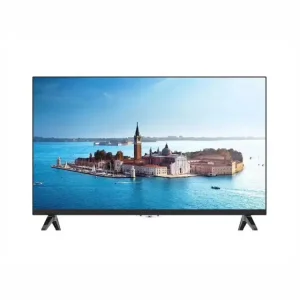
OEM Borderless 32 inch high-definition Android smart TV wholesale for supermarkets
View Product
OEM 75 -inch 4K QLED Android Smart Voice TV, Ultra HD Large Screen
View Product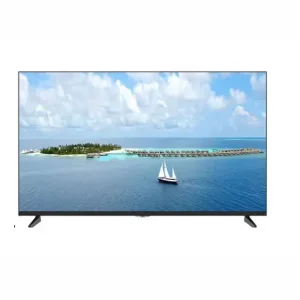
High-Quality 55-inch 4K QLED Android Smart TV with Frameless Design, Dolby Vision
View Product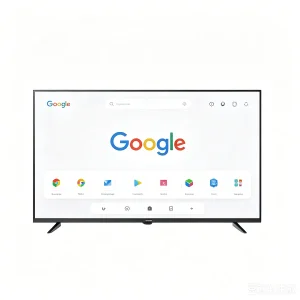
High-Quality 43-inch 4K QLED Google Smart TV, Google TV Export Network TV
View Product
Industry White Paper Analysis
The Architecture of Large-Format Display Manufacturing
A technical assessment of generation glass fabrication, structural thermals, and system integration across modern 75" to 100" panel categories.
In the contemporary audiovisual landscape, the procurement of ultra-large screen televisions (75-inch, 85-inch, 98-inch, and 100-inch formats) has shifted from consumer luxury procurement to a critical enterprise asset. The engineering baseline required to assemble an ultra-large TV is fundamentally distinct from standard-format production. As substrate dimensions cross the 75-inch threshold, volumetric physical stress, chromatic deflection across expansive viewing angles, and the thermomechanical behavior of high-density backlight arrays require strict, clean-room industrial automation.
1. The Substrate Matrix: LCD, QLED, and Self-Emissive OLED
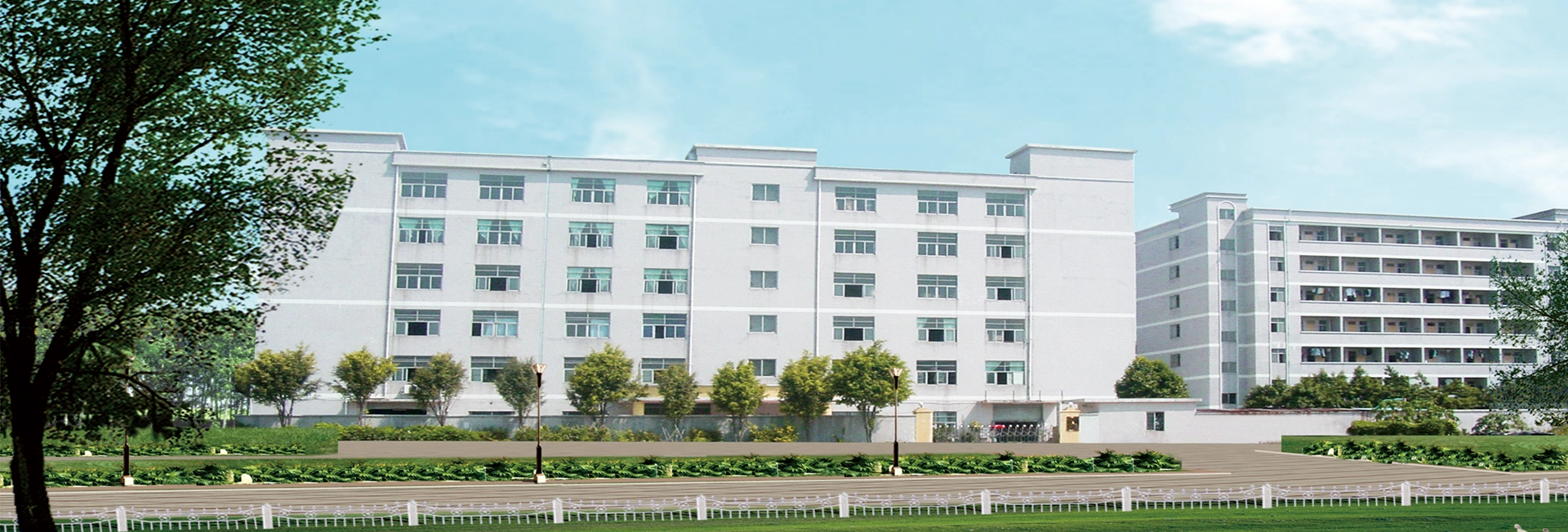
As a seasoned television manufacturing authority based in Huadu District, Guangzhou, Guangzhou Wanteng (WEIER) Electronic Co., Ltd. builds upon advanced substrate integration methodologies. While OLED architectures provide absolute contrast via self-emissive subpixels ideal for reference monitors and luxury hospitality suites, high-nit Quantum Dot Light Emitting Diode (QLED) solutions with multi-zone Local Dimming have emerged as the industrial benchmark for large-format displays.
Our 85-inch and 100-inch manufacturing pipelines integrate high-grade quantum-dot enhancement films (QDEF) layered over high-efficiency Blue CSP Mini-LED or Direct-lit LED (DLED) matrix backlights. This structure overcomes color degradation across vast physical surfaces, maintaining a DCI-P3 color gamut coverage in excess of 95% with peak HDR luminances exceeding 1,000 nits. Such optical performance ensures absolute clarity even in sunlit commercial atriums, luxury villas, and expansive hotel ballrooms.
2. Structural Integrity & Optical Precision in Ultra-Large Chassis
A primary failure mode in generic large-screen fabrication is torsional distortion and edge-light bleeding caused by chassis flexure. At our 60,000 m² automated production facility, our biggest screen displays utilize aerospace-grade aluminum alloy backplates paired with high-tensile stamped steel bezels. For high-occupancy public venues, our 100-inch explosion-proof series incorporates a custom-laminated 4mm anti-glare tempered optical glass substrate that adheres directly to the optical stack without creating internal air-gap reflections.
Enterprise Procurement
Decoding Global Procurement Demands
How multinational brand managers, system integrators, and government purchasing bodies structure their ultra-large display requirements.
Tier-1 Hospitality Chains
Demands centralized PMS protocol bridging, custom hospitality firmware with lockable configurations, and high-tensile impact panels that prevent physical damage in high-occupancy guest rooms and conference spaces.
National Retail Distributors
Requires localized multi-system tuner integration (DVB-T2/S2, ATSC 3.0, ISDB-T), certified Google TV / webOS operating systems, customized private-label housing tooling, and high shelf-appeal frameless edge aesthetics.
Commercial Integrators
Focuses on MTBF longevity ratings over 50,000 continuous hours, optimized low standby power consumption, high thermal dissipation matrices, and RS232/IP network-controllable display architectures.
Supply Chain Dominance
Guangzhou Supply Ecosystem Advantages
Why China's Pearl River Delta remains the global epicentre for high-efficiency large-screen television manufacturing.
Direct Panel Access
Co-located with global display panel giants (BOE, CSOT, HKC, Innolux), ensuring direct-line access to Grade-A Open-Cell glass substrates without intermediary cost overhead.
Turnkey Tooling & SMT
Complete in-house high-speed surface-mount technology (SMT) lines for motherboard fabrication, backed by dedicated injection mold engineering and stamping facilities.
SKD / CKD Modularity
Over 200,000 monthly kits shipped worldwide. Precise mechanical sub-assembly packaging specifically designed to reduce import tariffs for local assembly plants.
Logistical Hub Synergy
Situated in Huadu District, Guangzhou, minutes away from premier international container ports and express air cargo hubs for expedited global container dispatch.
Enterprise Compliance
Localization Support & Global Compliance Framework
Ensuring zero border friction through rigorous international certification regimes, spectrum adherence, and legal software licensing.
Mandatory Safety & EMC
Full CE (LVD/EMC) compliance for European territory, FCC Part 15 Class B compliance for the United States, CB schemes for APAC, and RoHS/REACH chemical regulation testing on all structural subcomponents.
Official Licensed Ecosystems
Authorized licensing tiers for Google TV (including GMS certifications and Widevine L1 DRM for seamless 4K Netflix/Prime streaming) alongside legitimate webOS Hub licensing with LG Electronics ecosystem continuity.
Regional Tuner & Power Modulars
Configurable mainboard tuners including ATSC for North America, DVB-T2/C/S2 for Europe & MEA, and ISDB-T for Latin America, coupled with wide-voltage (90V-264V) surge-protected industrial power supplies.
Forward Engineering
Emerging Technologies Shaping the 75"–100"+ Industry
Strategic technological migrations taking place across the global flat-panel manufacturing frontier through 2026–2030.
Mini-LED Backlight Proliferation
Transition from standard full-array direct backlighting to thousands of sub-millimeter Mini-LED diodes controlled by thousands of local dimming zones, eliminating blooming artifacts on massive displays.
Neural Picture Processing Units
Next-gen System-on-Chips (SoCs) containing dedicated Neural Processing Units (NPUs) running real-time frame interpolation, dynamic tone mapping, and AI-driven 4K/8K upscaling pipelines.
High Refresh Rate Gaming Ecosystems
Native 120Hz and 144Hz Variable Refresh Rate (VRR) panel architectures featuring HDMI 2.1 eARC connectivity, auto low latency modes (ALLM), and AMD FreeSync/NVIDIA G-Sync compatibility.
Diverse Applications
High-Yield Deployment Scenarios for Large Screens
Purpose-engineered hardware configurations tailored to specific physical environments and usage patterns.
Ultra-Luxury Home Cinemas
85" to 100" self-emissive OLED and flagship QLED screens delivering theatrical HDR realism, Dolby Vision IQ, and multi-channel Dolby Atmos spatial sound output for high-end domestic installations.
Interactive Corporate Boardrooms
Ultra-large borderless panels functioning as interactive presentations and high-definition video conferencing displays, with low glare coatings and rapid screen sharing compatibility.
High-Traffic Hospitality & KTV
Reinforced 100-inch explosion-proof models engineered with 4mm tempered architectural glass shielding to safeguard against impacts and spillages in entertainment spaces.
Public Arenas & Commercial Retail
700+ nits continuous daytime visible displays with scheduled power-on timers, lockable port covers, and durable metal frames designed for constant public signage duty cycles.
Technical FAQ
Engineering & Procurement Inquiries
Direct responses from our engineering and export departments regarding large-format manufacturing, quality control, and logistics.
How does WEIER guarantee zero dead-pixel standards on large 85" to 100" panels?
Every Open-Cell substrate processed in our Huadu manufacturing plant undergoes a multi-stage optical inspection adhering to ISO 9241-307 Class 1 guidelines. We strictly utilize Grade-A panels from BOE, CSOT, and Innolux. The optical assembly includes high-resolution automated optical inspection (AOI) followed by a mandatory 4-hour white/black full-screen thermal stress burn-in to verify that no pixel abnormalities manifest under prolonged operating conditions.
What are the freight considerations and palletizing strategies for ultra-large displays?
Screens over 75 inches are susceptible to micro-fracturing under transport torsion if packed incorrectly. We engineer specialized vertical honeycomb wooden crates and reinforced EPE foam corner arrays that maintain panels in a vertical orientation. Our loading plans optimize 40-foot HQ container cubic capacity while preventing horizontal compressive stress on the panel face.
Can international buyers specify custom smart TV operating systems and proprietary launchers?
Yes. As an authorized developer partner across Android Open Source Project (AOSP), official Google TV, and webOS Hub ecosystems, our in-house software engineering team handles deep UI/UX customization. This covers customized boot animations, dedicated launcher branding, pre-installed hospitality APKs, non-volatile volume limits, and remote firmware maintenance architectures.
What differentiates WEIER's 100-inch explosion-proof series from standard commercial TVs?
Our explosion-proof commercial displays integrate an optically coupled 4mm high-impact tempered glass layer treated with an oleophobic and anti-glare coating. The glass is physically locked into the reinforced front bezel rather than merely suspended over the panel, withstanding direct structural shocks up to 5J impact energy without panel shattering, making it ideal for KTV venues, public transit centers, and commercial arenas.
How do SKD and CKD television solutions lower procurement costs for overseas factories?
Importing fully built units (CBU) into regions like Latin America, India, and Africa often incurs significant customs duties. By sourcing our Semi Knocked Down (SKD) or Completely Knocked Down (CKD) modular kits—which include pre-tested mainboards, power supplies, LED backlights, bezels, and raw Open-Cell glass—importers can qualify for substantially lower local assembly import tariffs while leveraging their own regional workforce.
Full Product Matrix
High-Quality Display Inventory & Specifications
Direct manufacturer selection spanning versatile 32-inch bedroom sizes to 100-inch enterprise presentation screens.
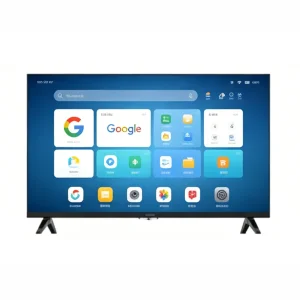
OEM 32-inch Full HD webOS Smart TV, LG System, for home, bedroom, hotel, commercial
View Product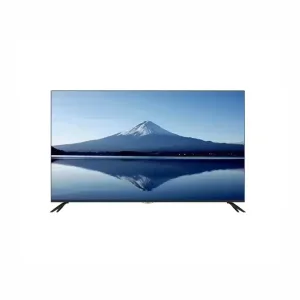
Wholesale Frameless 50-inch 4K Q LED Android Smart TV, Ultra HD HDR
View Product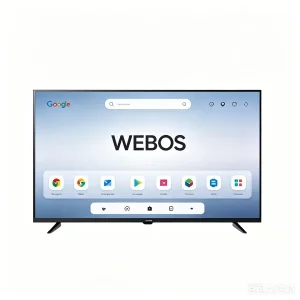
OEM 43-inch 4K UHD webOS Smart TV with AI, source manufacturer for home and hotel use
View Product
High-Quality 100-inch 4K Explosion-proof Smart TV with Tempered Glass Screen
View Product
High-Quality 85 -inch 4K QLED Android Smart Voice TV, ultra-high definition large screen
View Product
OEM 75 -inch 4K QLED Android Smart Voice TV, Ultra HD Large Screen
View Product
High-Quality 65-inch 4K OLED self-emissive Android smart TV with Dolby Vision HD TV
View Product