QLED Series
View Product Specs
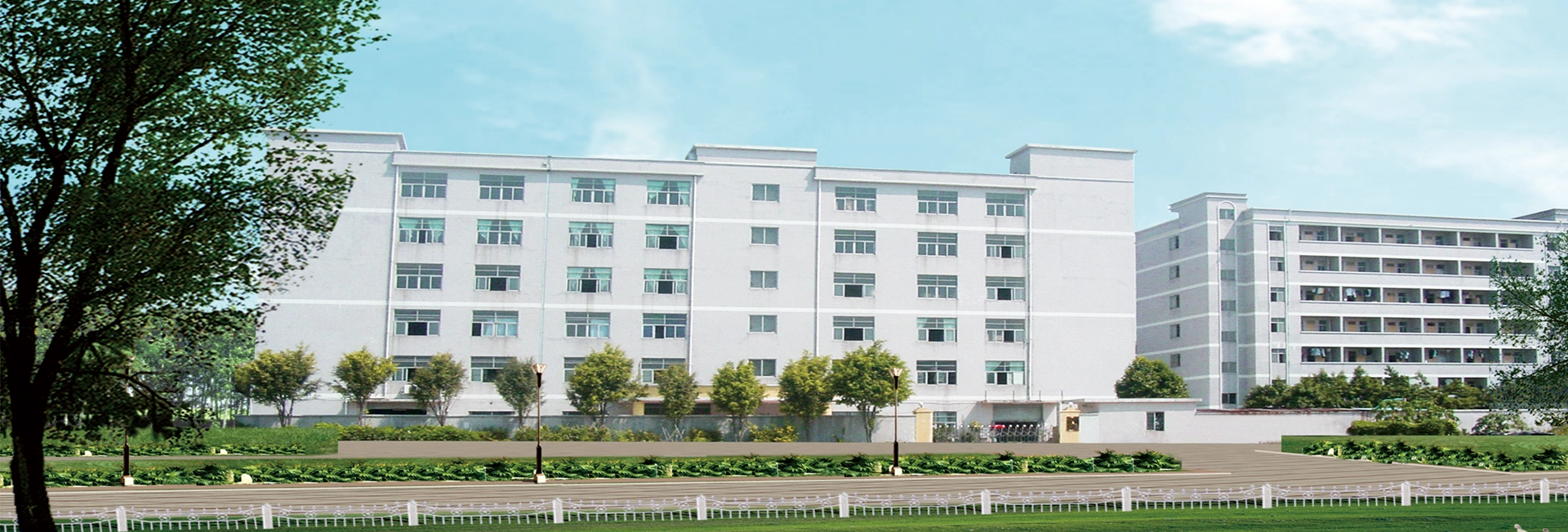
Manufactured in our 60,000 m² Huadu District industrial base. Available in CBU, SKD, and CKD assembly formats for international brand owners and turnkey project contractors.

Understanding mother glass multi-model glass (MMG) cutting yields, pixel density constraints, and supply chain dynamics for 42-inch, 48-inch, and sub-40-inch form factors.
While the global consumer television market has historically pushed average panel diagonal sizes above 55 inches, an acute industrial counter-trend has emerged: enterprise and premium commercial sectors increasingly demand high-quality smallest OLED TV solutions. From luxury marine vessels and medical simulation consoles to boutique executive suites and specialized defense display systems, the need for perfect black levels, infinite native contrast ratios (1,000,000:1), and zero grey-to-grey response time in compact enclosures has reached unprecedented procurement momentum.
However, manufacturing small-form-factor OLED televisions presents severe fabrication and thermodynamic hurdles that traditional LED-backlit LCD factories cannot resolve. At our 60,000 m² factory campus in Huadu District, Guangzhou, Guangzhou Wanteng (WEIER) Electronic Co., Ltd. (established in 1987) has re-engineered precision assembly lines to solve these fundamental physics constraints through specialized OEM/ODM integration workflows.
Standard Gen 8.5 mother glass substrate sheets (2200mm x 2500mm) are traditionally optimized to yield two 77-inch and two 48-inch panels via Multi-Model Glass (MMG) cutting. When manufacturing sub-48-inch or 42-inch OLED panels, edge loss, sub-pixel defect density, and thermal run-out require specialized laser-annealed micro-cutting to maintain commercial yields without escalating scrap rates.
Compressing 3840 x 2160 (4K UHD) self-emissive sub-pixels down to a compact 42-inch diagonal matrix pushes pixel density up to approximately 106 PPI (Pixels Per Inch). Because organic emissive sub-pixel aperture ratios decrease as pitch tightens, delivering 800+ nits peak brightness demands dual-stack tandem architectures and micro-lens arrays (MLA).
Unlike 75-inch and 85-inch television back-plates that offer expansive convective surface areas, compact OLED units concentrate thermal load from internal driving boards, switch-mode power supplies (SMPS), and high-luminance pixel diodes. We utilize direct-bond graphite thermal diffusion plates and cold-rolled alloy shielding to mitigate burn-in risk.
How WEIER solves driving IC timing, power conversion loss, and ABL auto-dimming throttling in compact OLED form-factors.
Procuring smallest OLED TVs from a tier-1 source factory requires rigorous scrutiny of the internal bill-of-materials (BOM). When dealing with compact screen matrices (such as 42-inch 4K panels or specialized 32-inch high-density displays), the display driver IC (DDIC) configuration, the timing controller (T-Con), and the underlying power conversion circuitry operate under razor-thin tolerances compared to standard commercial LCD panels.
| Architecture Vector | Standard Low-Cost Assembled Unit | WEIER Precision Small-OLED Industrial Build | Procurement Impact |
|---|---|---|---|
| Organic Layer Stack | Single-stack emissive layer with early luminance decay. | Tandem two-stack WRGB or high-purity RGB self-emissive configuration. | Doubles operational lifespan (LT95 > 30,000 hrs); avoids premature color shifting. |
| Thermal Interface | Passive plastic back-cover with localized hot spots. | Direct-contact pyrolytic graphite sheet with magnesium-aluminum alloy chassis. | Lowers central diode junction temperature by 9.4°C, preventing static image burn-in. |
| Mainboard & OS Tier | Generic uncertified Android AOSP board with limited codec licensing. | Enterprise-tier Android TV, Google TV, or LG webOS licensed platforms with AI T-Con. | Ensures wide DRM support (Widevine L1, PlayReady), native Dolby Vision, and OTA patch cycles. |
| Power Management (SMPS) | Standard open-frame SMPS with high ripple noise. | Custom low-EMI, wide-voltage (90V–264V) galvanic isolated power stage. | Certified for unstable marine or industrial grids; compliant with ERP Lot 5 Standby limits. |
| ABL (Auto Brightness Limiter) | Aggressive, noticeable step-down throttling on 100% white window. | Dynamic algorithm tuned with smooth temporal brightness transition. | Seamless visual experience in bright hospitality rooms, control rooms, and studio monitoring. |
Delivers over 1.07 billion colors with 99% DCI-P3 cinematic coverage. High-density OLED displays ensure color fidelity without FRC (Frame Rate Control) banding, critical for medical endoscopy and color grading studios.
Near-zero GtG latency eliminates motion blur during fast-paced telemetry feeds, e-sports gaming simulation, or high-speed video monitoring, providing crisp edge resolution absent on conventional liquid crystal panels.
Our factory firmware incorporates autonomous micro-pixel shift, logo brightness detection, and deep off-timer compensation cycles, ensuring that static interface elements in corporate or hotel use do not produce permanent image retention.
Where large screens are structurally or spatially unfeasible, compact OLED units deliver reference-grade visual performance.
Compact cabin bulkheads require ultra-thin, low-profile wall mounts with zero backlight bleed during nighttime cruising. Smallest OLED TVs provide wide viewing angles (up to 178°) so stateroom occupants experience uniform contrast from berth or seating positions.
Medical device integrators require sub-50-inch displays with DICOM Part 14 grayscale compliance, true black rendering, and exceptional color fidelity to distinguish subtle tissue anomalies without halo artifacts caused by LED local dimming zones.
Premium hotel suites prioritize aesthetic minimalism and sleek industrial design. Compact frameless OLED TVs integrated with customized webOS or Google TV PMS (Property Management Systems) deliver a bespoke in-room cinema experience.
Sim-racing, aerospace flight trainers, and professional creators utilize 42-inch smallest OLED TVs as desktop command monitors. Native 120Hz/144Hz refresh rates, variable refresh rate (VRR), and ALLM support deliver unmatched real-time feedback.
Direct manufacturing transparency: how we ensure customs clearance, tariff optimization, and certified quality across Europe, the Americas, Africa, and Asia-Pacific.
All production runs strictly adhere to global destination market standards. We hold validated compliance reports including CE (LVD & EMC directives) for the European Union, FCC Part 15 Class B for North America, RoHS Directive (EU) 2015/863, CB scheme reports (IEC 62368-1), and SASO/NOM frameworks for the Middle East and Latin America.
To help overseas brands circumvent exorbitant finished-goods (CBU) import duties, our facility packs and ships up to 200,000 sets per month of Semi-Knocked-Down (SKD) and Completely-Knocked-Down (CKD) TV kits. We provide anti-static packaging, automated testing jigs, and on-site engineering setup for your local assembly plant.
From 100% incoming optical inspection of OLED open-cells in Class 10,000 cleanrooms to high-temperature 48-hour burn-in stress aging racks, our six automated lines eliminate pixel degradation prior to palletizing. Third-party audits (SGS, TÜV, Intertek) and live container inspection feeds are welcomed.
| Target Region | Primary Import Standards | Recommended Packaging & Supply Format | Factory Turnaround Time |
|---|---|---|---|
| European Union & UK | CE, RoHS, ErP Energy Efficiency Tier, WEEE, UKCA | CBU in high-strength 5-ply export color cartons or SKD panel packs. | 25–30 Days (from BOM sign-off) |
| North America (US & CA) | FCC ID, UL 62368-1, Energy Star, CEC California Prop 65 | CBU pallets optimized for 40HQ ocean containers; drop-test certified. | 20–25 Days |
| Latin America (BR, MX, CO) | NOM-019, INMETRO, Anatel, SEC Chile | SKD/CKD kits to capitalize on local industrial manufacturing incentives. | 15–20 Days |
| Middle East & Africa | SASO Sabre, SONCAP, COC, G-Mark | Reinforced outer cartons with palletization for multi-modal transit. | 20–30 Days |
How emerging panel breakthroughs will shape the next generation of smallest OLED TV factories and global suppliers.
By layering billions of microscopic convex lenses above the organic light-emitting stack, internal refraction loss is eliminated. For small-format OLED screens, MLA boosts full-screen luminance by over 30% while reducing electrical wattage, fulfilling stricter EU ErP energy restrictions.
Transitioning from thermal vacuum deposition using fine metal masks (FMM) to industrial inkjet printing drastically cuts non-usable material loss. This breakthrough enables production of compact 27-inch, 32-inch, and 37-inch OLED monitors and TVs at price points competitive with premium mini-LED panels.
Replacing unstable fluorescent blue emitters with 100% internal quantum efficiency (IQE) phosphorescent or TADF compounds solves the differential aging problem in small screens. This advancement extends the useful lifespan of compact commercial OLEDs to over 50,000 continuous hours.
Direct engineering clarifications regarding panel sourcing, minimum order quantities, thermal design, and OEM/ODM private-label customization.
Precision-tested display assemblies built to international standards with certified OEM/ODM private labeling.