Factory Direct: Featured Ultra-Slim Display Units
Commercial-grade slim form-factors engineered with planar motherboards, edge-lit optical light guides, and seamless wall-flush chassis integration.
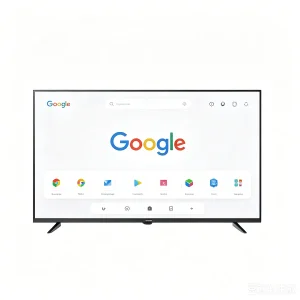
High-Quality 43-inch 4K QLED Google Smart TV, Google TV Export Network TV Factory
Explore Specification
Wholesale Frameless 50-inch 4K Q LED Android Smart TV, Ultra HD HDR for Home & Commercial
Explore Specification
High-Quality 85-inch 4K QLED Android Smart Voice TV Ultra HD Large Screen Flagship
Explore Specification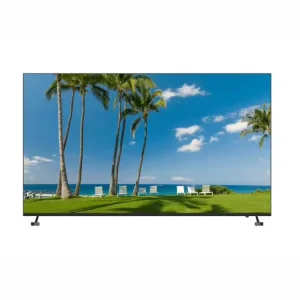
High-Quality 100-inch 4K Explosion-proof Smart TV with Tempered Glass for Hotel & Hospitality
Explore Specification
OEM 75-inch 4K QLED Android Smart Voice TV Ultra HD Large Screen Commercial & Export
Explore Specification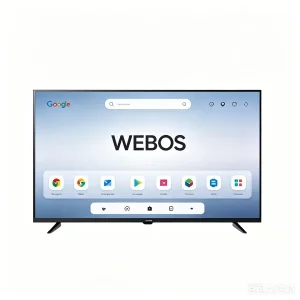
OEM 43-inch 4K UHD webOS Smart TV with AI Source Manufacturer for Hospitality & Residential
Explore Specification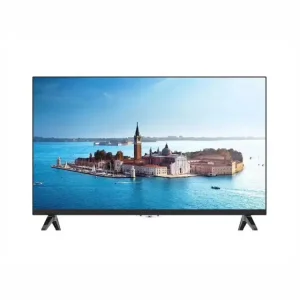
OEM Borderless 32-inch High-Definition Android Smart TV for Retail Supermarkets & Hospitality
Explore Specification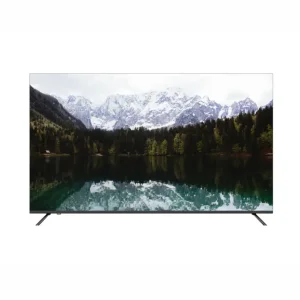
High-Quality 65-inch 4K OLED Self-Emissive Android Smart TV with Dolby Vision Ultimate Slim
Explore SpecificationEngineering the Flattest Flat Screen TV: Structural Realities
A rigorous examination of substrate physics, optical stack compression, and zero-gap mechanical tolerances in commercial television design.
Minimum OLED panel glass depth achieved on flagship assemblies.
Zero-gap recessed bracket flush clearance against architectural stone and drywalls.
Aviation-grade aluminum alloy backplate rigidity to eliminate substrate warpage.
Dedicated manufacturing and dust-free cleanroom capacity in Huadu, Guangzhou.
In contemporary consumer electronics and commercial digital installations, the term "flattest flat screen TV" has transitioned from a superficial marketing claim into a complex mechanical and thermal engineering benchmark. True flat-screen minimization requires addressing the physical limitations of display substrates: Direct-lit LED (DLED), Edge-lit LED (ELED), Quantum Dot LED (QLED), and self-emissive Organic Light Emitting Diode (OLED) matrices. As an established television manufacturer operating since 1987, Guangzhou Wanteng Electronic Co., Ltd. (WEIER) has engineered manufacturing protocols to minimize cross-sectional depth without sacrificing panel torsional strength, optical luminance, or long-term component MTBF (Mean Time Between Failures).
The dimensional profile of any television chassis is governed by four primary modules: the active panel layer, the optical backlight unit (BLU), the thermal dissipation matrix, and the structural enclosure. In traditional DLED architectures, an optical cavity distance of 18mm to 35mm is mandated between the LED emitter array and the diffusion plates to prevent chromatic hot-spotting. To engineer the flattest form factor possible within commercial viability, WEIER implements high-refractive-index polymethyl methacrylate (PMMA) optical light guide plates (LGP) paired with bilateral edge-mounted LED emitters, or transitions directly to self-luminous OLED panels that eliminate the backlight cavity entirely, yielding an ultrathin glass profile as slim as 3.8mm.
Self-Emissive OLED Architectures
By eradicating the liquid crystal polarization and backlight layers, our self-emissive 4K OLED panels achieve unparalleled flatness. Sub-pixel light control enables infinite contrast ratios while enabling an ultrathin panel module that sits flush against interior boundaries.
Quantum Dot Edge-Lit Engineering
For high-luminance hospitality and residential environments where sustained NIT output is non-negotiable, WEIER combines high-density blue LEDs with quantum dot enhancement film (QDEF) on 2.5mm laser-etched micro-dot LGPs, maintaining a sleek uniform depth under 12mm.
Reinforced Frameless Bezels
Structural rigidity is maintained across large diagonals (55" to 100") using automated liquid optically clear adhesive (LOCA) bonding to an aircraft-grade aluminum alloy outer chassis. This eliminates perimeter bezel plastic while avoiding physical panel flexure.
Eliminating the "Electronics Bulge": Thermal & Electrical Integration
How WEIER re-architects switch-mode power supplies, mainboard layouts, and pyrolytic graphite dissipation to create true planar screens.
A frequent compromise in commodity "thin" TVs is the uneven rear enclosure: while the perimeter edge measures a few millimeters, the lower-third houses a bulky transformer, power circuit, and motherboard compartment measuring 50mm to 80mm deep. This geometry fundamentally defeats flush wall mounting and aesthetic architectural recesses.
As a specialized OEM/ODM manufacturer, WEIER circumvents this limitation through three proprietary engineering configurations:
| Architecture Strategy | Technical Implementation | Thermal & Mechanical Impact | Target Sourcing Segment |
|---|---|---|---|
| Distributed Planar Power Supply (PSU) | Replacement of bulky toroidal inductors with low-profile planar magnetic transformers and surface-mount GaN (Gallium Nitride) switches. | Total board height reduced from 28mm to under 8.5mm, distributing heat across the entire chassis rear surface. | High-end residential, architectural interior fit-outs, and luxury retail displays. |
| Split-Chassis Separate Box Configuration | Relocation of RF tuners, AC input, HDMI switches, and heavy SoC chips to an external media transceiver hub connected via a single micro-optical umbilical cable. | Enables absolute 100% flat panel backing with uniform 9mm total product depth; zero rear chassis extrusion. | Five-star hospitality suites, boardroom presentation displays, and high-end OEM private-label brands. |
| Pyrolytic Graphite Heat Spreaders | Application of high-thermal-conductivity anisotropic synthetic graphite sheets (1500 W/m·K) across the rear structural aluminum plate. | Eliminates active cooling fans, minimizes thermal throttling on quad-core smart processors, and prevents localized panel discoloration. | 24/7 commercial surveillance monitors, KTV and explosion-proof entertainment venues, industrial monitoring. |
China Factory 4.0: Supply Chain Resilience & Cost Optimization
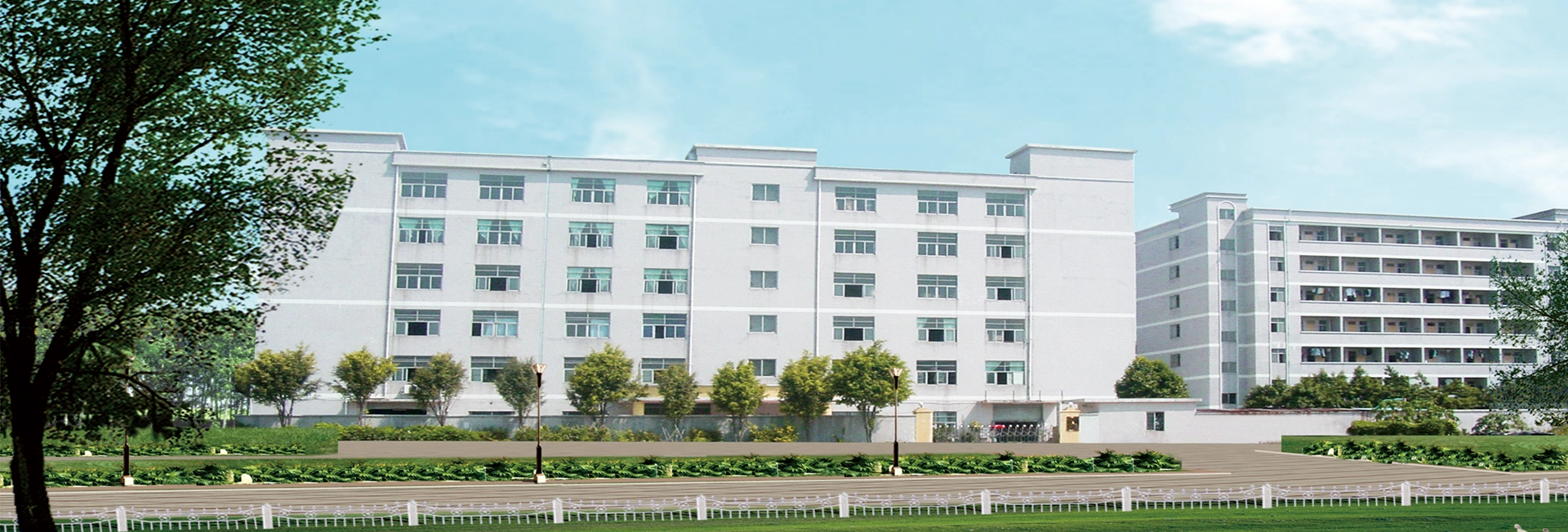
Inside our Guangzhou Wanteng electronics facility: 60,000 square meters of automated infrastructure driving global television shipments.
Guangzhou Wanteng Electronics Co., Ltd. (WEIER) has been anchored in Huadu District, Guangzhou, since 1987. Situated in China's Pearl River Delta consumer electronics manufacturing corridor, WEIER operates a vertically integrated factory complex that safeguards our international brand clients against component shortages, currency volatility, and unvetted tier-3 sub-suppliers.
Our 60,000 m² campus encompasses the entire value chain under direct factory management: automated surface-mount technology (SMT) mainboard assembly lines, Class 10,000 dust-free cleanroom optical bonding facilities, CNC aluminum processing workshops, automated aging and drop-testing laboratories, and multiple high-speed CBU (Completely Built Unit) assembly lines. This integrated ecosystem powers a finished production capacity of approximately 50,000 finished TVs and an expansive 200,000 sets of SKD/CKD kits every calendar month.
Tier-1 Open-Cell Direct Procurement
We maintain direct volume procurement contracts with world-leading glass panel manufacturers, including BOE, CSOT, LG Display, and Innolux. Direct procurement of Grade-A+ open-cells ensures consistent color uniformity, zero bright-dot tolerances, and eliminates third-party broker premiums.
Turnkey SKD / CKD Supply Mastery
High import tariffs in key global territories (such as Latin America, India, and Africa) necessitate local knockdown assembly. WEIER packages precision-tested semi-knocked-down (SKD) and completely-knocked-down (CKD) kits with custom jigs, software flashing tools, and modular packaging.
Defect-Free Six-Stage Inspection
Every flat panel undergo automated optical inspection (AOI) for solder joints, 100% white/black pattern open-cell inspection, 4 to 8 hours of continuous dynamic thermal aging, electrical safety hipot testing, high-impact drop tests, and vibration simulation.
Engineered Across Industries: B2B Deployment Matrices
How the physical profile of ultra-flat smart screens delivers quantifiable utility across diverse global industries.
Luxury Hospitality & Hotel Networks
For international hotel chains, bulky screens disrupt wall paneling and interior symmetry. Our flattest smart TVs with webOS and Google TV integrate Pro:Centric and commercial IPTV protocols, enabling customized brand landing pages, secure guest data wiping upon checkout, and minimal wall projection.
Commercial Supermarkets & Retail Chains
High-volume consumer retail demands aggressive cost controls combined with aesthetic appeal. WEIER's 32-inch to 55-inch borderless Android displays serve as versatile point-of-sale monitors and retail signage, supporting USB auto-loop playback and scheduled operational power cycles.
High-Traffic KTV & Commercial Venues
Commercial entertainment centers require equipment that combines ultra-flat profiles with structural defense. Our 100-inch explosion-proof models incorporate 4mm tempered, chemically treated anti-shatter glass laminated directly over the liquid crystal layer, resisting physical impacts.
Global Compliance & Tuner Localization Architectures
Ensuring zero border delays: Full regulatory conformance and embedded tuner flexibility across all global broadcast systems.
One of the most frequent points of failure for overseas electronic brands working with unvetted manufacturers is non-compliance with domestic broadcast standards and mandatory regional certifications. A television chassis can achieve physical flatness, but if its radio frequency demodulator is misconfigured or fails harmonic radiation tests, entire shipping containers face customs seizure or retail bans.
WEIER manufactures television platforms pre-engineered and certified for target regional jurisdictions across six continents:
| Target Export Market | Tuner Standard Embedded | Certification Coverage | Voltage & Regional Environmental Hardening |
|---|---|---|---|
| Europe & United Kingdom | DVB-T2 / DVB-S2 / DVB-C with CI+ Slot support and H.265 / HEVC demodulation. | CE, RoHS, REACH, ERP Tier II Energy Label. | 100V–240V 50/60Hz, ultra-low standby power (<0.5W), compliant with EU ecodesign directives. |
| North America & Mexico | ATSC 1.0 & ATSC 3.0 (NextGen TV ready) with QAM cable decryption. | FCC Part 15 Class B, UL/ETL electrical safety. | 110V–120V 60Hz, specialized anti-interference RF shielding for densely populated domestic spectra. |
| Latin America & Caribbean | ISDB-T (Ginga middleware compliant) and analog NTSC/PAL-M/N compatibility. | NOM (Mexico), INMETRO (Brazil), SEC (Chile). | Wide-range surge protection power supplies (90V–260V) engineered for areas with electrical grid fluctuations. |
| Middle East & Southeast Asia | DVB-T2 with multi-language OSD (Arabic, Persian, Thai, Vietnamese, Bahasa). | SASO (Saudi Arabia), SIRIM (Malaysia), CB Scheme. | Tropicalized conformal coating on motherboards and power circuits to resist ambient humidity and coastal salt-mist corrosion. |
| Africa & Emerging Economies | DVB-T2 digital migration compliant with analog bypass fallback. | COC, SONCAP (Nigeria), PVOC (Kenya). | Integrated solar DC 12V direct-input optional boards and surge-hardened heavy-duty filter circuits. |
Global Enterprise Sourcing: The OEM/ODM Procurement Blueprint
A step-by-step risk mitigation guide for consumer brand managers, procurement directors, and wholesale importers.
Procuring ultra-flat televisions at volume requires balancing bill-of-materials (BOM) transparency with warranty liability mitigation. When evaluating manufacturers for your next product line, senior procurement teams must require verifiable compliance in four foundational criteria:
Panel Grading Verification
Always verify Open-Cell grading. Low-tier assemblers often mix Grade-B panels with sub-pixel defects. WEIER provides verified Grade-A+ panels with zero bright-dot guarantees.
OS License Legality
Deploying Android Open Source Project (AOSP) without genuine Google EDLA or webOS licensing can result in streaming app blacklisting. WEIER provides certified Google TV and webOS solutions.
Drop-Test Certification
Because ultra-thin bezels leave less edge absorption, international drop tests (ISTA-1A / 3A) are essential. We utilize custom molded EPE corner buffers and double-wall corrugated packaging.
Spare Parts & Warranty
Reliable OEM contracts stipulate 1% FOC (Free of Charge) complete units or modular spare parts (mainboards, power boards, remote controls, LED strips) shipped directly with container batches.
Technical Roadmap: The Future of Zero-Thickness Displays
Anticipating next-generation manufacturing shifts: Micro-LED transfer printing, flexible glass substrates, and optical power delivery.
Micro-LED Substrate Miniaturization
The progression toward microscopic inorganic LEDs (<50μm) will eliminate color filters, liquid crystal cells, and polarizers entirely. Sub-millimeter direct-view displays will transition televisions into seamless architectural wall surfaces with negligible structural depth.
Wireless Laser Power Transmission
The final physical boundary of flat screen installation is the power cable. In partnership with upstream optoelectronic research laboratories, next-generation prototypes explore high-efficiency directional infrared laser power transfer to achieve complete wire-free wall integration.
AI-Powered Neural Super-Resolution
As panels become thinner, onboard image processors are migrating to ultra-low-power edge NPU silicon. These integrated neural coprocessors dynamically upscale SD/FHD broadcast signals into realistic 4K imagery in real time without generating excessive thermal footprints.
Frequently Asked Questions: Flat Screen TV Sourcing
Direct technical and operational answers from our chief engineering and export management teams.
What is the absolute thinnest profile achievable in commercial LED vs. OLED televisions?
Commercial self-emissive OLED televisions can achieve an edge glass thickness as thin as 3.8mm to 4.8mm, as they do not require an optical light guide or diffusion cavity. For Edge-Lit LED (ELED) and QLED TVs, the minimum physical depth achievable is generally between 8.5mm and 12mm across the panel section. Direct-lit LED (DLED) units with local dimming are naturally deeper, typically ranging from 22mm to 45mm to maintain optical uniformity without backlight hotspots.
How does an ultra-slim TV handle thermal dissipation without noisy cooling fans?
Our engineering team eliminates active cooling fans by combining aerospace-grade 5052 stamped aluminum alloy chassis backplates with high-thermal-conductivity pyrolytic graphite sheets (1500 W/m·K). This allows the entire rear surface of the TV to function as a passive heatsink, dissipating heat generated by the LED edge emitters, power semiconductors, and quad-core SoC processors without noise or dust ingress.
What is the standard Minimum Order Quantity (MOQ) for custom OEM/ODM brand programs?
For bespoke private-label configurations (custom front bezel silkscreening, boot-up logo animation, branded carton packaging, and customized remote control molds), the typical MOQ is one 20-foot shipping container (approx. 300 to 500 units depending on screen size). For established distributors testing new markets, flexible pilot run quantities or unified chassis with generic retail packaging can be arranged on a case-by-case basis.
What are the advantages of sourcing SKD / CKD television kits versus fully assembled CBU?
Semi-Knocked-Down (SKD) and Completely-Knocked-Down (CKD) kits are primarily utilized to optimize import tariffs and reduce maritime freight costs. Many nations impose 25% to 45% customs duties on finished consumer electronics (CBU) but only 5% to 10% on internal electronic assemblies. Furthermore, CKD packaging allows up to 2.5 times more units to be loaded into a single 40ft High Cube container, dramatically lowering landed unit cost.
How does WEIER guarantee zero glass panel breakage during maritime transit?
Ultra-flat and frameless screens are sensitive to perimeter torsional stress. WEIER uses high-density closed-cell expanded polyethylene (EPE) protective cradles engineered via drop-impact simulation software. For glass-on-edge screens and large formats (75"+), we employ double-wall five-layer corrugated master cartons reinforced with perimeter solid wood crating or composite edge protectors. Every design must pass ISTA-1A drop and vibration testing before mass packaging sign-off.
Can buyers conduct on-site factory audits and pre-shipment inspections?
Yes, we welcome on-site factory audits by client engineering delegations and recognized third-party inspection firms (e.g., SGS, TÜV Rheinland, Bureau Veritas). Our facility in Huadu District, Guangzhou, is located 25 minutes from Guangzhou Baiyun International Airport (CAN). Comprehensive remote video audits of our SMT lines, cleanrooms, and testing labs are also readily facilitated.
Direct Sourcing: Complete Lineup & Commercial Units
Explore our export-certified 32-inch to 100-inch televisions available for immediate OEM branding, CKD distribution, and project customization.
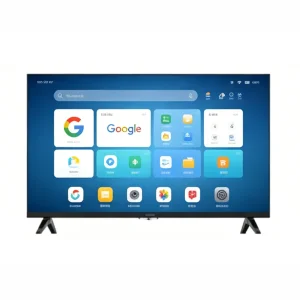
OEM 32-inch Full HD webOS Smart TV LG System for Bedroom, Hotel, Commercial & Export
Explore Specification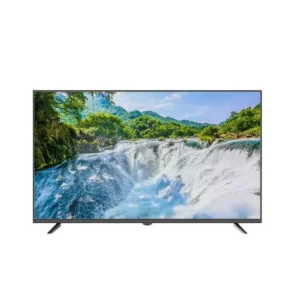
High-Quality 43-inch Borderless FHD Android Smart TV Wholesale Custom for Hotel Projects
Explore Specification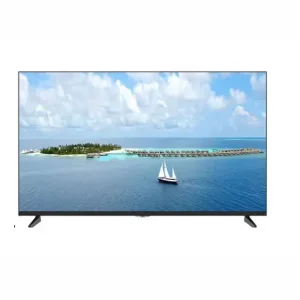
High-Quality 55-inch 4K QLED Android Smart TV with Frameless Design & Dolby Vision
Explore Specification
High-Quality 65-inch 4K OLED Self-Emissive Android Smart TV with Dolby Vision HD TV Factory
Explore Specification
OEM 75-inch 4K QLED Android Smart Voice TV Ultra HD Large Screen TV Factories
Explore Specification
High-Quality 100-inch 4K Explosion-proof Smart TV with Tempered Glass Screen Hotel KTV
Explore Specification
OEM 43-inch 4K UHD webOS Smart TV with AI Source Manufacturer for Home & Hotel Use
Explore Specification