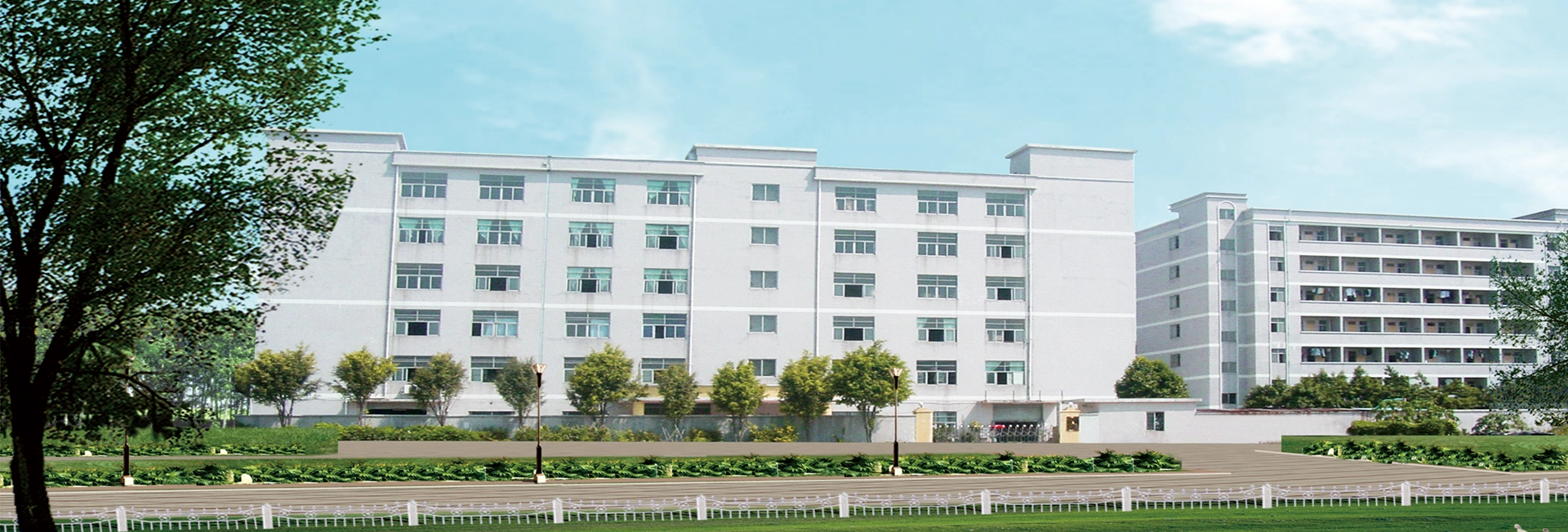
High-Precision Commercial & Consumer Curvature Lineup
Engineered for visual immersion, professional control rooms, high-traffic commercial deployments, and bespoke smart residential installations.
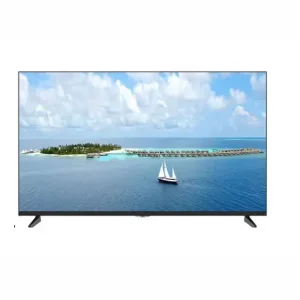
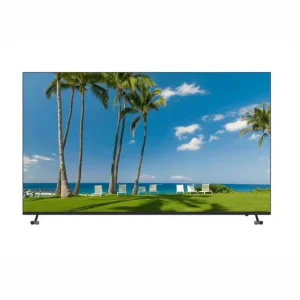
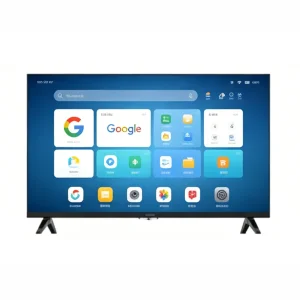
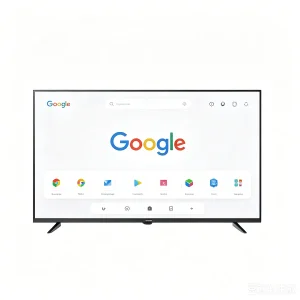
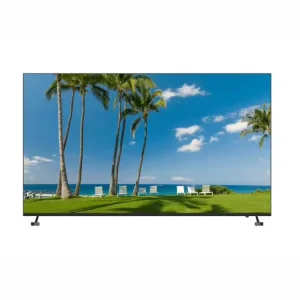
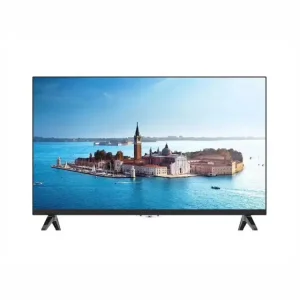
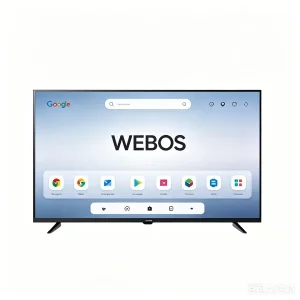

Engineering Equidistant Focal Geometry: 1500R to 4000R Radius
Curved screens represent a sophisticated convergence of optical physics and human peripheral vision science. Understanding the core technical parameters dictates industrial quality outcomes.
Equidistant Focal Geometry
Unlike planar screens where viewing distance significantly increases toward edge corners, an engineered 1800R or 3000R curvature maintains uniform ocular focal length across the entire horizontal field of view. This minimizes ciliary muscle ocular fatigue during extended monitoring sessions.
Refraction Angle Mitigation
By curving the glass substrate, external ambient light entering from lateral angles does not bounce directly into the viewer's pupils. Our optical coatings, combined with curved polarization filters, reduce ambient specular flare by up to 43% compared to conventional flat displays.
Curved Backlight Homogeneity
The manufacturing hurdle in curved production centers on edge-lit vs. direct-lit (DLED) thermal and luminous consistency. Our factory utilizes high-precision optical silicone matrix diffusors, eliminating 'mura' (clouding) and light leakage at the curved mechanical chassis margins.
Localized Commercial & Industrial Application Architecture
Curved screens provide architectural and functional differentiation across high-value business, mission-critical operations, and specialized digital signage environments.
SOC & NOC Control Centers
Security Operation Centers (SOC) utilize multi-screen 1800R curved arrays to give telemetry operators seamless data visualization without severe optical distortion at screen junctions.
Executive Financial Trading
High-frequency traders rely on curved ultrawide panels to ingest complex candle charts and low-latency order books in a single glance, avoiding peripheral blind spots.
Luxury Hospitality Suites
Boutique hotels incorporate curved architectural screens into custom cabinetry, delivering an elite cinematic feel while utilizing webOS and Android hospitality IPTV middleware.
Simulators & Professional Gaming
Racing and flight simulator cockpits require wrap-around immersion. Standard flat panels create visual breaks; 1500R curved screens match physical peripheral expectations.
China Supply Chain Resilience & Manufacturing Efficiency
Operating from Huadu District, Guangzhou, WEIER harnesses the unparalleled density of the Greater Bay Area optoelectronic cluster to ensure uninterrupted production cycles.
Upstream Glass & Driver IC Proximity
Direct supply links to tier-one open cell glass manufacturers (BOE, CSOT, HKC) located within a 2-hour logistics radius allow just-in-time glass delivery, significantly decreasing glass transit stress and inventory buffer holding costs.
Automated Curved Bonding Cleanrooms
Curving glass demands dust-free Class 1000 cleanrooms to eliminate trapped micro-particulates between the polarizers and the curved light-guide plate. Our automated lines apply constant-pressure roller lamination to prevent edge-delamination.
Bespoke SKD/CKD Tooling for Curved Panels
Shipping fully assembled curved televisions overseas can incur high dimensional freight penalties. Our proprietary CKD curved chassis kits enable regional overseas factories to assemble structural parts, boards, and curved glass locally with minimal capital expenditure.
Curved Display Engineering Roadmap: 2025–2028
Strategic technological inflection points steering our optoelectronic manufacturing and mechanical chassis tooling over the next four years.
Mini-LED Curved Local Dimming
- Integration of 1,152+ direct-lit local dimming zones on 1800R radius substrates.
- Quantum dot color-enhancement films with >98% DCI-P3 wide color gamut.
- Elimination of haloing artifacts along high-contrast curved edges.
Ultra-Flexible OLED Curvature
- Self-emissive organic pixel deposition on sub-millimeter polyimide substrates.
- True 0-nit absolute blacks without requiring mechanical backlight clamping.
- Modular bendable chassis enabling on-demand user curvature adjustments.
Micro-LED Modular Arch Arrays
- Inorganic micro-meter LED chips delivering 4,000+ nits peak brightness.
- Seamless panoramic bezel-free architectural concatenation.
- Zero risk of screen burn-in under 24/7 static industrial telemetry monitoring.
AI Spatial Autostereoscopy
- Glasses-free 3D holographic projection on curved focal planes.
- Edge-AI real-time eye-tracking dynamically shifts sub-pixel render arrays.
- Direct neural interface audio arrays embedded along curved bezels.
Macro Economic Landscape & B2B Procurement Shifts
How international regulatory demands, sea container optimization, and platform consolidation impact procurement decisions for global TV brand owners and wholesale importers.
Anti-Dumping Tariff Strategic Offsetting
Importing fully built TVs into regions like Latin America, the European Union, and India often incurs high finished-goods import tariffs (up to 35-40%). Sourcing certified SKD (Semi-Knocked Down) curved display modules allows buyers to categorize cargo under lower-duty sub-assemblies, preserving distributor margins.
Tier-1 Smart OS Licensing Consolidation
Global consumers no longer tolerate non-certified generic OS builds. Our factory directly provisions official Google TV (Google Play, Chromecast built-in) and LG webOS ecosystems with pre-licensed Widevine L1 DRM for seamless 4K Netflix, Prime Video, and YouTube streaming.
Volumetric Packaging Engineering
Curved panels require specialized internal molded EPS/EPP structural corner buffers to absorb torsion impacts during multi-modal maritime transit. Our packaging laboratory conducts simulated ISTA-3A drop and vibration tests to prevent glass micro-fracturing.
Localized Support & Compliance Assurance
Reliable commercial scaling requires adherence to global technical mandates, electromagnetic certifications, and direct factory-to-technician warranty support.
Global Certification Suite
Every TV architecture undergoes rigorous pre-compliance evaluations: CE (EMC & LVD) for Europe, FCC Part 15 Class B for North America, CB scheme certification, RoHS lead-free hazardous chemical restriction, and energy efficiency ratings according to regional standards (Energy Star, ErP Lot 5).
Field Engineer & Spare Part Kits
For high-volume export orders, we provide 1% complimentary critical spare parts (Main power boards, T-Con boards, LED backlights, and remote controls). Our senior bilingual firmware engineers support OTA (Over-The-Air) update rollouts and localized software adaptations.
Traceable Serialized QA Validation
Every production unit is tracked via unique laser-etched barcoding. Each display undergoes an automated 4-hour thermal aging run, dielectric voltage withstand test, and colorimeter white-balance calibration before secondary sealing and container drayage.
Frequently Asked Questions for Sourcing Directors
Direct, technically granular answers addressing production feasibility, minimum order volumes, optical tolerances, and shipping logistics.
What is the standard radius curvature tolerance during manufacturing?
Our automated curved press tools operate within a ±25R tolerance on specified radii (e.g., an 1800R target holds between 1775R and 1825R). This tight geometric precision prevents stress concentration on the glass cell, ensuring zero optical polarization distortion or light blooming over prolonged thermal cycles.
How does our factory handle SKD/CKD logistics for curved displays?
Curved open-cells cannot be stacked flat without damage. We utilize custom thermoformed blister trays and vibration-isolated wooden master crates designed specifically for bent glass modules, accompanied by detailed assembly jigs and standard operating procedure (SOP) manuals for local factories.
Can you provide custom firmware and launcher injection for enterprise clients?
Yes. Our in-house software engineering team supports boot logo locking, custom launcher design, pre-installed client APKs, hotel management system (PMS) integrations, and restricted engineering modes preventing unauthorized firmware tampering by end users.
What are the minimum order quantities (MOQ) for custom OEM curved lines?
Standard OEM private labeling (custom brand silkscreen, packaging, and custom user interface) requires an MOQ of 500 units for sizes 32" to 55", and 200 units for large format screens (65", 75", 85", and 100"). Trial and evaluation batches can be negotiated for project proofs of concept.
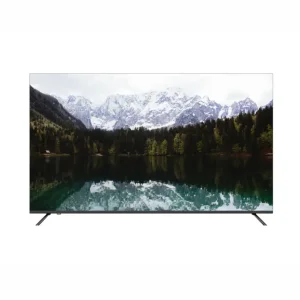
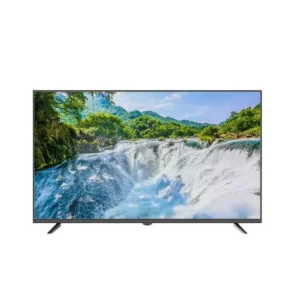
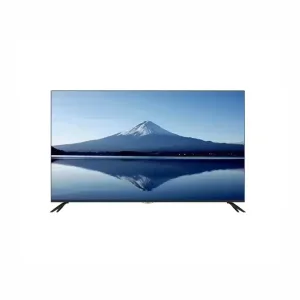
High-Reliability Smart Television Catalog
Factory-direct commercial displays, explosion-proof units, and smart operating system implementations ready for OEM container deployment.
Initiate Technical Dialogue with Our Optoelectronic Engineers
From CAD mechanical chassis design to custom tuner configurations and full container CKD assembly lines, leverage our 30+ years of source factory experience in Guangzhou.