Certified Flagship Smart TV Hardware Lineup
Precision-engineered large-format visual displays built to strict ISO9001 and CE/FCC/RoHS benchmarks. Directly sourced from our Guangzhou manufacturing campus.
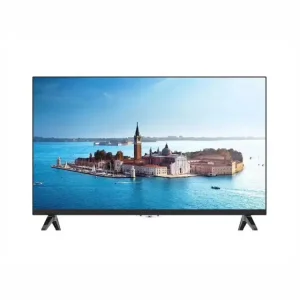
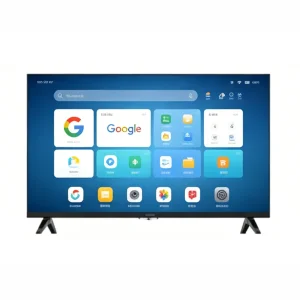

The 80-Inch Paradigm: Engineering Scalability & Commercial Landscape
An empirical analysis of large-format display panel manufacturing, market-specific consumer adoption, and OEM engineering viability.
The 80-Inch Sweet Spot: Commercial vs. Residential Convergence
The global smart television manufacturing matrix has undergone a generational seismic shift. As Generation 8.5 (G8.5) and Generation 10.5 (G10.5) glass substrate fabrication lines reach mature efficiency cycles, the manufacturing cost profile of panels between 75-inch and 85-inch has converged dramatically. The 80-inch diagonal class has emerged as the definitive tipping point: it maximizes spatial immersion for high-end home theaters while fulfilling the rigorous visual hierarchy required in commercial conference centers, airport information terminals, and luxury retail signage.
Historically, procurement channels faced a stark dilemma: integrate undersized 65-inch panels that compromised viewer engagement across open spaces, or accept exorbitant freight surcharges and fragile handling logistics for monolithic 98-inch to 100-inch displays. An 80-inch smart TV architecture resolves this structural tension. It presents an active display area exceeding 2,700 square inches—delivering 32% more visual real estate than a 70-inch panel—while fitting within standard ISO maritime container door heights without excessive pallet canting, dramatically reducing volumetric shipping expense.
Global B2B Market Analysis: OEM/ODM Shifts
Global procurement statistics illustrate that brand aggregators, multinational hotel conglomerates, and governmental agencies are moving rapidly away from off-the-shelf consumer retail displays. Off-the-shelf consumer screens frequently incur unmanageable total cost of ownership (TCO) penalties due to rigid, non-customizable firmware, unlicensable operating systems, planned consumer obsolescence, and inadequate thermal dissipation during sustained duty cycles.
By establishing direct sourcing protocols with high-capability Tier-1 China factories—such as WEIER (Guangzhou Wanteng Electronics Co., Ltd., founded in 1987)—international distributors gain comprehensive sovereignty over their Bill of Materials (BOM). From tailoring the optical diffusion stack and panel backlighting chemistry to flashing localized system firmware that complies with regional broadcast decoders (DVB-T2, ATSC 3.0, ISDB-T), factory-direct collaboration eliminates brand tiering markup while securing rigorous manufacturing oversight across the entire product lifecycle.
Technical Specifications & Architectural Engineering
Deep-dive structural teardown of our 80-inch smart TV architecture: panel chemistry, optical diffusion layers, multi-core processing engines, and thermal envelope management.
Substrate Chemistry & Backlight
We source Grade-A Open Cell glass directly from leading global panel foundries (BOE, CSOT, HKC, Innolux). Our 80-inch structural configurations support both Direct-LED (DLED) matrices with localized micro-dimming zones and edge-to-edge Quantum Dot Enhancement Film (QDEF) architectures.
By integrating semiconductor nanocrystals across the optical stack, our QLED panels achieve an ultra-wide color gamut exceeding 95% DCI-P3 and 130% sRGB coverage. Anti-glare (AG) surface polarizers with 3% to 5% internal haze suppress ambient reflections, ensuring 450 to 800+ nits calibrated luminance performance in sunlit lobbies and corporate glass environments.
AI SoC & Neural ISP Engine
Underpinning the visual pipeline is an advanced System-on-Chip (SoC) platform utilizing quad-core 64-bit ARM Cortex-A55 / Cortex-A73 architectures paired with high-throughput ARM Mali-G52 or Mali-G57 multi-core graphics processing units.
Dedicated Neural Processing Units (NPU) perform frame-by-frame deep-learning super-resolution, AI scene recognition, dynamic noise reduction, and intelligent 120Hz/144Hz MEMC (Motion Estimation, Motion Compensation). Even legacy standard-definition or 1080p surveillance video feeds are cleanly upscaled to native 3840×2160 UHD clarity with zero artifact blooming or edge smearing.
Thermal Dynamics & 24/7 MTBF
Consumer televisions degrade prematurely when deployed beyond 8 continuous operating hours. Our 80-inch commercial chassis incorporates a reinforced, high-grade galvannealed steel (SECC) backplate acting as a massive passive convection heatsink.
By decoupling the internal Switched-Mode Power Supply (SMPS) from the high-heat optical backplane, we maintain inner cabinet temperatures below 48°C even during continuous 24/7/365 operational schedules. This robust thermal engineering yields an audited Mean Time Between Failures (MTBF) exceeding 50,000 running hours, minimizing field warranty interventions for international brand clients.
| Engineering Parameter | Commercial Grade (WEIER 80" OEM) | Consumer Retail Grade (Standard) | Value Generation Direct Benefit |
|---|---|---|---|
| Panel Binning & Purity | Grade-A+ Zero Bad Pixel (ISO 13406-2 Class 1) | Grade-A / Grade-B Allowed Micro-defects | 100% cosmetic consistency across batch shipments |
| Operating Lifecycle (Duty Cycle) | 16/7 to 24/7 Industrial Continuous Duty | 6/7 to 8/7 Consumer Intermittent Duty | Prevents image sticking, color drift, and premature LED decay |
| Luminance Calibration | 400 to 800+ nits (Custom Direct-LED Matrix) | 250 to 300 nits (Cost-down Edge-lit) | Preserves readability in illuminated commercial and retail spaces |
| OS Ecosystem Flexibility | webOS / Google TV / Android 11-14 AOSP / Pure Signage | Locked Proprietary Retail Firmware | Custom brand boot, silent APK sideloading, API command control |
| Enclosure & Structural Frame | Aviation Alloy Bezel-less + Tempered Armor Option | Extruded Polycarbonate Plastic | Drop-tested, rigid frame prevents transit warping & cell fracture |
Localized Application Scenarios: Where the 80-Inch Form Factor Dominates
Engineered adaptations matching localized infrastructure realities, power fluctuations, and commercial architectural demands worldwide.
Corporate Boardrooms & Video Conferencing
In modern corporate enterprises, hybrid collaboration platforms (Microsoft Teams, Zoom Rooms, Google Meet) require large display surfaces that legibly show simultaneous gallery views and high-resolution presentation decks without requiring projector darkening. The 80-inch 4K screen provides optimal ergonomic viewing distances (2.5 to 5.5 meters). With wake-on-LAN (WOL), CEC HDMI automatic routing, and embedded wireless cast support (AirPlay, Miracast, Chromecast), corporate meetings start in seconds without cabling friction.
Luxury Hospitality, Hotels & VIP Suites
Elite hospitality groups require seamless interactive guest interfaces. Our webOS and Android-powered hotel TVs support customizable Pro:Centric and proprietary IPTV protocol stacks. The 80-inch footprint elevates presidential suites and luxury penthouses into bespoke private cinemas. Features include encrypted guest privacy resets on checkout, personalized welcome interfaces, embedded master volume limiting to prevent room bleed, and anti-theft security mount configurations.
High-Impact Commercial Retail & Quick-Service Hubs
From shopping mall anchor stores to airport duty-free corridors, visual impact translates directly into customer conversion. Our high-nit 80-inch screens serve as high-durability digital merchandising displays. The custom chassis supports landscape and portrait mounting orientations, while internal USB Auto-Play firmware schedules content playback upon AC power restoration without manual remote interaction.
Higher Education & Modern Lecture Amphitheaters
Contemporary academic spaces are replacing fragile lamp projectors with large-format solid-state digital panels. An 80-inch smart TV ensures that scientific formulas, CAD schematics, and lecture typography remain legible from the back of the lecture room. Optional 7H-hardness tempered glass shielding safeguards against accidental classroom impacts, while multi-microphone array integration facilitates remote distance education.
Security NOC, SOC & Dispatch Monitoring Centers
Network Operations Centers (NOC) and security monitoring rooms require 24/7 uninterrupted operation. With high pixel density and multi-window split-screen viewing capabilities, our 80-inch displays render up to 16 concurrent 1080p security camera feeds simultaneously with crystal-clear fidelity. The internal burn-in mitigation algorithm continuously shifts static pixels imperceptibly to prevent static menu burn-in over years of sustained monitoring.
High-End Residential Home Theaters & Private Villas
For discerning private residential clients, our 80-inch frameless QLED displays deliver true cinematic immersion without the complex calibration and high noise levels of front projectors. Support for Dolby Vision, HDR10+, and integrated Dolby Atmos soundbar acoustic arrays delivers deep blacks, vivid quantum colors, and three-dimensional spatial sound directly out of the box.
China Factory Supply Chain Resilience & Efficiency Advantages
Guangzhou Wanteng (WEIER) Electronic Co., Ltd.: Capitalizing on the Greater Bay Area electronics manufacturing cluster to ensure price-performance leadership and unshakeable supply continuity.
Guangzhou Cluster Ecosystem
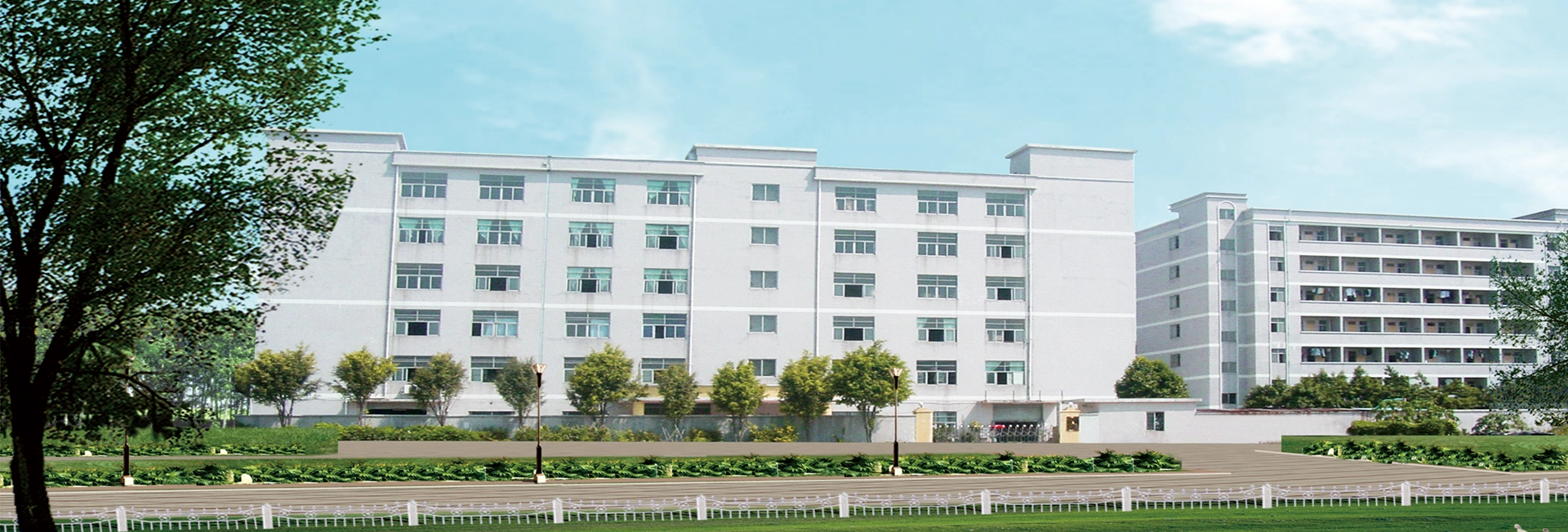
Located in Fenghuang Anzhi Area, Huadu District, Guangzhou, our manufacturing center sits at the nexus of the world's most concentrated display supply chain. Open-cell glass, optical diffusers, LED backlights, driver ICs, and mainboards are sourced within a 50-kilometer industrial radius. This geographic concentration reduces lead times from component release to assembly down to just 7-12 days, buffering international buyers against global shipping disruptions.
SKD & CKD Engineering Dominance
To help international partners navigate steep import tariffs and localized assembly regulations, WEIER operates dedicated Semi-Knocked-Down (SKD) and Completely-Knocked-Down (CKD) packing lines. With over 200,000 monthly kits shipped worldwide, our packaging engineering optimizes container cubing efficiency by over 300% compared to fully built (CBU) sets, drastically slashing ocean freight per unit.
Rigorous 6-Stage Quality Assurance
Zero-compromise reliability is guaranteed through our 6-stage testing protocol: 100% incoming optical cell inspection, automatic SMT solder-paste optical inspection, 4-hour high-temperature dynamic burn-in testing, drop and vibration transit simulation, high-voltage dielectric isolation testing, and final acoustic-optical calibration. Every display leaving our floor is fully certified for continuous, trouble-free operation.
Localized Support & Regulatory Compliance Framework
Complete conformity with global electrical safety, electromagnetic compatibility, and energy efficiency mandates across North America, the European Union, the Middle East, and Latin America.
CE, RoHS & EU Eco-Design
For European Union distributors, our televisions carry full CE-RED (Radio Equipment Directive), CE-LVD (Low Voltage Directive), and CE-EMC compliance. Internal solder pastes, printed circuit boards, and frame finishes comply with RoHS 2.0 (2011/65/EU) and REACH restrictions. Furthermore, our models adhere strictly to EU Eco-Design standby consumption limits under 0.5W, minimizing environmental footprint while simplifying customs clearance.
FCC Part 15 & UL Electrical Safety
For North American import channels, all Wi-Fi and Bluetooth wireless modules hold modular FCC identifiers. Main chassis structures are engineered to prevent stray electromagnetic interference (EMI) with critical aviation and emergency bands. SMPS power boards are designed according to UL 62368-1 fire and shock prevention standards, accompanied by double-insulated fire-retardant enclosures for peace of mind in high-density installations.
Regional Broadcast & Voltage Engineering
Global markets require tailored power and broadcast compatibility. For Latin America, our televisions support 90V-260V wide-range operational tolerances to handle local power grid fluctuations seamlessly. Broadcast decoding covers multi-standard tuners: DVB-T2/C/S2 for Europe and Africa, ATSC for North America, and ISDB-T for South America and Japan, ensuring plug-and-play operation for any end customer worldwide.
Display Technology Roadmap: Mini-LED, Micro-LED & Edge AI Integration
Anticipating the technological horizon: our R&D trajectory for large-format 80-inch display solutions through 2026-2030.
High-Density Mini-LED Arrays
Mini-LED technology represents the pinnacle of high-brightness, high-contrast performance. By miniaturizing backlighting chips down to 100-200 micrometers, our next-generation 80-inch prototypes incorporate over 1,500 independent local dimming zones. This provides true OLED-rivaling zero-black levels without OLED's organic burn-in risks, while achieving peak luminance beyond 1,500 nits for outdoor-facing commercial and residential installations.
Edge AI Vision & Auto-Calibration
Our upcoming platform firmware incorporates ambient light and color-temperature sensors communicating directly with the on-chip NPU. The display dynamically adjusts gamma curves, white-point balance, and panel drive voltages to match surrounding ambient illumination in real time. This ensures optimal visual clarity while reducing overall energy consumption by up to 35% across daylight and evening hours.
Modular Motherboard Scalability
To future-proof procurement cycles, our advanced chassis designs adopt a modular hardware architecture. The main processing board, power supply, and external I/O terminals are housed in swappable, service-friendly sub-chassis bays. As wireless standards evolve (Wi-Fi 7, 8K connectivity, 5G cellular IoT), enterprise clients can upgrade core compute modules without discarding the expensive 80-inch optical panel assembly.
Frequently Asked Questions (FAQ) for Global Buyers
In-depth answers addressing procurement logistics, technical configurations, warranty terms, and custom OEM/ODM production protocols.
1. Why should our brand procure 80-inch smart TVs directly from WEIER rather than standard retail channels?
Commercial retail channels sell standardized displays burdened by distributor markups, restrictive consumer warranties, and locked firmware. At WEIER, we are a direct source factory established in 1987 in Huadu District, Guangzhou, operating 60,000 m² of manufacturing space. You gain direct control over your Bill of Materials (BOM), select panel grades, customize firmware, specify tuner protocols, and brand every detail from bezels to packaging—backed by industrial-grade thermal designs built for 16/7 to 24/7 reliability.
2. Which smart operating systems are available for custom 80-inch display configurations?
We provide complete factory integration across three primary platforms: official Google TV (with voice remote and Google Play store), LG webOS (featuring the familiar Magic Remote interface and webOS content ecosystem), and Android Open Source Project (AOSP Android 11 through Android 14). AOSP configurations are particularly popular among commercial integrators who require silent background APK sideloading, proprietary signage software, or customized kiosk interfaces without third-party account requirements.
3. What is the difference between CBU, SKD, and CKD supply models, and which is right for our market?
CBU (Completely Built Unit) is fully assembled, tested, and packaged for immediate retail distribution. SKD (Semi-Knocked Down) typically ships the tested front panel module intact alongside separate mainboards, power boards, and packaging kits, allowing local teams to complete final assembly and qualify for reduced import duties. CKD (Completely Knocked Down) ships raw components down to bare metal chassis and loose screws, maximizing space efficiency (over 300% more units per container) and fulfilling strict local assembly content laws in regions such as South America, Africa, and Southeast Asia.
4. How does WEIER manage ocean transit protection for fragile large-format 80-inch panels?
Large display panels are susceptible to cell warping and glass fracture if incorrectly loaded. Our shipping designs utilize reinforced honeycomb export cartons, high-density closed-cell EPE foam cushions, and internal corner corner-guards. For CBU shipments, pallets are designed to sit upright inside standard 40-foot High Cube (40HQ) containers with certified dynamic tie-downs. All production runs undergo standard ISTA-1A drop tests and random vibration testing prior to final shipping container sign-off.
5. What minimum order quantities (MOQ) and production lead times apply to OEM orders?
Standard mass-production MOQs for custom-branded 80-inch televisions begin at 50 to 100 units for standard configurations, and 200 units for fully customized outer tooling or silkscreen chassis designs. Prototype and pre-production evaluation samples are generally assembled and dispatched within 7-10 business days. Standard production runs for 20GP or 40HQ containers are completed within 20 to 28 days following golden sample sign-off and deposit receipt.
6. What warranty, spare parts, and after-sales support protocols does WEIER maintain?
We offer comprehensive 1-to-3-year factory warranties on core assemblies. For container-quantity orders, we include 1% to 2% critical FOC (Free of Charge) spare components—including mainboards, SMPS power supplies, T-CON timing boards, backlight strips, and remote controls. Furthermore, our senior software and hardware engineers provide direct remote assistance, flashing tools, and OTA firmware updates to your local technical team in English.
Comprehensive Commercial & Residential Display Solutions
Select from our proven commercial product lines ready for private-label customization, regional tuner adaptation, and turnkey container dispatch.