Featured 4K 120Hz & Commercial High-Framerate Lineup
Precision calibrated commercial panels, hospitality displays, and ultra-high-definition television hardware ready for rapid OEM/ODM deployment and SKD/CKD container freight.
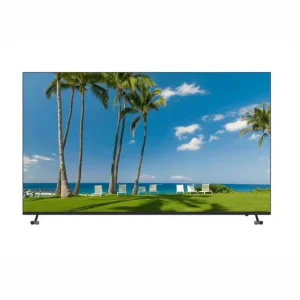
High-Quality 85 -inch 4K QLED Android Smart Voice TV, ultra-high definition large screen, flagship model for home and commercial use, export only. Suppliers, Manufacturer
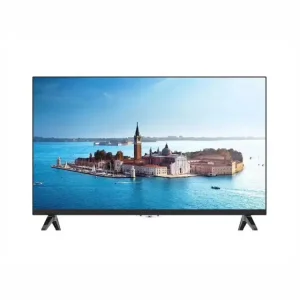
OEM Borderless 32 inch high-definition Android smart TV wholesale for supermarkets, high-definition network TVs Factory, Supplier
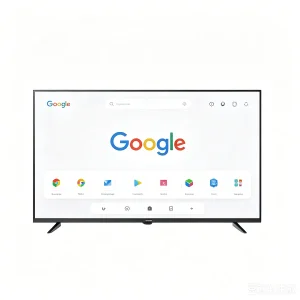
High-Quality 43-inch 4K QLED Google Smart TV, Google TV Export Network TV Factory Factory, Manufacturers
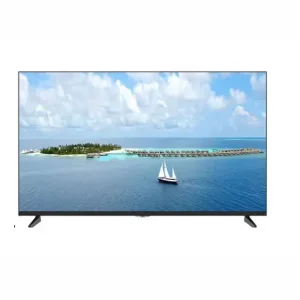
High-Quality 55-inch 4K QLED Android Smart TV with Frameless Design , Dolby Vision, Flagship Model for Home, Commercial, and Export Use Factories, Manufacturer
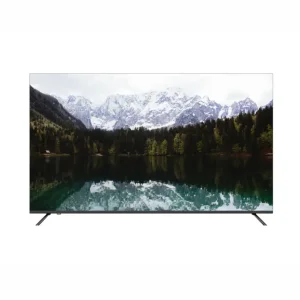
High-Quality 65-inch 4K OLED self-emissive Android smart TV with Dolby Vision HD TV Factory, Manufacturers
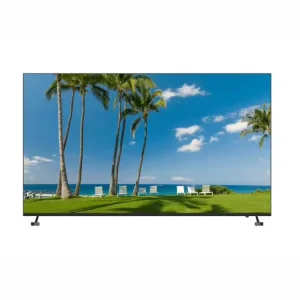
High-Quality 100-inch 4K Explosion-proof Smart TV with Tempered Glass Screen, Suitable for Hotels, KTVs, Commercial Use, and Export Supplier, Manufacturers
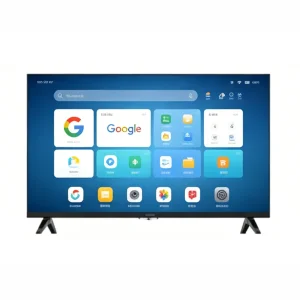
OEM 32-inch Full HD webOS Smart TV, LG System, for home, bedroom, hotel, commercial, and export use Suppliers, Supplier

OEM 75 -inch 4K QLED Android Smart Voice TV, Ultra HD Large Screen, Home/Commercial/Export TV Factories, Manufacturers
Engineering Whitepaper: Sourcing High-Quality 4K 120Hz Television Displays
In the ultra-high-definition television manufacturing ecosystem, the shift toward 4K TV 120Hz architecture represents far more than an incremental refresh rate boost. For enterprise procurement directors, regional distributors, and hospitality system integrators, transitioning to 120Hz native refresh rates requires a comprehensive audit of timing controllers (T-CON), mainboard system-on-chip (SoC) computational throughput, HDMI 2.1 Fixed Rate Link (FRL) bandwidth integrity, and thermal dissipation margins. As commercial environments demand fluid motion rendering for high-frame-rate sporting broadcasts, interactive esports venues, digital signage, and executive conferencing, understanding the structural differences between genuine native 120Hz panel substrates and pseudo-interpolated variants is paramount to securing market-leading display hardware.
Technical Validation: Native 120Hz Panel Substrates vs. DLG/MEMC Emulation
A persistent vulnerability in overseas display sourcing is the conflation of Native 120Hz Physical Gate-in-Glass (GIP) Panels with software-interpolated 60Hz panels (utilizing Motion Estimation Motion Compensation - MEMC) or Dual-Line Gate (DLG) scanning. While MEMC artificially inserts synthesized frames between 60Hz source frames, it introduces artifact haloing, image smearing, and severe latency spikes (>35ms). Conversely, DLG reduces vertical resolution by 50% to achieve high frequency. At Guangzhou Wanteng (WEIER) Electronic Co., Ltd., our high-tier 4K 120Hz export models utilize dual-channel V-by-One or 8-lane eDP interfaces driving authentic 120Hz liquid crystal matrices paired with high-performance silicon, guaranteeing uncompromised resolution, sub-6ms GTG pixel response, and native VRR/ALLM compatibility.
Engineering Architecture & Display Substrate Specification Matrix
Procurement teams must align panel chemistry and controller pipelines with specific deployment scenarios. The engineering matrix below contrasts core display configurations deployed across our Guangzhou manufacturing lines.
| Architecture Metric | Native 120Hz 4K QLED Flagship | 120Hz 4K OLED Self-Emissive | 60Hz Native with MEMC Turbo | Standard Commercial DLED 60Hz |
|---|---|---|---|---|
| Panel Refresh Rate | 120Hz True Native Hardware | 120Hz True Native Hardware | 60Hz Native (Interpolated) | 60Hz Native Standard |
| Interface Bus Topology | V-by-One 16-Lane / 8-Lane eDP | eDP 1.4b High-Speed Bus | V-by-One 8-Lane Standard | LVDS / Mini-LVDS |
| HDMI Port Protocol | HDMI 2.1 (48Gbps FRL6) | HDMI 2.1 (48Gbps eARC/VRR) | HDMI 2.0b (18Gbps TMDS) | HDMI 2.0 / 1.4 Legacy |
| Variable Refresh Rate | 48Hz - 120Hz VRR & AMD FreeSync | G-Sync & FreeSync Premium Pro | Not Supported | Fixed 60Hz Rate |
| Input Latency (Game Mode) | < 5.6 ms @ 4K 120Hz | < 1.2 ms @ 4K 120Hz | > 28.0 ms (MEMC active) | > 35.0 ms |
| Peak Luminance (Nits) | 600 - 1,200 Nits (Direct LED) | 800 - 1,000 Nits (Pixel Peak) | 350 - 450 Nits | 250 - 350 Nits |
| Color Gamut Coverage | 95% - 100% DCI-P3 (QLED) | 99% DCI-P3 / 88% Rec.2020 | 85% - 90% DCI-P3 | 72% NTSC Standard |
| Optimal Application | Esports Lounges, Premium Retail | High-End Cinema, Executive Suites | Hospitality Common Rooms | Budget Hotel Guest Rooms |
Quantum Dot Enhancement Film (QDEF)
By sandwiching cadmium-free quantum dot nanocrystals between the blue LED backlight array and the optical diffusing stack, our 4K 120Hz QLED TVs generate spectrally pure red and green peak wavelengths, dramatically elevating color volume without thermal penalties.
Automated Low Latency Mode (ALLM)
Integrated mainboards feature real-time source signal sensing. When an enterprise gaming system, simulation engine, or commercial media server outputs high-framerate metadata, the television bypasses post-processing pipelines, instantly locking down input lag.
Thermal & Power Regulation (24/7 Duty)
Industrial grade aluminum-alloy chassis design functions as a passive heatsink for the mainboard SoC and LED driver boards. This maintains junction temperatures below 65°C under continuous operational stress in public commercial installations.
Global Procurement Analysis: CBU, SKD & CKD Sourcing Models
Navigating global television import tariffs, non-tariff customs barriers, and landed-cost optimization requires flexible factory assembly topologies. As an established source manufacturer in Guangzhou since 1987, WEIER supports three core delivery structures:
CBU (Completely Built Up)
Finished, packaged units featuring 100% factory testing, customized retail or industrial carton artwork, molded EPS foam buffers, user manuals, and regional power cables. Ideal for markets with low tariff differentials on complete electronics (e.g., North America, GCC, parts of Western Europe).
SKD (Semi-Knocked Down)
Open-cell display modules, pre-assembled front bezels, optical films, mainboards, power units, and speaker modules shipped in high-density partitioned bulk cartons. Reduces container shipping volume by up to 45% while enabling local factories to meet domestic manufacturing requirements.
CKD (Completely Knocked Down)
Raw structural backplanes, bare mainboards, SMD reels, diffuse sheets, liquid crystal open cells, and individual hardware screws. Designed for industrial assemblers in high-tariff jurisdictions (Brazil MANAUS, India, Egypt, Nigeria) optimizing customs duty down to component tiers.
Turnkey OEM/ODM Engineering
Full customization across three major smart ecosystems: Android TV, Google TV GMS, and LG webOS Hub. Encompasses hardware tooling, custom remote controls (voice/pointer), client boot logos, pre-loaded hospitality applications, and dedicated factory firmware flashing.
Container Freight Packing Efficiency Metrics
Our logistics engineering team calculates precise load plans for 40ft High Cube (40HC) containers. For example, by engineering ultra-slim frameless bezel architectures, carton dimensions for our flagship 55-inch models allow up to 480 CBU units per 40HC, or over 1,400 SKD units per container. This mathematical density reduces ocean freight expense per unit by up to 28% compared to standard bulky cabinet alternatives.
Commercial Engineering Applications for 4K 120Hz Displays
Standard consumer televisions fail when subjected to demanding enterprise duty cycles. Our custom factory engineering adapts 4K 120Hz platforms to withstand specialized industry use cases worldwide.
Hospitality & Luxury Hotel Integrations
Equipped with customized hotel firmware menus, Pro:Centric and webOS hospitality server protocols, volume-capping limits, automated welcome screens, and RS-232C / IP serial controls. Integrates with hotel property management systems (PMS) without external set-top boxes.
High-Traffic Entertainment & KTV Venues
High-impact environments require the tempered glass, explosion-proof construction found in our 100-inch and 85-inch models. 4mm physical tempered front glass resists mechanical shocks, liquid ingress, and continuous vandalism risks in karaoke lounges, pubs, and airport concourses.
Commercial Esports Lounges & Sports Bars
Broadcasting live sporting events and running next-generation gaming consoles (PS5, Xbox Series X, high-end PC rigs) requires uncompressed 4K 120fps video pipelines. The high refresh rate eliminates judder during fast camera pans, while eARC handles Dolby Atmos spatial audio distribution.
Technology Roadmap: 2025–2030 Display Innovation Vector
Forward-looking television procurement necessitates anticipating component obsolescence and emerging consumer technology standards. The five-year roadmap below directs WEIER's factory R&D investments.
144Hz Native Mainstream Transition
Evolution of the standard gaming television timing controller from 120Hz to 144Hz native refresh across 55-inch to 85-inch QLED tiers, offering unified PC gaming monitor and television convergence with DisplayPort over Type-C expansion capabilities.
Mini-LED Dense Local Dimming (500+ Zones)
Transition from edge-lit and broad Direct-LED (DLED) backlights to active-matrix Mini-LED arrays containing over 500 to 2,000 independent local dimming zones. Yields contrast ratios exceeding 1,000,000:1 at a fraction of OLED panel procurement costs.
Edge AI SoC Upscaling & Micro-LED
Deployment of dedicated 4nm silicon processors featuring neural processing units (NPU) capable of 120Hz per-pixel depth estimation, generative super-resolution upscaling, dynamic acoustic room mapping, and early industrial micro-LED commercial open-cell adoption.
Guangzhou Factory Infrastructure, QC & International Certifications
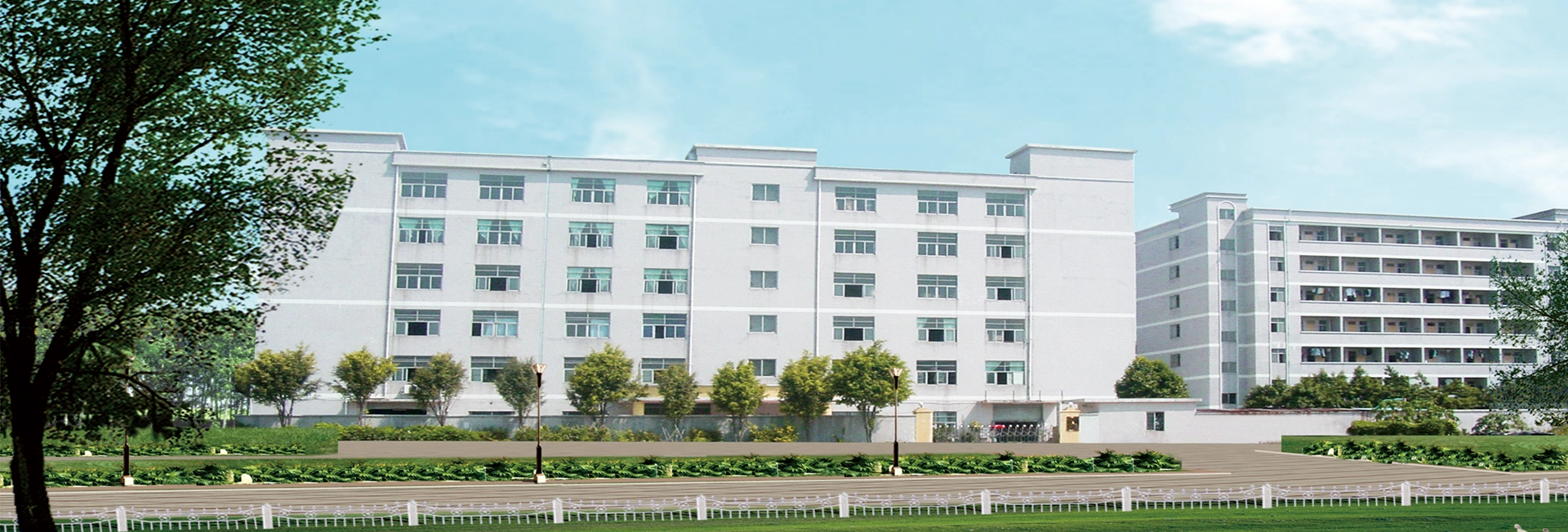
Quality reliability is the bedrock of repeat B2B international business. Our 60,000 m² Huadu District manufacturing base executes stringent end-to-end verification protocols under strict ISO9001 and ISO14001 guidelines.
100% Panel Aging & Pixel Inspection
Every open-cell display undergoes an uninterrupted 4-to-8 hour high-temperature thermal aging chamber test at 40°C. Dark-field, full-white, and RGB primary tests identify and eliminate sub-pixel defects, optical mura, and backlight leakage before final packaging.
Signal Integrity & Drop Simulations
High-frequency oscilloscope eye-diagram testing ensures HDMI 2.1 differential pairs achieve compliant jitter tolerances. In addition, finished export packaged units undergo ISTA-1A drop tests and three-axis simulated transportation vibration testing.
Global Market Access Credentials
Complete documentation packages available for customs clearance worldwide: CE (EMC & LVD), FCC Part 15 Class B, RoHS hazardous substance compliance, CB Scheme, NOM (Mexico), and energy efficiency validation under European ErP directives.
Enterprise 4K Displays & Commercial Screen Solutions
Explore commercial options across 43" to 100" form factors, tailored with Google TV, webOS, and Android Smart platforms for supermarkets, hotels, and export distributors.
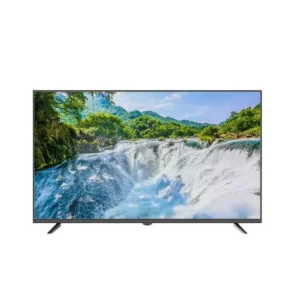
High-Quality 43-inch Borderless FHD Android Smart TV – Wholesale & Custom for Hotel, Supermarket & Engineering Projects Supplier, Manufacturer
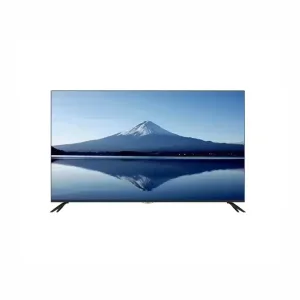
Wholesale Frameless 50-inch 4K Q LED Android Smart TV, Ultra HD HDR, for Home, Commercial, and Export Use Suppliers, Supplier
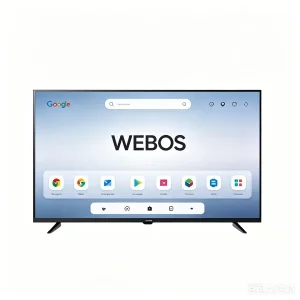
OEM 43-inch 4K UHD webOS Smart TV with AI, source manufacturer for home and hotel use, export Factory, Manufacturer
High-Quality 100-inch 4K Explosion-proof Smart TV with Tempered Glass Screen, Suitable for Hotels, KTVs, Commercial Use, and Export Supplier, Manufacturers
High-Quality 85 -inch 4K QLED Android Smart Voice TV, ultra-high definition large screen, flagship model for home and commercial use, export only. Suppliers, Manufacturer
High-Quality 65-inch 4K OLED self-emissive Android smart TV with Dolby Vision HD TV Factory, Manufacturers
High-Quality 55-inch 4K QLED Android Smart TV with Frameless Design , Dolby Vision, Flagship Model for Home, Commercial, and Export Use Factories, Manufacturer
OEM 75 -inch 4K QLED Android Smart Voice TV, Ultra HD Large Screen, Home/Commercial/Export TV Factories, Manufacturers
Frequently Asked Technical & Sourcing Questions
Detailed answers addressing engineering validation, minimum order quantities (MOQ), operating system licensing, and container lead times for overseas importers.