Nagoya Hospitality Spec
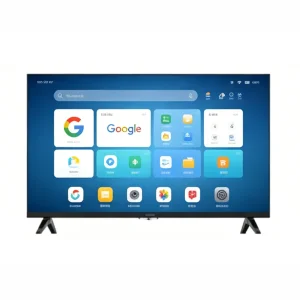
32-Inch FHD
webOS Hub
Hotel Mode
Pre-configured with webOS Hub ecosystem middleware, low standby consumption, and rapid Japanese content integration for business hotels, retail storefronts, and boardroom systems.
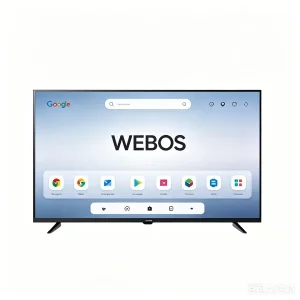

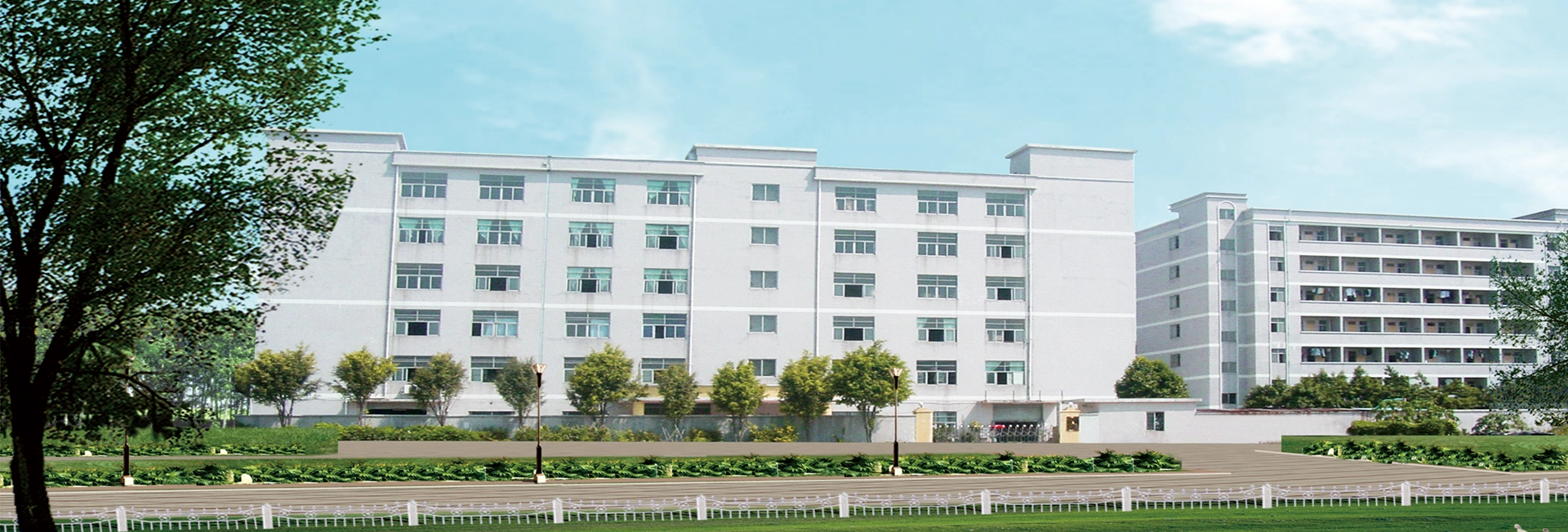
Analyzing procurement dynamics across Aichi Prefecture, the Greater Chubu industrial core, and the metropolitan commercial districts of Sakae and Meieki.
The Greater Nagoya region (comprising Aichi, Gifu, and Mie prefectures) represents the unchallenged manufacturing capital of Japan, contributing substantially to the nation's GDP through automotive, aerospace, precision machine tooling, and heavy robotics. However, procurement methodologies in Nagoya differ fundamentally from Tokyo's consumer retail focus. Nagoya's corporate procurement entities, system integrators (SIer), and trading houses (shosha) enforce strict industrial durability, long product life cycles (5+ years without panel revamping), and precise thermal dissipation metrics.
As commercial spaces modernize—from automotive plant control boards in Toyota City and Kariya to high-end executive lodging surrounding Nagoya Station (Meieki) and Hisaya-odori Park in Sakae—the demand for unified, secure, and content-rich display firmware has made the webOS Hub platform the primary operating system of choice. Enterprise buyers demand screens that bridge the gap between consumer-grade streaming fluidity (supporting TVer, Netflix Japan, U-NEXT, and YouTube) and enterprise control parameters (RS-232C over IP, Pro:Centric hotel PMS integration, and automated wake-on-LAN scheduling).
Over 32,000 hotel keys throughout Nagoya require uniform centralized channel mapping, custom Japanese guest welcome screens, automatic session wipe-outs, and seamless mirroring for inbound international business guests.
Automotive assembly networks across Aichi utilize our 55-inch to 85-inch 4K displays as high-reliability digital dashboards, monitoring real-time JIT lines, supply telemetry, and QA metrics over HDMI/LAN 16/7 continuous cycles.
Nagoya’s expanding healthcare infrastructure demands flicker-free, wide-viewing-angle IPS panels with anti-glare coatings, intuitive Japanese remote control layouts, and medical-grade EMI shielding matching VCCI Class B standards.
Engineered to surpass Japan's stringent electrical safety, broadcast tuner latency, and carbon footprint reduction benchmarks.
In the Japanese commercial market, system stability and license conformity are critical. Off-the-shelf open-source Android ROMs frequently fail compliance reviews due to uncertified Widevine DRM levels, inconsistent Japanese EPG (Electronic Program Guide) translation, and fragmented remote-control key mapping. Our factory delivers genuine licensed webOS Hub solutions under strict OEM/ODM authorizations.
This ensures seamless cloud DRM compliance for all domestic Japanese OTT applications, full support for LG’s patented Magic Remote with gyroscopic air-mouse tracking, and integrated Japanese voice command recognition. For commercial deployments in Nagoya, our factory provides specialized custom bootloader ROMs capable of locking USB configurations, enforcing hotel hospitality welcome channels, and disallowing end-user firmware tampering.
| Evaluation Parameter | WEIER ODM webOS Platform (Japan Spec) | Generic White-Label Android Displays | Tier-1 Domestic Japanese Brands |
|---|---|---|---|
| Operating System | Official webOS Hub (Licensed Core) | Generic AOSP / Android TV Open-Source | Proprietary Linux / Customized Google TV |
| Safety & RF Compliance | PSE (Diamond/Circle) + TELEC + VCCI Class B | Often uncertified or self-declared CE only | PSE + TELEC + VCCI + S-Mark |
| Japanese OTT Support | Native TVer, U-NEXT, Netflix, Amazon Prime | Frequent DRM downgrade / App playback failure | Full native support |
| Procurement Cost Advantage | 35%–45% direct factory savings vs domestic brands | Lowest upfront, high field-failure cost | High premium (brand markup + multi-tier agents) |
| Custom Hospitality ROM | Yes (Custom Boot Logo, PMS link, Guest Wipe) | Rarely supported / unstable memory leaks | Supported at steep software licensing fees |
| Supply Lead Time to Nagoya | 14–21 days production + 4.8 days sea freight | Unpredictable component sourcing | Domestic warehouse or 60-day allocation delay |
Entering the Japanese electronics market necessitates compliance with rigorous legal frameworks overseen by the Ministry of Economy, Trade and Industry (METI). Our export smart televisions are tailored at the motherboard and power supply unit (PSU) engineering phase to exceed Japan's technical baselines:
Direct integration from 60,000 m² state-of-the-art facilities to Nagoya’s international shipping terminals with zero trading intermediaries.
Founded in 1987 in Guangzhou Huadu, operating 6 fully automatic clean-room surface-mount and assembly lines. Over 50,000 finished displays produced monthly with rigorous batch constancy.
Complete Built-Up units (CBU) ready for distribution, or Semi-Knocked Down (SKD) and Completely Knocked Down (CKD) kits (200,000 pcs monthly capacity) for local Japanese assembly tax optimization.
Direct weekly container freight sailing from Guangzhou Nansha / Shenzhen Yantian to the Port of Nagoya. Buffer inventory stocking options and transparent Bill of Materials (BOM) locking.
Direct answers from our engineering directors regarding minimum order volumes, custom software builds, and Japanese homologation.
We supply motherboards configured specifically for the Japanese terrestrial standard (ISDB-T) alongside BS/CS 110-degree digital tuners where required. Full B-CAS or ACAS chip/card compatibility and Japanese G-Guide EPG firmware layers are integrated directly into our webOS image.
Yes. We deliver deep customized hotel builds with volume limits, initial channel and input presets, USB clone setups, auto-wake timers, customized background wallpaper featuring Japanese city branding, and automated guest privacy clears upon system power cycling.
Standard mass production takes approximately 18 to 22 business days following Golden Sample sign-off. Direct maritime shipping from Guangzhou Nansha or Shenzhen Shekou to the Port of Nagoya takes 4 to 5 days, enabling agile container turnarounds for Japanese importers.
All remotes can be customized with silk-screened Japanese kana labeling, designated direct-access OTT buttons (Netflix, Prime Video, TVer, YouTube), and full Japanese user guides proofread and formatted according to domestic retail standards.
We employ A-Grade Open Cell panels sourced directly from premier glass makers (BOE, CSOT, HKC, AUO). Every unit undergoes rigorous 100% white/black screen RGB aging inspections, maintaining an industry-leading zero dead pixel policy for commercial shipments.
We actively welcome client auditing teams and third-party inspection firms (e.g., SGS, TÜV, Bureau Veritas) to our Guangzhou plant. Live high-definition remote video audits can also be coordinated for pre-shipment container sealing.
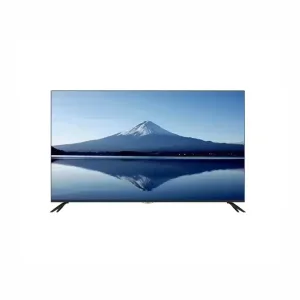
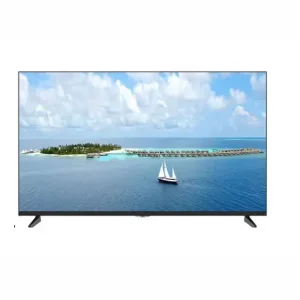
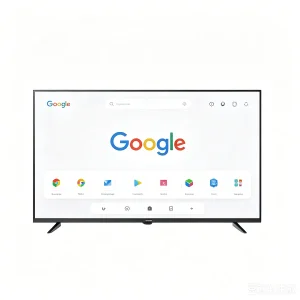
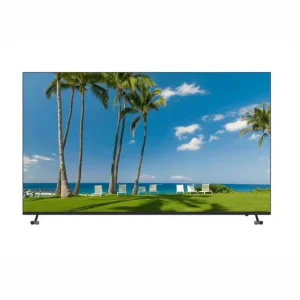
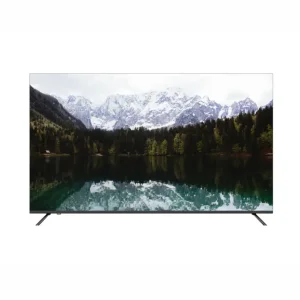
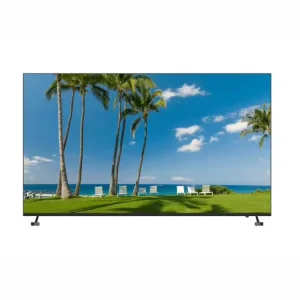
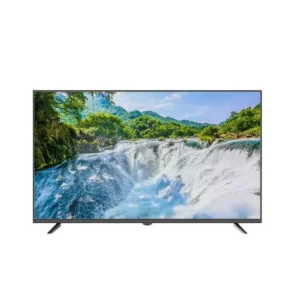
From compact hotel units to ultra-large commercial displays. All models support custom OEM/ODM brand identity, custom packaging, and Japanese technical compliance.
Partner directly with our Guangzhou manufacturing facility. Receive comprehensive quotation sheets, Japanese compliance documentation (PSE/TELEC), firmware customization proposals, and ocean freight logistics plans directly to the Port of Nagoya.